
Most American founders underestimate how crucial it is to choose the right co-founder, even though about 65 percent of startup failures stem from team conflict. This decision directly impacts your company’s future, making it just as important as your business idea or product itself. With the right guidance, you can identify what truly matters in a partnership and step confidently through every phase of the co-founder search.
Table of Contents
- Step 1: Clarify Your Co Founder Requirements
- Step 2: Leverage Top Platforms To Connect
- Step 3: Assess Alignment And Complementarity
- Step 4: Initiate Meaningful Conversations
- Step 5: Validate Commitment And Working Style
- Step 6: Formalize The Partnership Structure
Quick Summary
| Key Point | Explanation |
|---|---|
| 1. Clarify co-founder requirements | Define specific skills and traits for a co-founder to complement your strengths and fill gaps in expertise. |
| 2. Use co-founder matching platforms | Explore specialized online platforms that connect entrepreneurs based on skills and startup vision. |
| 3. Assess alignment and complementarity | Evaluate potential co-founders’ values and vision to ensure compatible partnership beyond skills. |
| 4. Initiate meaningful conversations | Engage in deep discussions to reveal motivations and long-term goals, fostering authentic connections. |
| 5. Formalize the partnership structure | Create a legally binding agreement that outlines roles, equity distribution, and conflict resolution strategies. |
Step 1: Clarify your co founder requirements
Defining your startup’s co-founder requirements is like creating a strategic roadmap for your most critical partnership. Your goal in this step is to identify the precise skills, personality traits, and professional competencies that will complement your existing capabilities and fill critical gaps in your founding team.
Start by conducting an honest self assessment of your own strengths and weaknesses. Skill matching platforms demonstrate how critical it is to understand your individual capabilities before seeking a collaborative partner. Map out the core competencies your startup needs: technical skills, business development expertise, design capabilities, marketing knowledge, financial acumen. Determine which areas you excel in and which require additional support.
Be specific about your requirements. Instead of vague statements like “needs business skills,” outline concrete expectations such as “experienced in SaaS sales with proven track record of closing enterprise contracts” or “technical co-founder with minimum 3 years backend development experience in Python and cloud infrastructure.” The more precise you are, the more likely you’ll attract a compatible co-founder who genuinely enhances your startup’s potential. Understanding founder market fit will help you refine these requirements and identify the ideal partnership dynamics.
Step 2: Leverage top platforms to connect
Connecting with potential co-founders has become easier than ever with specialized online platforms designed to match entrepreneurial talent. Your mission in this step is to strategically explore and utilize digital networking spaces that can help you find your ideal startup partner.
Top co-founder matching platforms offer sophisticated networking opportunities beyond traditional professional networks. These specialized sites use advanced algorithms to match entrepreneurs based on skills, industry experience, complementary capabilities, and startup vision. Look for platforms that allow detailed profile creation, where you can showcase your technical skills, business expertise, and specific startup goals.
Approach platform networking strategically. Create a compelling profile that highlights your unique strengths and clearly articulates the specific skills you seek in a co-founder. Some platforms provide comparative analysis of different networking sites, which can help you choose the most appropriate channel for your startup’s needs. Be proactive in reaching out, attend virtual networking events, and engage authentically with potential partners who align with your entrepreneurial vision. Remember that finding the right co-founder is about quality connections, not just quantity.
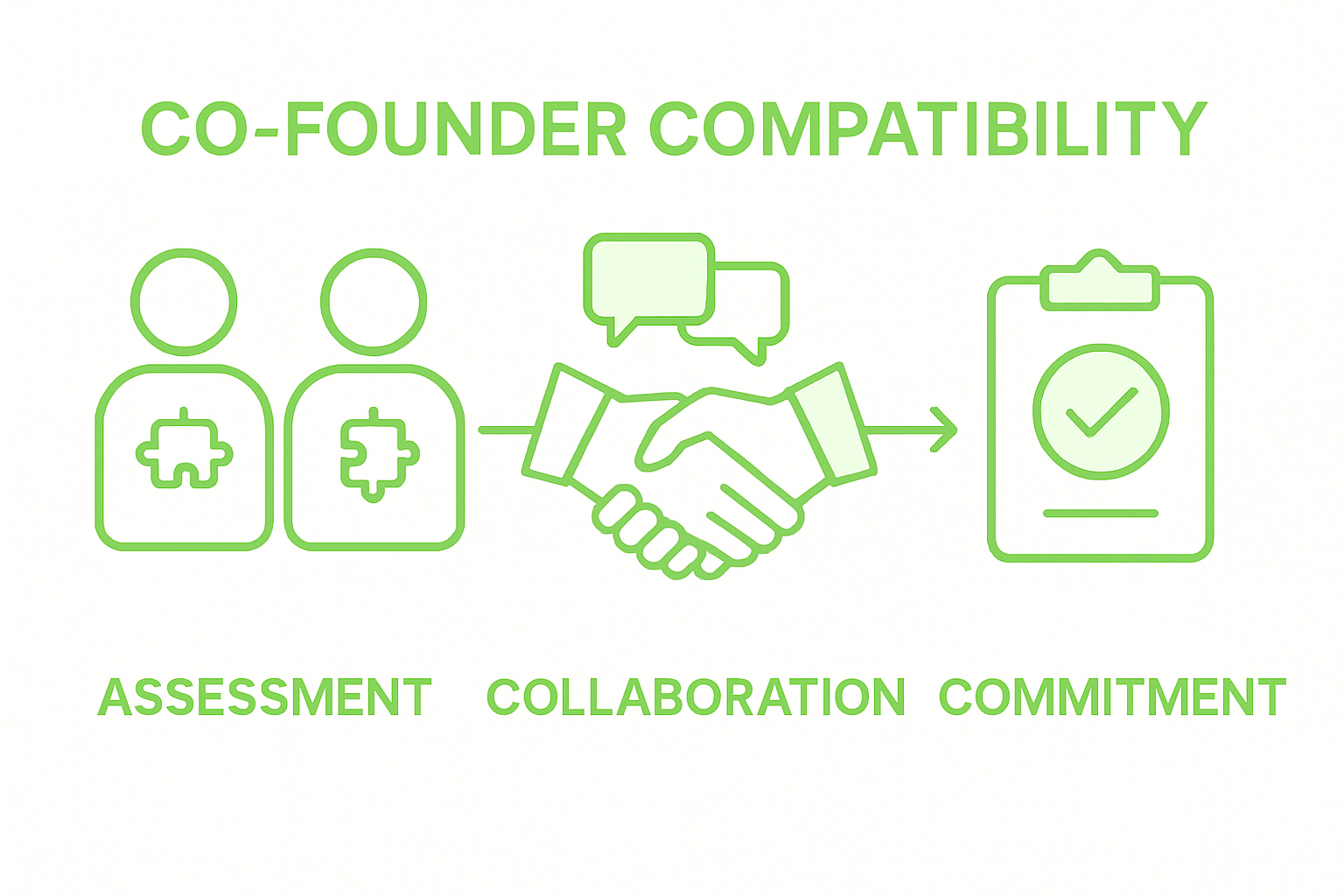
Step 3: Assess alignment and complementarity
Finding a co-founder is more than just matching skills its about discovering a true partnership where your individual strengths create a synergistic whole. Your goal in this step is to conduct a deep and nuanced evaluation of potential co-founders beyond surface level professional capabilities.

Comprehensive alignment assessment goes far beyond technical skills or professional experience. Explore your potential partners core values entrepreneurial philosophy and long term vision for the startup. This means engaging in substantive conversations that reveal not just what they can do but how they think strategically and approach problem solving.
Collaborative exploration is key to understanding true compatibility. Consider working on a small side project together a time boxed challenge or prototype that allows you to observe their work style communication patterns and ability to collaborate under real world constraints. Pay attention to how they handle disagreements communicate challenges and distribute workload. The ideal co-founder relationship is not about finding someone identical to you but someone whose skills complement yours and whose approach to challenges creates a balanced dynamic.
Step 4: Initiate meaningful conversations
Initiating meaningful conversations with potential co-founders requires a delicate balance of openness authenticity and strategic communication. Your objective is to transform initial interactions from surface level networking into substantive dialogues that reveal genuine partnership potential.
Effective communication strategies go beyond standard professional small talk. Prepare thoughtful questions that probe deeper than typical resume discussions. Share your startup vision candidly and invite your potential co-founder to articulate their own entrepreneurial narrative. Focus on understanding their motivations passion and long term goals beyond immediate business objectives.
Open dialogue techniques are crucial in establishing trust and mutual understanding. Practice active listening demonstrate genuine curiosity about their experiences and be transparent about your own startup challenges. Your goal is to create a conversational environment where both parties feel comfortable exploring potential collaboration authentically. Remember that great partnerships are built on mutual respect vulnerability and a shared commitment to solving meaningful problems together.
Step 5: Validate commitment and working style
Validating a potential co founders true commitment and compatibility requires more than surface level conversations. Your goal is to create strategic opportunities that reveal their genuine dedication passion and collaborative potential beyond initial impressions.
Comprehensive commitment assessment involves designing practical challenges that test real world collaboration. Consider launching a time boxed prototype project or participating in a weekend hackathon that allows you to observe their problem solving approach work ethic and ability to navigate complex challenges under pressure. Pay close attention to how they communicate distribute tasks handle unexpected obstacles and maintain enthusiasm during demanding scenarios.
Working style exploration goes beyond professional skills and delves into personal dynamics. Discuss specific scenarios like potential disagreements funding challenges and pivotal strategic decisions to understand their decision making process. The ideal co founder relationship is not about finding someone who always agrees with you but someone who can constructively challenge your perspectives while maintaining mutual respect and shared commitment to your startup vision.
Step 6: Formalize the partnership structure
Formalizing your co-founder partnership transforms your startup relationship from an informal connection into a legally protected and strategically structured collaboration. Your mission is to create a comprehensive agreement that establishes clear expectations accountability and mutual understanding.
Partnership agreement development requires meticulous attention to critical legal and operational details. Engage a startup attorney who specializes in business formations to draft a robust founders agreement that comprehensively outlines equity distribution role definitions decision making protocols and potential exit strategies. This document should transparently address potential scenarios like equity vesting intellectual property ownership voting rights and mechanisms for resolving potential conflicts.
Strategic partnership documentation goes beyond standard legal boilerplate. Consider creating a founders roadmap that articulates not just legal obligations but shared vision core values and long term objectives. Be prepared to have candid conversations about worst case scenarios including potential partnership dissolution mechanisms. Remember that a well structured agreement protects both parties and provides a clear framework for navigating the complex journey of building a startup together.
Accelerate Your Search for the Perfect Co-Founder with Intelligent Guidance
Finding the perfect co-founder is one of the most critical challenges for any startup founder. This article highlights how essential it is to clarify your co-founder requirements, assess alignment deeply, and validate commitment thoroughly. These steps can feel overwhelming and risky without the right framework and insights to guide you.
That is where siift.ai Intelligent Business Canvas comes in. Our AI-powered platform is specifically designed to help founders like you define concrete roles and complementary skills, gain personalized feedback on founder alignment, and systematically validate business and partnership ideas before you commit. By using actionable insights and a structured process, you reduce blind spots and reduce risk as you build your founding team.
Ready to move beyond guesswork? Use siift.ai to transform your co-founder search into a strategic advantage. Start refining your partnership strategy today for a stronger startup tomorrow.
Frequently Asked Questions
How do I clarify my co-founder requirements for my startup?
To clarify your co-founder requirements, begin by assessing your strengths and weaknesses. Specifically outline the skills and experiences you need in a co-founder, such as expertise in business development or technical skills in software engineering. Consider creating a list that includes your desired qualifications and characteristics.
What platforms can I use to connect with potential co-founders?
You can connect with potential co-founders using specialized online platforms that focus on entrepreneurial matching. Create a detailed and compelling profile that highlights your strengths and the qualities you seek in a co-founder. Engage actively on these platforms by reaching out and participating in online networking events.
How can I assess the alignment between myself and a potential co-founder?
To assess alignment, engage in deep conversations about core values, entrepreneurial philosophy, and long-term visions. Consider working on a small project together to observe how well you collaborate and communicate under real conditions. This will help you determine if your working styles complement each other.
What should I discuss during conversations with potential co-founders?
During conversations, focus on your startup vision and ask thoughtful questions about their motivations and long-term goals. Practice active listening and ensure that both parties openly share their experiences and challenges. Establishing a comfortable and authentic dialogue is essential for exploring partnership potential.
How do I validate a potential co-founder’s commitment to the startup?
You can validate commitment by designing practical challenges that test collaboration skills, such as launching a prototype project together. Observe their problem-solving approach and how they handle unexpected obstacles. Pay attention to their enthusiasm and willingness to engage under challenging conditions.
What are the key components of a partnership agreement with my co-founder?
A partnership agreement should include details on equity distribution, role definitions, decision-making protocols, and potential exit strategies. Work with a legal professional to create a comprehensive founders agreement that addresses these aspects clearly. Ensure that it outlines your shared vision and core values to avoid misunderstandings later.
Recommended
- blog | siift | How to Find Cofounders in 2025: Proven Steps for Students & Innovators
- blog | siift | What are Multi-Founders?
- blog | siift | How to Find Mentors: A Guide for Aspiring Entrepreneurs
- blog | siift | Top Growth Strategies for Startups in 2025: Practical Steps for Beginners
- Complete Guide to Startup Mentorship Explained