
Most advice about building a startup overlooks one critical truth: nearly ninety percent of American entrepreneurs believe their daily habits matter more than luck or genius. When so many founders stake their dreams on a single product or idea, the routines shaping their decisions can mean the difference between thriving and fading out. This guide reveals the proven habits, founder types, and validation strategies that power real-world startup success.
Table of Contents
- The Core Habits Of Successful Founders
- Types Of Founders And Startup Journeys
- Effective Idea Validation And Feedback Loops
- Building Your First Product Systematically
- Common Pitfalls And How To Avoid Them
- De-Risking Your Founder Journey With AI
Key Takeaways
| Point | Details |
|---|---|
| Core Habits Define Success | Successful founders cultivate daily routines focused on time management, continuous learning, and disciplined execution to maximize their effectiveness. |
| Understand Your Founder Archetype | Identifying your founder type can help leverage strengths and improve areas that need development for entrepreneurial success. |
| Iterative Idea Validation is Key | Engaging potential customers early through market research and feedback loops is essential for refining business concepts. |
| Leverage AI for Risk Management | Utilizing AI tools can enhance decision-making processes and reduce risks by providing data-driven insights tailored to individual founders. |
The Core Habits Of Successful Founders
Successful founders aren’t just born—they’re crafted through deliberate habits and strategic mindsets that transform raw potential into real-world impact. While talent matters, the consistent daily practices of top entrepreneurs truly separate breakthrough founders from those who merely dream.
The most powerful founders understand that success isn’t about extraordinary moments, but about building extraordinary routines. Research from career design experts reveals that top entrepreneurs consistently wake up early, meticulously plan their day, and prioritize physical exercise as fundamental productivity strategies. These aren’t random choices—they’re calculated decisions designed to optimize mental performance and strategic thinking.
Building sustainable entrepreneurial success requires developing core habits across multiple dimensions. Successful founders typically demonstrate:- Strategic Time Management: Breaking complex goals into actionable daily tasks- Continuous Learning: Dedicating time to skill development and market research- Resilient Mindset: Viewing challenges as opportunities for growth- Network Intelligence: Cultivating relationships with mentors, peers, and potential collaborators- Disciplined Execution: Maintaining consistent progress regardless of external circumstances
Entrepreneur development studies confirm that entrepreneurs who establish structured daily routines can dramatically improve focus, reduce anxiety, and become more adaptable in changing business landscapes.
Pro Tip: Habit Architect: Design your ideal founder routine by reverse-engineering the daily practices of successful entrepreneurs in your industry, then systematically implement and track your progress using a personal performance journal.
Types Of Founders And Startup Journeys
Entrepreneurial journeys are as diverse as the founders who embark on them, with each individual bringing a unique approach, motivation, and skill set to their startup vision. Research exploring startup founder archetypes reveals a fascinating spectrum of founder types that significantly influence a venture’s trajectory and potential for success.
Founders can be broadly categorized into distinct archetypes, each with characteristic strengths and approaches to building businesses. These types include:
- Solo Founders: Independent entrepreneurs who drive their vision independently
- Visionary Founders: Big-picture thinkers who imagine transformative solutions
- Serial Disruptors: Repeat entrepreneurs who thrive on challenging existing market paradigms
- Technical Founders: Engineers and developers who solve problems through technological innovation
- Personality Founders: Charismatic leaders who leverage personal brand and network
- Accidental Founders: Individuals who stumble into entrepreneurship through unexpected opportunities
- Intentional Founders: Strategic planners who methodically design their entrepreneurial path
Comprehensive research on founder typologies further distinguishes founders based on their career intentions, highlighting the complex motivations driving entrepreneurial ecosystems. Understanding these archetypes can help aspiring founders identify their natural strengths and potential growth areas.
Pro Tip: Founder Mapping: Conduct a personal assessment to identify your founder archetype, then strategically develop skills that complement your natural entrepreneurial style while addressing potential blind spots.
Here’s a comparison of founder archetypes and how they influence startup journeys:
| Founder Type | Core Strength | Typical Risk |
|---|---|---|
| Solo Founder | Independent execution | Limited bandwidth |
| Visionary Founder | Innovative solutions | Potential overreach |
| Serial Disruptor | Market adaptation | Burnout risk |
| Technical Founder | Product expertise | Business blind spots |
| Personality Founder | Strong networking | Over-reliance on image |
| Accidental Founder | Fresh perspective | Lack of planning |
| Intentional Founder | Strategic focus | Slow to pivot |
Effective Idea Validation And Feedback Loops
Transforming a raw idea into a successful business requires more than just passion—it demands a systematic approach to idea validation that separates promising concepts from potential failures. The Customer Development model emphasizes the critical practice of engaging potential customers early, providing founders with a strategic framework to test and refine their assumptions before significant resource investment.
Successful founders understand that validation is an iterative process involving multiple strategic steps:
- Market Research: Understanding target audience needs and pain points
- Prototype Development: Creating minimal viable versions of the concept
- Customer Interviews: Gathering direct feedback from potential users
- Competitive Analysis: Identifying unique value propositions
- Rapid Iteration: Quickly adapting based on authentic user insights
The Lean Startup methodology further revolutionizes idea validation by advocating for building a minimum viable product that allows founders to learn and pivot rapidly. This approach transforms traditional product development from a risky, assumption-driven process into a data-informed journey of continuous improvement. By collecting real-world feedback, entrepreneurs can make precise adjustments that dramatically increase their chances of market success.

Pro Tip: Validation Navigator: Create a structured feedback grid that tracks customer responses, pain points, and suggested improvements, turning every interaction into a strategic learning opportunity for refining your business concept.
Building Your First Product Systematically
Building a product is not about perfection—it’s about creating strategic momentum through systematic development. The Lean LaunchPad methodology offers entrepreneurs a transformative approach to product creation, combining experiential learning with rigorous business model development that minimizes risk and maximizes potential.
Successful product development requires a structured, iterative process that includes:
- Problem Definition: Clearly articulating the specific challenge your product solves
- Customer Discovery: Identifying and interviewing potential users
- Prototype Design: Creating minimal viable versions to test core assumptions
- Rapid Experimentation: Testing features with real user feedback
- Continuous Refinement: Adapting the product based on authentic insights
- Scalability Planning: Designing infrastructure for potential growth
Steve Blank’s Customer Development methodology further emphasizes the critical importance of understanding customer needs before and during product development. This approach transforms product building from a speculative exercise into a data-driven journey, where each iteration brings you closer to a solution that genuinely resonates with your target market. The key is to remain flexible, listen intently, and be willing to pivot when real-world feedback demands it.
Pro Tip: Product Architect: Develop a detailed decision matrix that tracks every product feature against user feedback, helping you systematically prioritize development efforts and maintain clear alignment with market needs.
Common Pitfalls And How To Avoid Them
The entrepreneurial journey is paved with potential mistakes that can derail even the most promising ventures. Startup failures are not just possible—they’re probable without strategic self-awareness and proactive risk management. Research on entrepreneurial habits emphasizes that successful founders view failure not as a defeat, but as a critical learning opportunity for refining strategies and improving future outcomes.
Common startup pitfalls that founders must navigate include:
- Overconfidence Trap: Believing your initial idea is perfect without market validation
- Resource Mismanagement: Burning through capital without sustainable revenue strategies
- Scaling Prematurely: Expanding operations before establishing solid product market fit
- Neglecting Personal Wellness: Sacrificing health for short-term productivity
- Isolation Syndrome: Working in a vacuum without seeking mentorship or peer feedback
- Rigid Thinking: Refusing to pivot when data suggests a different approach
Comprehensive studies on founder performance reveal that neglecting personal well-being can severely impair decision-making and entrepreneurial effectiveness. Top performers understand that sustainable success requires a holistic approach—balancing professional ambition with physical and mental health. The most successful founders create systems that support consistent performance, not just momentary bursts of intense work.
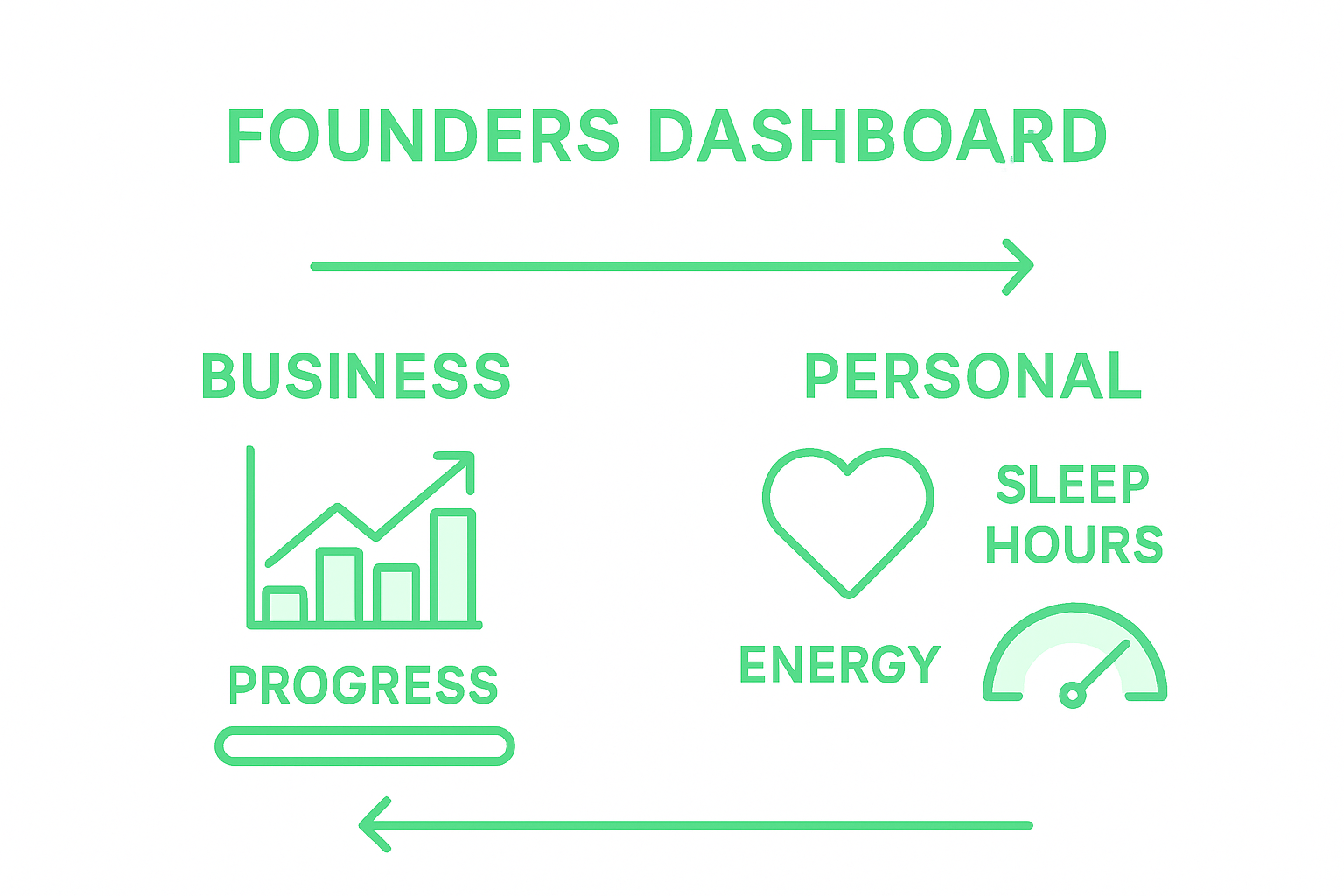
Pro Tip: Resilience Architect: Develop a personal dashboard that tracks not just business metrics, but also your energy levels, sleep quality, and mental well-being, treating your personal performance as seriously as your business performance.
De-Risking Your Founder Journey With AI
The entrepreneurial landscape is undergoing a transformative revolution, with artificial intelligence emerging as a powerful ally for founders seeking to minimize risks and maximize potential. Cutting-edge research reveals that AI agents can now function as digital co-founders, providing unprecedented support in transforming creative ideas into viable businesses by offering sophisticated market analysis, rapid prototyping, and strategic scaling capabilities.
AI’s risk mitigation strategies for founders include:
- Predictive Market Analysis: Generating comprehensive market insights
- Scenario Simulation: Modeling potential business outcomes
- Competitive Intelligence: Tracking and analyzing competitor movements
- Resource Optimization: Recommending efficient capital allocation
- Performance Forecasting: Predicting potential challenges and opportunities
- Personalized Strategy Development: Tailoring approaches to specific founder profiles
Emerging studies on founder personality dynamics demonstrate that AI tools can be strategically integrated to complement and enhance individual entrepreneurial traits. By understanding a founder’s unique strengths and potential blind spots, AI systems can provide targeted recommendations that significantly reduce potential strategic missteps. This symbiotic relationship transforms traditional risk management from a reactive process to a proactive, data-driven approach that empowers founders to make more informed decisions.
Pro Tip: AI Navigator: Create a dedicated AI advisory layer in your startup strategy, treating artificial intelligence as a strategic partner that provides objective, data-driven insights to complement your human intuition and creativity.
Below is a summary of how AI de-risks the founder journey through targeted capabilities:
| AI Capability | Impact on Founders | Example Use Case |
|---|---|---|
| Predictive Market Analysis | Informs decisions with trends | Identifying new customer segments |
| Scenario Simulation | Anticipates outcomes | Testing pricing models |
| Competitive Intelligence | Tracks market shifts | Spotting emerging competitors |
| Resource Optimization | Improves budget allocation | Minimizing unnecessary expenses |
| Performance Forecasting | Plans for challenges | Predicting cash flow gaps |
| Personalized Strategy | Aligns advice to personality | Matching founders to growth strategies |
Transform Your Founder Habits Into Real Business Impact
The journey from an idea to a thriving startup is filled with challenges like validating your concept, managing risks, and building your product systematically. This article highlights how founders need strategic routines, iterative feedback loops, and resilient mindsets to turn vision into reality. If you are striving to overcome these hurdles and de-risk your founder journey, you are not alone.
That is where siift.ai Intelligent Business Canvas can empower you. This AI-driven platform provides personalized feedback, actionable insights, and step-by-step guidance through ideation, validation, and go-to-market strategies. With no bias or gatekeepers, siift.ai helps you architect your unique founder routine and validate ideas effectively to avoid common startup pitfalls. Take control now and start building your venture with confidence by visiting siift.ai.
Ready to transform your startup ambitions into real business success? Discover how the Intelligent Business Canvas can guide you systematically through your founder journey and accelerate your path toward impact.
Frequently Asked Questions
What are the core habits of successful founders?
Successful founders often adopt strategic time management, continuous learning, a resilient mindset, network intelligence, and disciplined execution as core habits that enhance productivity and foster growth.
How can I effectively validate my business idea?
To validate your business idea, engage in market research, develop prototypes, conduct customer interviews, perform competitive analysis, and iterate rapidly based on user feedback.
What systematic approach should I take to build my first product?
A systematic approach involves defining the problem, discovering customer needs, designing prototypes, experimenting rapidly, and continuously refining the product based on genuine user insights.
How can AI help me de-risk my entrepreneurial journey?
AI can assist by providing predictive market analysis, scenario simulation, competitive intelligence, resource optimization, performance forecasting, and personalized strategy development, helping founders make informed decisions.
Recommended
- blog | siift | How to Validate Idea in 2025: A Simple Guide for New Founders
- blog | siift | Building Entrepreneurial Mindset: Steps for Beginners in 2025
- blog | siift | Purpose Driven Business: A Simple Guide for Beginners
- blog | siift | How to Find Business Ideas in 2025: Proven Steps for Students and New Grads
- The Essentials of Making a Cricket Bat With Artistry – Cricket Bats Com
- Effective Pre-Workout Routine for Women: Boost Your Performance – Interval