
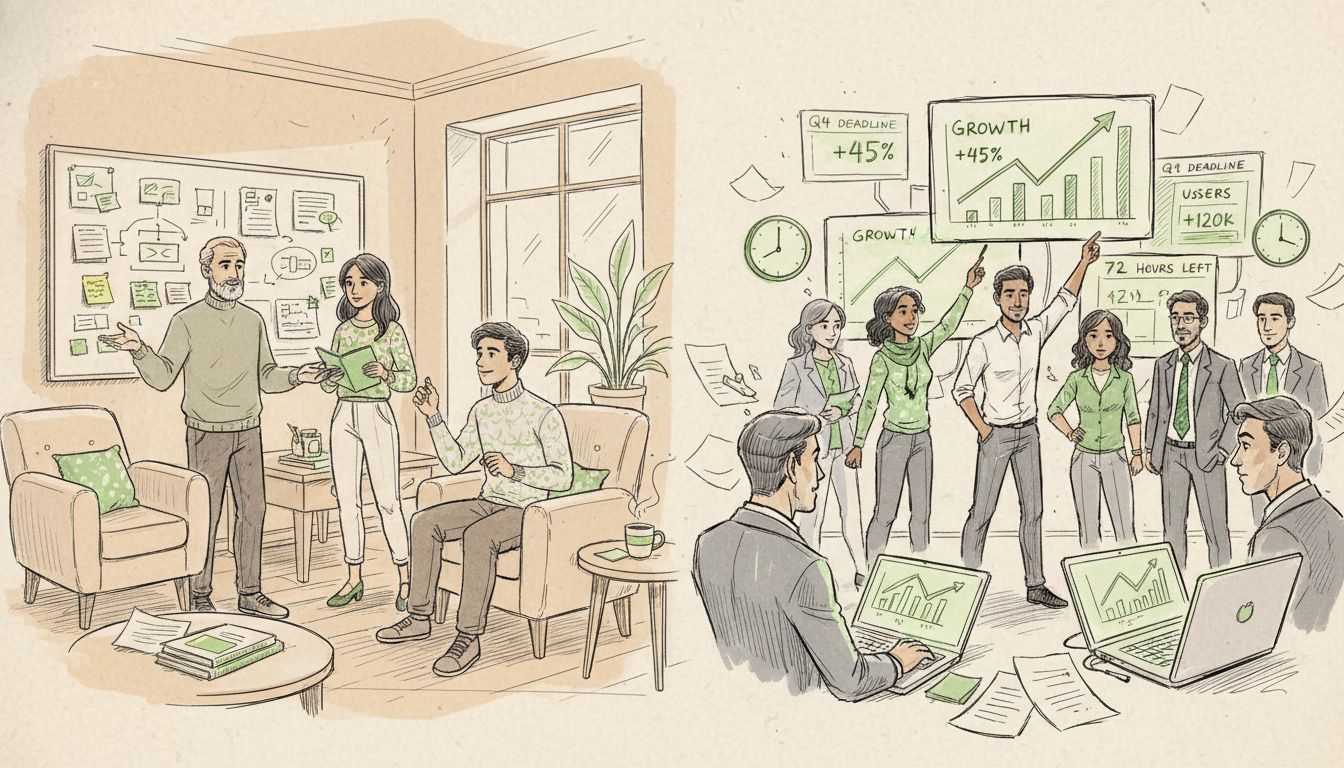
Most startup founders never make it past the first hurdle, with less than 10 percent surviving beyond five years. The journey from idea to thriving business is rarely straightforward, and the choice between incubators and accelerators can shape every step ahead. Knowing exactly what these support systems offer and how they differ helps founders avoid costly detours, make informed decisions, and unlock opportunities tailored for their stage of growth.
Table of Contents
- Defining Incubators And Accelerators Clearly
- Key Differences In Structure And Goals
- How Eligibility And Selection Processes Work
- Challenges And Barriers To Entry For Founders
- Smarter Alternative: AI Business Canvas As Solution
Key Takeaways
| Point | Details |
|---|---|
| Incubators vs. Accelerators | Incubators focus on nurturing early-stage startups with foundational support, while accelerators emphasize rapid scaling of businesses with market potential. |
| Selection Processes | Incubators have more flexible eligibility criteria, whereas accelerators maintain rigorous selection processes to evaluate high-growth potential startups. |
| Time Commitment Differences | Incubator support is typically long-term, allowing organic development, whereas accelerator programs are short-term, aimed at quick market readiness. |
| AI Business Canvas Advantage | The AI Business Canvas offers an inclusive alternative to traditional support systems, providing founders with personalized, data-driven guidance without gatekeeping barriers. |
Defining Incubators And Accelerators Clearly
For entrepreneurs eager to transform their brilliant ideas into successful ventures, understanding the nuanced landscape of startup support ecosystems is critical. Incubators and accelerators represent two powerful but distinctly different pathways that can dramatically influence a startup’s trajectory. According to research-and-innovation.ec.europa.eu, these organizations provide essential resources, mentorship, and networking opportunities designed to nurture emerging businesses.
At their core, incubators function like entrepreneurial nurseries. They are designed to help early-stage startups develop sustainable business models by providing fundamental support services. Think of an incubator as a supportive environment where fragile business concepts can take root, receive careful nurturing, and gradually gain strength. Typical incubator services include:
- Shared office spaces
- Access to basic business infrastructure
- Initial seed funding connections
- Basic legal and accounting guidance
- Mentorship from experienced entrepreneurs
In contrast, accelerators operate more like high-intensity training programs for startups that already have a minimum viable product and demonstrable market potential. As outlined by MDPI research, accelerators focus on rapidly scaling existing businesses through intensive, time-limited programs. These programs typically span 3-6 months and provide startups with:
- Structured mentorship from industry experts
- Significant networking opportunities
- Potential venture capital introductions
- Advanced business model refinement
- Rapid growth strategies
The key difference? Incubators help you build the foundational structure, while accelerators help you sprint toward aggressive growth. Both are incredibly competitive and challenging to access. This is precisely why siift’s AI Business Canvas emerges as a game-changing alternative - offering founders an “AI accelerator” they can access immediately, without the traditional gatekeeping, application processes, or inherent biases of conventional startup support programs.
Key Differences In Structure And Goals
When navigating the startup ecosystem, understanding the nuanced structural and strategic differences between incubators and accelerators can make or break your entrepreneurial journey. Research-and-innovation.ec.europa.eu highlights a critical distinction: incubators typically focus on transferring business knowledge and network opportunities, while accelerators aim to rapidly scale startups through financial investment and intensive programming.
Time Commitment represents the most striking structural difference. Incubators offer long-term, open-ended support that can span several years, creating a nurturing environment where startups can organically develop their business models. As outlined by MDPI research, accelerator programs are typically short-term, high-intensity experiences lasting just 3-6 months. These compressed timeframes are designed to rapidly prototype, refine, and prepare startups for aggressive market entry.
The selection and support models further underscore their unique approaches:
Incubator Characteristics:
- Longer, more flexible engagement periods
- Lower competitive entry requirements
- Focus on foundational business development
- Minimal upfront financial investment
- Gradual, supportive growth strategy
Accelerator Characteristics:
- Short, intense program duration
- Highly competitive selection process
- Emphasis on rapid scaling and market penetration
- Typically includes seed funding
- Performance-driven growth expectations
Ultimately, both models aim to transform promising entrepreneurial concepts into viable businesses. However, their methodologies differ dramatically. Incubators are like patient gardeners, carefully cultivating business potential over time. Accelerators function more like high-performance coaches, pushing startups to achieve maximum growth in minimal time.
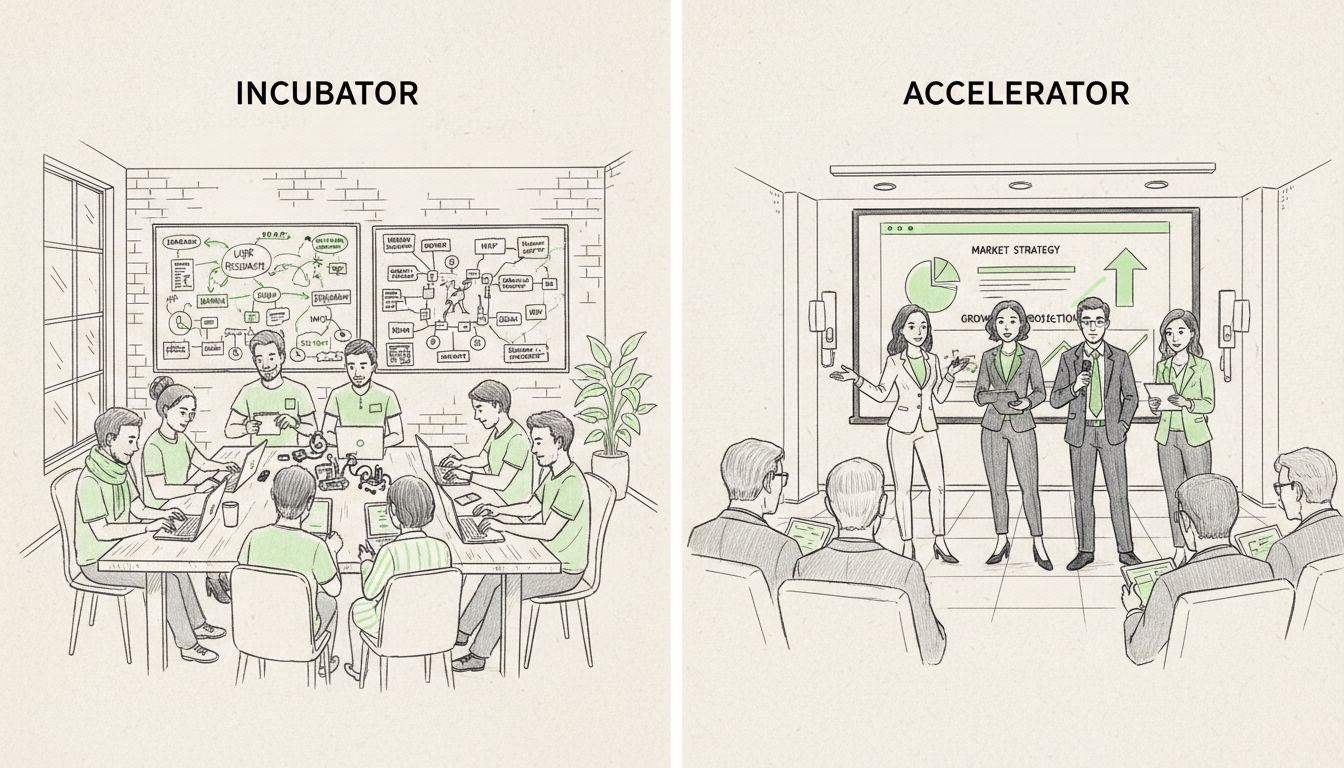 This fundamental difference means entrepreneurs must carefully assess which model aligns best with their specific business stage, growth potential, and strategic objectives.
INFOGRAPHIC:infographic_content] For many founders facing these traditional gatekeeping systems, [siift’s AI Business Canvas offers a revolutionary alternative - providing personalized, AI-driven guidance without the constraints of conventional startup support models.
How Eligibility And Selection Processes Work
Navigating the competitive landscape of startup support requires understanding the intricate selection mechanisms that separate promising ventures from the rest. According to MDPI research, accelerators employ highly selective processes that meticulously evaluate startups based on multiple critical factors including innovation potential, market viability, and team capabilities.
For incubators, the eligibility criteria tend to be more flexible and holistic. These programs typically look beyond just current business performance, focusing instead on the potential for sustainable growth and the entrepreneur’s commitment. Potential applicants can expect evaluations that consider:
- Uniqueness of business concept
- Founder’s passion and dedication
- Long-term market opportunity
- Potential for social or economic impact
- Alignment with incubator’s strategic focus
Accelerator selection, by contrast, represents a far more rigorous gauntlet. As highlighted by IJSRP research, these programs assess startups through a lens of professional financial activity, credibility with venture capitalists, and the potential return on investment. Their screening process often includes:
- Comprehensive application reviews
- Pitch competitions
- In-depth team interviews
- Technical and market feasibility assessments
- Potential for rapid scaling
The selection process is brutally competitive. Top-tier accelerators like Y Combinator accept less than 2% of applicants, making the odds more challenging than getting into an Ivy League university. This intense filtering means many promising entrepreneurs find themselves repeatedly shut out of traditional startup support systems. This systemic gatekeeping is precisely why siift’s AI Business Canvas represents a revolutionary alternative - offering personalized, unbiased guidance without the traditional barriers that exclude talented founders from accessing critical resources.
Challenges And Barriers To Entry For Founders
Startup founders face a minefield of challenges that can quickly transform entrepreneurial dreams into survival nightmares. MDPI research highlights the critical obstacles startups encounter, emphasizing the complex task of building sustainable business models, securing funding, and determining precise product development directions.
The resource constraint represents the most immediate and brutal barrier. As outlined by IJSRP research, startups frequently grapple with fundamental limitations in knowledge, network connections, and financial capital. These constraints force entrepreneurs to make high-stakes decisions in uncertain environments, often with minimal room for error. The typical startup survival landscape looks remarkably unforgiving:
- Less than 10% survive beyond 5 years
- Funding rounds are hyper-competitive
- Market validation requires constant pivoting
- Personal financial risk is substantial
- Technical expertise must be paired with business acumen
The psychological barriers prove equally challenging. Founders must simultaneously manage:
- Extreme uncertainty
- Constant rejection
- Limited financial runways
- Complex regulatory environments
- Rapid technological changes
Traditional incubators and accelerators often exacerbate these challenges through rigid selection processes that filter out potentially innovative but unconventional founders. Their gatekeeping mechanisms create additional layers of complexity, effectively turning entrepreneurial dreams into navigational nightmares.
This systemic exclusion is precisely why understanding business risks becomes crucial for aspiring entrepreneurs. For many founders facing these overwhelming obstacles, siift’s AI Business Canvas offers a revolutionary alternative - providing personalized, unbiased guidance that democratizes the entrepreneurial journey without the traditional barriers that exclude talented innovators.
Smarter Alternative: AI Business Canvas As Solution
In an era of unprecedented technological disruption, entrepreneurs need more adaptive and intelligent tools to navigate complex business landscapes. ArXiv research reveals how generative AI and Large Language Models (LLMs) are fundamentally transforming entrepreneurship, offering revolutionary opportunities for innovation and strategic planning.
Artificial Intelligence represents the ultimate democratizing force in business ideation. Unlike traditional incubators and accelerators with their rigid selection processes, an AI-powered business canvas provides personalized, unbiased guidance tailored to each unique entrepreneurial vision. The key differentiators include:
- Real-time strategic insights
- Personalized recommendation engines
- Comprehensive scenario modeling
- Instant market trend analysis
- Zero geographical or resource constraints
Drawing inspiration from innovation frameworks like the Metaverse Innovation Canvas, ArXiv research demonstrates how targeted ideation tools can help founders systematically define user problems, articulate unique value propositions, and plan for scalable growth. The AI Business Canvas takes this concept exponentially further by:
- Removing human cognitive biases
- Providing data-driven validation
- Offering 24/7 strategic support
- Generating actionable business models
- Adapting recommendations in real-time
Traditional startup support systems have inherent limitations. They’re expensive, geographically restricted, and favor founders with existing networks. In contrast, understanding the lean canvas approach through an AI-powered platform like siift.ai represents a paradigm shift. It’s not just a tool - it’s an intelligent co-founder that provides personalized guidance, helping entrepreneurs transform innovative ideas into viable businesses without the gatekeeping and systemic barriers of conventional startup ecosystems.
Unlock Your Startup’s True Potential with AI-Driven Strategy
The journey from idea to thriving business often feels blocked by gatekeepers and rigid support systems such as incubators and accelerators. This article reveals the harsh reality of competitive selection, limited resources, and intense pressure many founders face when trying to scale rapidly or build a foundation. If you have ever felt overwhelmed by the challenges of navigating these traditional paths, know that you are not alone. Many entrepreneurs struggle with the demand for rapid growth or find themselves stuck waiting years for basic support.
What if you could bypass those hurdles entirely and access personalized, unbiased guidance tailored uniquely to your startup’s stage and vision? That is exactly what siift.ai Intelligent Business Canvas offers. This AI-powered platform walks you through ideation, validation, and go-to-market strategies step-by-step with no gatekeepers or pressure. It provides real-time insights and prioritized actions designed to reduce risk and unlock growth potential quickly without the need for selective programs or seed funding prerequisites.
Ready to transform your startup journey into a clear, confident path forward? Explore how siift.ai Intelligent Business Canvas can serve as the smartest alternative to traditional incubators and accelerators. Start building a resilient business model today with the support you deserve by visiting siift.ai. Your future as a founder should not depend on competing for limited slots but on smart, accessible tools that put you in control.
Frequently Asked Questions
What is the main difference between incubators and accelerators?
Incubators focus on nurturing early-stage startups by providing long-term support and resources to help develop sustainable business models, while accelerators aim to rapidly scale existing startups through intensive, short-term programs.
What types of support do incubators typically offer?
Incubators generally provide shared office spaces, access to business infrastructure, seed funding connections, legal and accounting guidance, and mentorship from experienced entrepreneurs.
How do the selection processes for incubators and accelerators differ?
Incubator selection is usually more flexible and holistic, focusing on sustainability and the entrepreneur’s commitment. In contrast, accelerators typically employ rigorous selection processes that assess innovation potential, market viability, and team capabilities, often with highly competitive application requirements.
What challenges do founders face when applying for incubators and accelerators?
Founders commonly encounter resource constraints, such as limited knowledge, connections, and financial capital. Psychological barriers like extreme uncertainty and constant rejection can also pose significant challenges, making it difficult to navigate traditional startup support systems.
Recommended
- blog | siift | What is a Business Incubator? Understanding Its Role in Startups
- blog | siift | Understanding What is Entrepreneurship: A Complete Guide
- blog | siift | Understanding Founder Mode: Your Guide to Entrepreneurship
- blog | siift | How to Find Mentors: A Guide for Aspiring Entrepreneurs
- Understanding Growth Hacking Strategies 2025 for Marketers
- The Symbiosis of Innovation and Investment: Navigating the Strategic Continuum of Product Development