
More than 36 million American micro-companies are reshaping the way business works today. This wave of lean entrepreneurship is all about freedom, rapid growth, and agility. Entrepreneurs are discarding traditional models in favor of streamlined structures that cut red tape and lower barriers to entry. Discover how micro-company status provides the flexibility to launch, adapt, and thrive in an economy where small teams can now rival large, established firms.
Table of Contents
- Defining Micro‑Company Status
- Global Micro‑Company Thresholds
- Simplified Reporting And Benefits
- Legal Obligations And Exemptions
- Risks And Common Pitfalls
- When To Move Beyond Micro‑Status
Key Takeaways
| Point | Details |
|---|---|
| Micro-Company Characteristics | Micro-companies are characterized by a minimal team size, low capital requirements, and a digital-first approach that emphasizes operational efficiency. |
| Global Variations | Definitions and thresholds of micro-companies vary across regions, with specific revenue, employee, and asset limits guiding classifications. |
| Advantages of Simplified Reporting | Simplified reporting reduces administrative burdens and enables entrepreneurs to focus on growth, making business ownership more accessible. |
| Growth Transition Considerations | Assessing readiness for growth involves evaluating revenue consistency, operational capacity, and market complexity to manage potential challenges effectively. |
Defining Micro‑Company Status
A micro-company represents a strategic business model designed for agile entrepreneurs who want maximum flexibility with minimal administrative overhead. Unlike traditional small businesses, these lean organizational structures prioritize efficiency, rapid iteration, and low operational complexity. They’re the digital era’s answer to bureaucratic business frameworks.
Micro-companies typically share several defining characteristics that distinguish them from standard small businesses:
- Minimal Team Size: Usually operated by 1-3 founders
- Low Capital Requirements: Initial investments under $10,000
- Streamlined Operations: Reduced administrative processes
- Digital-First Approach: Heavy reliance on online tools and platforms
- Rapid Scalability: Potential for quick business model adjustments
The core philosophy behind micro-companies centers on economic democratization and individual empowerment. These business models leverage modern technology to break down traditional barriers to entry, allowing solo founders and small teams to compete effectively in global markets. By minimizing fixed costs and maximizing digital infrastructure, entrepreneurs can launch sophisticated business concepts with unprecedented speed and minimal financial risk.

From a practical standpoint, micro-companies represent more than just a business structure – they’re a response to changing workforce dynamics. Modern professionals increasingly seek autonomy, flexible income streams, and the ability to monetize specialized skills without massive upfront investments. This approach transforms side projects into potential full-time ventures, bridging the gap between traditional employment and entrepreneurial ambition.
Global Micro‑Company Thresholds
Micro-company definitions vary significantly across global regulatory landscapes, reflecting complex economic and legal considerations. While no universal standard exists, different regions establish unique thresholds that help classify these nimble business entities based on specific economic parameters and organizational characteristics.
Key global classification parameters typically include:
- Annual Revenue Limits: Generally ranging from $50,000 to $250,000
- Employee Count: Usually restricted to 1-10 full-time workers
- Asset Valuation: Maximum total assets under $500,000
- Operational Complexity: Simplified accounting and reporting requirements
- Business Registration: Streamlined legal registration processes
In the United States, micro-business regulations emphasize flexibility for solo entrepreneurs and small teams. The Small Business Administration defines micro-businesses as enterprises with fewer than 10 employees and annual revenues under $250,000. European Union countries often have more nuanced approaches, with countries like Germany and France implementing specific legal frameworks that provide tax incentives and reduced bureaucratic barriers for these compact business models.
Interestingly, emerging economies in Asia and Latin America are increasingly adopting micro-company frameworks as tools for economic empowerment. These regions recognize that flexible business structures can unlock entrepreneurial potential, particularly for digital professionals and freelancers seeking alternative income streams. By reducing administrative burdens and lowering entry barriers, governments are creating ecosystems that support innovative, technology-driven micro-enterprises capable of rapid scaling and global market engagement.
Simplified Reporting And Benefits
Simplified reporting represents one of the most compelling advantages for micro-companies, dramatically reducing administrative complexity and allowing entrepreneurs to focus more energy on business growth. By streamlining financial documentation and regulatory compliance, these frameworks create significant operational efficiencies that traditional business structures cannot match.
Key reporting simplifications typically include:
- Minimal Financial Documentation: Reduced annual reporting requirements
- Abbreviated Financial Statements: Less detailed accounting records
- Lower Compliance Costs: Reduced expenses for professional accounting services
- Faster Filing Processes: Quicker submission of annual financial information
- Reduced Audit Requirements: Fewer mandatory external financial reviews
In the United Kingdom, micro-entities can prepare significantly simplified accounts that meet only statutory minimum requirements. This approach allows businesses to submit just a basic balance sheet to regulatory authorities, eliminating the need for comprehensive financial documentation. Similarly, qualifying as a micro-entity provides substantial reporting flexibility, enabling companies to generate more concise financial statements that dramatically reduce administrative overhead.
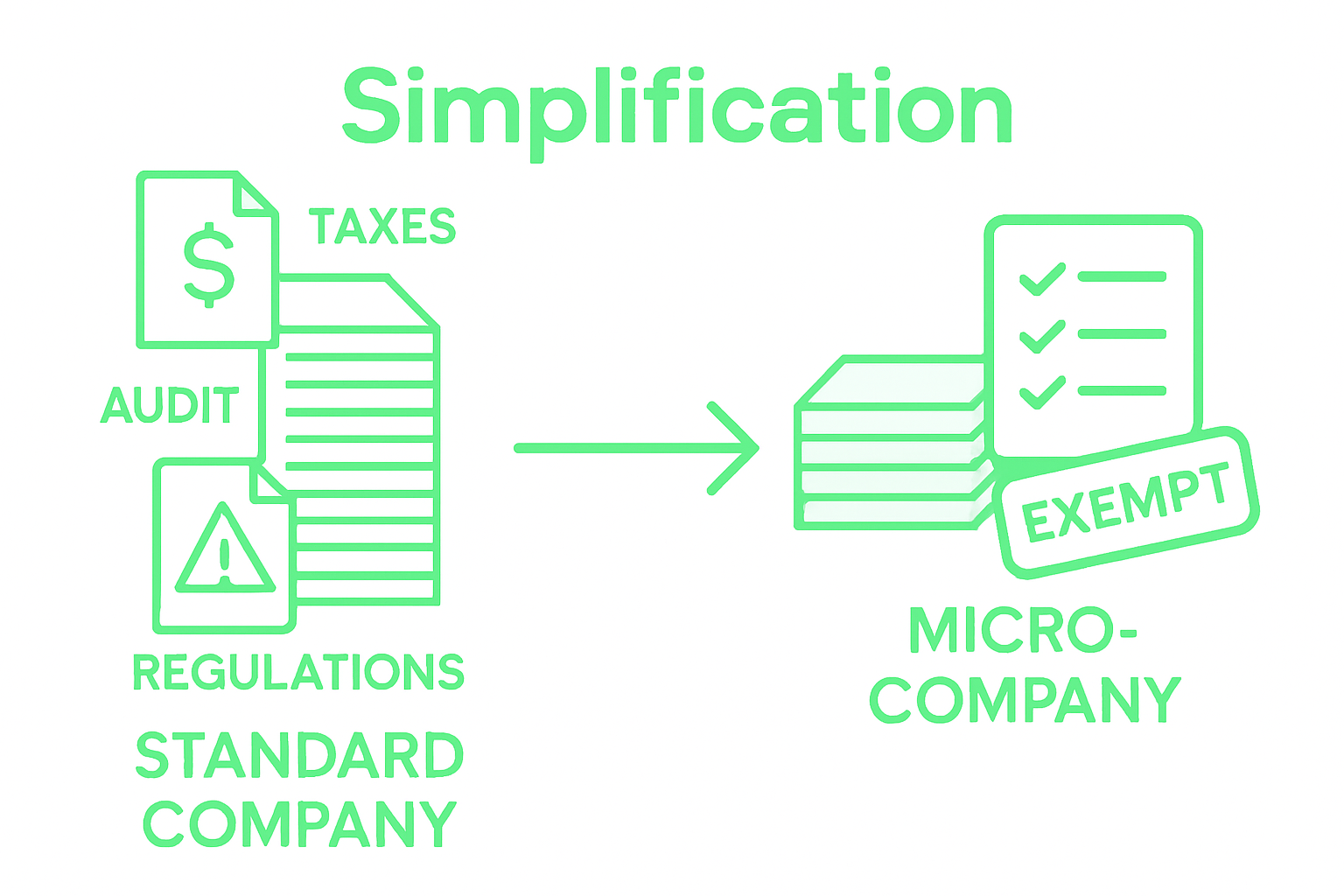
Beyond paperwork reduction, these simplified reporting frameworks offer profound strategic benefits. They lower barriers to entry for new entrepreneurs, reduce compliance stress, and create a more accessible pathway for innovative professionals to transform side projects into legitimate business ventures. By minimizing bureaucratic friction, micro-company reporting models effectively democratize business ownership, allowing talented individuals to channel more resources into product development, marketing, and core business activities rather than drowning in complex regulatory requirements.
Legal Obligations And Exemptions
Legal compliance forms a critical backbone for micro-companies, balancing regulatory requirements with operational flexibility. While these business structures offer streamlined frameworks, entrepreneurs must still navigate a complex landscape of legal responsibilities and potential exemptions that vary across jurisdictions.
Key legal considerations for micro-companies include:
- Tax Reporting: Annual tax return submissions
- Registered Business Address: Mandatory contact information maintenance
- Basic Financial Record Keeping: Maintaining minimum documentation
- Regulatory Compliance: Adherence to local business regulations
- Liability Protection: Understanding personal vs. business legal boundaries
In the United Kingdom, micro-entities must submit statutory accounts to HMRC despite simplified reporting options, ensuring that basic regulatory requirements are still met. Notably, certain companies are automatically excluded from micro-entity classifications, such as those preparing group accounts or exceeding specific financial thresholds, even if they technically meet initial size criteria.
Beyond formal requirements, legal exemptions offer strategic advantages for micro-companies. These frameworks recognize that smaller businesses require different regulatory approaches compared to large corporate entities. By creating tailored legal pathways, governments aim to reduce bureaucratic barriers, encourage entrepreneurship, and provide nimble businesses with more opportunities to innovate and grow. Entrepreneurs must understand these nuanced legal landscapes, balancing compliance with the flexibility needed to transform innovative ideas into successful ventures.
Risks And Common Pitfalls
Micro-company ventures demand strategic awareness of potential challenges that can derail even the most promising entrepreneurial efforts. While these business models offer unprecedented flexibility, they also present unique risks that require careful navigation and proactive management.
Common pitfalls for micro-company founders include:
- Misclassification Risks: Incorrectly defining business status
- Compliance Oversights: Failing to meet regulatory requirements
- Financial Management: Poor tracking of income and expenses
- Scope Creep: Losing focus on core business objectives
- Personal Liability: Inadequate legal and financial protections
Entrepreneurs must be particularly vigilant about accurately assessing their business’s eligibility for micro-entity status, as misclassification can lead to significant legal and financial complications. Statutory obligations must be meticulously met to avoid potential penalties, even within simplified reporting frameworks.
Beyond regulatory challenges, micro-companies face inherent operational vulnerabilities. Founders often struggle with limited resources, making every strategic decision critical. The thin line between innovation and risk means entrepreneurs must develop robust risk management skills, maintain financial discipline, and remain adaptable. Understanding business risk fundamentals becomes crucial for navigating these complex entrepreneurial landscapes, transforming potential pitfalls into opportunities for growth and learning.
When To Move Beyond Micro‑Status
Business evolution represents a critical inflection point for micro-company founders, demanding strategic assessment of growth potential and organizational readiness. Transitioning beyond micro-status isn’t just about financial metrics, but represents a fundamental transformation in operational complexity, legal responsibilities, and entrepreneurial vision.
Key indicators suggesting readiness for expansion include:
- Revenue Consistency: Stable income exceeding $250,000 annually
- Team Growth: Requiring more than 10 full-time employees
- Market Complexity: Needing more sophisticated business infrastructure
- Investment Attraction: Pursuing venture capital or significant external funding
- Operational Scale: Outgrowing current business management capabilities
The decision to transition requires careful consideration of potential trade-offs. Moving beyond micro-status introduces additional administrative burdens, increased regulatory scrutiny, and more complex financial reporting requirements. Entrepreneurs must weigh the benefits of expanded operational capacity against the increased overhead and potential loss of the agile advantages inherent in micro-company structures.
Successful founders recognize that business evolution is not a linear progression, but a strategic choice aligned with their unique vision and market opportunities. Understanding business scaling principles becomes crucial in making informed decisions about organizational transformation. The most effective transitions occur when entrepreneurs proactively anticipate growth challenges, maintain financial discipline, and preserve the innovative spirit that initially drove their micro-company’s success.
Empower Your Micro-Company Journey with Intelligent Strategy Support
Navigating the complex landscape of micro-company status comes with challenges like maintaining compliance, managing simplified reporting, and planning when to scale your business. If you are an indie founder balancing these critical aspects, the pressure to avoid pitfalls and grow strategically is real. Understanding your unique business model and identifying the right moment to evolve beyond micro-status can feel overwhelming without structured guidance.
This is where siift.ai Intelligent Business Canvas becomes an essential partner. Designed specifically for founders who want to turn ideas into viable ventures, this AI-powered platform offers personalized feedback and actionable insights to help you reduce risks and avoid misclassification errors. The tool guides you step-by-step through validating your business concept, managing growth thresholds, and aligning with legal obligations — all with clarity and zero bias. Start transforming your micro-company challenges into confident strategic moves at siift.ai. Take control today and build a future-ready business foundation you can trust.
Frequently Asked Questions
What is a micro-company?
A micro-company is a business model typically operated by 1-3 founders, requiring minimal capital, streamlined operations, and a digital-first approach. It allows entrepreneurs to launch businesses with low overhead and high flexibility.
What are the benefits of operating a micro-company?
Micro-companies offer simplified reporting, reduced administrative complexity, and lower compliance costs. This structure allows founders to focus on growth while leveraging modern technology for efficiency.
How do micro-companies differ from traditional small businesses?
Micro-companies prioritize agility, scalability, and minimal operational complexity compared to traditional small businesses, which often have higher administrative burdens and larger team sizes.
When should a micro-company evolve beyond its current status?
A micro-company should consider expansion when it consistently earns over $250,000 in revenue, requires more than 10 full-time employees, or needs more sophisticated business infrastructure to manage increased complexity.