
A feasibility study for startup business is a process used to evaluate whether a business idea is practical, profitable, and worth pursuing. Deciding whether your business idea will actually work is no small task. About 50 percent of new businesses fail within the first five years. Most people rush in armed with enthusiasm and little else. Looking deeper, a feasibility study can turn uncertainty into real confidence by helping founders analyze market demand, costs, risks, and opportunities before investing time and money.
Table of Contents
The Importance Of Business Feasibility Studies: Why It Matters
Components Of A Business Feasibility Study: Breaking It Down
Interpreting Financial Projections: Making Sense Of The Numbers
Quick Summary
Takeaway | Explanation |
|---|---|
Conduct a comprehensive feasibility study. | A thorough study helps evaluate market demand, financial needs, and operational challenges for informed decision-making. |
Analyze market viability in depth. | Understanding customer behavior and competition is essential to identifying opportunities and potential barriers. |
Create detailed financial projections. | A well-structured financial analysis highlights potential income, costs, and liquidity challenges, guiding strategic planning. |
Include all critical components. | Key areas such as market analysis, technical feasibility, and legal compliance are vital for a complete assessment. |
Use findings for risk mitigation. | Identifying potential barriers enables entrepreneurs to develop contingency plans, reducing financial risks. |
Defining Business Feasibility Study: Key Concepts
A business feasibility study is a strategic assessment that helps entrepreneurs evaluate the potential success of a business idea before investing significant time and resources. According to research from Iowa State University, this comprehensive analysis examines multiple critical factors to determine whether a proposed business venture is viable and worth pursuing.
What Exactly is a Feasibility Study?
A feasibility study is more than just a preliminary business check. It’s a rigorous investigation that systematically explores the practical potential of a business concept. Entrepreneurs use this tool to answer fundamental questions about their idea’s potential for success. The study goes beyond surface-level enthusiasm, diving deep into realistic assessments of market demand, financial requirements, operational challenges, and potential risks.
Core Components of a Business Feasibility Study
Effective feasibility studies typically include several key components that provide a holistic view of the business potential:
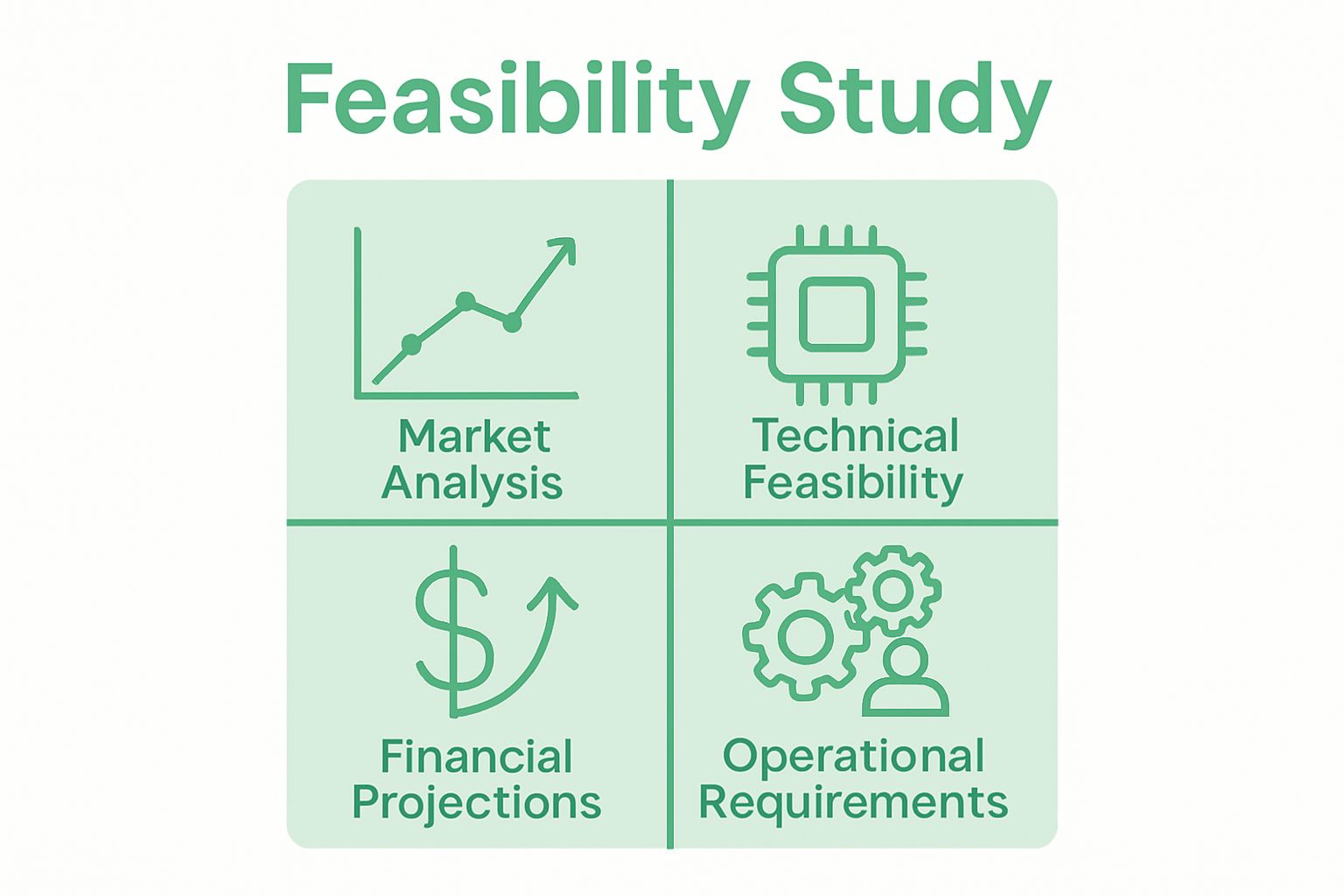
Market Analysis: Understanding target customer segments, market size, competition, and potential demand
Technical Feasibility: Evaluating the technological requirements and capabilities needed to execute the business idea
Financial Projections: Detailed assessment of startup costs, potential revenue streams, and projected financial performance
Operational Requirements: Analyzing the human resources, infrastructure, and operational processes necessary for business execution
By conducting a comprehensive feasibility study, entrepreneurs can learn more about strategic business opportunity evaluation and make informed decisions about their business ventures.
This approach transforms raw business ideas into structured, well-researched opportunities with a clear understanding of potential challenges and opportunities.
The Importance of Business Feasibility Studies: Why It Matters
Research from Purdue University highlights that business feasibility studies are critical tools for entrepreneurs seeking to minimize risks and maximize potential success. These comprehensive evaluations serve as strategic roadmaps that transform abstract business ideas into actionable, well-researched plans.
Risk Mitigation and Strategic Decision Making
Business feasibility studies act as powerful risk management instruments. By conducting a thorough analysis before significant financial investment, entrepreneurs can identify potential challenges and opportunities that might otherwise remain hidden. This proactive approach allows founders to make informed decisions, understand potential obstacles, and develop strategic contingency plans that dramatically increase their chances of business survival.
Economic and Strategic Benefits
The strategic value of a feasibility study extends far beyond simple risk assessment. Entrepreneurs gain multiple critical advantages through this comprehensive evaluation:
Financial Clarity: Detailed projections help understand potential revenue streams, startup costs, and break-even points
Market Understanding: Deep insights into customer segments, competitive landscape, and market dynamics
Resource Optimization: Precise mapping of required technological, human, and operational resources
Investor Confidence: A well-prepared feasibility study demonstrates professionalism and strategic thinking to potential investors
By investing time in a comprehensive feasibility study, entrepreneurs can explore detailed business validation strategies that transform uncertain ideas into robust, well-researched business concepts. This approach not only reduces financial risks but also provides a structured pathway to turning entrepreneurial dreams into sustainable business realities.
Components of a Business Feasibility Study: Breaking It Down
According to Iowa State University research, a comprehensive business feasibility study examines multiple interconnected components that provide a holistic view of potential business success. Understanding these elements helps entrepreneurs create a robust assessment of their business concept.
Core Analytical Dimensions
A thorough feasibility study is not a singular assessment but a multifaceted exploration of business potential. Each component offers unique insights that collectively determine whether a business idea can transform from concept to successful venture. By systematically analyzing different dimensions, entrepreneurs gain a nuanced understanding of their potential business landscape.
Key Components of a Comprehensive Feasibility Study
Entrepreneurs should focus on several critical areas when developing a comprehensive feasibility study:
Market Analysis: Detailed examination of target market, customer demographics, competitive landscape, and potential market demand
Technical Feasibility: Assessment of technological requirements, infrastructure needs, production capabilities, and potential operational challenges
Financial Projections: Comprehensive evaluation of startup costs, potential revenue streams, profitability forecasts, and financial sustainability
Operational Requirements: Detailed mapping of human resources, organizational structure, necessary skills, and operational processes
Legal and Regulatory Compliance: Investigation of industry regulations, licensing requirements, potential legal obstacles, and compliance frameworks
By thoroughly exploring these dimensions, entrepreneurs can learn more about developing a robust business model that goes beyond surface-level enthusiasm. A well-constructed feasibility study transforms abstract ideas into actionable, evidence-based business strategies, providing a critical foundation for entrepreneurial success.
The table below summarizes the five core components of a comprehensive business feasibility study, providing a clear definition and the primary focus of each.
Component | Definition | Primary Focus |
|---|---|---|
Market Analysis | Examines target market, customer characteristics, competition, and market demand | Understanding demand and competition |
Technical Feasibility | Assesses technological needs, infrastructure, and potential operational challenges | Determining technical requirements and capabilities |
Financial Projections | Evaluates startup costs, revenue streams, and forecasts overall financial sustainability | Projecting income, expenses, and profitability |
Operational Requirements | Details in required human resources, organization, and operations processes | Mapping out people, processes, and infrastructure |
Legal and Regulatory Compliance | Investigates regulations, licenses, and legal obstacles relevant to the business | Ensuring legal operation and industry compliance |
Analyzing Market Viability: Understanding Your Audience
According to the Small Business Administration, understanding market viability is crucial for entrepreneurs seeking to transform their business ideas into successful ventures. Market analysis goes far beyond simple demographic research, requiring deep insights into customer behaviors, preferences, and unmet needs.
Defining Market Viability
Market viability represents the potential of a product or service to succeed within a specific market context. It involves a comprehensive evaluation of customer demand, competitive landscape, and potential barriers to entry. Entrepreneurs must move beyond assumptions and conduct systematic research that reveals genuine market opportunities and potential challenges.
Critical Elements of Market Analysis
A robust market analysis encompasses several interconnected dimensions that provide entrepreneurs with a holistic understanding of their potential market:
Target Audience Identification: Detailed mapping of ideal customer segments, including demographic, psychographic, and behavioral characteristics
Competitive Landscape Assessment: In-depth examination of existing competitors, their strengths, weaknesses, and market positioning
Customer Pain Point Exploration: Systematic investigation of unresolved challenges and needs within the target market
Market Size and Growth Potential: Quantitative analysis of total addressable market, potential market share, and projected growth trajectories
Customer Validation Mechanisms: Strategies for gathering direct feedback through surveys, interviews, and prototype testing
By thoroughly exploring founder market fit and trends, entrepreneurs can transform market research from a theoretical exercise into a strategic roadmap for business success. Understanding your audience is not just about collecting data but interpreting insights that guide meaningful product development and market positioning.
Interpreting Financial Projections: Making Sense of the Numbers
According to Iowa State University research, financial projections are more than simple number crunching. They represent a strategic blueprint that helps entrepreneurs understand the potential financial trajectory of their business concept, transforming abstract ideas into quantifiable economic possibilities.
Decoding Financial Projection Fundamentals
Financial projections serve as a critical diagnostic tool that goes beyond basic revenue estimates. These comprehensive forecasts provide entrepreneurs with a nuanced view of potential financial performance, helping them anticipate challenges, identify opportunities, and make informed strategic decisions. By creating detailed financial models, founders can simulate various business scenarios and understand potential outcomes before committing significant resources.
Essential Components of Financial Analysis
A robust financial projection encompasses several key elements that paint a holistic picture of business potential:
Revenue Forecasting: Detailed estimates of potential income streams, considering market demand, pricing strategies, and sales projections
Cost Structure Analysis: Comprehensive breakdown of fixed and variable expenses, including operational costs, marketing expenditures, and potential scaling challenges
Cash Flow Modeling: Systematic tracking of money entering and leaving the business, highlighting potential liquidity challenges and funding requirements
Break-Even Point Calculation: Precise determination of the point at which total revenues match total expenses
Profitability Scenarios: Exploration of different financial outcomes under varying market conditions and business strategies
Entrepreneurs can explore deeper insights into startup growth metrics to complement their financial projections. By transforming raw numbers into meaningful insights, founders can develop a more nuanced understanding of their business’s financial potential and create more strategic, informed plans for sustainable growth.
Here is a table comparing the essential elements involved in a solid financial projection, highlighting their definitions and their role in business viability analysis.
Financial Projection Component | Definition | Role in Feasibility Study |
|---|---|---|
Revenue Forecasting | Estimates potential sales and income streams | Projects business earnings potential |
Cost Structure Analysis | Breaks down fixed and variable business expenses | Identifies cost drivers and operational outlays |
Cash Flow Modeling | Tracks timing and amount of incoming and outgoing cash | Reveals funding needs and liquidity challenges |
Break-Even Point Calculation | Calculates when total revenue covers total expenses | Determines minimum sales threshold for sustainability |
Profitability Scenarios | Explores different financial outcomes under various market conditions | Assesses best- and worst-case business scenarios |

Ready to Validate Your Business Idea With Confidence?
Feeling uncertain about whether your business idea will succeed can be overwhelming. This article shows that a business feasibility study is critical for understanding your target audience, analyzing market trends, and making solid financial projections. But even with all this knowledge, taking the first step alone is tough. Many founders struggle to get unbiased feedback and actionable next steps tailored to their unique situation.
Take control of your founder journey today by using siift. Our intuitive platform is designed to guide you through every phase of business validation. Get personalized feedback and clear actions so you can make informed decisions and reduce risk. Start your journey now and see how easy it is to turn your business opportunity analysis into reality.
Frequently Asked Questions
What is a business feasibility study?
A business feasibility study is a detailed evaluation that assesses the potential success of a business idea. To start, outline your business concept and examine the market demand, financial projections, and operational requirements involved.
Why is a feasibility study important for new entrepreneurs?
A feasibility study is crucial because it helps identify potential risks and ensures there’s a real market for your idea. Begin by conducting thorough market analysis and financial projections to mitigate risks before investing significant resources.
What components should I include in my feasibility study?
Key components of a feasibility study include market analysis, technical feasibility, financial projections, operational requirements, and legal compliance. Compile detailed information on each aspect to create a comprehensive assessment of your business idea.
How long does it take to complete a business feasibility study?
The time required to complete a business feasibility study can vary, but it typically takes a few weeks to a couple of months, depending on the complexity of the idea. Set a timeline for each component, aiming to finalize your study within 30-60 days.
Can I conduct a feasibility study on my own?
Yes, you can conduct a feasibility study on your own if you have a clear understanding of your market and business concept. Start by researching your target audience and analyzing data to make informed decisions throughout your assessment.
How can financial projections enhance my feasibility study?
Financial projections provide crucial insights into potential income, costs, and profitability of your business. Create detailed forecasts to help understand financial requirements and break-even points, which will strengthen the overall viability of your business idea.
Recommended
blog | siift | Business Opportunity Analysis for First-Time Founders 2025
blog | siift | Business Plan Essentials 2025: A Beginner’s Guide for New Founders
blog | siift | What Is a Business Model? Simple Guide for Future Entrepreneurs 2025
blog | siift | What Is Business Risk? A Simple Guide for New Entrepreneurs 2025