

Did you know that over $500 billion in revenue is generated from intellectual property every year worldwide? For creators and business owners, understanding intellectual property is vital to keep their original ideas safe and profitable. Misunderstandings about what IP truly covers can leave even the most innovative thinkers exposed to risk. Clear knowledge of these rights is the first step toward protecting your creativity and staying ahead in a competitive market.
Table of Contents
- Intellectual Property Defined And Common Misconceptions
- Major Types Of Intellectual Property Rights
- Protecting Ideas: Registration And Practical Strategies
- Legal Frameworks And International Considerations
- Risks, Costs, And Common Mistakes To Avoid
Key Takeaways
| Point | Details |
|---|---|
| Understanding IP Types | Familiarize yourself with patents, trademarks, copyrights, and trade secrets as they are crucial for protecting your innovations. |
| Strategic Registration | Actively register your intellectual property to secure protection and prevent unauthorized use by others. |
| Avoid Common Pitfalls | Be cautious of premature disclosure and ensure thorough documentation to safeguard your ideas from being compromised. |
| Global Protection Awareness | Recognize the need for a multi-layered IP protection strategy that accommodates international regulations and jurisdictional nuances. |
Intellectual Property Defined and Common Misconceptions
Imagine your brilliant idea as more than just a thought scribbled on a napkin. Intellectual property (IP) is the legal realm where creativity meets protection, encompassing those intangible sparks of human innovation that can transform the world. According to Cornell Law, IP includes everything from inventions and artistic works to symbols, names, and commercial images that emerge from human imagination.
Contrary to popular belief, intellectual property isn’t something you can physically touch. It’s a non-rivalrous asset, which means multiple people can use the same concept simultaneously without diminishing its value. Think of IP like a digital song - it can be played by thousands without losing its original essence. As Lemelson MIT explains, IP rights aren’t about granting you the right to use your creation, but rather preventing others from unauthorized use.
Let’s break down the core types of intellectual property that founders and creators need to understand:
- Patents: Protection for inventions and technological innovations
- Trademarks: Legal protection for brand names, logos, and identifying marks
- Copyrights: Safeguarding original artistic, literary, and creative works
- Trade Secrets: Confidential business information providing competitive advantage
The most critical misconception? Thinking IP protection is automatic or simple. In reality, securing and maintaining intellectual property requires strategic planning, legal expertise, and proactive documentation. Your innovative concept isn’t automatically protected just because you thought of it first. You’ll need to actively register, monitor, and defend your intellectual assets in an increasingly complex digital landscape.
For founders and creators, understanding IP isn’t just legal jargon - it’s a fundamental business survival skill. Protecting your unique ideas can mean the difference between building a sustainable venture and watching someone else profit from your creativity.
Major Types of Intellectual Property Rights
When you’re a founder turning innovative ideas into reality, understanding the landscape of intellectual property rights becomes crucial. According to Utah State Research, these rights provide creators and entrepreneurs with legal protections across different domains of innovation and creativity.
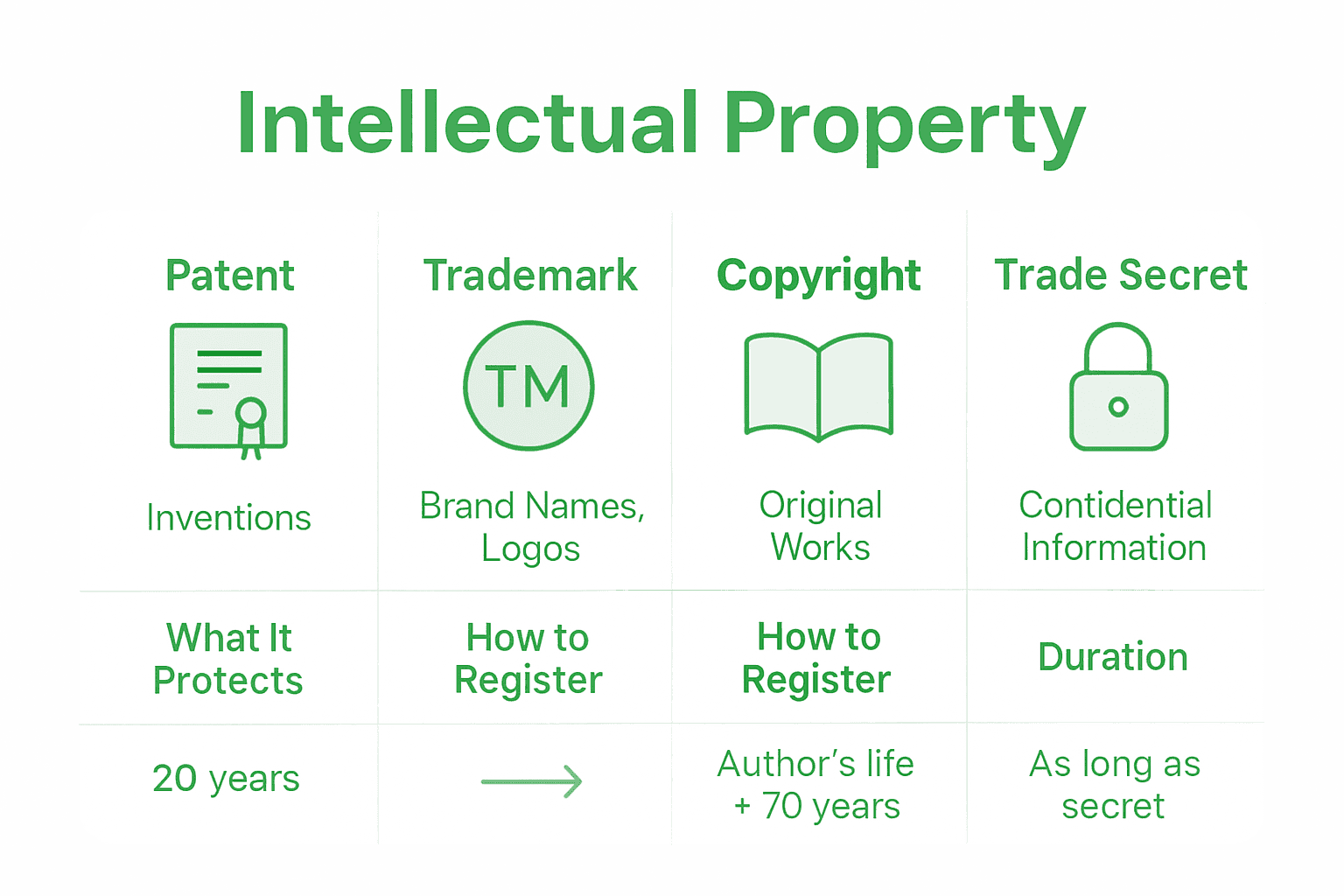
Let’s break down the four primary types of intellectual property rights that every entrepreneur should know:
Here’s a comparison of the four major types of intellectual property rights:
| IP Type | What It Protects | How to Obtain Protection | Duration |
|---|---|---|---|
| Patent | Inventions Technological innovations |
File with patent office Meet novelty requirements |
Up to 20 years |
| Copyright | Creative works Art, music, software |
Automatic upon creation Registration recommended |
Life of author + 70 years |
| Trademark | Brand names Logos Slogans |
Register with trademark office | Indefinite with renewal |
| Trade Secret | Confidential business info Formulas Processes |
Maintain secrecy Use NDAs Internal protocols |
As long as kept secret |
 |
|
Patents: Protecting Technological Innovations
Patents are the heavyweight champions of technological protection. They grant inventors exclusive rights to their novel inventions for a specific period, typically 20 years. Whether you’re developing a groundbreaking software algorithm, a unique hardware design, or a revolutionary manufacturing process, patents prevent others from making, using, or selling your invention without permission.
Copyrights: Safeguarding Creative Works
Copyrights protect original works of authorship - think software code, design assets, written content, music, and artistic creations. As Stanford OTL explains, these rights automatically activate when you create something original, giving you control over reproduction, distribution, and derivative works.
Trademarks: Defending Brand Identity
Trademarks are your brand’s visual and verbal fingerprints. They protect distinctive signs like logos, brand names, slogans, and design elements that distinguish your products or services in the marketplace. Registering a trademark prevents other businesses from using similar identifiers that could confuse consumers.
Trade Secrets: Preserving Competitive Advantage
Trade secrets are the covert operatives of intellectual property. They cover confidential business information that provides a competitive edge - think proprietary algorithms, manufacturing processes, customer lists, or strategic business methods.
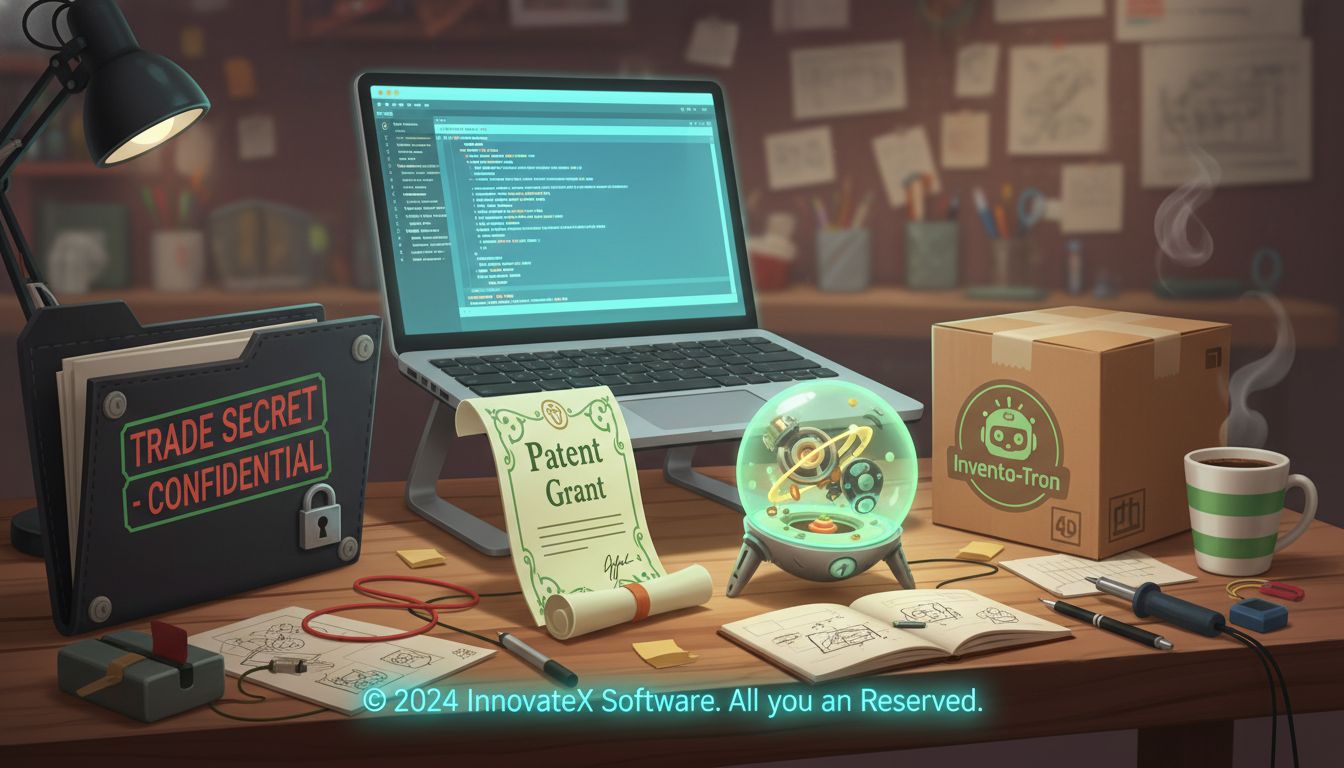 Unlike other IP rights, trade secrets remain protected as long as they remain genuinely secret.
For founders and creators, navigating these intellectual property rights isn’t just about legal compliance. It’s a strategic tool for building and protecting your business’s most valuable asset: its unique innovations and creative expressions.
Protecting Ideas: Registration and Practical Strategies
Transforming your innovative concept from a brilliant spark to a legally protected asset requires strategic action. According to UC Davis Research, protecting intellectual property isn’t just about having a great idea - it’s about implementing robust legal safeguards that shield your creative work from potential infringement.
Strategic Registration Approaches
Registration is your first line of defense in intellectual property protection. Different types of IP require different registration strategies:
- Patents: File a detailed application demonstrating your invention’s novelty and utility
- Copyrights: Register original works with the appropriate copyright office
- Trademarks: Submit comprehensive applications highlighting your unique brand identifiers
- Trade Secrets: Implement rigorous confidentiality protocols
Confidentiality and Documentation
As Rutgers Research emphasizes, protecting intellectual property goes beyond formal registration. Implementing comprehensive confidentiality agreements is crucial. These legal documents prevent unauthorized disclosure and provide a critical layer of protection for your most valuable intangible assets.
Practical Implementation Strategies
Successful IP protection requires a multifaceted approach:
- Conduct thorough prior art searches before filing patents
- Document every stage of your innovation process
- Use non-disclosure agreements (NDAs) with employees, contractors, and potential partners
- Regularly audit and update your IP protection strategies
Whether you’re a solo entrepreneur or leading a startup, understanding and proactively managing your intellectual property isn’t just a legal requirement - it’s a critical business survival skill. Your ideas are your most valuable asset, and protecting them requires continuous vigilance and strategic planning.
For founders looking to dive deeper into business registration nuances, check out our guide on when to register a business, which can provide additional context for protecting your entrepreneurial journey.
Legal Frameworks and International Considerations
Navigating the complex world of intellectual property requires understanding the intricate legal landscapes that govern innovation across borders. As Cornell Law explains, intellectual property rights are not just local regulations but a sophisticated global network of interconnected legal frameworks that protect creators’ rights internationally.
Global Protection Mechanisms
The Trade-Related Aspects of Intellectual Property Rights (TRIPS) Agreement stands as the cornerstone of international IP protection. According to Lemelson MIT, this international treaty establishes minimum standards for IP protection among member countries, creating a baseline of legal consistency that helps entrepreneurs protect their innovations worldwide.
Key International IP Protection Strategies
For founders looking to secure global protection, consider these critical approaches:
- Patent Cooperation Treaty (PCT): Allows inventors to seek patent protection in multiple countries through a single application
- Madrid Protocol: Simplifies international trademark registration
- Berne Convention: Provides automatic copyright protection across participating nations
- World Intellectual Property Organization (WIPO) Registration: Offers centralized international IP protection mechanisms
Jurisdictional Complexity
Understanding IP protection isn’t just about filing paperwork - it’s about comprehending the nuanced legal differences across jurisdictions. Each country has unique requirements, timelines, and enforcement mechanisms. What provides robust protection in one region might offer limited security in another.
For founders with global ambitions, this means developing a sophisticated, multi-layered IP protection strategy. You’ll need to:
- Conduct thorough international market research
- Consult with IP lawyers specializing in international law
- Develop country-specific protection strategies
- Budget for ongoing international registration and maintenance
Remember, in the world of intellectual property, one size definitely does not fit all. Your protection strategy must be as innovative and adaptable as the ideas you’re seeking to protect.
For founders looking to dive deeper into business registration nuances that intersect with IP protection, check out our guide on when to register a business, which can provide additional context for your entrepreneurial journey.
Risks, Costs, and Common Mistakes to Avoid
Intellectual property protection isn’t just about filing paperwork - it’s a strategic minefield where one wrong step can cost you everything. According to Boston University Research, entrepreneurs frequently stumble into costly traps by failing to secure proper protection or understanding the complex landscape of IP management.
Financial Risks and Hidden Costs
The financial burden of intellectual property protection can be substantial. Registration expenses, legal consultations, and potential litigation can quickly drain a startup’s limited resources. As Lemelson MIT warns, many founders underestimate the true cost of protecting their innovations, which extends far beyond initial filing fees.
Critical Mistakes to Avoid
Navigate the IP landscape carefully by steering clear of these common pitfalls:
- Premature Public Disclosure: Revealing your invention before filing can invalidate patent protection
- Incomplete Documentation: Failing to maintain thorough records of your innovation process
- Inadequate Prior Art Searches: Neglecting comprehensive research before patent applications
- Misunderstanding Patent Scope: Assuming a patent guarantees the right to use an invention
Strategic Risk Mitigation
Protecting your intellectual property requires a proactive, multifaceted approach:
- Conduct exhaustive prior art searches
- Maintain strict confidentiality protocols
- Budget for ongoing IP protection and potential legal expenses
- Consult with IP specialists before making critical disclosures
The stakes are high. A single misstep can mean losing years of work and potential revenue. Understanding business risk is crucial for any entrepreneur looking to safeguard their innovative ideas.
For founders seeking deeper insights into navigating entrepreneurial challenges, explore our comprehensive guide on business risks that can help you anticipate and mitigate potential threats to your venture.
Protect Your Innovations with Confidence and Clear Direction
Intellectual property can feel overwhelming and risky when you face challenges like navigating complex registrations, avoiding costly mistakes, and safeguarding your unique ideas against infringement. This article highlights critical terms like patents, trademarks, trade secrets, and copyrights, emphasizing the need for strategic planning and proactive protection. If you worry about missing vital steps or the hidden costs that could slow down your startup journey, you are not alone.
siift.ai is here to empower founders just like you with an intuitive AI platform that guides you through every stage from ideation to market launch while helping you de-risk critical business decisions including intellectual property protection. With personalized feedback and prioritized actions, you will avoid hidden traps and confidently map out your IP strategy. Start mastering your entrepreneurial journey with no blindspots, gatekeepers, or pressure by exploring how to turn your ideas into viable businesses today.
Don’t wait until it’s too late to protect your intellectual property and business future. Visit siift.ai now and discover step-by-step support that puts founder intelligence at your fingertips. Learn more about safeguarding your innovations with expert guidance in our business risk guide and find the perfect time to start your journey in our when to register a business guide. Take action now to safeguard your vision and build your success on solid ground.
Frequently Asked Questions
What is intellectual property (IP)?
Intellectual property refers to the legal protections for creations of the mind, including inventions, artistic works, symbols, names, and commercial images that arise from human imagination.
What are the main types of intellectual property rights?
The main types of intellectual property rights include patents (for inventions), copyrights (for creative works), trademarks (for brand identity), and trade secrets (for confidential business information).
How can I protect my intellectual property?
You can protect your intellectual property by registering it with the appropriate agencies, implementing confidentiality agreements, and maintaining thorough documentation of your innovations.
What are common mistakes to avoid when managing intellectual property?
Common mistakes include premature public disclosure, incomplete documentation of innovation processes, neglecting thorough prior art searches, and misunderstanding the scope of patents.
Recommended
- blog | siift | Business Plan Essentials 2025: A Beginner’s Guide for New Founders
- blog | siift | Choosing a Business Structure: A Simple Guide for New Founders
- blog | siift | Naming Your Startup: A Beginner’s Guide for 2025
- blog | siift | Top Growth Strategies for Startups in 2025: Practical Steps for Beginners
- Hoe bescherm je jouw intellectueel eigendom - Ondernemers Plaza Online