

Choosing a name for your startup might seem like a creative exercise. But how to name your startup effectively? The key is choosing a name that is simple, memorable, easy to pronounce, and aligned with your brand. The stakes are surprisingly high. Companies with names that are easier to pronounce and more concise can see higher investor recognition and improved value, according to recent studies. You might assume any catchy word will do, but research shows your choice could shape how fast your business grows, how memorable you are, and even your market credibility. The right name is not just about style it can be your most valuable early asset.
Table of Contents
Quick Summary
Takeaway | Explanation |
|---|---|
Choose a name that’s easy to pronounce | Names that are simple and clear improve recognition and firm value significantly. |
Select a name that reflects your brand | Your startup’s name should convey its identity, values, and unique offerings to connect emotionally with the audience. |
Check for digital availability | Ensure your chosen name has an available domain and compatible social media handles to streamline online presence. |
Avoid overly complex names | Complicated names hinder searchability and can confuse customers, making your brand less memorable. |
Test names with potential customers | Gather feedback on name options to understand emotional reactions and potential misinterpretations before finalizing your choice. |
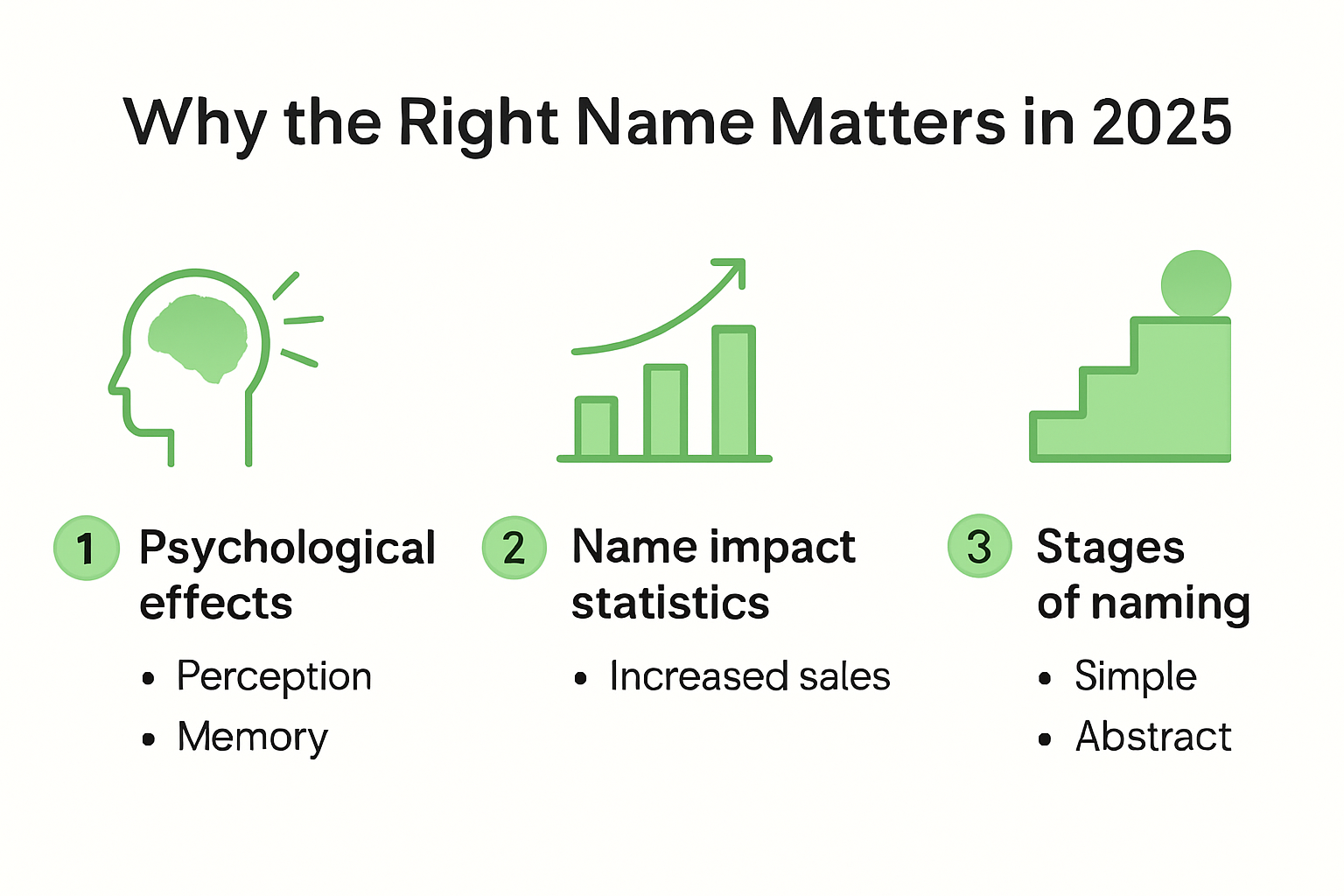
Why the Right Name Matters in 2026
In the competitive startup ecosystem of 2026, your company name is more than just a label. It’s a strategic asset that can significantly impact your brand’s perception, investor interest, and market positioning.
The Psychology of First Impressions
Names are powerful psychological triggers. According to research published in the Journal of Financial Economics, companies with names that are easier to pronounce and more concise tend to experience higher levels of investor recognition and improved firm value. This phenomenon highlights how a seemingly simple choice can create profound economic implications.
The cognitive fluency of your startup’s name directly influences how potential customers, investors, and partners perceive your brand. A name that rolls off the tongue effortlessly can create an immediate sense of approachability and memorability. Conversely, a complicated or awkward name might unconsciously signal complexity or lack of clarity in your business proposition.
Strategic Naming Beyond Aesthetics
Research from brand management studies underscores that naming is integral to brand development. Your name is the first communication touchpoint that communicates your startup’s identity, values, and potential. In 2026’s saturated market, a well-crafted name can distinguish you from competitors and create an instant emotional connection.
Interestingly, naming strategies evolve with industry maturity. An analysis of the U.S. biotech industry revealed that startups initially opt for descriptive names to establish legitimacy. As industries mature, entrepreneurs shift towards more abstract and unique identifiers that capture imagination and differentiation.
Practical Considerations for 2026
In the digital age, your name must also be digitally functional. Consider domain availability, social media handle compatibility, and global pronunciation. A name that works seamlessly across digital platforms reduces friction in your marketing and branding efforts.
Moreover, in 2026’s global marketplace, cross-cultural interpretability becomes crucial. Avoid names with unintended meanings in different languages or cultural contexts. A name that sounds appealing in English might carry unintended connotations elsewhere, potentially limiting your international growth.
Remember, your startup’s name is an investment. It’s not just about sounding cool or clever. It’s a strategic decision that can influence investor perceptions, customer trust, and your overall brand narrative. Choose wisely, thoughtfully, and with a clear understanding of the psychological and practical implications.
How to Generate Winning Startup Name Ideas
Crafting the perfect startup name requires strategic thinking and creative exploration. In 2026, your naming approach must balance innovation, memorability, and strategic positioning.
Define Your Brand Foundation
Before diving into name generation, establish a clear brand identity. According to the University of Houston’s Small Business Development Center, developing a mission statement and value proposition is crucial. These foundational elements will guide your naming process, ensuring your chosen name authentically represents your startup’s core purpose and vision.
Start by asking key questions: What problem does your startup solve? Who is your target audience? What unique value do you offer? These insights will help create a naming framework that resonates with potential customers and investors.
Creative Ideation Techniques
The Lassonde Entrepreneur Institute recommends creating a creative brief that includes visual and textual elements associated with your company. This approach helps generate starter words that capture your brand’s essence. Explore our guide on sparking entrepreneurial creativity to enhance your ideation process.
Cornell University’s New Venture Research Guide suggests using mind mapping and word association techniques. Start with a central concept and branch out into related words or themes. For instance, if your startup focuses on sustainable technology, map out terms like innovation, green, future, efficiency, and technology. This method can uncover unexpected and compelling name combinations.
Practical Naming Strategies
When generating names, consider these practical approaches:
Descriptive Names: Directly communicate your product or service
Metaphorical Names: Use symbolic language that hints at your brand’s values
Invented Names: Create unique, memorable words
Combination Names: Blend relevant words or word fragments
If you want to explore names with domains already available to buy, Atom offers curated premium domains, AI search that can surface options suited to your brand, and preliminary trademark screening to help narrow your shortlist.
In any case, best practice is to ensure your potential names are:
Easy to pronounce
Memorable
Available as a domain name
Not already trademarked
Culturally sensitive
Remember, your startup name is more than a label. It’s your first marketing message, your brand’s initial handshake with the world. Choose wisely, test extensively, and select a name that not only sounds good but strategically positions your startup for success in 2026’s competitive landscape.
Here’s a table summarizing different startup naming approaches and their characteristics, to help you decide which might suit your brand best:
Naming Approach | Description | Example Benefits |
|---|---|---|
Descriptive Name | Directly communicates product or service | Clarity, instant recognition |
Metaphorical Name | Symbolic, suggests a concept or value | Emotional connection, uniqueness |
Invented Name | Completely new or blended word | Distinctiveness, easy trademark |
Combination Name | Merges separate words or word fragments | Memorability, brandable |
Avoiding Common Naming Mistakes as a New Founder
Navigating the startup naming process is fraught with potential pitfalls that can undermine your brand’s potential from the very beginning. Understanding and avoiding these common mistakes can save you significant time, money, and future rebranding headaches.
Naming Complexity and Searchability
According to Rivier University, new founders often fall into traps of overcomplexity. Avoid using unconventional spellings that make your business difficult to find online or remember. Made-up words and cryptic acronyms might seem creative, but they often confuse potential customers and create unnecessary barriers to brand recognition.
The Florida Small Business Development Center warns that names too similar to competitors can lead to legal challenges and brand confusion. Your name should be distinctive enough to stand out while remaining clear and accessible. Learn more about navigating early founder challenges to prevent common startup pitfalls.
Legal and Scalability Considerations
Bplans highlights critical naming mistakes that can stunt your startup’s growth. Choosing a name that lacks exclusivity might seem trivial now, but it can create significant obstacles when you want to expand or potentially sell your business.
Key red flags to avoid include:
Names tied to specific geographic locations
Personal names that complicate future business transitions
Overly trendy terms that might quickly become dated
Names that unintentionally limit your market or service scope
Strategic Naming Principles
Successful startup naming requires a balance between creativity and practicality. Avoid these additional pitfalls:
Cute or Gimmicky Names: These often fail to communicate your value proposition
Offensive or Potentially Controversial Terms: These can alienate potential customers
Difficult Pronunciation: If people struggle to say your name, they’ll struggle to remember it
Domain Availability Obsession: While important, don’t let domain constraints dictate your entire brand identity
Remember, your business name is more than just a label. It’s the first impression potential customers, investors, and partners will have of your venture. Take time to research, get feedback, and ensure your name genuinely represents your startup’s mission and potential.
Ultimately, a great name should be memorable, meaningful, and malleable enough to grow with your business. When in doubt, simplicity and clarity should be your guiding principles.
The following table organizes the most common startup naming mistakes and explains why each can undermine your brand’s success:
Naming Mistake | Why It’s a Problem |
|---|---|
Overly complex or odd spellings | Hard to find/remember, hurts searchability |
Too similar to competitors | Legal risk, brand confusion |
Geographic/personal names | Limits growth or transferability |
Trendy or dated terms | Can become irrelevant quickly |
Offense/controversial language | Alienates customers, reputational risk |
Overemphasis on domain availability | Restricts creativity, weak brand identity |
Testing and Finalizing the Perfect Startup Name
Once you’ve brainstormed potential names for your startup, the real work begins in rigorously testing and validating your top choices. This critical phase ensures your name resonates with your target audience and supports your long-term business goals.
Comprehensive Name Evaluation
The Lassonde Entrepreneur Institute recommends a systematic five-step approach to name selection. Start by creating a creative brief that defines your brand’s core direction. Next, apply SEO strategies to ensure online visibility. Rank your top 10 name ideas based on key factors like memorability, uniqueness, and potential market appeal.
A fascinating computational study on brand naming suggests evaluating potential names through multiple lenses: readability, pronounceability, memorability, and uniqueness. This data-driven approach can help you objectively assess your name’s potential impact.
Legal and Digital Verification
Forbes highlights critical steps in finalizing your startup name. Conduct thorough internet and trademark searches to ensure your chosen name isn’t already in use. Securing the .com domain is crucial, but don’t let domain availability completely dictate your choice. Learn how to validate your startup idea effectively to ensure your name aligns with your broader business strategy.
Key verification steps include:
Trademark database searches
Domain name availability checks
Social media handle availability
International naming considerations
Here’s a checklist table summarizing the critical verification steps you should complete before finalizing your startup name:
Verification Step | Purpose | Completed? |
|---|---|---|
Trademark search | Avoids legal issues and name conflicts | |
Domain name availability check | Ensures web presence can be established | |
Social media handle availability | Confirms brand consistency across platforms | |
International checks | Prevents issues with meaning in other languages | |
Informal audience testing | Reveals first impressions and pronunciation issues |
Audience and Feedback Testing
Before making a final decision, gather external perspectives. Create a shortlist of 3-5 names and conduct informal focus groups or surveys with potential customers, colleagues, and industry peers. Pay attention to:
Initial emotional reactions
Ease of pronunciation
Memorable qualities
Potential misinterpretations
Cultural and linguistic nuances

Be prepared to iterate. The perfect name might require slight modifications or might emerge through this feedback process. Remember that naming is both an art and a science. While data and research are crucial, there’s also an intangible quality to a truly great startup name.
Ultimately, your name should tell a story, create an emotional connection, and provide a glimpse into your startup’s unique value proposition. Take your time, be thorough, and trust the process. The right name can be a powerful foundation for your brand’s future success.
Frequently Asked Questions
What factors should I consider when naming my startup in 2026?
When naming your startup, consider factors such as ease of pronunciation, memorability, digital availability (e.g., domain names and social media handles), and cultural interpretability to ensure it resonates globally and aligns with your brand identity.
How can I generate unique name ideas for my startup?
To generate unique name ideas, define your brand foundation by identifying your mission and target audience, use creative ideation techniques like mind mapping, and consider various naming strategies, including descriptive, metaphorical, or invented names.
Why is a good startup name important for attracting investors?
A strong startup name is crucial for attracting investors because names that are easier to pronounce and remember often lead to higher levels of recognition and perceived value, directly influencing investor interest and trust in your business.
What common mistakes should I avoid when naming my startup?
Avoid naming mistakes such as using overly complex or hard-to-pronounce names, choosing names too similar to competitors, and ignoring legal implications like trademark conflicts. These pitfalls can hinder brand recognition and future growth.
Ready for a Startup Name That Sets You Apart?
Choosing a memorable and effective name is just the first step on your founder journey. But making the right choice can feel overwhelming. You already know that a clear, easy-to-pronounce name can mean better investor recognition, stronger customer trust, and doors opening more quickly. The stakes are high and mistakes like complex spellings or missed digital availability can slow you down right from the start. You need guidance that helps you avoid the traps discussed in this article so your vision does not get lost in the noise.
siift is more than a naming resource. Our intuitive AI platform becomes your step-by-step partner for the entire startup journey. Get personalized feedback as you brainstorm names. Receive insights and prioritized actions tailored to your challenges, whether you need to validate ideas, check domain availability, or test customer reactions. Move from naming confusion to building your whole business foundation with guidance designed just for you.
Explore siift today. Start with a name you believe in and stay supported as you turn your idea into a thriving company. Take your next step now and make sure your startup stands out from day one.