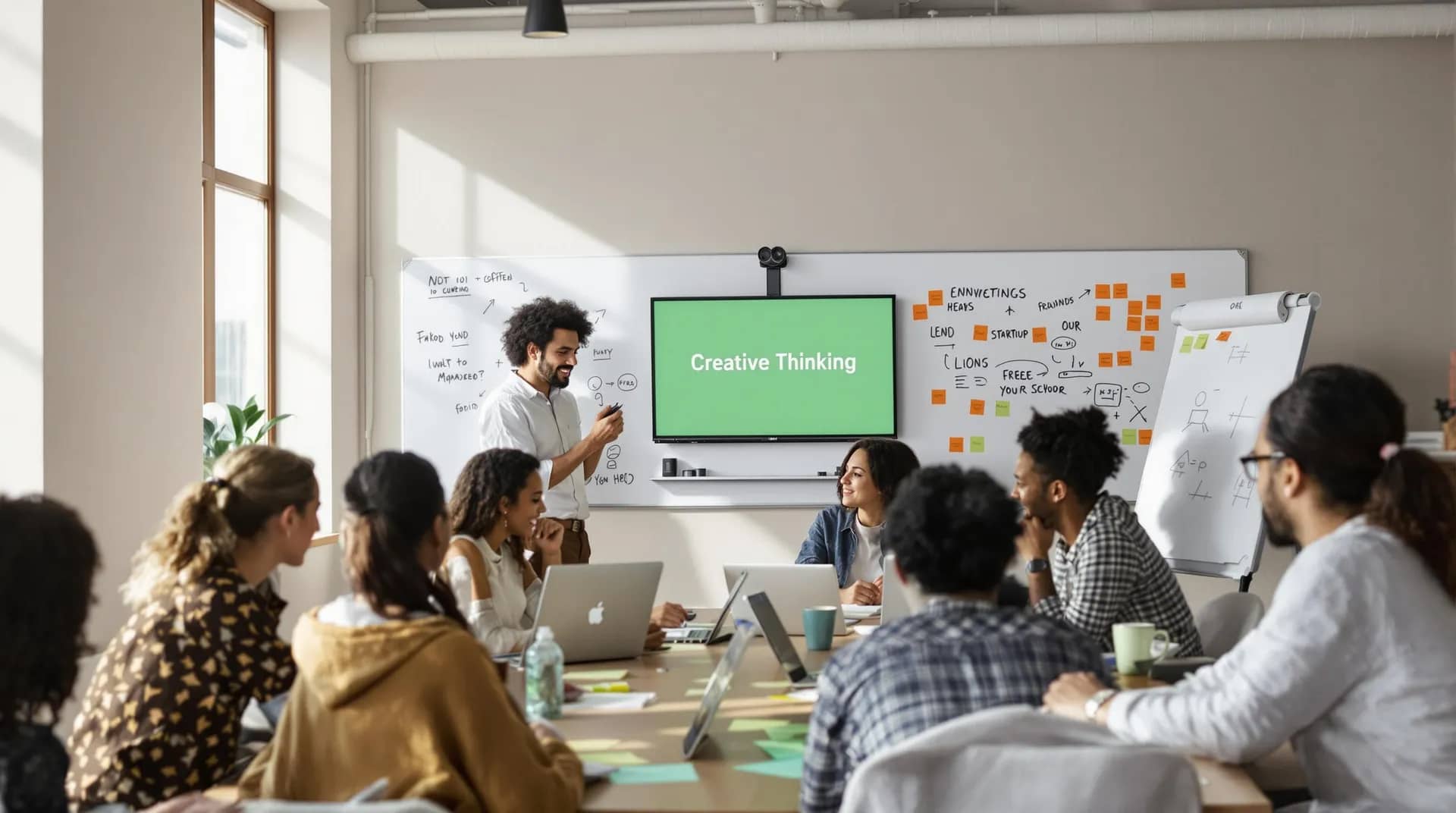
Creative thinking is often seen as a bonus for entrepreneurs, but in the fast pace of 2025, it has become non negotiable for those who want to stand out. Everyone talks about grit or hustle, but the real edge comes from flexible thinking that most founders ignore. Research shows that daily creative exercises can increase problem solving ability by up to 60 percent. This flips the script on business success—imagination is not just for artists, it is your startup’s secret weapon. Today’s entrepreneurs don’t just rely on imagination. They use AI tools for founders, idea generation tools, and startup validation software to turn creative thinking into real business opportunities.
Table of Contents
Why Creative Thinking Exercises Matter For New Entrepreneurs
Applying Creative Thinking To Start A Successful Side Business
Quick Summary
Takeaway | Explanation |
|---|---|
Creative thinking is essential for entrepreneurs | Embracing creative exercises helps entrepreneurs convert challenges into opportunities effectively. |
Practice structured brainstorming for ideas | Techniques like SCAMPER encourage diverse viewpoints and innovative concepts, essential for competitive advantage. |
Develop a daily creative routine | Consistency in creative activities nurtures innovation and strengthens cognitive flexibility over time. |
User empathy is crucial in problem definition | Understanding potential customers’ needs shapes unique business solutions and enhances market relevance. |
Flexible thinking leads to business success | Cultivating cognitive flexibility allows quick strategy adaptations, resulting in resilience and creativity in entrepreneurship. |
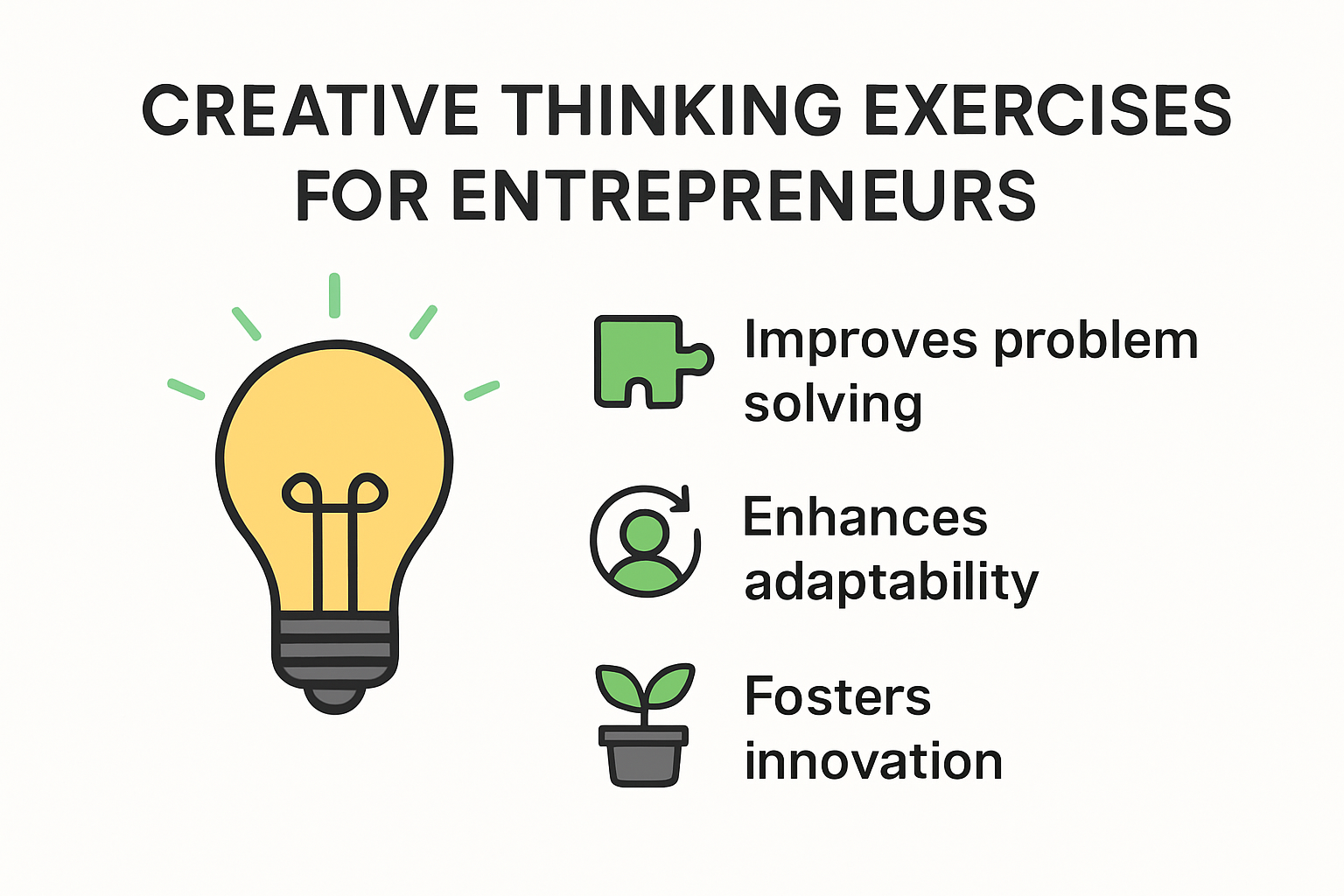 |
Why Creative Thinking Exercises Matter for New Entrepreneurs
Entrepreneurship demands more than technical skills or business knowledge. It requires a dynamic mental approach that transforms challenges into opportunities. Creative thinking exercises are not just academic tools but essential survival strategies for founders navigating complex business landscapes. These exercises become more powerful when combined with startup brainstorming software, AI-powered idea generation tools, and productivity tools for founders, helping entrepreneurs think more strategically.
Breaking Through Mental Barriers
Most entrepreneurs encounter invisible mental roadblocks that limit their potential. Research from Stanford University demonstrates that individuals who practice creative thinking develop stronger problem solving capabilities and increased adaptability. These skills become critical when confronting unexpected business challenges.
Traditional linear thinking often constrains innovative solutions. By engaging in deliberate creative thinking exercises, entrepreneurs can:
Expand Perspective: Challenge existing assumptions and view problems from multiple angles
Generate Innovative Solutions: Develop unique approaches that differentiate their ventures
Reduce Decision Paralysis: Build confidence in making strategic choices under uncertainty
Cognitive Flexibility as a Competitive Advantage
Harvard Business Review research reveals that cognitive flexibility directly correlates with entrepreneurial success. Entrepreneurs who consistently practice creative thinking techniques demonstrate:
Enhanced ability to pivot strategies quickly
More resilient problem solving approaches
Greater capacity to identify emerging market opportunities
Creative thinking is not about generating random ideas but systematically training your brain to approach challenges with curiosity and openness. It transforms entrepreneurs from reactive problem managers into proactive opportunity creators.
The most successful founders understand that creativity is a skill that can be developed through intentional practice. Just like physical exercise builds muscle memory, creative thinking exercises build mental agility. By dedicating time to structured creative exploration, entrepreneurs prepare themselves to navigate the unpredictable terrain of business innovation.
Ultimately, creative thinking exercises are not optional luxuries but essential tools for modern entrepreneurs. They represent the difference between surviving and thriving in a rapidly changing business ecosystem. Many founders also use business idea validation tools and market research tools for startups to quickly test whether their ideas have real demand before investing time and effort.
10 Actionable Creative Thinking Exercises for Beginners
For aspiring entrepreneurs, developing creative thinking skills is not just a bonus but a fundamental requirement. These practical exercises will help transform your cognitive approach and unlock innovative problem solving capabilities.
Structured Brainstorming Techniques
The SCAMPER technique offers a systematic method for generating breakthrough ideas. This acronym represents seven strategic thinking prompts:
Substitute: Replace existing components with alternative solutions
Combine: Merge different concepts to create unique approaches
Adapt: Modify existing ideas to fit new contexts
Modify: Alter current strategies or products
Put to other uses: Explore unconventional applications
Eliminate: Remove unnecessary elements
Rearrange: Reorganize components for fresh perspectives
Here is a table summarizing the SCAMPER technique’s seven prompts and their definitions for quick reference:
SCAMPER Step | Description |
|---|---|
Substitute | Replace existing components with alternative solutions |
Combine | Merge different concepts to create unique approaches |
Adapt | Modify existing ideas to fit new contexts |
Modify | Alter current strategies or products |
Put to other uses | Explore unconventional applications |
Eliminate | Remove unnecessary elements |
Rearrange | Reorganize components for fresh perspectives |
Visual Ideation Strategies
Mind mapping transforms linear thinking into a dynamic, interconnected exploration of ideas. This visual technique allows entrepreneurs to:
Break down complex problems into manageable components
Identify unexpected connections between concepts
Create non linear thinking pathways
Visualize potential business strategies
The ‘30 Circles’ exercise represents another powerful visual creativity technique. IDEO suggests this quick activity challenges participants to transform 30 blank circles into recognizable objects within a limited timeframe. This exercise trains your brain to:
Generate ideas rapidly
Overcome mental blocks
Embrace quick, intuitive thinking

Additional creative thinking exercises entrepreneurs can practice include reverse brainstorming, random word association, and scenario planning. Each technique provides a unique approach to expanding cognitive flexibility and generating innovative solutions.
Remember that creative thinking is a skill. Like any skill, it improves with consistent practice. Entrepreneurs who dedicate time to these exercises develop a competitive mental advantage that transforms how they approach business challenges. The goal is not just generating ideas but cultivating a mindset of continuous innovation and adaptability.
Applying Creative Thinking to Start a Successful Side Business
Starting a side business requires more than technical skills or industry knowledge. Creative thinking transforms entrepreneurial dreams into actionable strategies that set your venture apart from competitors.
Problem Definition and User Empathy
OpenStax’s Entrepreneurship research highlights the Design Thinking process as a critical framework for innovative problem solving. This approach involves five key stages that help entrepreneurs develop unique business solutions:
Empathize: Deeply understand your potential customers’ needs and pain points
Define: Clearly articulate the specific problem your business will solve
Ideate: Generate multiple potential solutions without judgment
Prototype: Create minimal viable versions of your product or service
Test: Gather feedback and iterate based on real world insights
The following table organizes the five Design Thinking stages alongside their goals to clarify the process:
Stage | Goal |
|---|---|
Empathize | Understand customers’ needs and pain points |
Define | Clearly articulate the specific problem to solve |
Ideate | Generate multiple potential solutions without judgment |
Prototype | Create minimal viable versions of the solution |
Test | Gather feedback and iterate based on real world insights |
Generating Innovative Business Ideas
The Random Connections technique offers a fascinating approach to sparking entrepreneurial creativity. By intentionally linking seemingly unrelated concepts, entrepreneurs can uncover unique business opportunities. For instance, combining two disparate ideas like bicycle repair and mobile technology could inspire a novel service like on demand bike maintenance through a smartphone app.
Strategic Thinking Frameworks
Research in Innovation and Entrepreneurship suggests using structured thinking methods to enhance creative problem solving. The Six Thinking Hats method provides a systematic approach to exploring business ideas from multiple perspectives:
White Hat: Focus on objective data and information
Red Hat: Explore emotional and intuitive responses
Black Hat: Identify potential risks and challenges
Yellow Hat: Explore optimistic and positive potential
Green Hat: Generate creative and innovative solutions
Blue Hat: Manage the overall thinking process
Successful side businesses emerge from entrepreneurs who view challenges as opportunities for creative exploration. By adopting flexible thinking strategies, you transform potential obstacles into unique value propositions that distinguish your venture in competitive markets.
Remember that creativity is not about generating perfect ideas immediately but about continuous exploration and refinement. Each creative thinking exercise brings you closer to understanding your market, developing innovative solutions, and building a sustainable side business that reflects your unique perspective and skills.
Tips to Make Creative Thinking a Daily Habit
Transforming creative thinking from an occasional practice to a consistent habit requires intentional strategies and commitment. Successful entrepreneurs understand that creativity is not a sporadic burst of inspiration but a muscle that strengthens with daily exercise.
Building a Creative Routine
Research from the University of British Columbia highlights five critical practices for integrating creativity into daily life:
Develop a Consistent Morning Ritual: Dedicate the first 30 minutes of your day to creative exploration
Keep a Thought Journal: Record random ideas, observations, and potential solutions
Seek Diverse Inspiration: Expose yourself to different perspectives and experiences
Experiment with New Activities: Challenge your brain by trying unfamiliar tasks
Allow Regular Mental Breaks: Create space for subconscious problem solving
Daily Creative Challenges
The University of Pennsylvania recommends specific strategies to activate innovative thinking:
Embrace playful approaches to problem solving
Set daily micro challenges that push your creative boundaries
Trust the creative process without judgment
Celebrate small creative victories
Systematic Creative Planning
The Journal of Creative Behavior suggests that daily creativity planning can significantly enhance creative output. Entrepreneurs can implement this by:
Establishing specific daily creative goals
Tracking creative insights and breakthrough moments
Creating a structured yet flexible approach to ideation
Reflecting on creative progress weekly
The key is consistency and patience. Creative thinking is not about generating groundbreaking ideas every moment but about maintaining an open and curious mindset. Each small creative exercise builds neural pathways that enhance your overall cognitive flexibility.
Remember that creativity thrives in an environment of psychological safety. Be kind to yourself during the process. Not every creative attempt will result in a revolutionary idea, but each attempt trains your brain to think more expansively and innovatively.
Ultimately, making creative thinking a daily habit is about creating a personal ecosystem that nurtures curiosity, welcomes experimentation, and views challenges as opportunities for growth. By dedicating time and attention to your creative development, you transform creative thinking from a sporadic skill into a powerful entrepreneurial superpower.
Frequently Asked Questions
What are creative thinking exercises for entrepreneurs?
Creative thinking exercises are activities designed to enhance innovative thinking and problem-solving skills. They help entrepreneurs break through mental barriers, expand their perspectives, and generate unique business ideas.
Why is creative thinking important for new entrepreneurs?
Creative thinking is essential for new entrepreneurs as it enables them to navigate complex business challenges, adapt quickly to changes, and identify new opportunities for growth. It is a key component for turning challenges into rewarding ventures.
How can I develop a daily creative routine?
To develop a daily creative routine, try dedicating specific time each day for creative exploration, such as a morning ritual that includes brainstorming or journaling. Additionally, seek diverse inspirations and allow mental breaks for subconscious processing.
What is the SCAMPER technique in brainstorming?
The SCAMPER technique is a structured brainstorming method that prompts users to consider seven strategic actions: Substitute, Combine, Adapt, Modify, Put to other uses, Eliminate, and Rearrange. This technique helps generate innovative ideas by systematically changing existing concepts.
Ready to Put Creative Thinking Into Action?
Reading about creative thinking exercises is the first spark. But turning your ideas into a real business? That is where many aspiring entrepreneurs get stuck. You have learned how flexible thinking and daily exercises can boost problem solving, adaptability, and innovation. Still, building something concrete from a great idea often feels overwhelming. Sometimes you are not sure what the next step should be or how to validate if your business concept can work in the real world. Modern entrepreneurship is increasingly dependent on startup growth tools and AI tools for founders, which help transform raw ideas into validated business opportunities faster and more efficiently.
This is where siift steps in. With siift, you do not just read about entrepreneurship — you live it. Our AI platform guides you step-by-step from creative brainstorming to launching your business. You get personalized feedback, actionable insights, and clear priorities, all while avoiding the usual roadblocks. Stop guessing. Let your creativity drive actual progress. If you are ready to transform your imagination into a thriving venture, start today at https://app.siift.ai/.
Recommended
Comment organiser un brainstorming efficace en 2025 pour booster votre marketing
How to Build a Marketing Strategy for Small Businesses in 2025 - Zoo Digital