
Siift vs ChatGPT comes down to one key difference: ChatGPT is a general AI assistant, while Siift is an AI business operating system designed for startup founders.
Artificial intelligence is becoming a core part of modern business operations. According to McKinsey’s State of AI report, 65% of organizations reported regularly using generative AI in at least one business function in 2024, showing how quickly companies are adopting AI workflows.
However, founders need more than AI-generated answers. Building a successful startup requires an AI system that can validate assumptions, maintain business context, prioritize high-impact actions, and support better decision-making.
This is where Siift takes a different approach, while ChatGPT helps users interact with AI, Siift is an AI Business Operating System that helps founders build, validate, and operate their businesses with AI.
Quick Answer: Siift vs ChatGPT
Siift is built for entrepreneurs who need AI support for business decisions, validation, and execution. ChatGPT is better suited for general AI tasks such as writing, research, and productivity.
Feature | ChatGPT | Siift |
|---|---|---|
Purpose | General AI assistant | AI business operating system |
Best For | Productivity and information | Startup strategy and execution |
Workflow | Open-ended conversations | Intent-driven convograms |
Decision Support | Provides responses | Filters priorities and validates actions |
Memory | General conversation memory | Master Context Engine + Truth Hierarchy |
Business View | Chat-based answers | Intelligent Business Canvas |
Tools | Individual integrations | Top-of-toolchain orchestration |
Privacy | General AI platform approach | Founder-focused private infrastructure |
Why Founders Are Searching for ChatGPT Alternatives
ChatGPT has become one of the most popular AI tools because it can help users generate content, analyze information, and answer complex questions.
For founders, however, the challenge is different, starting and growing a company requires:
Validating ideas
Understanding customers
Finding market opportunities
Prioritizing resources
Making decisions with limited information
Many AI assistants help founders create more output, but more output does not always mean better execution. Startup success depends on making the right decisions at the right time.
According to CB Insights’ analysis of startup failures, 35% of startups fail because they do not adequately address market needs, making validation one of the most critical stages of building a company. This is why many entrepreneurs are looking beyond traditional AI chatbots and exploring AI software for startup founders.
Siift vs ChatGPT: From AI Conversations to Business Execution
Traditional AI assistants are conversation-based.
The founder still has to:
Decide what questions to ask
Identify important insights
Validate suggestions
Create strategic workflows
Maintain business context
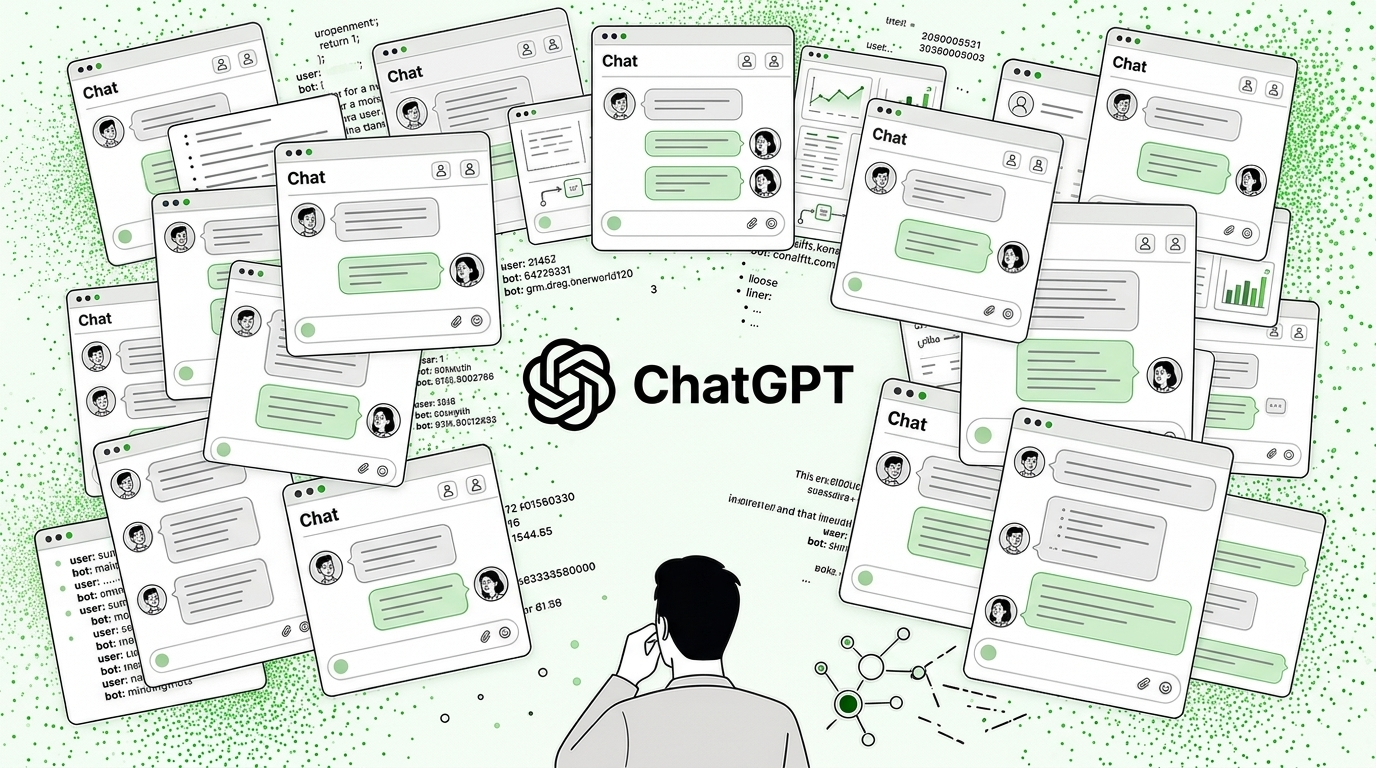
While ChatGPT is highly effective for writing, coding, and research, it relies on open-ended conversations. As discussions grow, important business context can become fragmented, requiring founders to manually reconnect ideas, reassess assumptions, and determine the next strategic step.
AI productivity loop:
Generate ideas
Create documents
Ask more questions
Collect more information
Delay execution
Siift takes a different approach.
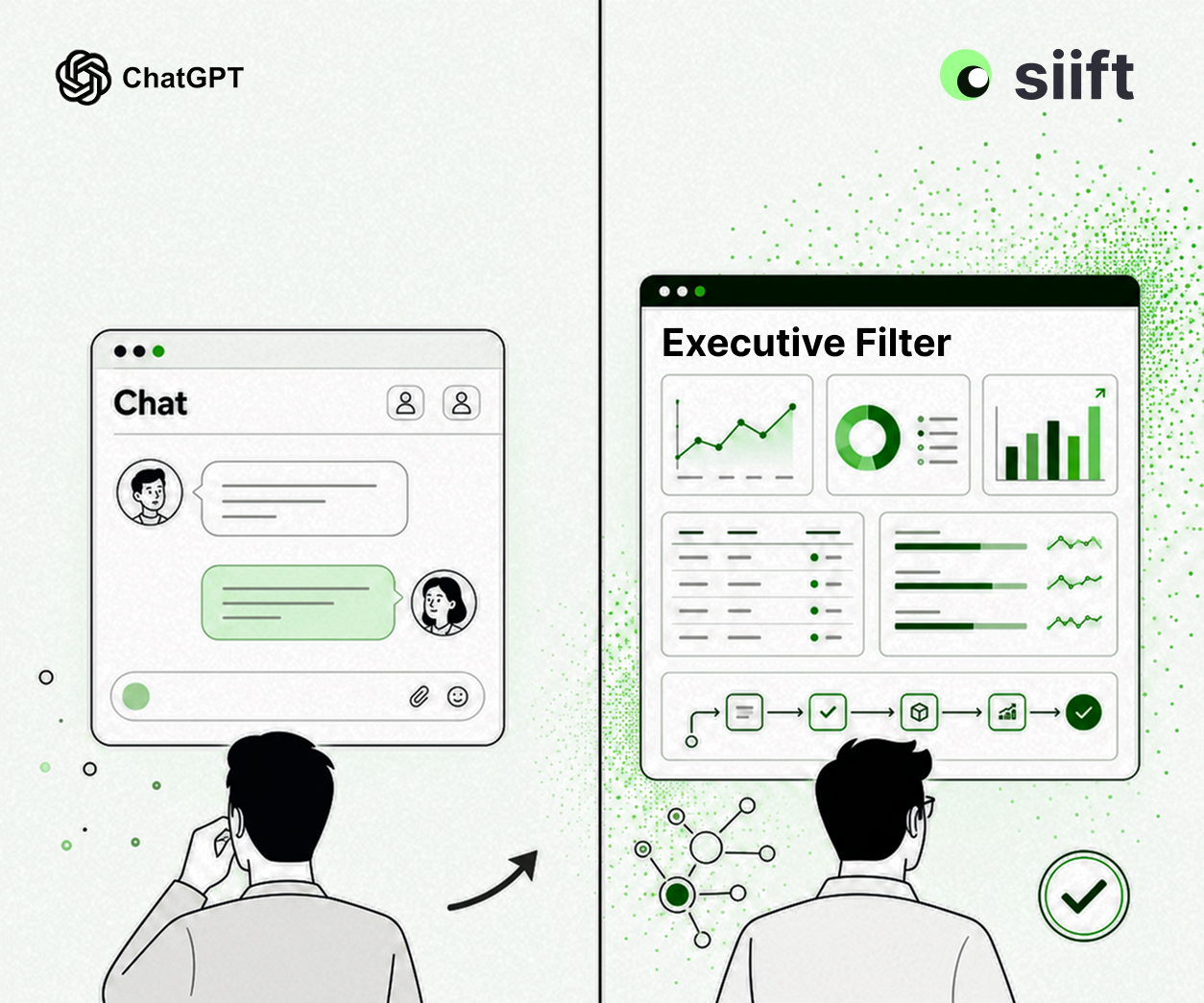
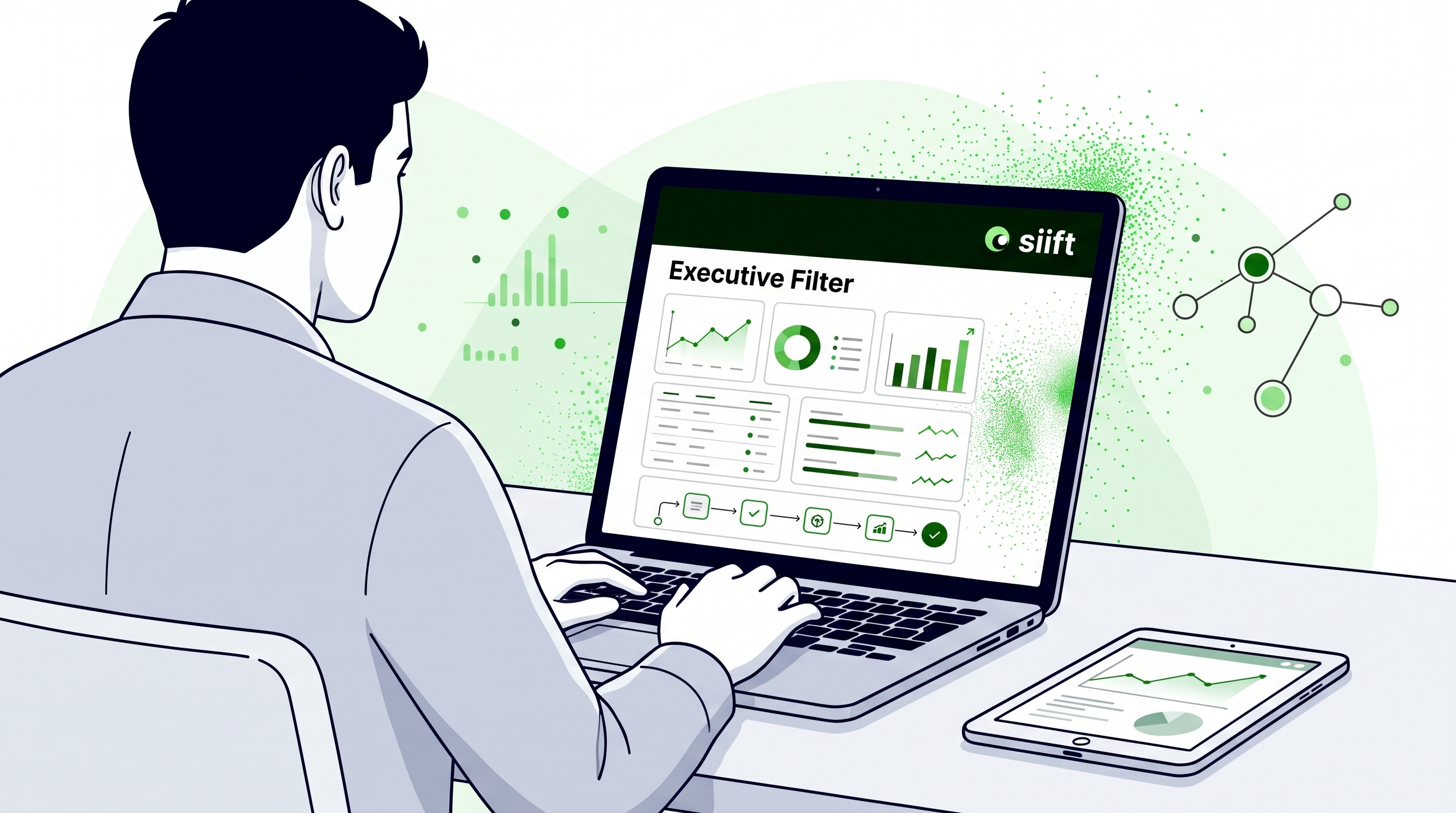
Instead of maximizing AI-generated content, Siift acts as an executive filter. Rather than encouraging endless conversations, it helps founders focus on validated evidence, measurable milestones, and the highest-impact next actions. This aligns with Siift's Anti-Slop Stance, reducing cognitive overload and preventing "vibe-founding" so entrepreneurs can move from assumptions to validated business decisions faster.
Siift Executive Filter: The Anti-Slop Approach
Most AI tools are optimized for producing responses. Siift is designed around the opposite philosophy. Its Anti-Slop Stance focuses on reducing unnecessary AI output and helping founders concentrate on measurable business progress.
Siift is designed to prevent:
Cognitive overload
Endless brainstorming loops
Unvalidated assumptions
"Vibe-founding"
Instead, Siift helps founders focus on:
Real business milestones
Evidence-based decisions
High-leverage actions
The goal is not more AI conversations. the goal is better business outcomes.
Siift Convograms vs Traditional AI Chats
A major difference between Siift and general AI assistants is how conversations are structured.
Traditional AI chats start with a blank page.
The founder decides:
What to ask
What direction to take
How to evaluate the answer
Siift introduces convograms intent-driven conversation frameworks designed to guide founders through ideation, validation, go-to-market planning, and execution instead of open-ended AI chats.
Convograms help founders focus on:
Startup idea validation
Market evaluation
Customer discovery
Go-to-market planning
Strategic decisions
Instead of asking:
"Give me more startup ideas."
Founders can focus on:
"What evidence supports this decision, and what is the next action that creates progress?"
Master Context Engine: Why Siift Understands Business Context Better
Business decisions depend on context.
A startup contains different types of information:
Initial assumptions
Customer feedback
Market research
Revenue signals
Product insights
The challenge is that not all information has the same value. Siift solves this through the Master Context Engine and Truth Hierarchy.
Unlike traditional AI memory systems, Siift dynamically rebalances context by giving more importance to validated evidence.
Higher-value signals include:
Customer feedback
Traction metrics
Real-world results
Rather than treating every conversation equally, Siift continuously rebalances context so validated evidence carries more weight than early assumptions.
Lower-value signals include:
Unvalidated assumptions
Temporary ideas
Outdated information
This helps founders avoid context rot and make decisions based on business reality. This approach aligns with customer development principles, where startups use customer feedback and market learning to improve decisions.
Intelligent Business Canvas: A Better AI Workspace for Entrepreneurs
Most AI assistants organize information inside chat conversations, but businesses are not built through chat history. Siift introduces the Intelligent Business Canvas, a visual business command center designed around three core areas:
Insights
Understand important business signals, patterns, and discoveries.
Actions
Identify the highest-impact next steps.
Assets
Organize important business resources and outputs.
Instead of managing scattered documents and disconnected workflows, founders get a clearer view of their business in one place.
Siift as a Top-of-Toolchain AI Orchestrator
Modern startups rely on many specialized tools:
CRM platforms
Development tools
Marketing systems
Analytics software
The problem is not having enough tools, the problem is disconnected information.
Siift does not try to replace specialized developer, design, or marketing platforms. Instead, it works as a top-of-toolchain orchestrator. Through Model Context Protocol (MCP) and connectors, Siift coordinates workflows across existing tools and brings business information back into one unified command center.
Private AI Business Assistant: Protecting Founder Data
For startups, business information is one of the most valuable assets.
This includes:
Product strategies
Customer research
Revenue models
Growth plans
Competitive advantages
Siift follows a privacy-first approach through its sustainable token business model. Because Siift's sustainable token business model is aligned with founder success, it has no incentive to monetize, farm, or use customer data to train third-party AI models.
Does not sell business information
Does not train third-party models on your intellectual property
Protects business intelligence through enterprise-grade cloud infrastructure
Founders can use AI for sensitive business decisions while maintaining control over their information. Responsible AI adoption requires organizations to consider security, governance, and risk management practices. The NIST AI Risk Management Framework provides guidance for managing AI risks.
When Should Founders Choose Siift Over ChatGPT?
Business Need | Better Choice |
|---|---|
Writing emails and content | ChatGPT |
General research | ChatGPT |
Learning new concepts | ChatGPT |
Startup idea validation | Siift |
Business strategy | Siift |
Managing business context | Siift |
Founder decision-making | Siift |
Connecting startup workflows | Siift |
Where ChatGPT Still Makes Sense
ChatGPT remains a powerful AI assistant for general purposes, where structuring and organizing data are not a challenge or priority.
It is useful for:
Writing support
Coding assistance
Research
Everyday productivity
Generating media (images, logos)
ChatGPT is a high-volume DIY multi-purpose AI tool, it is not designed for founders who need an AI business operating system focused on execution and reliable information.
Who Is Siift Built For?
Startup Founders
Entrepreneurs turning ideas into validated businesses.
Early-Stage Teams
Teams managing complex decisions and workflows.
Business Operators
Professionals who need connected business intelligence.
Entrepreneurs
People who want structured AI support instead of endless conversations.
Why Switch From ChatGPT to Siift?
Founders should consider Siift when they need:
✅ More than AI-generated answers
✅ Better startup validation workflows
✅ Structured business decision-making
✅ Long-term business context management
✅ A connected AI operating system for their tools
The difference is simple:
ChatGPT helps you communicate with AI, Siift helps you operate your business with AI.
Frequently Asked Questions
What is the best ChatGPT alternative for startup founders?
Siift is an AI business operating system designed for founders who need validation, strategic guidance, and execution workflows beyond traditional AI chat.
Is Siift better than ChatGPT for business?
ChatGPT is a general AI assistant, while Siift focuses on startup strategy, business context, validation, and execution.
What makes Siift different from other AI tools?
Siift combines convograms, Master Context Engine, Truth Hierarchy, Intelligent Business Canvas, and tool orchestration into one founder-focused platform.
Can AI help startup founders make better decisions?
Yes. AI can analyze information and support decisions, but specialized AI business systems provide structured workflows designed around business execution.
Final Verdict: Siift vs ChatGPT
ChatGPT changed how people interact with artificial intelligence. But founders need stronger startup validation systems more than conversations. They need an AI system that understands business context, filters distractions, validates assumptions, and turns ideas into measurable execution. Siift (The New Business OS or Executive Filter) is built for that purpose, while ChatGPT helps you interact with AI, Siift helps you build, validate, and operate your business with AI.
Ready to Move Beyond AI Chatbots?
Stop collecting more AI-generated ideas and start making better business decisions. Build, validate, and operate your startup with an AI business operating system designed for founders.
Explore Siift Today