
TL;DR:
A clear purpose and honest self-assessment are essential foundations for effective online personal branding.
Consistency, authenticity, and storytelling are key to building trust and recognition online.
Focusing on one or two high-impact platforms and regularly reviewing strategies drives sustainable growth.
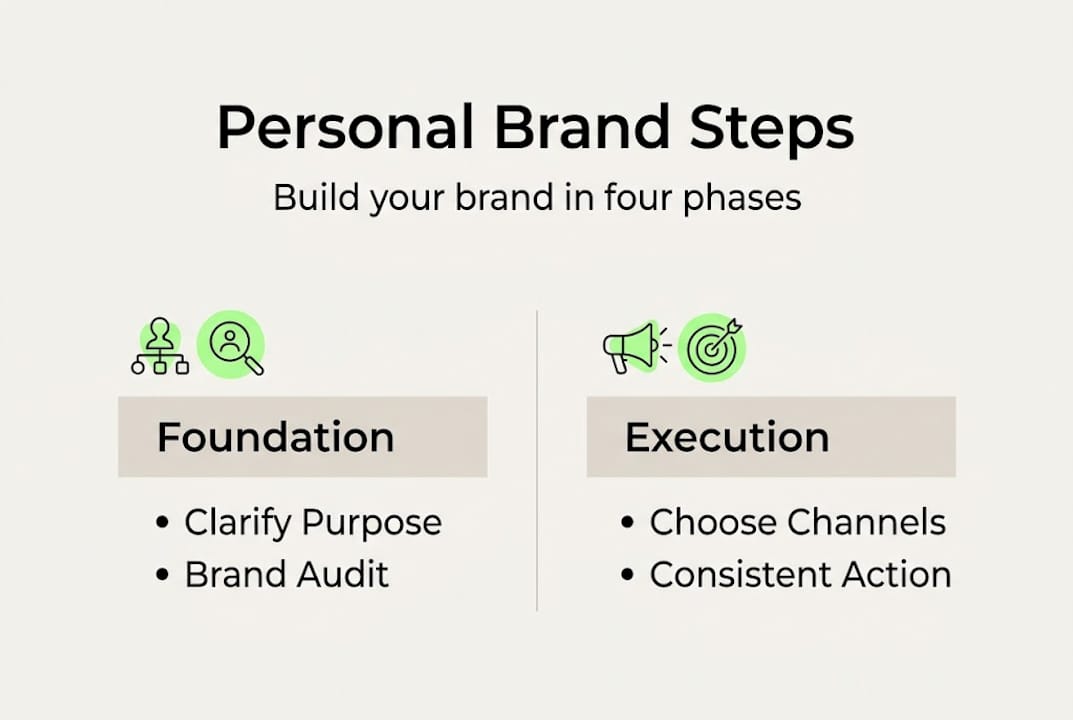
Starting a business without a clear online presence is like opening a store with no sign out front. You might have the best product or service in your niche, but if the right people can’t find you, recognize you, or trust you, growth stalls before it begins. For aspiring entrepreneurs and solopreneurs, learning how to build a personal brand online is no longer a luxury it’s the foundation everything else is built on. A strategic personal brand attracts clients, signals credibility, and opens doors that cold outreach rarely can. This guide walks you through every concrete step to create a personal brand that actually works, from defining your purpose to executing with consistency.
Table of Contents
Key Takeaways
Point | Details |
|---|---|
Start with clarity | Define your purpose, mission, and audience before building your online presence. |
Tell a consistent story | Craft a memorable narrative and share it authentically across all platforms. |
Pick smart platforms | Focus on the channels and tools best aligned with your goals for greater impact. |
Execute and improve | Produce regular content, network actively, and fine-tune your strategy based on feedback. |
Define your purpose and assess your brand
With the importance of a personal brand established, let’s start with the foundation — purpose and honest self-assessment. Most new founders skip this step entirely. They jump straight to designing a logo or posting on Instagram before they’ve answered the most important question: What do I actually stand for, and who am I trying to reach?
The Harvard 7-step personal branding framework begins exactly here — defining purpose and auditing your existing brand equity before doing anything else. That’s not an accident. Without clarity on your mission, every piece of content you create will feel scattered, and your audience will feel it too.
Start by asking yourself four foundational questions:
What am I uniquely good at? Identify your top three strengths, not just skills, but the intersection of talent and passion.
Who do I want to serve? Define your ideal audience as specifically as possible — industry, role, stage of business, pain points.
What do I want to be known for? Choose one or two themes you want to own in your space.
What’s my long-term mission? Think beyond revenue. What change are you trying to create?
Once you’ve answered those, conduct a brand audit. Google your own name. Review every social profile you have. Ask three trusted peers or colleagues what words come to mind when they think of you professionally. You’re looking for gaps between how you see yourself and how others perceive you — that gap is where your brand work begins.
Here’s a simple framework to organize your audit:
Audit area | What to check | What to fix |
|---|---|---|
Google search results | First page results for your name | Outdated bios, missing profiles |
Social profiles | Photo, headline, bio, recent activity | Inconsistent messaging |
Content history | Old posts, articles, comments | Off-brand or irrelevant content |
Peer perception | Informal feedback | Misaligned reputation signals |
From this audit, write a single-sentence purpose statement. Something like: “I help early-stage founders build scalable go-to-market strategies through practical, no-fluff guidance.” This sentence becomes your north star for everything that follows. For a deeper look at branding for new businesses, it pays to revisit the fundamentals regularly as your business evolves.
Pro Tip: Don’t overthink the purpose statement on day one. Write a draft, use it for 30 days, then refine it based on how people respond to your content and conversations.
Craft a memorable personal brand narrative
Once your goals and current reputation are clear, it’s time to shape your story. A personal brand without a narrative is just a collection of facts. Facts inform. Stories connect. And connection is what converts a casual follower into a loyal client or collaborator.
Constructing a compelling narrative is a core step in Harvard’s framework for a reason. Humans are wired to remember stories, not bullet points. Your story is your most durable competitive advantage because no one else has lived your exact journey.
Build your narrative around three core story types:
Origin story: Why did you start this journey? What problem did you personally experience that led you here? Be specific and honest, not polished.
Key wins: What results have you achieved, for yourself or others? Use numbers where you can — percentages, timelines, outcomes.
Philosophy: What do you believe about your industry that most people get wrong? This is where you establish a point of view that attracts your tribe and repels those who aren’t a fit.
Authenticity matters enormously here, but so does aspiration. Your story should reflect where you are and where you’re heading. Readers want to see themselves in your journey. They want to believe that if you figured it out, they can too.
“Your brand is what people say about you when you’re not in the room.” — Jeff Bezos
That quote cuts deep for solopreneurs, because you often are the brand. Every post, reply, and conversation shapes that perception. Make sure your narrative is repeatable across all channels. If your LinkedIn bio tells one story and your Instagram caption tells another, people sense the inconsistency even if they can’t name it. Consistency builds trust faster than any single viral post ever will. For practical building online reputation tips, focus on keeping your core message tight and your tone recognizable everywhere you show up.
Choose the right channels and tools
With your story ready, your next step is choosing where and how to share it. This is where many solopreneurs make a costly mistake: they try to be everywhere at once and end up being effective nowhere.

Here’s a realistic comparison of the top platforms for personal brand building:
Platform | Best for | Effort level | Audience type |
|---|---|---|---|
B2B credibility, thought leadership | Medium | Professionals, decision-makers | |
Personal website | Owned audience, SEO, portfolio | High (upfront) | All audiences |
Twitter/X | Real-time conversation, ideas | Low to medium | Tech, media, founders |
Visual storytelling, lifestyle brands | Medium to high | Consumer, creative industries |
For most solopreneurs starting out, LinkedIn and a personal website are non-negotiable. LinkedIn is where business leaders grow personal brands through updating profiles, experimenting with content formats, networking broadly, and investing in evergreen tools. A personal website gives you an owned platform that no algorithm can take away.
Here’s a prioritized starting sequence:
Build your personal website with a clear homepage, about page, and one lead magnet or contact form.
Optimize your LinkedIn profile with a keyword-rich headline, a compelling summary, and a recent professional photo.
Choose one secondary platform based on where your target audience actually spends time.
Set up a content calendar using free tools like Notion or Buffer to plan posts two weeks ahead.
Install basic analytics on your website and track LinkedIn post performance weekly.
Consistency across platforms comes down to a personal style guide. Document your brand colors, fonts, tone of voice, and the types of content you will and won’t publish. This takes two hours to create and saves you countless hours of second-guessing later. Explore solopreneur tools and AI tools for entrepreneurs to find the right stack for your workflow without overcomplicating things.
Pro Tip: Audit your chosen platforms every 90 days. If a channel isn’t generating meaningful engagement or leads after three months of consistent effort, reallocate that time to what’s working.
Execute your brand: Content, networking, and iterations
Once your platforms are set, execution and iteration become the engine for sustained growth. Strategy without action is just planning. And planning without feedback loops is just guessing.
Consistent content, style guides, and active networking are what separate personal brands that gain traction from those that fade out after a few weeks of enthusiasm. Here’s how to build an execution rhythm that’s sustainable:
Post with a mix of content types. Rotate between short-form insights, longer articles, behind-the-scenes updates, and engagement questions. Video consistently outperforms text-only posts on most platforms, so don’t avoid it out of fear.
Engage before you broadcast. Spend 15 minutes each day commenting meaningfully on posts from thought leaders in your space. Genuine, specific comments build visibility faster than posting alone.
Join two or three communities where your target audience is active, whether that’s a LinkedIn group, a Slack community, or an industry forum. Show up consistently, not just when you want to promote something.
Follow your style guide religiously. Every post, bio update, and reply should feel like it came from the same person with the same values and voice.
Review your analytics monthly. Which posts drove the most profile visits? Which topics got the most saves or shares? Let data guide your next 30 days of content.
Networking deserves special attention. Strategic relationship-building is one of the highest-leverage activities a solopreneur can invest in. For actionable business networking steps and networking event tips, the key is to approach every interaction with genuine curiosity rather than a transactional mindset.
Pro Tip: Batch your content creation. Set aside three hours once a week to write and schedule all your posts. This protects your creative energy and keeps you consistent even during busy weeks.
What most new solopreneurs get wrong about personal branding online
Here’s something we see constantly: founders spend weeks obsessing over their logo colors and font choices, then wonder why their brand isn’t growing. Visuals matter, but they’re the last 10%. The first 90% is clarity, substance, and showing up consistently with something worth saying.
Real brand growth doesn’t come from a viral moment. It comes from the compounding effect of showing up with a clear point of view, week after week until the right people start to recognize and trust you. That’s a slower process than most people want, but it’s the only one that actually holds.
Another common trap is platform-hopping. A new channel gains buzz and founders abandon what’s working to chase the trend. Choosing one or two high-impact platforms and mastering them will always outperform spreading your effort thin across six. Depth beats breadth, especially early on.
We also see founders treat branding as a one-time project rather than an ongoing practice. Your brand should evolve as you learn more about your audience and your market. Build in regular reputation-building strategies reviews every quarter so your brand stays sharp and relevant as you grow.
Ready to supercharge your online brand?
Building a personal brand that actually attracts clients and opportunities takes more than good intentions. It takes a clear strategy, the right tools, and a system that keeps you moving forward even when motivation dips. That’s exactly what we’ve built at siift.ai. Our Intelligent Business Canvas guides you step-by-step through the decisions that matter most, from clarifying your positioning to validating your go-to-market approach, so you’re not just building a brand but building a business with real traction behind it. Start with our solopreneur tools guide to find the resources that fit where you are right now.
Frequently asked questions
What is the most important first step in online personal branding?
Clarifying your purpose and target audience lays the foundation for everything else. Defining purpose is the first step in Harvard Business School’s 7-step personal branding framework.
How often should I update my online profiles for personal branding?
Updating key profiles like LinkedIn and your website at least monthly keeps your brand credible and current. Regular LinkedIn updates are consistently cited as a core habit for effective personal brand growth.
Is LinkedIn or Instagram better for building my online personal brand?
LinkedIn is the stronger choice for professional credibility and B2B audiences, while Instagram works better for visual content and lifestyle-driven brands. Match the platform to where your specific audience actually spends time.
How do I stay consistent across multiple platforms?
Create a personal style guide that documents your brand colors, tone of voice, and core messages, then reference it every time you create content. A style guide maintains brand consistency across every channel without requiring constant decision-making.
What if my personal brand isn’t growing fast enough?
Reevaluate your messaging, content mix, and engagement habits, then commit to testing your adjustments for at least 60 days before drawing conclusions. Regular brand reassessment is built into Harvard’s framework precisely because growth is rarely linear.
What is a step by step systematic approach to building personal brand online with full automation?
Define your niche, audience, and clear value you want to deliver online.
Create content pillars like education, personal experience, tools, and insights.
Use AI to turn one idea into multiple posts and automate content scheduling.
Drive traffic into an email list and optimize based on what performs best.