

TL;DR:
Effective online networking involves purposeful engagement, clear goals, and personalized outreach. Building strong relationships requires consistent interaction, authentic communication, and timely follow-up. Avoid generic messages and focus on adding value to create lasting professional connections.
Online networking is the intentional use of digital platforms and techniques to form and nurture professional relationships that lead to real career and business opportunities. This is not passive scrolling or collecting connections like baseball cards. 85% of career opportunities come from consistent networking, which means the quality of your digital relationships is one of the most consequential investments you can make. Whether you are a founder validating your first idea, a student building your professional footprint, or a seasoned professional expanding your reach, knowing how to network online with intention separates the people who grow from the people who just stay busy.
How to network online: what you need before you start

Effective online networking starts with clarity, not activity. Before you send a single message, you need to know what you want, where your people are, and what your digital presence says about you when you are not in the room.
Set goals that actually guide you
Vague goals produce vague results. Define whether you want introductions to investors, peer accountability partners, potential clients, or mentors in a specific industry. That single decision shapes every platform choice and message you write afterward.
Choose the right platforms
LinkedIn remains the default for professional relationship building, but niche communities often outperform it for depth. Slack groups, Discord servers, and industry-specific forums connect you with people who share a precise context, which makes trust easier to build. 76% of internet users participate in online communities, which signals that the real conversations have already moved beyond the main feed.
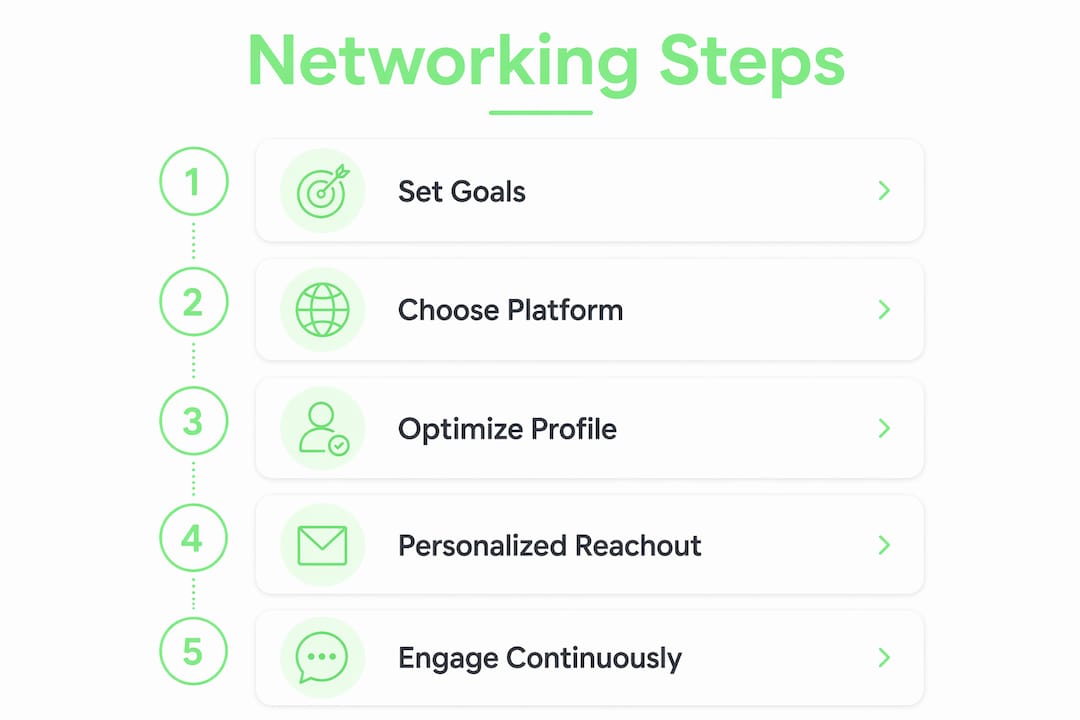
Optimize your profile before outreach
Your profile is your handshake. A professional photo, a headline that states what you do and for whom, and a clear call to action in your summary are non-negotiable. Think of your personal brand online as the first impression that works while you sleep.
Your pre-networking checklist:
Professional headshot (not a cropped group photo from 2019)
Headline that leads with value, not job title
Summary with a clear call to action or contact method
Featured section with your best work, writing, or project
Digital business card or contact link ready to share
Pro Tip: Use a digital business card tool to share your contact details in one tap during virtual events. It removes friction and makes follow-up effortless for both sides.
How do you reach out strategically and build real connections?
The biggest mistake in online outreach is treating it like a numbers game. Personalized, relevant messages consistently outperform mass outreach in both response rates and platform algorithm favorability. LinkedIn actively penalizes high-volume generic outreach, so the spray-and-pray approach does not just feel bad. It literally does not work.
The 3-to-1 Rule
The 3-to-1 Rule is the single most practical framework for outreach: give three pieces of value before you make one ask. Comment thoughtfully on someone’s post. Share their article with a genuine note. Answer a question they posed publicly. By the time you reach out directly, you are not a stranger. You are a familiar, generous presence.
Warm up before you reach out
Cold messages to people who have never seen your name convert poorly. Spend one to two weeks engaging with a target connection’s content before sending a direct message. Like, comment with substance, and reply to their replies. When your message arrives, it lands in a warm inbox, not a cold one.
Use asynchronous video messages
Asynchronous video messages get 4x higher response rates than traditional text messages. A 60-second video where you reference something specific about the person’s work, state your ask clearly, and keep it conversational does more work than three paragraphs of text. Tools like Loom make this dead simple.
What every effective outreach message needs:
A specific reference to their work, post, or background
A clear, single ask (not three questions stacked together)
Brevity: under 150 words for text, under 90 seconds for video
A low-friction next step (two or three suggested times, not a booking link)
Pro Tip: Never send a calendar booking link as your opening move. It signals that your time matters more than theirs. Instead, suggest two or three specific times and let them pick. Sending a booking link first reduces connection acceptance and creates unnecessary friction.
What does ongoing engagement actually look like?
Building connections online is not a one-time event. It is a practice. The professionals who build the strongest networks treat engagement like a daily habit, not a quarterly campaign.
Dedicating 30 minutes daily to intentional online networking beats occasional marathon sessions every time. Small, consistent interactions compound over months into real relationships. Here is a system that works:
Spend 10 minutes engaging with your feed. Comment on two or three posts from people in your target network. Make your comments substantive, not just “Great post!”
Spend 10 minutes following up. Reply to any messages you received. Send a value-add note to someone you met at a recent virtual event.
Spend 10 minutes prospecting. Identify two or three new people worth connecting with and warm them up by engaging with their content.
Follow up within 48 hours of any new connection. Reference something specific from your conversation or their content. Generic follow-ups get ignored. Specific ones get remembered.
Active listening and focused presence improve the quality of online interactions more than any script. When you are in a virtual coffee chat, close your other tabs. Single-task. The person on the other side can feel whether you are actually there.
Virtual events deserve special attention. Side conversations and chat threads at virtual events produce stronger connections than the main presentations. When someone asks a sharp question in the chat, reach out to them directly afterward and reference it. That specificity is what turns a stranger into a contact.
Pro Tip: Use a simple spreadsheet or a lightweight CRM to track your key contacts, when you last spoke, and what you discussed. Even 20 rows in a Google Sheet beats relying on memory.
What are the most common online networking mistakes?
Most networking failures are not about effort. They are about approach. Knowing what to avoid saves you months of wasted outreach.
Over-automation kills credibility. AI-generated mass messages are easy to spot and immediately signal that you do not actually care about the person you are contacting.
Leading with an ask. Opening a conversation with a request, before any relationship exists, is the digital equivalent of asking someone to marry you on a first date.
Lurker syndrome. Consuming content without ever contributing means you are invisible. Engagement is the price of admission to any online community.
Ignoring introverts’ advantage. Online networking is an introvert’s superpower because asynchronous communication lets you craft thoughtful responses without the pressure of real-time conversation. If in-person events drain you, lean into this.
Networking burnout. Trying to be everywhere at once leads to shallow connections everywhere. Pick two or three platforms and go deep.
“Treat LinkedIn like a garden to cultivate, not a directory to scrape. The people who grow the best networks are the ones who show up consistently, add value generously, and ask for things rarely.”
For founders specifically, building trust online requires a long-term mindset. Relationships that pay off in year two were planted in year one. Patience is not optional. It is the strategy.
Key Takeaways
Effective online networking is built on consistent, personalized engagement, not volume, and the professionals who apply the 3-to-1 Rule, optimize their profiles, and follow up within 48 hours build the strongest, most durable connections.
Point | Details |
|---|---|
Goals before platforms | Define what you want from networking before choosing where to spend your time. |
Profile as first impression | Optimize your headline, photo, and summary before sending any outreach. |
The 3-to-1 Rule | Give three acts of value before making one ask to avoid being seen as a taker. |
Daily 30-minute habit | Consistent small interactions compound into real relationships faster than occasional bursts. |
Follow up within 48 hours | Specific, timely follow-ups after new connections dramatically improve conversion to real relationships. |
Why most people network wrong (and what I’ve learned from doing it right)
Here is something most networking advice gets wrong: it treats connection as a transaction with extra steps. Send message, get meeting, close deal. That model is dead, and honestly, it was never that alive to begin with.
What I have found, after years of building professional relationships across digital platforms, is that the people who build genuinely useful networks think like gardeners. They plant seeds without knowing exactly which ones will grow. They water consistently. They do not dig up the roots every week to check on progress.
The shift to asynchronous video changed everything for me personally. Sending a 60-second video where I reference a specific piece of someone’s work, in my own voice, with my actual face, creates a human moment that no text message can replicate. The response rates are not just higher. The quality of the conversations that follow is categorically different.
The cultural shift worth paying attention to is this: authenticity is now a competitive advantage. In a world where AI can generate a thousand generic outreach messages before breakfast, the person who writes something real and specific stands out immediately. Your quirks, your specific perspective, your genuine curiosity about someone’s work. These are not soft skills. They are your actual edge.
If you are a founder or entrepreneur, your network is part of your product. The early customers and collaborators who matter most will almost always come through a relationship, not a cold ad. Build accordingly. And if you want a framework for thinking about building in public as a networking strategy, it is one of the most underrated plays available to founders right now.
— Samim
What Siift offers founders who are serious about growth
Building a network is one piece of the founder puzzle. Knowing what to do with the opportunities that network surfaces is another. Siift is an agentic AI platform built specifically for founders and entrepreneurs who want to move from idea to validated strategy without the guesswork. It guides you through ideation, validation, and go-to-market planning in a structured, step-by-step way that generic AI tools simply cannot replicate. If you are ready to turn your connections into traction, start with Siift and see how a purpose-built founder OS changes the way you operate. For an alternative entry point, explore Siift here and find the plan that fits where you are right now.
FAQ
What is the most effective way to network online?
The most effective approach combines a clear goal, an optimized profile, and personalized outreach using the 3-to-1 Rule. Consistent daily engagement of around 30 minutes outperforms sporadic high-volume activity.
Which platforms are best for professional online networking?
LinkedIn is the standard for professional relationship building, but niche communities on Slack and Discord often produce deeper connections faster. Choose platforms based on where your specific target audience is most active.
How do I network online as an introvert?
Asynchronous communication is a natural fit for introverts because it removes the pressure of real-time conversation. Asynchronous video messages and thoughtful written comments let you engage on your own terms without sacrificing quality.
How soon should I follow up after connecting with someone online?
Follow up within 48 hours of any new connection. Reference something specific from your interaction to make the message personal and memorable.
How do I avoid coming across as spammy when networking online?
Personalize every message, lead with value, and never open with an ask. LinkedIn penalizes high-volume generic outreach, so quality and specificity are both the ethical and the algorithmic choice.