TL;DR:
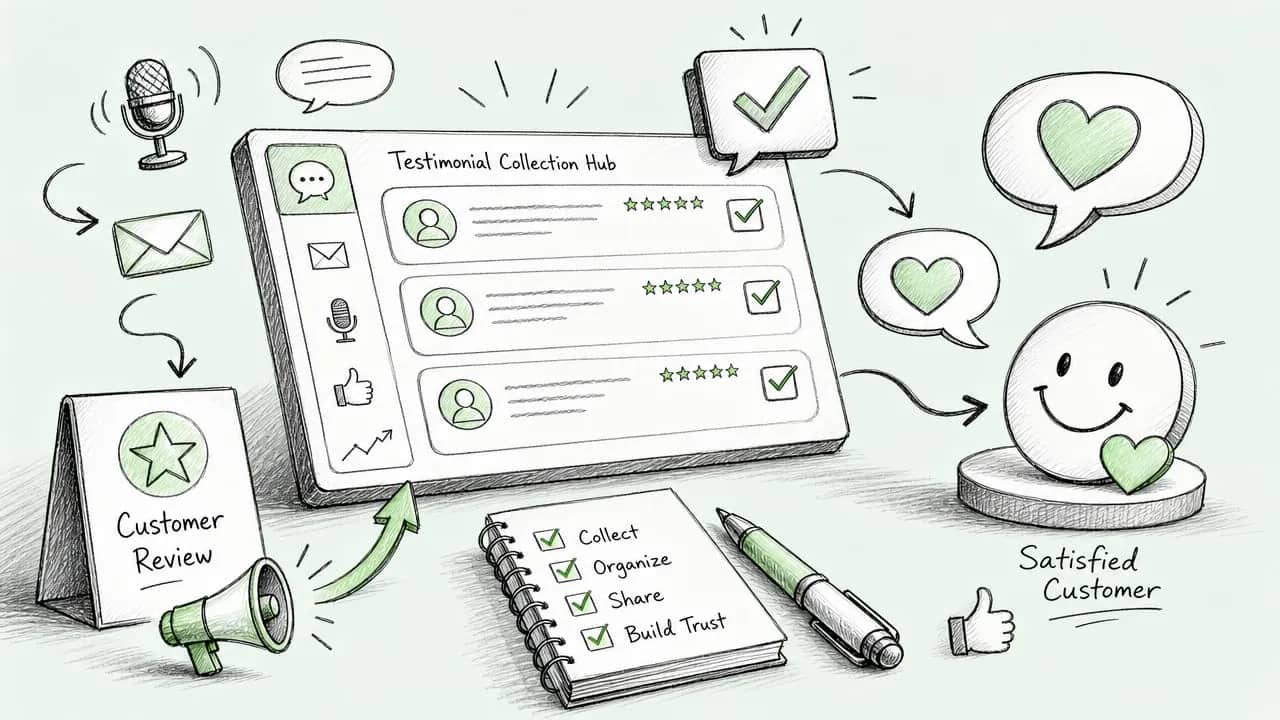
Collecting customer testimonials requires a structured process, personalized timing, and multiple channels to build authentic social proof. Avoid common mistakes like generic requests, late asks, and unnecessary friction, and always secure proper consent. Using well-placed, genuine testimonials across marketing assets effectively builds trust and accelerates growth.
A customer testimonial is a direct, authentic statement from a real buyer describing the results they got from your product or service. Knowing how to get testimonials is one of the highest-leverage moves a small business owner can make. A single compelling quote on your homepage does more selling than three paragraphs of your own copy. Optimized testimonial processes achieve over 60% response rates, which is a number that should make every founder sit up straight. This guide gives you the timing frameworks, request scripts, collection workflows, and post-collection strategies to build a testimonial engine that runs consistently.
How to get testimonials: what you need before you start
The biggest mistake founders make is asking for testimonials without a system. Winging it produces one or two quotes that live in your inbox and never see the light of day.
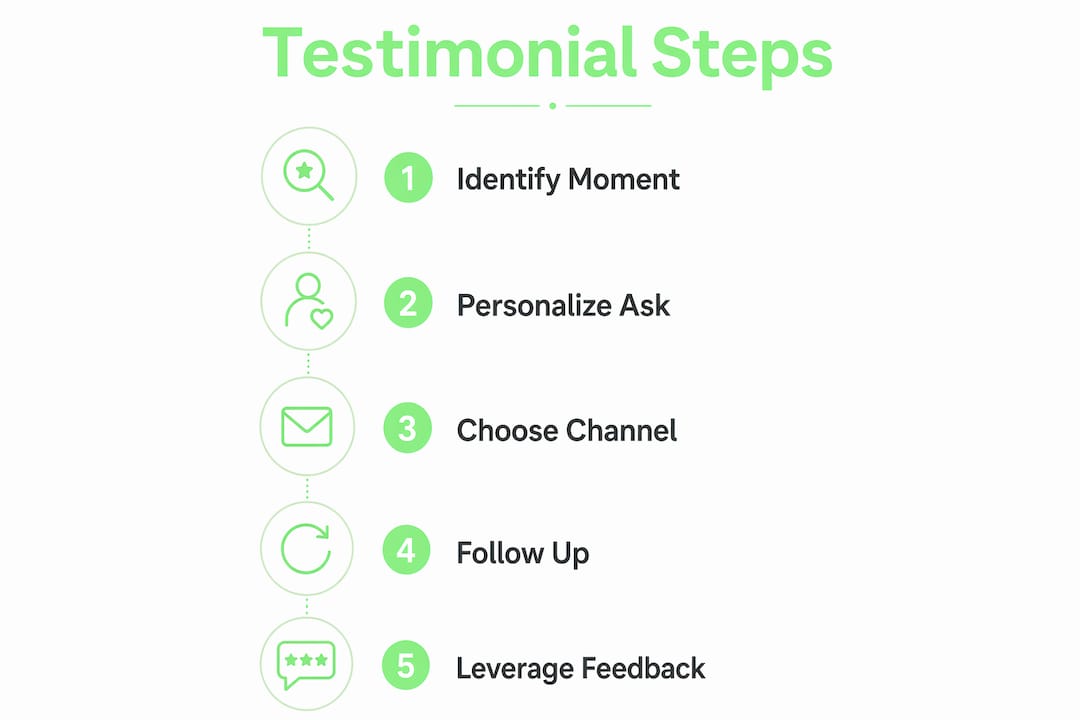
Before you send a single request, get clear on three things: the right moment to ask, the channel you will use, and how you will store what comes back. The right moment is almost always tied to a milestone. Project completion, a measurable result, a product delivery, or a renewal conversation are all natural openings. Asking in the middle of a project, before the customer has felt the benefit, is asking too early.
Your collection method should match your customer’s habits. Here is a quick overview of the main options:
Method | Best use case | Effort for customer |
|---|---|---|
Email with form link | Service businesses, B2B | Low |
SMS with short link | E-commerce, local services | Very low |
Video invite (Zoom call) | High-ticket, consulting | Medium |
Social media outreach | Consumer brands, communities | Low |
In-person or on-call ask | Agencies, coaches, freelancers | Very low |
Personalization matters at every step. A request that mentions the customer’s name, their specific project, and a concrete result they achieved converts far better than a mass blast. Make the form mobile-friendly. Remove every unnecessary field. Friction kills response rates faster than anything else.
How do you craft a testimonial request that gets a response?
Timing is the single biggest lever you have. Request testimonials within 48 hours of project completion for service businesses, and within 7–14 days of purchase for e-commerce. That window captures the customer when excitement is fresh and results are visible.
The structure of the request matters just as much. Keep the entire process under two minutes. Response rates drop sharply when the process exceeds two minutes or uses generic satisfaction questions. Ask one or two focused, outcome-related questions instead of a long survey.
Strong questions sound like these:
“What specific result did you get from working with us?”
“What would you tell a friend who was considering hiring us?”
“What was the biggest problem we solved for you?”
These questions produce specific, story-driven answers. Generic questions like “How was your experience?” produce generic answers like “It was great!” which help no one.
Pro Tip: Frame your request as helping other customers make a better decision, not as a favor to your business. Framing the ask this way makes clients feel like trusted advisors rather than promotional tools, and response rates climb noticeably.
Here is a simple email template you can adapt:
“Hi [Name], working with you on [specific project] was genuinely rewarding, especially seeing [specific result]. I’m building out a resource to help other founders facing the same challenges you had. Would you be willing to share a quick thought? It takes under two minutes. [Link to form]”
For SMS, strip it down further: “Hi [Name], quick question about your results with [product]. Mind sharing one sentence? [Link].” Short, specific, and respectful of their time.
What are the best ways to collect and manage testimonials?
A branded landing page dedicated to testimonials does two things. It signals professionalism, and it removes the confusion of “where do I send this?” Keep the page simple: a short explanation of why you are collecting feedback, two or three guiding questions, and a submit button. Nothing else.
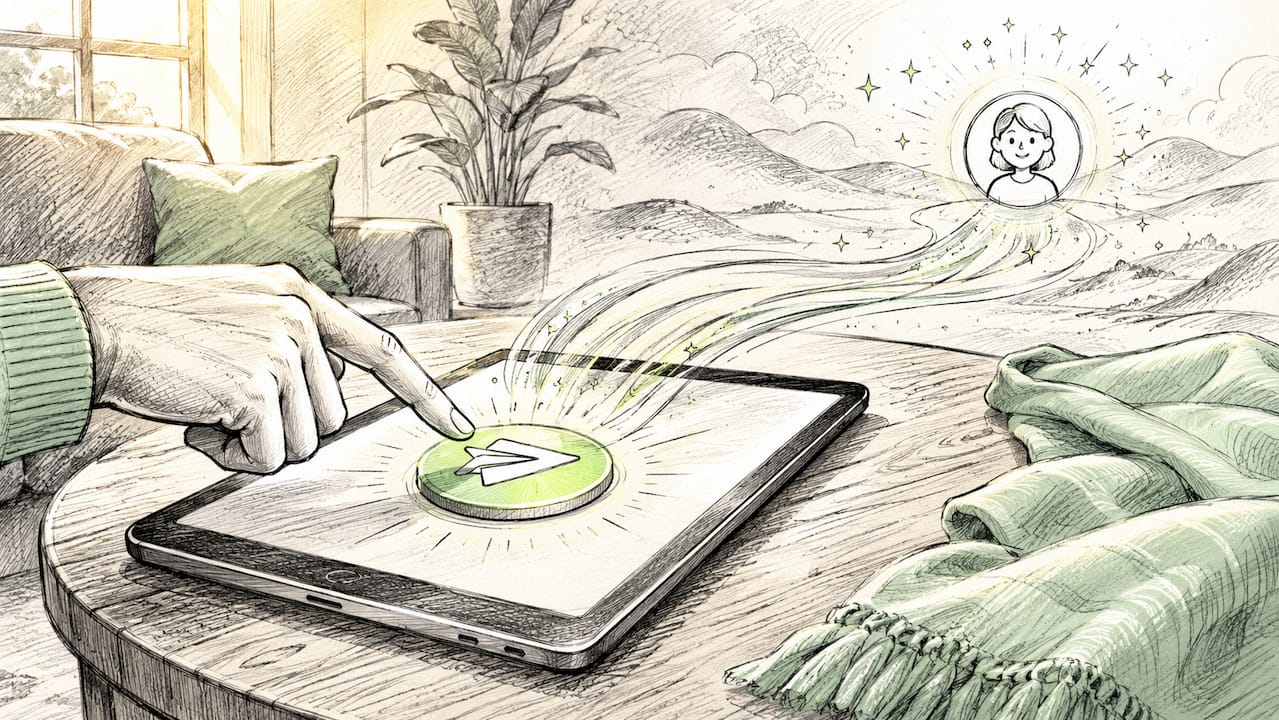
Automated workflows save founders the most time. Set a trigger at the milestone moment, whether that is a project marked complete in your project management tool or a purchase confirmation in your e-commerce platform, and let the system send the request. Smart follow-ups, sent once after three to five days if there is no response, recover a meaningful portion of missed opportunities.
Pro Tip: Pre-draft a testimonial for the client to edit and approve. Removing the blank page barrier is one of the most effective ways to increase submission rates. Most clients will approve a well-written draft with minor edits.
Video testimonials are worth the extra effort for high-ticket services. Inviting clients to a 5–10-minute Zoom call produces authentic, high-quality content that converts significantly better than text alone. Give them a simple script or three talking points beforehand so they are not staring at the camera wondering what to say.
Social media is an underused source. Monitor mentions, tags, and comments regularly. When a customer posts organic praise, reach out directly and ask if you can feature it as a testimonial. Combining passive monitoring with active asks produces the best overall results. Relying on only one method leaves real social proof on the table. These social proof strategies can increase engagement by meaningful margins when applied consistently.
What mistakes kill your testimonial collection efforts?
Most testimonial programs fail for predictable reasons. Knowing the pitfalls in advance saves you weeks of wasted effort.
Generic mass requests. A blast email to your entire list with no personalization reads as spam. Customers ignore it because it does not feel like it is meant for them.
Asking too late. Wait more than two weeks after a service delivery and the emotional peak has passed. The customer has moved on, and so has their enthusiasm.
Requiring account creation. Any form that asks a customer to create a login before submitting feedback will lose the majority of potential respondents.
Asking before results are visible. A customer who has not yet experienced the benefit of your product has nothing meaningful to say. Patience here pays off.
Over-following up. One follow-up after three to five days is appropriate. Two or more follow-ups signals desperation and damages the relationship.
“The best testimonial programs treat the customer’s time as the most valuable resource in the exchange. Every unnecessary step you add is a step closer to a ‘no.’”
The common thread across all these mistakes is friction. Every barrier you add, whether it is a long form, a late ask, or a confusing process, reduces the chance of getting a response. Build the path of least resistance and customers will walk it.
What should you do after you collect a testimonial?
Getting the testimonial is only half the job. What you do with it determines whether it actually builds trust or sits in a folder somewhere.
Get written consent. Even an email approval counts, but a dedicated consent form or checkbox during collection is cleaner and protects you legally when editing or republishing.
Edit for clarity, not meaning. You can fix typos, tighten sentences, and remove filler. You cannot change what the customer actually said. Always send edits back for approval.
Place testimonials where decisions happen. Your homepage, pricing page, proposal documents, email sequences, and social media profiles are all high-impact locations. A testimonial buried in a blog post does less work than one placed next to a “Buy Now” button.
Repurpose across formats. A strong written testimonial becomes a pull quote, a social media graphic, a case study intro, and a video script prompt. One piece of authentic customer feedback can fuel multiple marketing assets.
Strong customer validation built from real testimonials also feeds directly into your broader go-to-market strategy. It tells you what your customers value most, which is information that sharpens every message you put out.
Key Takeaways
The most effective testimonial strategy combines precise timing, personalized requests, and multiple collection channels to produce authentic social proof that converts.
Point | Details |
|---|---|
Timing is everything | Ask within 48 hours for services and 7–14 days for e-commerce to capture peak enthusiasm. |
Keep requests short | Limit the process to under two minutes with 1–2 focused outcome questions for the best response rates. |
Remove friction at every step | Mobile-friendly forms, no account creation, and pre-drafted text all increase submission rates. |
Use multiple channels | Combine email, SMS, video invites, and social media monitoring to capture every opportunity. |
Secure consent and repurpose | Get written approval, then deploy testimonials across your website, proposals, and social channels. |
What I’ve learned from building testimonial systems from scratch
Here is the uncomfortable truth about testimonials: most founders treat them as an afterthought. They finish a project, feel awkward asking for praise, wait too long, and then wonder why their website looks like a ghost town of unverified claims.
The shift that changed everything for me was treating testimonial collection as a repeatable process, not a one-off favor. When you build it into your workflow at the milestone moment, it stops feeling like begging and starts feeling like a natural part of delivering value. Customers expect it. Many actually appreciate the structure.
The other thing I have seen consistently is that conversational language outperforms formal language every single time. A message that sounds like it came from a human being, not a marketing department, gets opened, read, and answered. Conversational, outcome-focused questions produce testimonials that are specific, credible, and genuinely persuasive. Generic questions produce generic answers that no one believes.
Respect your customers’ time, make it easy, and frame it as something that helps others. That combination works. Every time.
— Samim
Siift helps you build your testimonial strategy with confidence
Building a testimonial system is one part of a larger go-to-market strategy that every founder needs to get right. Siift is an agentic AI platform built specifically for entrepreneurs who want to move from idea to traction without the guesswork. It guides you through validation, positioning, and go-to-market planning step by step, so you know exactly who to ask, what to say, and when to say it. Collecting authentic customer proof becomes far easier when your overall strategy is clear. If you are ready to build a business that earns trust at every stage, start with Siift and see how a validated strategy changes everything. You can also explore word of mouth strategies to amplify the testimonials you collect.
FAQ
How do you ask for a testimonial without being awkward?
Frame the request as helping other customers make a better decision, not as a favor to yourself. A short, personalized message tied to a specific result the customer achieved removes almost all of the awkwardness.
What is the best time to request a testimonial?
The best timing is within 48 hours of project completion for service businesses and within 7–14 days of purchase for e-commerce. Asking during this window captures the customer when results are fresh and enthusiasm is high.
How many follow-up messages should you send?
Send one follow-up after three to five days if you receive no response. More than one follow-up risks damaging the relationship and signals poor boundary awareness.
Do video testimonials perform better than written ones?
Video testimonials convert significantly better than text, particularly for high-ticket services and consulting. Offering clients a simple script and a short Zoom call removes most of the technical barrier.
Do you need written consent to use a customer testimonial?
Yes. A dedicated consent form or checkbox during collection is the cleanest approach. Even an email approval provides a record, but formal consent protects you when editing or reusing the content across marketing channels.