

TL;DR:
Startups are newly created companies designed to disrupt markets through rapid growth and scalable business models. Most startups fail due to poor product-market fit or premature scaling, making validation and careful funding management essential. Success depends on founders focusing on customer problems, validating ideas early, and choosing a growth path aligned with their goals.
A business startup is a newly created company built to pursue rapid growth through an innovative product or service and a scalable business model. The term “startup” is the widely used industry label, but the formal business startup definition goes deeper than just “a new company.” Startups are specifically designed to disrupt markets, not just participate in them. Global venture funding hit $425 billion in 2025, a 30% year-over-year increase, which tells you the world is betting big on this model. Yet 90% of all startups eventually fail, with the most common cause being poor product-market fit. That tension between massive opportunity and brutal odds is exactly why every aspiring founder needs a clear-eyed business startup guide before they spend a dollar.
What is a business startup, and how is it different from a small business?
The distinction matters more than most founders realize. Startups target exponential growth and exits; small businesses prioritize long-term stability and steady profit. A local bakery and a food-tech app may both be “new businesses,” but they operate on completely different logic.
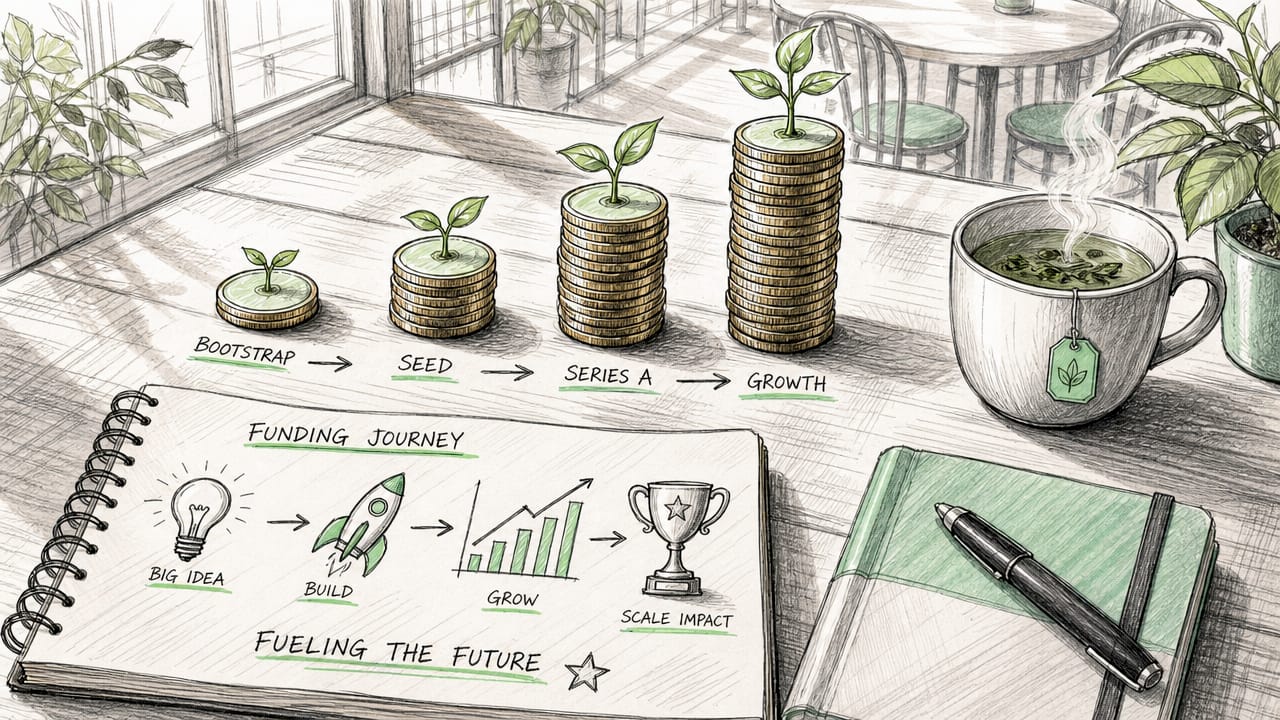
Here is a direct comparison:
Dimension | Startup | Traditional small business |
|---|---|---|
Primary goal | Rapid scale and market disruption | Stable revenue and community presence |
Funding model | Venture capital, angel investors, seed rounds | Personal savings, bank loans, bootstrapping |
Growth expectation | Exponential, often global | Steady, often local or regional |
Exit strategy | Acquisition, IPO, or merger | Long-term ownership or family succession |
Risk tolerance | High, by design | Moderate, by preference |
The mindset gap is where founders get into trouble. A founder who wants VC funding but thinks like a small business owner will frustrate investors. A founder who chases hypergrowth without the cash runway to support it will burn out fast. Knowing which model you are actually building is the first real decision you make.
Pro Tip: Ask yourself honestly: do you want to build something you own for 20 years, or something you scale and sell in 7? Your honest answer determines your funding strategy, hiring plan, and daily priorities.
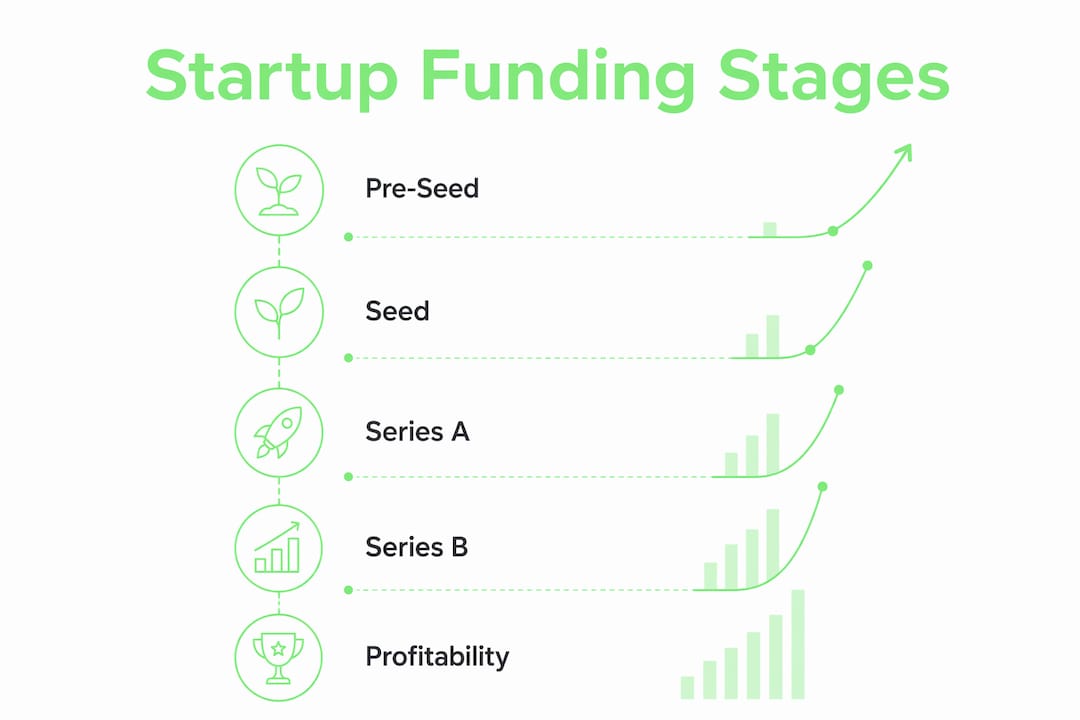
What are the typical startup funding stages and timelines to profitability?
Funding is not a single event. It is a sequence of bets, each one larger than the last, each one requiring more proof.
Startup funding rounds follow a clear progression: pre-seed rounds typically raise $500K–$2M to test an idea; seed rounds have a median of around $3.1M to build an early product; Series A raises $5M–$20M to prove a repeatable business model; and Series C rounds reach $50M–$200M or more for scaling and liquidity events. Each stage demands more traction, more data, and more conviction from investors.
Here is what founders often miss: less than 30% of seeded startups reach Series A. That is not a typo. Most startups that raise seed funding never make it to the next round. Series A is the toughest filter in the entire funding funnel, and it rewards founders who obsess over metrics, not just momentum.
Profitability timelines vary significantly by business type:
Service businesses: 3–9 months to profitability, because overhead is low and revenue starts early
E-commerce startups: 12–24 months, as inventory, logistics, and marketing costs stack up
SaaS and deep-tech: 3–6 years to profitability, given the long product development cycles and customer acquisition costs
The funding path you choose shapes everything. Bootstrapped startups typically reach profitability in 18–30 months, while venture-backed companies often burn cash for five or more years to capture market share. Neither path is wrong. Both require you to understand your runway, which is the number of months you can operate at your current spending rate before the money runs out. Runway is not a finance term. It is a survival metric.
For a deeper breakdown of what each round actually requires, the startup funding stages guide on Siift’s blog is worth your time.
Why do most startups fail, and how can you avoid it?
The failure rate is not random. It follows predictable patterns, which means it is also preventable, at least partly.
The leading causes of startup failure include:
No product-market fit: 34–43% of startups fail because nobody actually wanted what they built
Running out of money: Poor runway management kills companies that had real potential
Weak or misaligned founding teams: Skills gaps and co-founder conflicts destroy more startups than bad markets do
Premature scaling: 70% of tech startup failures trace back to scaling before validating product-market fit
That last point deserves a full stop. Premature scaling is the silent killer. Founders hire, advertise, and expand before they have confirmed that real customers will pay real money for their product. The result is a fast-burning fire with no fuel source.
“Most founders mistake ‘building’ for validation. True validation requires quick, cheap experiments with real customers to confirm product-market fit before you scale anything.”
The Lean Startup methodology, developed by Eric Ries and popularized through frameworks at institutions like Stanford’s d.school, treats every business assumption as a hypothesis to be tested cheaply and quickly. You do not build a full product to find out if people want it. You build the smallest possible version, get it in front of real users, and let their behavior tell you the truth.
Pro Tip: Treat your startup’s first six months as a series of experiments, not a construction project. Each experiment should answer one specific question about your customer, your market, or your model. Kill the ones that fail fast. Double down on the ones that work.
Founders who want a structured path through this process can use Siift’s avoid startup failure guide to map the most common pitfalls before they hit them.
How to start a business: the foundational steps for aspiring entrepreneurs
Starting a new business is not about having the perfect idea. It is about having a testable idea and the discipline to test it before you bet everything on it.
Define the problem, not the solution. Start with a specific pain point a specific group of people has. The more precisely you can describe who suffers from this problem and why current solutions fail them, the stronger your foundation.
Conduct real market research. Talk to at least 20–30 potential customers before writing a single line of code or spending on production. Ask about their current behavior, not their hypothetical preferences. People lie about what they would do. They cannot lie about what they already do.
Validate before you build. Use landing pages, mockups, or manual processes to test demand. If people will not sign up, pre-order, or pay for a prototype, they will not pay for the finished product either. This is the core of finding product-market fit fast.
Choose your funding strategy deliberately. Decide early whether you are building a bootstrapped business or a venture-backed one. This choice determines your hiring pace, your growth targets, and your tolerance for dilution. Founders often retain only 10–20% ownership by IPO after multiple funding rounds. Know what you are signing up for.
Build a complementary founding team. Solo founders succeed, but the odds improve with a co-founder who covers your blind spots. A technical founder paired with a commercial founder is a classic combination for good reason. Skills overlap is waste. Skills complementarity is strength.
Set early metrics that matter. Track weekly active users, conversion rates, customer acquisition cost, and churn from day one. Vanity metrics like social media followers tell you nothing about product-market fit. Revenue and retention tell you everything.
For founders thinking about organic growth from the start, building an organic marketing strategy early creates compounding returns that paid channels cannot replicate.
Key Takeaways
A business startup succeeds when founders validate market demand before scaling, choose a funding path aligned with their growth goals, and manage runway as their most critical survival metric.
Point | Details |
|---|---|
Startup vs. small business | Startups target exponential growth and exits; small businesses prioritize stability and steady profit. |
Funding stages matter | Pre-seed through Series C follow a defined sequence; less than 30% of seeded startups reach Series A. |
Failure is predictable | 34–43% of startups fail due to poor product-market fit, which is preventable through early validation. |
Profitability timelines vary | Service businesses profit in 3–9 months; SaaS startups often take 3–6 years. |
Runway is survival | Bootstrapped founders must reach profitability faster; venture-backed founders must manage burn against milestones. |
The hard truth about starting a startup in 2026
I have watched a lot of founders make the same mistake, and it is not the one they expect. They think their biggest risk is a bad idea. It is not. The biggest risk is a good idea executed before it is validated.
The founders who survive are not the ones with the most funding or the most technical skill. They are the ones who stay curious about their customers longer than feels comfortable. They ask “why” one more time when they think they already know the answer. They treat a failed experiment as data, not defeat.
The funding environment in 2026 is genuinely exciting. AI startups captured 50% of all VC funding last year, and the tools available to early-stage founders today would have seemed like science fiction a decade ago. But tools do not replace judgment. The discipline to validate before you scale, to manage your runway like your life depends on it (because your company’s life does), and to build a team that challenges your assumptions rather than confirms them. That is what separates the 10% that make it from the 90% that do not.
If I could give one piece of advice to every aspiring founder reading this: do not fall in love with your solution. Fall in love with your customer’s problem. The solution will change. The problem will not.
— Samim
How Siift helps founders build with confidence
Knowing the theory of startup validation is one thing. Having a system that walks you through it step by step is another. Siift’s New Business OS is built specifically for founders at the ideation and validation stage, guiding you through market research, business model testing, and go-to-market planning before you commit serious resources. It is the kind of structured thinking that used to require a $500-per-hour consultant, now available to any founder with a laptop. If you are serious about building something that lasts, validate your startup idea with Siift before you build it.
FAQ
What is a business startup in simple terms?
A business startup is a newly created company designed to grow rapidly by solving a market problem with a product or service that can scale. Unlike traditional small businesses, startups are built with the intent to disrupt markets and often pursue venture funding or acquisition as an exit.
How long does it take a startup to become profitable?
Profitability timelines depend on the business type. Service startups can reach profitability in 3–9 months, e-commerce startups in 12–24 months, and SaaS or deep-tech startups typically take 3–6 years.
What is the most common reason startups fail?
Poor product-market fit causes 34–43% of startup failures. Founders build products that real customers do not want or will not pay for, often because they skipped rigorous validation before scaling.
What is the difference between a startup and a small business?
Startups target exponential growth, market disruption, and eventual exits through acquisition or IPO. Small businesses focus on long-term stability, steady profit, and community presence. The funding models, risk profiles, and growth expectations are fundamentally different.
How much money do startups raise at each stage?
Pre-seed rounds typically raise $500K–$2M, seed rounds have a median of around $3.1M, Series A rounds raise $5M–$20M, and Series C rounds can reach $50M–$200M or more for scaling and liquidity events.