
Starting a business means making tough choices every day. 85% of business leaders experience ethical decision distress, revealing how complex these calls can be. For millennial entrepreneurs and side hustlers, understanding business ethics is not optional. It builds trust, attracts investors, and creates sustainable growth. This guide covers core principles, real dilemmas, culture building, CSR integration, and practical frameworks to navigate ethics confidently.
Table of Contents
Common Ethical Dilemmas In Startups And How To Navigate Them
The Cost Of Unethical Practices: Lessons From Real-World Scandals
Conclusion: Integrating Ethics Into Your Entrepreneurial Journey
Key Takeaways
Point | Details |
|---|---|
Ethics drives trust and growth | Transparent ethical practices increase customer loyalty by 30% and profitability by 20%. |
Decision distress is common | 85% of leaders struggle with ethical dilemmas, requiring structured frameworks. |
CSR strengthens stakeholder bonds | Corporate social responsibility initiatives enhance brand reputation and long-term viability. |
Culture starts with leadership | Embedding ethics through hiring, training, and accountability creates lasting impact. |
Myths hinder adoption | Ethical practices enable growth, not slow it, and are critical even for side hustles. |
Introduction to Business Ethics for Entrepreneurs
Business ethics guide transparent decision-making and align with societal expectations. These principles shape how you interact with customers, employees, investors, and communities. For startups, resource constraints and ambiguous situations create unique challenges. You might face pressure to cut corners or make quick compromises. Millennials and side hustlers benefit especially from prioritizing ethics early because it establishes credibility and attracts stakeholders who value integrity.
Core principles include transparency, integrity, fairness, respect, and accountability. Transparency means honest communication about your products, operations, and challenges. Integrity involves aligning actions with stated values consistently. Fairness ensures equitable treatment of all stakeholders. Respect honors the dignity and rights of everyone you interact with. Accountability means owning your decisions and their consequences.
These principles create a foundation for trust. When customers believe you operate ethically, they become loyal advocates. When investors see your commitment to business ethics definition and principles, they view you as lower risk. When employees observe ethical leadership, they stay engaged and productive.
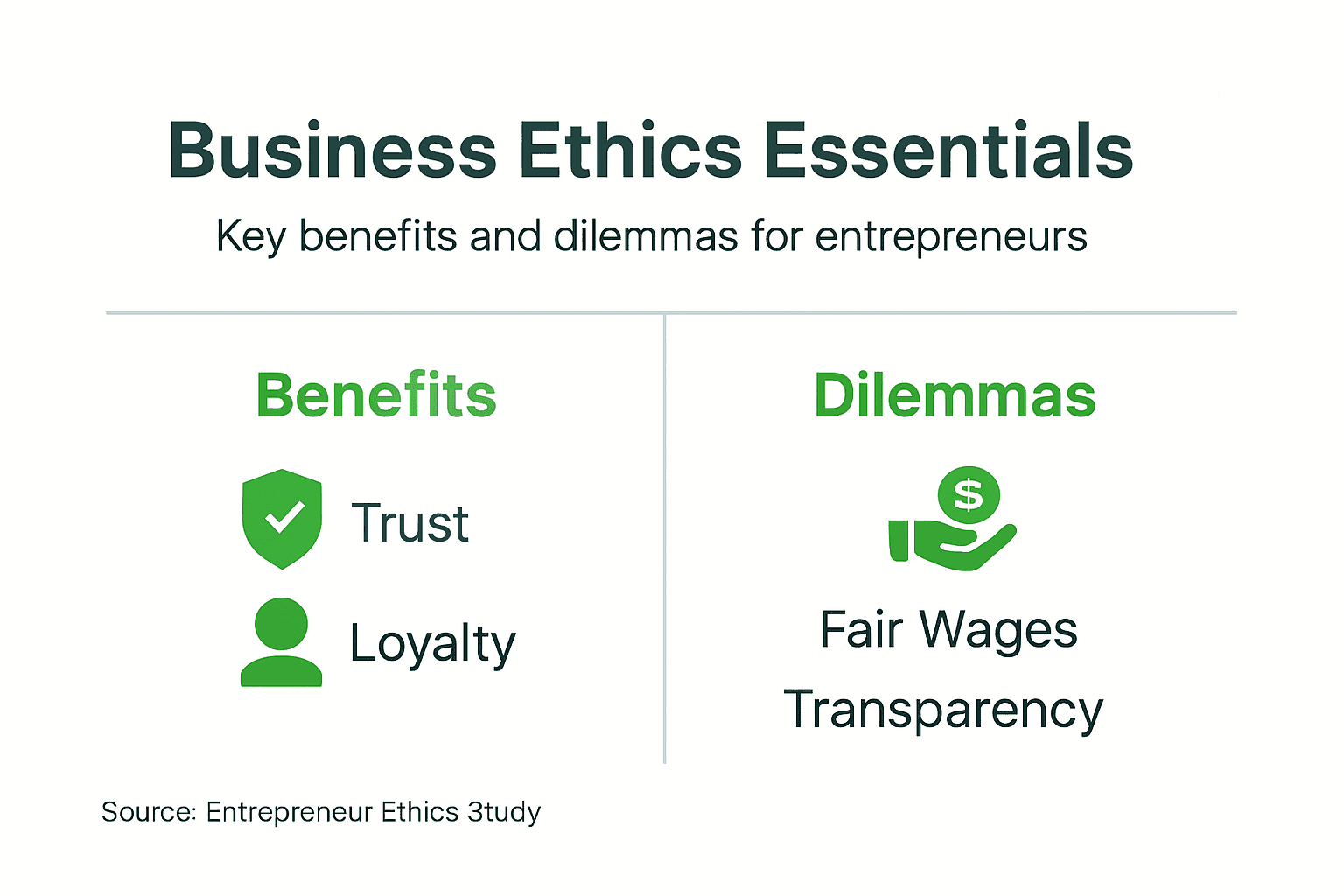
Startups face dilemmas like balancing profitability with fair wages or deciding how transparent to be about limitations. Side hustlers juggle ethics with survival pressures. Establishing clear principles early helps you navigate these moments without compromising your vision or reputation.
Why Business Ethics Matters for Entrepreneurs
Ethical practices deliver tangible business results. Companies with ethical cultures outperform peers by 20% profitability and retain 30% more customers over 3 years. These numbers show ethics is not abstract philosophy. It directly impacts your bottom line and growth trajectory.
Consumers increasingly make purchasing decisions based on values. 70% of consumers are more likely to buy from transparent ethical brands. Transparency about sourcing, labor practices, and environmental impact builds trust. When you demonstrate integrity consistently, customers become repeat buyers and recommend you to others.
Investors evaluate ethics as part of risk assessment. Ethical businesses face fewer legal issues, regulatory fines, and reputation crises. They attract capital from impact investors and socially conscious funds. Ethics creates a competitive advantage by differentiating you in crowded markets.
Key benefits of ethical practices include:
Enhanced customer loyalty and lifetime value
Increased investor confidence and easier fundraising
Lower legal and compliance risks
Stronger employee engagement and retention
Sustainable long-term growth
Distinct market positioning
Adopting ethical best practices for startups early builds momentum. You avoid costly mistakes and establish patterns that scale with your business. Ethics becomes woven into your operations rather than retrofitted later.
For detailed research on benefits, explore this ethical business benefits study and insights on consumer trust and ethics.
Common Ethical Dilemmas in Startups and How to Navigate Them
Entrepreneurs face recurring ethical challenges. Product claims tempt exaggeration to attract customers. AI tools raise transparency questions about authenticity. Conflicts of interest emerge when personal gain competes with stakeholder benefit. 85% of leaders face decision distress with ethics issues, showing these dilemmas are universal.
“85% of business leaders experience significant distress when navigating ethical decisions, highlighting the need for structured frameworks.”
The Ethical Entrepreneurial Decision Cycle offers a structured approach:
Identify the Issue: Recognize when a decision has ethical dimensions. Ask who benefits and who might be harmed.
Evaluate Impacts: Assess consequences for all stakeholders, including customers, employees, investors, and community.
Consider Alternatives: Generate multiple options. Avoid false binaries like “profit or ethics.”
Decide with Values: Choose the option that aligns with your core principles while meeting business needs.
Reflect and Learn: After implementation, review outcomes and refine your approach for future dilemmas.
This framework from ethical decision-making framework research helps you move from reactive to proactive ethics. Regular practice reduces distress and improves decision quality.
Pro Tip: Schedule monthly ethics reflections with your team. Discuss recent dilemmas and invite feedback to strengthen your ethical decision-making muscles.
Transparency about AI use deserves special attention. Transparency about AI use in communications boosts trust, so disclose when AI helps create content. Customers appreciate honesty more than perfection. Hiding AI involvement creates suspicion and damages credibility when discovered.
For navigating startup ethical dilemmas and applying ethical decision frameworks for startups, structured tools reduce anxiety and improve outcomes. More guidance on AI transparency and ethics clarifies emerging standards.
Building an Ethical Culture in Startups
Ethical culture requires intentional design. Leadership commitment sets the tone. When founders model ethical behavior, teams follow. 70 ethics and sustainability experts emphasize cross-departmental collaboration to embed ethics across operations. Isolating ethics in one department creates blind spots.
Diversity strengthens ethical decision-making. Teams with greater gender diversity maintain higher integrity under pressure. Diverse perspectives challenge assumptions and surface ethical concerns others might miss. Building diverse teams from the start creates ethical advantages.
Steps to build ethical culture:
Define core values explicitly and communicate them regularly
Integrate ethics into hiring criteria and interview questions
Provide ethics training during onboarding and ongoing education
Create safe channels for reporting concerns without retaliation
Recognize and reward ethical behavior publicly
Hold leadership accountable to the same standards as all employees
Review policies regularly to ensure they reflect evolving values
Pro Tip: Embed ethics discussions into weekly team meetings. Make it normal to raise ethical concerns and celebrate instances where team members made principled choices.
Cross-functional collaboration prevents silos. When marketing, product, and operations teams discuss ethics together, they identify tensions early. For example, marketing wants bold claims while product knows limitations. Joint ethics discussions find honest messaging that excites customers without misleading them.
Resources like building startup ethical culture provide templates and checklists. Research on cross-department ethics integration and gender diversity and ethics offers evidence-based strategies.
Role of Corporate Social Responsibility in New Ventures
Corporate social responsibility connects business success with social good. CSR focuses on environmental, social, and governance factors. For startups, CSR builds brand reputation and stakeholder trust. It demonstrates commitment beyond profit maximization.
52% of corporate citizenship leaders plan increased CSR resource allocation in 2026, showing growing prioritization. Even small ventures can participate meaningfully. CSR does not require massive budgets. It requires intentional choices aligned with your values.
Industry Type | Planned CSR Resource Increase 2026 |
|---|---|
Technology | 58% |
Retail | 51% |
Financial Services | 49% |
Manufacturing | 47% |
Practical CSR initiatives for startups:
Partner with local nonprofits on shared missions
Implement sustainable packaging or operations
Offer employee volunteer time or matching donations
Source from ethical suppliers and vendors
Commit to carbon neutrality or offset programs
Support diversity and inclusion in hiring and leadership
Donate products or services to underserved communities
CSR strengthens your ethical foundation by extending responsibility beyond immediate stakeholders. Customers, investors, and employees increasingly expect businesses to contribute positively to society. CSR alignment with business ethics creates coherent, authentic brand positioning.
Explore CSR in startups for implementation guides. Data on CSR trends 2026 reveals industry benchmarks and emerging practices.
The Cost of Unethical Practices: Lessons from Real-world Scandals
Unethical behavior destroys businesses. Volkswagen’s emissions scandal and Enron’s accounting fraud demonstrate catastrophic consequences. Unethical business practices lead to multi-billion dollar fines and reputation damage. Both companies faced bankruptcy, leadership imprisonment, and permanent brand tarnish.
Scandal | Financial Penalty | Long-term Impact |
|---|---|---|
Volkswagen Emissions | $30+ billion | Market share loss, trust erosion |
Enron Accounting Fraud | $40+ billion (investor losses) | Bankruptcy, regulatory reform |
“Unethical practices cost billions in fines and destroy decades of brand equity, proving ethics is not optional for survival.”
Warning signs startups should monitor:
Pressure to meet targets through questionable methods
Leadership discouraging questions or dissent
Opacity in decision-making processes
Ignoring stakeholder concerns or feedback
Rationalizing small ethical compromises as necessary
Even small ventures face existential risk from ethical failures. A single scandal can end a startup before it gains traction. Customers abandon brands that betray trust. Investors withdraw support. Talent leaves. Regulatory scrutiny intensifies.
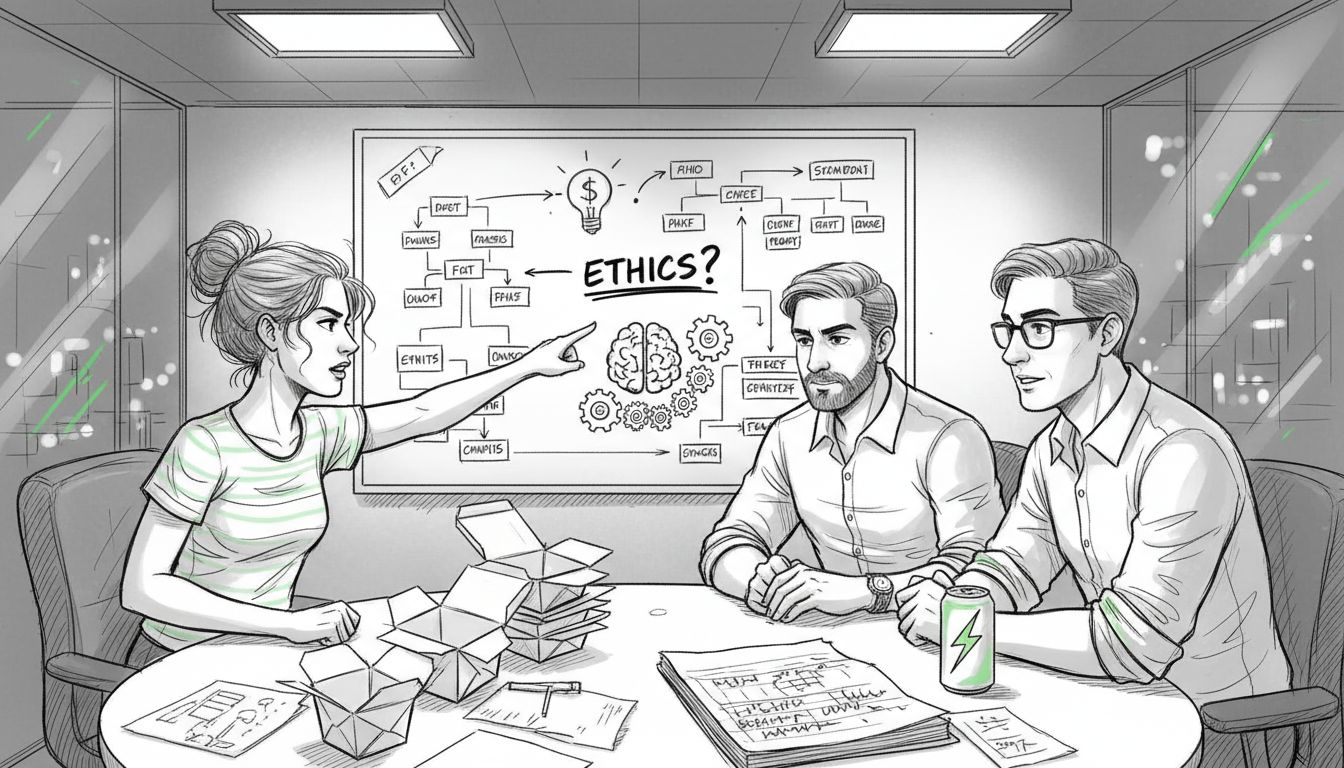
Ethical neglect is a business risk, not just a moral issue. Prevention costs far less than recovery. Establishing strong ethics early protects your venture from avoidable catastrophes. Learn more about the cost of unethical business practices.
Common Misconceptions About Business Ethics
Myths about ethics prevent entrepreneurs from embracing it fully. Correcting these misconceptions reveals ethics as a growth enabler.
Myth 1: Ethics slows growth and limits profitability.
Reality: Ethics increases profitability and attracts investors, not hinders growth. Ethical companies see 20% higher profitability. They access capital more easily and retain customers longer. Ethics accelerates sustainable growth.
Myth 2: Business ethics is just legal compliance.
Reality: Ethics exceeds legal minimums. Compliance prevents penalties. Ethics builds trust, loyalty, and competitive advantage. Many ethical practices are not legally required but create significant business value.
Myth 3: Ethics is irrelevant for side hustles and small businesses.
Reality: Ethics matters at every scale. Side hustlers need credibility to attract initial customers. Small ethical breaches damage reputation permanently in connected markets. Early ethical foundations support scaling.
Key contrasts:
Myth: Ethical decisions are always clear-cut. Reality: Most ethical dilemmas involve competing goods requiring careful analysis.
Myth: Only large corporations need formal ethics programs. Reality: Startups benefit from clear values and decision frameworks from day one.
Myth: Customers do not care about ethics. Reality: 70% of consumers prioritize ethical brands when purchasing.
Understanding these realities helps you integrate ethics confidently. Explore ethics misconceptions and facts for evidence-based perspectives.
Conclusion: Integrating Ethics into Your Entrepreneurial Journey
Business ethics creates trust, sustainability, and competitive advantage. You have learned core principles like transparency and integrity. You understand how ethical cultures outperform competitors by 20% profitability and retain 30% more customers. The Ethical Entrepreneurial Decision Cycle provides a framework for navigating dilemmas systematically.
Recap of key steps: identify ethical issues early, evaluate impacts on all stakeholders, consider multiple alternatives, decide aligned with your values, and reflect to improve. These practices reduce the decision distress 85% of leaders experience.
Building ethical culture requires leadership commitment, cross-functional collaboration, and embedding ethics into hiring and training. CSR extends your responsibility to broader societal impact, strengthening stakeholder relationships.
Actionable next steps:
Define your core values explicitly and share them with your team
Implement the Ethical Entrepreneurial Decision Cycle for upcoming decisions
Schedule regular ethics reflections to normalize ethical discussions
Identify one CSR initiative aligned with your mission to launch this quarter
Use tools like siift.ai to validate your business idea with ethics integrated from the start
Ongoing ethical reflection strengthens your decision-making. Make ethics a regular conversation, not a crisis response. Celebrate ethical wins and learn from challenges. Your commitment to ethics today builds the foundation for lasting success.
How siift.ai Supports Ethical Business Building
siift.ai helps entrepreneurs embed ethics into business validation from day one. The Intelligent Business Canvas guides you through ideation with integrated ethical considerations. You identify value alignment gaps early before investing significant resources.
Our business idea validation guide incorporates stakeholder impact assessments and sustainability checks. You receive personalized feedback highlighting ethical risks and opportunities specific to your venture. This reduces blindspots and accelerates product-market fit through principled decisions.
The siift.ai platform provides step-by-step frameworks that systematically address ethics alongside market validation and go-to-market planning. You build a business designed for trust and sustainability, not one requiring ethical retrofitting later. Explore siift.ai today to turn your idea into a viable, ethical business.
FAQ
What are the core principles of business ethics for startups?
Core principles include transparency, integrity, fairness, respect, and accountability. These guide decision-making across all stakeholder interactions. Transparency ensures honest communication, integrity aligns actions with values, fairness treats all equitably, respect honors dignity, and accountability owns consequences.
How can I handle ethical dilemmas as a new entrepreneur?
Use the Ethical Entrepreneurial Decision Cycle: identify the issue, evaluate impacts on stakeholders, consider alternatives, decide aligned with values, and reflect afterward. This structured approach reduces distress and improves decision quality. Regular practice with your team strengthens ethical decision-making skills. Explore ethical decision frameworks for additional tools.
Why is corporate social responsibility important for startups?
CSR connects your business with social and environmental causes, enhancing stakeholder trust and brand reputation. It demonstrates commitment beyond profit, attracting socially conscious customers and investors. Even small CSR initiatives like sustainable operations or nonprofit partnerships create meaningful impact and differentiation.
What are common misconceptions about business ethics?
Myths include ethics slowing growth, being only legal compliance, or being irrelevant for small businesses. Reality shows ethical companies achieve 20% higher profitability and 30% better customer retention. Ethics builds competitive advantage at every scale, from side hustles to enterprises.