

TL;DR:
- Storytelling is a vital tool for entrepreneurs because it enhances memory, builds trust, and effectively conveys complex strategies.
- Authentic, emotionally resonant narratives stand out in an AI-driven content landscape, creating lasting brand impact.
Storytelling is defined as the structured use of narrative to convey meaning, build emotional connection, and move people to action. For entrepreneurs and creatives, the importance of storytelling goes far beyond crafting a catchy brand tagline. Storytelling improves memory retention more effectively than even the best mnemonic techniques, and emotional narratives generate oxytocin, the empathy hormone that makes audiences trust you like family. If you want to build a brand that people remember and a business that moves people to act, narrative is your most powerful tool.
Why does storytelling matter for your brain?
The human brain does not process information as a list of facts. Without narrative structure, cognition fragments, anxiety rises, and comprehension breaks down. Story is how the brain converts raw experience into organized memory, creating cause and effect where there was only chaos.
When you hear a well-structured story, multiple brain regions activate at once. Language centers process the words. Sensory and motor cortices simulate the described experience. Emotional centers fire up and assign meaning. This is called neural coupling, and it is why a great pitch lands harder than a slide deck full of bullet points.
The oxytocin connection is especially relevant for founders. Oxytocin release through storytelling fosters social bonding and makes your audience feel invested in your outcome. That is not a soft, feel-good benefit. It is a neurochemical mechanism that drives trust, loyalty, and purchasing decisions.
Data alone does not trigger this response. A statistic about market size tells the brain nothing about why it should care. A story about a real customer who struggled and then succeeded does. The difference between forgettable and memorable often comes down to whether you gave the brain a narrative to hold onto.
Pro Tip: Build tension into your story by identifying what your character wants and what stands in the way. That gap between desire and reality is what keeps audiences emotionally invested and triggers genuine empathy, according to neuroscience research on narrative structure.
How storytelling drives business strategy and communication
Storytelling is not a communication add-on. The best leaders treat storytelling as strategy, using narrative as the primary vehicle for executing plans, shaping culture, and moving people to action. Raw data and org charts do not inspire teams. Stories do.
Consider what happens during a merger or acquisition. Executives face the challenge of communicating complex changes to employees, investors, and customers who are all anxious and skeptical. Industry leaders now require storytelling to convey complex information in these high-stakes scenarios, precisely because data alone falls short of building the trust and clarity needed for alignment.
The same principle applies to your startup. When you pitch investors, you are not just presenting numbers. You are asking them to believe in a future that does not yet exist. When you onboard a new team member, you are asking them to care about a mission they just learned about. Narrative is what makes both of those asks land.
Narrative strategies reveal why audiences should care and translate that caring into real impact. That is the strategic value of storytelling in business communication, and it is why founders who master it outperform those who rely on spreadsheets alone.
| Communication Method | Audience Impact | Memory Retention | Trust Building | Best Use Case |
|---|---|---|---|---|
| Data-driven presentation | Low emotional engagement | Short-term recall | Moderate | Reporting, compliance |
| Storytelling | High emotional engagement | Long-term retention | High | Pitching, culture, change management |
| Hybrid (story + data) | Highest engagement | Strongest retention | Highest | Strategy, fundraising, launches |
Pro Tip: Ethical, transparent storytelling builds lasting trust. Audiences can detect manipulation. Ground your narrative in real outcomes and honest stakes, and your credibility compounds over time. Fabricated or exaggerated stories erode the very trust you are trying to build.
How can entrepreneurs apply storytelling practically?
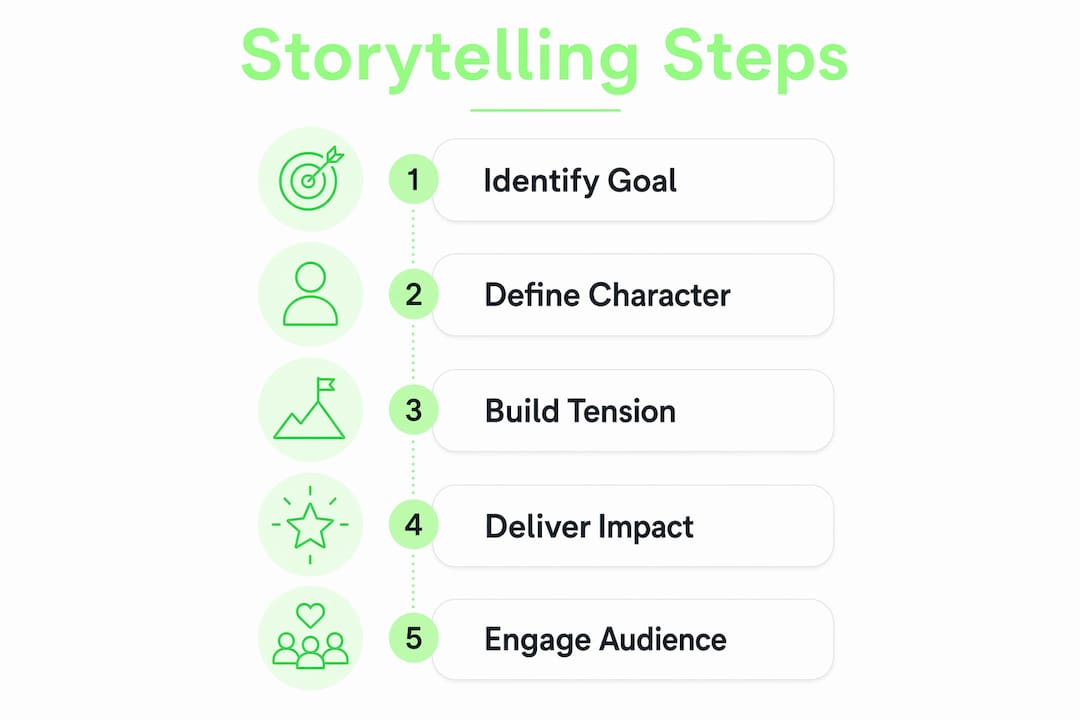
Knowing that narrative works neurologically is one thing. Knowing how to build one for your brand is another. The good news is that effective storytelling follows a repeatable structure, and you can learn it.

Start by identifying your core audience and their specific struggle. Not a demographic profile. A real problem they wake up thinking about. Your story begins there, not with your product. The audience is the hero. You are the guide who helps them win.
From there, build a story arc with three essential elements:
- Conflict: What does your audience want, and what stands in their way? This is the tension that creates emotional investment.
- Journey: What does the path to resolution look like? Show the stakes, the obstacles, and the turning points.
- Resolution: How does your audience’s life change after your product, idea, or service enters the picture? Make the outcome concrete and specific.
Sensory detail and emotional specificity are what separate forgettable content from stories that stick. “Our software saves time” is a claim. “Maria used to spend three hours every Monday morning reconciling spreadsheets. Now she spends that time with her team” is a story. One activates memory. The other does not.
Common pitfalls to avoid:
- No arc: Listing features without conflict or resolution is not a story. It is a catalog.
- Overloading with facts: Data supports a story. It does not replace one.
- Making yourself the hero: Your audience needs to see themselves in the narrative, not you.
- Skipping the stakes: If nothing is at risk, no one cares what happens next.
For business communication skills, storytelling applies across every channel: your website homepage, your investor deck, your team all-hands, your social content, and your product launch emails. The arc stays the same. The context shifts.
Pro Tip: Use the “before and after” frame in your marketing copy. Describe your audience’s world before your solution, then paint the world after. This simple structure activates the brain’s narrative processing and makes your value proposition feel real, not abstract.
Does human storytelling still matter in an ai-driven world?
The short answer is yes, and the premium on it is rising. AI lacks the timing and emotional depth required to craft stories that build culture and drive commerce. It can produce volume. It cannot produce meaning.
This is the paradox of the current content environment. AI tools generate more content than ever before. That flood makes authentic, human-driven narrative rarer and more valuable. When everything sounds the same, the story that carries a real perspective cuts through.
Stories that matter are favored over sheer volume in the AI content age. Audiences have developed a sharp instinct for content that was generated without genuine perspective. They scroll past it. They share the stories that feel true.
For entrepreneurs, this is a genuine competitive advantage. Your lived experience, your specific point of view, and your authentic relationship with your audience are things no AI tool can replicate at scale. The founders who invest in data-driven entrepreneurship alongside strong narrative skills are the ones who build brands that last.
| Content Type | Emotional Depth | Audience Trust | Differentiation | Scalability |
|---|---|---|---|---|
| AI-generated content | Low | Declining | Low | High |
| Human storytelling | High | High | High | Moderate |
| AI-assisted human story | Moderate to high | Moderate to high | Moderate | High |
The takeaway is not that AI is useless. It is that AI is a production tool, not a storytelling brain. You bring the perspective, the stakes, and the emotional truth. AI can help you move faster. It cannot tell your story for you.
Key takeaways
Storytelling is the most direct path from information to action, because it works with the brain’s natural need for narrative rather than against it.
| Point | Details |
|---|---|
| Narrative activates memory | Stories organize information into cause and effect, making content far more memorable than raw data. |
| Oxytocin drives trust | Emotional narratives trigger oxytocin release, building the audience trust that converts attention into loyalty. |
| Strategy needs story | Leaders use narrative to execute strategy, align teams, and guide stakeholders through complex change. |
| Arc is non-negotiable | Conflict, journey, and resolution are the structure that keeps audiences invested and triggers empathy. |
| Human story commands a premium | In an AI-saturated content world, authentic human perspective is the differentiator that builds lasting brands. |
Storytelling is your strategy, not your slogan
I have watched founders spend months perfecting their pitch deck and then lose the room in the first two minutes. Not because their numbers were wrong. Because they led with data when they should have led with a story.
The shift I have seen work, again and again, is treating narrative as the operating system for your strategy, not the packaging around it. When you frame your company’s mission as a story your audience is already living, everything changes. Your team rallies around something they can feel. Your customers see themselves in what you are building. Your investors believe in a future they can picture.
The entrepreneurs who grow fastest are not always the ones with the best product. They are the ones who can make other people care about what they are building. That is a skill. It is learnable. And it compounds over time the same way any other strategic asset does.
My honest advice: stop treating storytelling as a marketing task you hand off. Make it a core competency you practice every week. Write your founder story. Refine your customer narrative. Test your pitch on real people and watch where their attention drifts. The gap between where they drift and where you want them to stay is your storytelling problem to solve.
Pair that narrative discipline with tools that help you validate your strategy and sharpen your thinking, and you have something genuinely powerful.
— Samim
Build your brand story with Siift
A great story without a validated strategy underneath it is just good marketing copy. Siift is built for founders who want both. The Siift platform guides you step by step through ideation, validation, and go-to-market, so your narrative is grounded in real strategic clarity rather than hope. When you know exactly who you are building for, what problem you are solving, and why your approach wins, your story writes itself. Explore how Siift helps you turn insights into action and build a brand that people actually remember. Your story starts with a strategy worth telling.
FAQ
What is the importance of storytelling in business?
Storytelling is the primary tool leaders use to execute strategy, align teams, and build audience trust. It converts complex information into memorable, emotionally resonant messages that data alone cannot deliver.
How does storytelling improve memory retention?
Storytelling improves memory retention by organizing information into narrative structure, which the brain processes more deeply than lists or facts. Research shows it outperforms even survival-based mnemonic techniques.
Why does storytelling build trust with audiences?
Emotional narratives trigger oxytocin release in the brain, which is the same hormone that drives social bonding and empathy. This neurochemical response is why audiences who hear a compelling story feel connected to the teller.
Can AI replace human storytelling?
AI can produce content at scale but lacks the emotional depth, timing, and lived perspective required for stories that build culture and drive commerce. Human storytelling commands a growing premium precisely because AI cannot replicate authentic point of view.
What makes a story effective for entrepreneurs?
An effective entrepreneurial story has a clear arc: conflict that reflects the audience’s real struggle, a journey that shows the stakes, and a resolution that makes the outcome concrete. Skipping any of these elements is why most brand stories fail to connect.