Starting a business without outside funding sounds risky and nearly impossible. Most founders imagine you need deep pockets or venture capital to get a new idea off the ground. But shockingly, over 60 percent of small businesses in the US are launched using only personal savings. The real surprise is that these self-funded founders often outperform their venture-backed rivals because their limitations force them to get creative, stay focused, and build businesses that last.
Table of Contents
Quick Summary
Takeaway | Explanation |
|---|---|
Bootstrapping fosters resourcefulness and innovation | This approach encourages entrepreneurs to leverage personal resources and manage finances effectively to grow sustainably. |
Choose low-risk, low-investment business ideas | Service-based or technology-enabled ventures require minimal upfront costs and align with existing skills for easier entry. |
Leverage personal skills for funding | Freelance work and consulting can generate initial revenue while maintaining job security and building a professional network. |
Use strategic partnerships and bartering | Forming alliances or exchanging services can help expand your business without incurring additional costs. |
Focus on a minimum viable product (MVP) | Create an MVP to quickly attract customers, allowing you to test market demand while conserving resources. |
What Bootstrapping Means for New Entrepreneurs
Bootstrapping represents a fundamental approach to entrepreneurship where founders launch and grow their businesses using personal resources and minimal external funding. According to the US Small Business Administration, bootstrapping is more than just a financial strategy - it’s a mindset of resourcefulness and strategic self-reliance.
The Financial Foundation of Bootstrapping
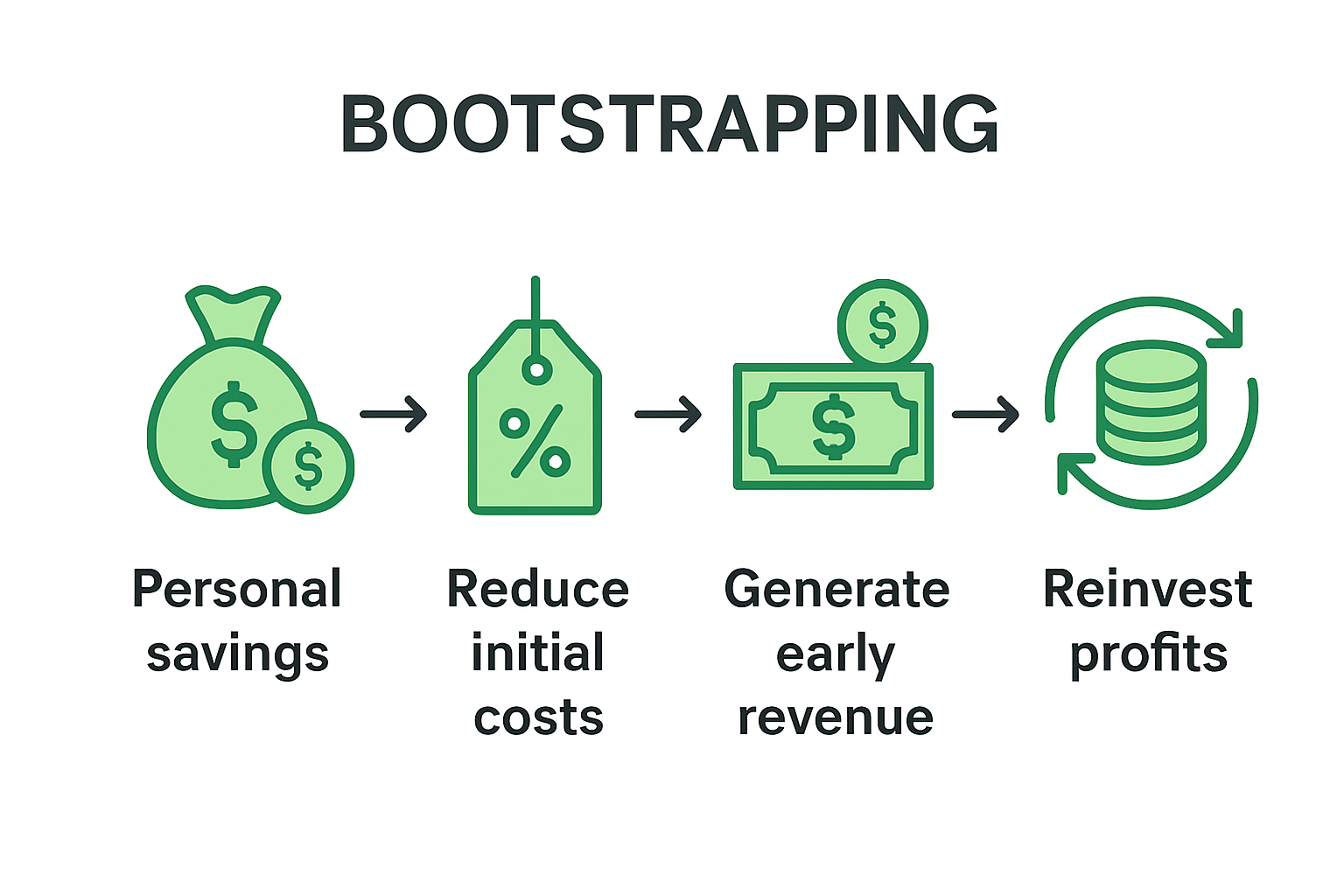
At its core, bootstrapping means funding your business through personal savings, reinvested earnings, and creative cost management. Data from DataUSA reveals that a significant percentage of new entrepreneurs start their ventures with limited resources, forcing them to develop innovative survival strategies. This approach demands founders become masters of financial efficiency, carefully allocating every dollar and prioritizing essential investments.
New entrepreneurs practicing bootstrapping typically leverage several key financial tactics. These include using personal savings, minimizing initial expenses, generating early revenue to fund growth, and avoiding unnecessary overhead. The goal isn’t just survival but building a sustainable business model that can scale organically.
Strategic Resource Management
Bootstrapping goes beyond mere financial constraints - it’s a comprehensive approach to building a business with maximum efficiency. Entrepreneurs must become adept at wearing multiple hats, from marketing to product development, without the luxury of extensive hiring. This multi-role strategy requires developing diverse skill sets and maintaining a laser focus on core business objectives.
The bootstrapping philosophy encourages founders to make strategic trade-offs. Instead of seeking massive external investments, bootstrappers prioritize lean operations, direct customer feedback, and incremental growth. Learn more about developing an entrepreneurial mindset that supports this resourceful approach to building a business.
Successful bootstrapping isn’t about doing everything cheaply - it’s about doing what matters most efficiently. Founders must continuously evaluate where to invest limited resources, balancing immediate needs with long-term growth potential. This requires exceptional financial discipline, creative problem-solving, and an unwavering commitment to the business’s core mission.
Ultimately, bootstrapping transforms financial limitations into a powerful catalyst for innovation. By forcing entrepreneurs to be strategic, resourceful, and deeply connected to their business fundamentals, this approach often leads to more sustainable and resilient ventures. The constraints of bootstrapping become not a hindrance, but a unique competitive advantage that shapes more thoughtful, customer-focused businesses.
Choosing Low-Risk Business Ideas to Start Small
For first-time entrepreneurs, selecting a low-risk business idea is crucial when bootstrapping. According to the Better Business Bureau, developing a startup with minimal resources requires strategic thinking and careful business model selection.
Identifying Low-Investment Business Opportunities
Low-risk business ideas typically share common characteristics: minimal upfront capital requirements, flexible operational models, and potential for quick revenue generation. Service-based businesses often emerge as top choices for bootstrappers. These can include freelance consulting, digital marketing services, web design, content creation, and online tutoring. Such ventures leverage existing skills without substantial equipment or inventory investments.
Below is a summary table comparing low-risk, low-investment business ideas discussed in the article, highlighting their key features useful for bootstrapping entrepreneurs.
Business Idea | Upfront Investment | Monetization Speed | Skill Dependency |
|---|---|---|---|
Freelance Consulting | Minimal | Fast | High |
Digital Marketing Services | Minimal | Moderate | High |
Web Design | Minimal | Fast | High |
Content Creation | Minimal | Moderate | High |
Online Tutoring | Minimal | Moderate | High |
Online Courses/E-books | Minimal | Slow-Moderate | Moderate |
Software Templates | Minimal | Moderate | High |
Dropshipping | Low | Moderate | Low |
Affiliate Marketing | Minimal | Slow-Moderate | Low |
Social Media Management | Minimal | Moderate | High |
Technology-enabled businesses provide another avenue for low-risk entrepreneurship. Digital products like online courses, e-books, software templates, and downloadable resources require minimal initial investment while offering scalable income potential. Learn more about understanding business risks to make informed decisions about your startup strategy.
Strategic Business Model Considerations
Columbia Business School emphasizes that successful bootstrapping involves meticulous cash management and strategic resource allocation. Entrepreneurs should prioritize business models with low overhead, quick monetization potential, and minimal ongoing expenses.
Consider businesses that can be started part-time alongside existing employment, allowing gradual business development without complete financial risk. Potential models include dropshipping, affiliate marketing, social media management, virtual assistance, and niche online retail stores. These approaches enable entrepreneurs to test market demand while maintaining financial stability.
Effective low-risk business selection requires thorough market research and personal skill assessment. Founders must honestly evaluate their expertise, network connections, and potential customer base. The ideal bootstrapped business aligns personal strengths with market opportunities, minimizing financial exposure while maximizing growth potential.
Ultimately, choosing a low-risk business idea is about creating a sustainable pathway to entrepreneurship. By focusing on scalable, skills-based ventures with minimal upfront investment, bootstrappers can transform limited resources into meaningful business opportunities. The key is patience, strategic planning, and a willingness to adapt as the business evolves.
Smart Ways to Fund Your Side Project Early On
Launching a side project requires creative financial strategies that minimize risk while maximizing potential. According to SCORE, entrepreneurs have multiple innovative approaches to fund their early-stage ventures without substantial financial strain.
Leveraging Personal Resources and Skills
Moonlighting represents one of the most effective bootstrapping techniques for side project funding. This approach involves maintaining your primary employment while developing your business during off-hours. Self-funding strategies can help entrepreneurs build financial momentum without risking total economic stability.
Utilize your existing professional skills to generate initial project capital. Freelance consulting, contract work, and skill-based services can provide direct funding streams. These opportunities not only generate revenue but also help you build a professional network and refine your entrepreneurial capabilities.

Low-Cost Funding and Resource Optimization
OpenStax’s Entrepreneurship research highlights several cost-effective funding mechanisms. Consider strategies like working from home to reduce operational expenses, utilizing independent contractors instead of full-time employees, and leveraging low-cost digital marketing channels.
Crowdfunding platforms offer another promising avenue for side project funding. By creating compelling project narratives and demonstrating clear value propositions, entrepreneurs can attract small investments from a broader audience. Social media presence and network engagement become critical in successfully executing crowdfunding campaigns.
The Harvard Business Review emphasizes that successful bootstrappers prioritize operational speed and quick break-even potential. This means designing your side project to generate revenue rapidly, focusing on high-value offerings that require minimal initial investment.
Additionally, explore alternative funding sources like micro-grants, startup competitions, and community innovation programs.
This table outlines smart, low-cost strategies for funding and resource optimization as described in the article. It helps entrepreneurs quickly compare different approaches for getting their side projects off the ground.
Funding/Resource Strategy | Description | Primary Benefit |
|---|---|---|
Moonlighting | Work on business during off-hours while keeping main job | Income security + flexibility |
Freelance/Consulting | Use skills to earn early funds through contract work | Revenue + network building |
Working from Home | Operate business remotely to save on overhead | Cost reduction |
Hiring Contractors | Use independent contractors rather than full-time staff | Flexibility + lower costs |
Crowdfunding Platforms | Raise small investments via online campaigns | Access to capital + exposure |
Micro-grants/Startup Competitions | Apply for small grants or prizes | Funding + mentorship |
Community Innovation Programs | Tap into local programs for funding and networking | Support + connections |
These platforms often provide not just financial support but also mentorship and networking opportunities crucial for early-stage entrepreneurs.
Ultimately, smart side project funding is about strategic resource management. By combining personal skills, creative financing, and lean operational approaches, entrepreneurs can transform limited resources into meaningful business opportunities. The key lies in maintaining financial discipline, remaining adaptable, and continuously seeking innovative funding solutions.
Growth Tactics When Resources Are Limited
Bootstrapping entrepreneurs face unique challenges when seeking business growth with minimal financial resources. According to the Tory Burch Foundation, strategic resource management becomes critical for sustainable expansion.
Maximizing Existing Resources
Leveraging personal networks and skills represents a powerful growth strategy for resource-constrained businesses. Bartering services, trading expertise, and forming strategic partnerships can provide alternative pathways to business development without significant cash investment. Learn more about startup growth strategies to unlock innovative expansion approaches.
OpenStax’s Entrepreneurship research emphasizes the importance of scrutinizing every expense and finding creative ways to minimize cash outflows. This might involve negotiating extended payment terms with suppliers, utilizing free or low-cost digital tools, and prioritizing investments that directly contribute to revenue generation.
Building a Minimum Viable Growth Strategy
Columbia University’s entrepreneurship insights recommend focusing on developing a minimum viable product (MVP) that can quickly attract early customers. This approach allows entrepreneurs to test market demand while maintaining tight control over business resources.
Key growth tactics for resource-limited businesses include:
Utilizing free marketing channels like social media and content marketing
Attending networking events to build connections without significant marketing expenses
Offering services or products that require minimal upfront investment
Reinvesting profits directly back into business development
The Tory Burch Foundation also suggests taking advantage of free resources such as government workshops, nonprofit business training programs, and online learning platforms to continuously develop entrepreneurial skills without substantial financial investment.
Successful bootstrapped growth requires a combination of creativity, strategic thinking, and relentless focus on value creation. Entrepreneurs must become adept at identifying opportunities that provide maximum impact with minimal resource expenditure. This often means being flexible, continuously learning, and remaining open to unconventional growth strategies.
Ultimately, limited resources can become a catalyst for innovation rather than a barrier to success. By maintaining financial discipline, prioritizing high-impact activities, and remaining adaptable, bootstrapping entrepreneurs can build resilient businesses that grow organically and sustainably.
Frequently Asked Questions
What is bootstrapping in entrepreneurship?
Bootstrapping refers to starting and growing a business using personal resources and minimal external funding. It emphasizes resourcefulness and financial efficiency to build a sustainable business model.
How can I choose a low-risk business idea for bootstrapping?
To select a low-risk business idea, look for options that require minimal upfront capital, have flexible operational models, and can generate quick revenues, such as service-based businesses or technology-enabled ventures.
What are some smart ways to fund my side project initially?
You can fund your side project by leveraging personal skills through freelance work, moonlighting while retaining your primary job, utilizing crowdfunding platforms, and applying for micro-grants or participating in startup competitions.
What growth tactics can I adopt when resources are limited?
To grow with limited resources, focus on maximizing existing assets, forming strategic partnerships, bartering services, utilizing free marketing channels, and developing a minimum viable product (MVP) to quickly attract early customers.
Take Control of Your Bootstrapping Journey With Personalized Guidance
Building a business from scratch without outside funding is thrilling but it can also leave you second-guessing every move. The article outlines how first-time founders face uncertainty managing limited resources, searching for the right low-risk ideas, and prioritizing growth when every dollar counts. If you are navigating these same challenges or looking for smart ways to validate your concept through an MVP, you know how important clear priorities and actionable steps are to succeed.
siift is built to solve these pain points. As your founder’s compass, siift gives you tailored guidance at each stage of your bootstrapping path. You get step-by-step action plans, instant feedback, and practical advice to help you master resource management, cash flow decisions, and rapid product validation. Ready to replace doubt with clarity? Get started now at siift and turn your dream into a resilient business today.
Recommended
blog | siift | Self Funding a Business: Step-by-Step Guide for Beginners 2025
blog | siift | Top Growth Strategies for Startups in 2025: Practical Steps for Beginners
blog | siift | Business Plan Essentials 2025: A Beginner’s Guide for New Founders
blog | siift | Business Resilience Strategies for Beginners 2025 Guide