
More than 80 percent of american startups now use data insights to guide their biggest business decisions. In a world where every choice can impact growth or survival, understanding how data-driven entrepreneurship sets new standards is more relevant than ever. This guide uncovers what makes a data-first approach so powerful and how it empowers entrepreneurs to turn raw information into smarter strategies and greater opportunities.
Table of Contents
- Core Principles Of Data-Driven Entrepreneurship
- Key Data Sources And Analytical Methods
- Data-Driven Decision Making In Startups
- Common Pitfalls And How To Avoid Them
- Essential Tools For Data-First Founders
Key Takeaways
| Point | Details |
|---|---|
| Embrace Data-Driven Decision Making | Startups should prioritize data analysis over intuition to navigate complex business environments effectively. |
| Invest in Technological Infrastructure | Building a strong digital framework is essential for real-time data processing and informed decision-making. |
| Balance Technology with Human Insight | Successful entrepreneurs combine data-driven analyses with critical thinking and creativity to maximize opportunities. |
| Avoid Common Pitfalls | Be aware of potential challenges like over-reliance on data or ignoring data privacy to ensure sustainable growth. |
Core Principles Of Data-Driven Entrepreneurship
Data-driven entrepreneurship transforms traditional business approaches by systematically leveraging information, technology, and analytics to make strategic decisions. Modern entrepreneurs recognize that raw data, when properly analyzed and interpreted, becomes a powerful catalyst for innovation and competitive advantage.
The core principles of data-driven entrepreneurship emerge from four critical dimensions: technological infrastructure, data-driven mindset, human resource management, and social capital. Successful entrepreneurs today understand that building robust digital capabilities goes beyond merely collecting information - it requires developing sophisticated analytical frameworks that can transform complex datasets into actionable insights.
Technological infrastructure represents the foundational layer of data-driven entrepreneurship. This involves selecting appropriate digital tools, implementing advanced analytics platforms, and creating systems that can capture, process, and interpret large volumes of information efficiently. Entrepreneurs must invest in scalable technologies that enable real-time decision making and provide competitive intelligence. Purpose-driven business strategies complement these technological investments by ensuring that data collection and analysis align with broader organizational goals.

The human element remains crucial in data-driven approaches. While advanced technologies provide powerful analytical capabilities, successful entrepreneurs combine technological prowess with critical thinking, creativity, and domain expertise. This means developing teams that can not just interpret data, but also question assumptions, recognize patterns, and translate statistical insights into innovative business strategies. The ability to balance technological sophistication with human intuition distinguishes truly exceptional data-driven entrepreneurs.
Key Data Sources And Analytical Methods
Data-driven entrepreneurs rely on a diverse ecosystem of information sources that transform raw numbers into strategic insights. These sources range from structured internal databases to unstructured external platforms, each offering unique perspectives on market dynamics, customer behavior, and emerging opportunities.
Traditional data repositories like customer relationship management (CRM) systems, financial records, and web analytics provide foundational quantitative information. However, modern entrepreneurs increasingly leverage large-scale social data and machine-learning methods to uncover deeper competitive intelligence. These advanced analytical approaches enable entrepreneurs to identify technological trends, forecast market shifts, and predict potential competitive landscapes with unprecedented precision.
Augmented analytics represents a cutting-edge approach to data interpretation, employing machine learning and natural language processing to automate complex analytical processes. This technology allows entrepreneurs to discover nuanced data correlations, generate intuitive visualizations, and prepare sophisticated predictive models without requiring extensive technical expertise. Key analytical methods include:
- Predictive analytics for forecasting market trends
- Prescriptive analytics to recommend strategic actions
- Descriptive analytics for understanding current business performance
- Diagnostic analytics to investigate underlying causes of specific outcomes
Successful data-driven entrepreneurs understand that raw information means little without contextual interpretation. They cultivate a holistic approach that combines technological tools with human creativity, transforming statistical insights into actionable business strategies. The most effective entrepreneurs view data not as a passive resource, but as a dynamic conversation that reveals emerging opportunities and potential challenges.
Data-Driven Decision Making In Startups
Data-driven decision making transforms startup environments from intuition-based guesswork to strategic, empirically supported approaches. Modern entrepreneurs recognize that systematic data analysis provides a critical competitive advantage, enabling more precise navigation through complex business landscapes.
Successful startups implement tools and frameworks for maximizing human capital by integrating advanced data analysis techniques into their core operational strategies. These approaches go beyond traditional metrics, leveraging sophisticated analytical methods to uncover nuanced insights about team performance, market opportunities, and potential growth trajectories.
The decision-making process in data-driven startups typically involves several key stages:
- Collecting relevant and high-quality data from multiple sources
- Implementing advanced analytics and visualization tools
- Developing clear key performance indicators (KPIs)
- Creating iterative feedback loops for continuous improvement
- Establishing a culture of transparency and evidence-based reasoning
Understanding growth metrics becomes crucial in this context, as startups must quickly identify which data points truly indicate potential success. Effective entrepreneurs don’t just collect data - they develop sophisticated interpretation frameworks that transform raw information into actionable strategic insights. The most successful startups treat data as a dynamic conversation, constantly questioning assumptions and refining their understanding of market dynamics and internal performance.
Common Pitfalls And How To Avoid Them
Data-driven entrepreneurship demands strategic awareness of potential challenges that can derail even the most promising startup initiatives. Recognizing and proactively addressing these pitfalls becomes crucial for sustainable business development and long-term success.
Challenges in developing entrepreneurial competencies during digital transformation highlight several critical areas where startups frequently stumble. These include inadequate technological infrastructure, misaligned skill sets, and resistance to systematic organizational change. Entrepreneurs must develop comprehensive strategies that anticipate and mitigate these potential roadblocks.
Key pitfalls to watch for include:
- Over-relying on data without human intuition
- Collecting irrelevant or low-quality data
- Failing to establish clear decision-making frameworks
- Ignoring data privacy and ethical considerations
- Resisting adaptive learning and continuous improvement
Lean integration principles offer valuable guidance in navigating these challenges by emphasizing customer value, waste elimination, and team empowerment. Successful data-driven entrepreneurs create flexible systems that balance analytical rigor with creative problem-solving. They understand that data is a tool, not a substitute for strategic thinking, and cultivate a culture of continuous learning that transforms potential obstacles into opportunities for innovation and growth.
Essential Tools For Data-First Founders
Data-first founders require a sophisticated toolkit that transforms raw information into actionable strategic insights. Modern entrepreneurial success hinges on selecting the right technological infrastructure and analytical approaches that enable rapid, informed decision-making.
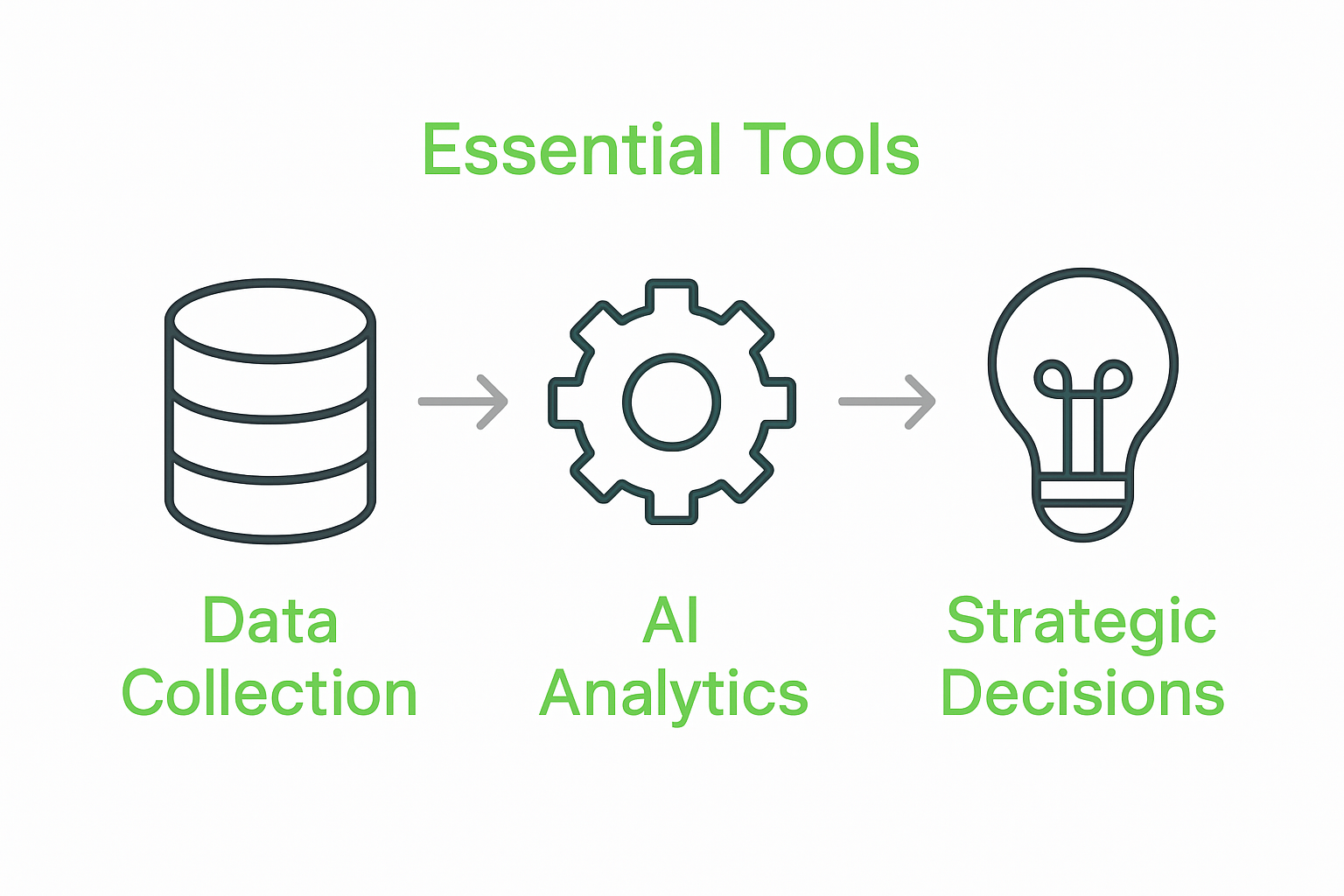
The BADIR framework provides a structured approach to data science that helps founders systematically navigate complex analytical challenges. This methodology emphasizes critical steps like business understanding, precise analysis planning, comprehensive data collection, and actionable insights derivation - creating a robust foundation for data-driven entrepreneurship.
Key tools for data-first founders include:
- Advanced analytics platforms with machine learning capabilities
- Customer relationship management (CRM) systems
- Business intelligence dashboards
- Predictive modeling software
- Real-time data visualization tools
- Cloud-based collaboration platforms
Understanding the best AI tools for founders becomes crucial in building a comprehensive technological ecosystem. Establishing a data culture means more than just collecting information - it requires creating an organizational mindset that prioritizes statistical insights over traditional experience-based decision-making. Successful entrepreneurs integrate these tools seamlessly, transforming complex datasets into clear, actionable strategies that drive competitive advantage.
Unlock the Power of Data-Driven Entrepreneurship with siift.ai
Building a startup while navigating complex data challenges can feel overwhelming. This expert guide highlights key hurdles such as establishing strong technological infrastructure, interpreting analytics accurately, and creating a data-driven culture that balances human intuition with advanced tools. If you want to avoid common pitfalls like collecting irrelevant data or lacking clear decision frameworks, embracing a structured, supportive platform is essential.
siift.ai Intelligent Business Canvas is designed exactly for founders facing these challenges. It offers an intuitive AI app that walks you step-by-step through ideation, validation, and go-to-market strategies while delivering personalized feedback and prioritizing actions that reduce your risks. With features that align with concepts like the BADIR framework and data-driven decision making you read about, siift.ai equips you to turn data insights into clear, actionable business plans.
Are you ready to transform complex data into confident decisions that accelerate your startup success? Explore how siift.ai can simplify your founder journey and help you build a winning strategy today at siift.ai. Learn more about creating a purpose-driven business and discover the best AI tools for founders that enhance your data-first approach.
Frequently Asked Questions
What are the core principles of data-driven entrepreneurship?
The core principles of data-driven entrepreneurship include technological infrastructure, a data-driven mindset, effective human resource management, and strong social capital. These elements work together to leverage data for strategic decision-making and competitive advantage.
How can startups implement data-driven decision-making?
Startups can implement data-driven decision-making by collecting relevant data, using advanced analytics and visualization tools, defining key performance indicators (KPIs), establishing feedback loops, and fostering a culture of transparency and evidence-based reasoning.
What are some common pitfalls in data-driven entrepreneurship?
Common pitfalls include over-relying on data without incorporating human intuition, collecting irrelevant or low-quality data, failing to establish clear decision-making frameworks, ignoring data privacy concerns, and resisting adaptive learning methods.
What tools are essential for data-first founders?
Essential tools for data-first founders include advanced analytics platforms, customer relationship management (CRM) systems, business intelligence dashboards, predictive modeling software, real-time data visualization tools, and cloud-based collaboration platforms.
Recommended
- blog | siift | Understanding What is Entrepreneurship: A Complete Guide
- blog | siift | How to Find Business Ideas in 2025: Proven Steps for Students and New Grads
- blog | siift | Building Entrepreneurial Mindset: Steps for Beginners in 2025
- blog | siift | 10 Essential Habits of Successful Entrepreneurs Explained