
Most advice about launching an American startup skips the toughest first steps. Only about 20 percent of new American businesses survive beyond their first year, so defining your idea and measuring real progress is crucial. Understanding exactly which metrics matter can help you avoid common mistakes and build a foundation for real growth. This guide breaks down how to sharpen your concept, measure what counts, and set your American startup on the path to success.
Table of Contents
- Step 1: Define Your Idea And Identify Key Metrics
- Step 2: Collect Relevant Data And Analyze Market Trends
- Step 3: Validate Your Assumptions Using Real Feedback
- Step 4: Build And Test A Minimum Viable Product
- Step 5: Monitor Data And Refine Your Strategy
Quick Summary
| Key Insight | Explanation |
|---|---|
| 1. Define Your Idea Clearly | Accurately identifying your business concept and market need is crucial for success. Ensure it addresses a real problem for a targeted audience. |
| 2. Establish Key Performance Metrics | Choose metrics like customer acquisition cost and lifetime value to guide your startup’s strategic decisions and measure growth effectively. |
| 3. Validate Assumptions with Real Feedback | Test your business hypotheses through customer interactions to refine your product and ensure market fit based on authentic insights. |
| 4. Build a Minimum Viable Product | Focus on creating a simplified prototype that solves the main problem, enabling you to gather essential feedback for further development. |
| 5. Continuously Monitor and Adjust Strategy | Implement a feedback loop with regular performance reviews to adapt your business based on real-world data and emerging trends. |
Step 1: Define your idea and identify key metrics
This step transforms your startup vision from a vague concept into a structured, measurable strategy. You will learn how to crystallize your business idea and select performance indicators that will guide your growth and decision making.
Starting with your core concept requires brutal honesty and strategic thinking. What problem are you genuinely solving? Who specifically experiences this problem? Your idea must address a real market need with clarity and precision. Understanding the difference between an idea and a true market opportunity helps entrepreneurs avoid common pitfalls.
To define your metrics effectively, leverage the Business Model Canvas framework to map out key components like value propositions and customer segments. Focus on actionable metrics that directly reflect your startup’s health: customer acquisition cost, lifetime value, revenue growth rate, and user retention. These numbers will become your startup’s vital signs, providing real insights into performance and potential.
Pro tip: Create a one-page document that succinctly describes your idea, target market, and three most critical metrics. This living document will serve as your north star, helping you stay focused and aligned as your startup evolves.
Here’s a summary of key actionable startup metrics and their strategic importance:
| Metric | What It Measures | Business Impact |
|---|---|---|
| Customer Acquisition Cost | Cost to gain each new customer | Informs budget and pricing strategy |
| Lifetime Value | Revenue a customer brings over time | Guides marketing and retention efforts |
| Revenue Growth Rate | Speed of revenue increase | Indicates market traction and scaling |
| User Retention | Percentage of users who stay active | Reflects product value and satisfaction |
Step 2: Collect relevant data and analyze market trends
This step transforms raw information into strategic insights that will power your startup’s decision making. You will learn how to systematically gather and interpret market data that reveals hidden opportunities and potential challenges.
Market research begins with understanding marketing intelligence techniques that help you identify key trends and customer preferences. Start by mapping your target market through comprehensive research methods. Analyze industry reports, competitor strategies, consumer behavior studies, and emerging technological shifts. Tracking current market trends allows you to position your startup precisely where customer needs intersect with innovative solutions.
Focus on collecting quantitative and qualitative data that provide actionable insights. Use tools like surveys, customer interviews, social media analysis, and industry databases to build a multidimensional view of your market landscape. Pay special attention to technological developments that might disrupt or enhance your business model. Track metrics like market size, growth rates, customer acquisition costs, and potential barriers to entry.
Pro tip: Create a dynamic spreadsheet that aggregates your market research findings, updating it monthly to maintain a real-time pulse on market dynamics and emerging opportunities.
This table compares major market research techniques to help startups choose the right approach:
| Method | Data Type | Typical Use Case |
|---|---|---|
| Surveys | Quantitative | Measure demand and preferences |
| Customer Interviews | Qualitative | Explore pain points in detail |
| Social Media Analysis | Both | Track trends and competitor moves |
| Industry Reports | Quantitative | Assess overall market size and growth |
Step 3: Validate your assumptions using real feedback
This step is about transforming your startup concept from theory to reality by rigorously testing your initial hypotheses against genuine market responses. You will learn how to systematically challenge and refine your business assumptions through structured customer interactions.
Cognitive mapping techniques can help you strategically deconstruct and validate your startup’s core assumptions. Begin by creating a clear hypothesis about your target customer, their primary problem, and your proposed solution. Then design targeted experiments to test these assumptions. Conduct interviews, create minimum viable prototypes, and engage potential customers in meaningful dialogue. Understanding how to validate your business idea means moving beyond theoretical discussions into real world testing.
Achieving product market fit requires persistent iteration based on authentic feedback. Document every interaction meticulously. Look for patterns in customer responses that confirm or challenge your initial assumptions. Be prepared to pivot quickly if your research reveals significant misalignments between your concept and market needs. Successful validation is not about proving yourself right, but about gaining genuine insights that shape a more robust business model.
Pro tip: Create a structured feedback grid that tracks each assumption, the specific test method, results, and potential business implications to transform raw customer insights into actionable strategic intelligence.
Step 4: Build and test a minimum viable product
This step transforms your validated concept into a tangible prototype that can be tested in the real market. You will learn how to create a strategic first version of your product that captures core value while minimizing development complexity.
Software development practices for startups emphasize building lean prototypes that efficiently validate core assumptions. Your minimum viable product should focus on solving the primary problem for your target customers with the simplest possible solution. Choose features that directly address your core value proposition and create a functional prototype that demonstrates your fundamental concept. Understanding lean startup methodology means prioritizing learning and iteration over perfection.

Utilize the Market Opportunity Navigator framework to systematically evaluate your prototype against market potential. Design multiple variations of your MVP to test different hypotheses. Collect quantitative and qualitative feedback from potential users through structured interviews, beta testing, and observational studies. Pay attention to not just what users say, but how they interact with your product. Be prepared to make rapid adjustments based on authentic user experiences.
Pro tip: Allocate 20% of your development time to creating your MVP and 80% to testing and iterating based on real user feedback to maximize your chances of building a product people actually want.
Step 5: Monitor data and refine your strategy
This step transforms raw data into strategic insights that will guide your startup’s continuous evolution. You will learn how to create a dynamic feedback loop that allows your business to adapt rapidly and intelligently based on real world performance.
Key metrics for startup founders are essential for understanding your business trajectory. Create a centralized dashboard that tracks critical performance indicators like customer acquisition cost, lifetime value, conversion rates, and user engagement. Implement systematic tracking mechanisms that provide real time visibility into your startup’s health. Strategic management approaches emphasize the importance of continuous monitoring and iterative refinement, allowing you to make data driven decisions quickly and confidently.
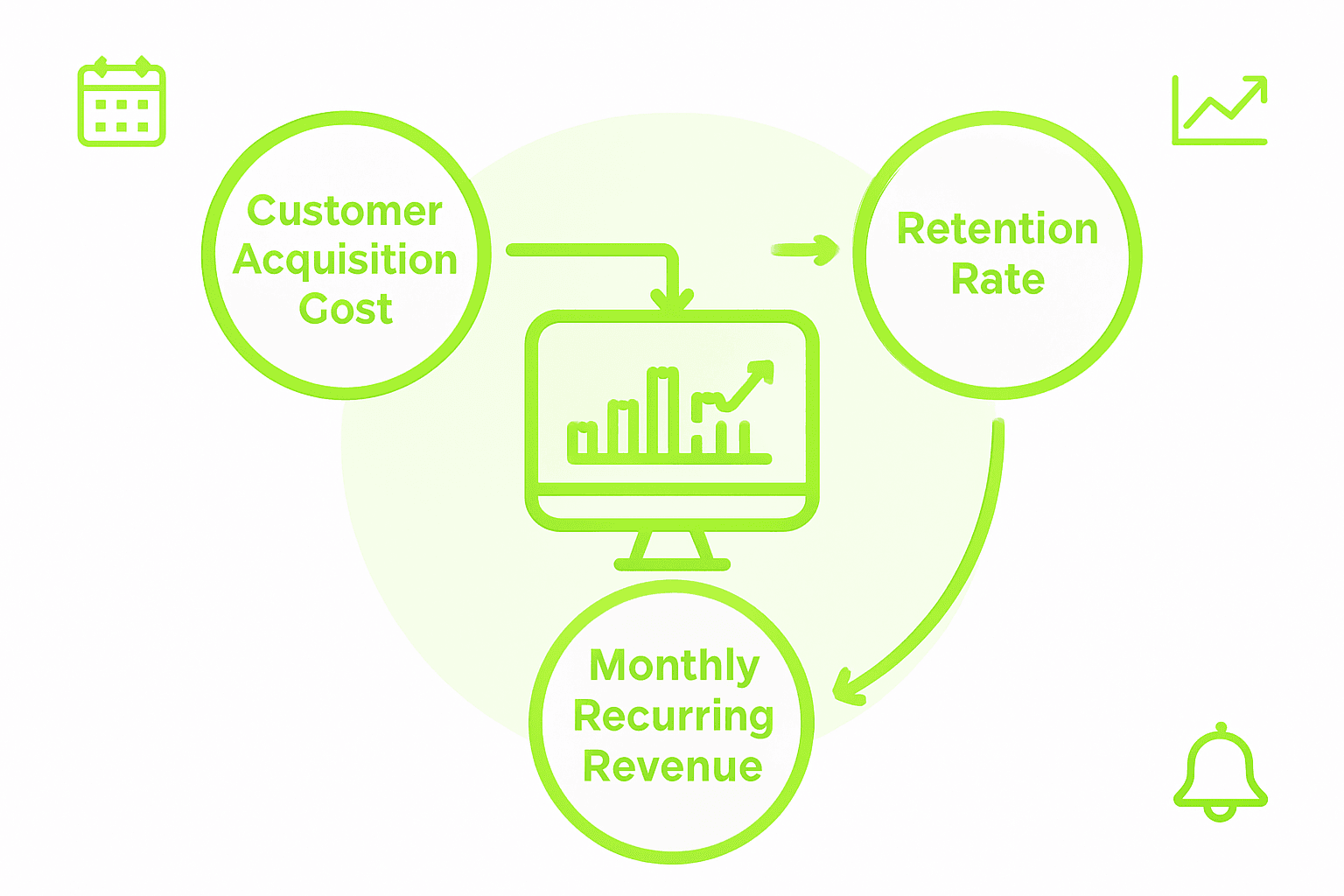
Develop a quarterly review process where you deeply analyze your metrics, compare them against your original hypotheses, and create actionable adjustment strategies. Look for patterns in your data that reveal opportunities for optimization. Are certain customer segments responding more positively? Are specific features driving more engagement? Be prepared to pivot your approach based on empirical evidence rather than emotional attachment to your original concept.
Pro tip: Set up automated reporting tools that generate weekly performance snapshots, allowing you to track trends without getting bogged down in manual data collection and freeing your energy for strategic thinking.
Drive Your Startup Success With Data-Driven Insights and AI Guidance
Launching a startup means navigating complex challenges like defining core metrics, validating assumptions, and building an effective minimum viable product. The article highlights key pain points such as selecting the right customer acquisition cost, lifetime value, and user retention metrics while overcoming uncertainty in market trends and product market fit. These steps demand clear focus and systematic progression to avoid costly blindspots or wasted efforts.
This is where siift.ai transforms your journey. Our Intelligent Business Canvas harnesses AI to guide founders through ideation, validation, and go-to-market strategy with personalized feedback and prioritized actions. You gain clarity on your business idea, real-time market validation tools, and a structured approach to build and monitor your MVP all in one platform. By eliminating guesswork and emotional bias, you stay confidently aligned with the strategic metrics that truly drive growth.
Ready to turn data into decisive action and de-risk your founder’s path? Experience how the AI Business Canvas helps you systematically launch and refine your startup with a modern strategy tailored just for you. Take control of your success today by visiting siift.ai Intelligent Business Canvas and start building a thriving business with insight and precision.
Frequently Asked Questions
How do I define my startup idea and select key metrics?
To define your startup idea, clearly articulate the problem you are solving and identify your target market. Choose three key metrics—such as customer acquisition cost, lifetime value, and revenue growth rate—to gauge your startup’s health within the first 30 days.
What data should I collect to analyze market trends effectively?
Collect both quantitative data, like market size and customer demographics, and qualitative insights through customer interviews. Focus on current industry reports and competitor strategies to shape a well-rounded understanding of your market within 60 days.
How can I validate my assumptions using real customer feedback?
Validate your assumptions by creating clear hypotheses about your target customer and their needs, then conduct interviews or tests with potential users. Aim to test these ideas through minimum viable products to gather real-world feedback within the initial months of your startup.
What features should I include in my minimum viable product (MVP)?
Your MVP should focus on the essential features that solve your target customer’s primary problem while remaining simple. Prioritize core functionalities that reflect your value proposition and aim for completion within a few weeks to start testing live with users.
How often should I monitor performance metrics and refine my strategy?
You should monitor performance metrics at least weekly to maintain a real-time understanding of your startup’s health. Conduct a detailed quarterly review to evaluate your metrics against your original hypotheses and pivot your strategy based on your findings.
What tools can help with ongoing data tracking and performance monitoring?
Set up automated reporting tools to track and compile key performance indicators such as customer acquisition cost and user engagement. Use these tools to generate weekly performance snapshots and maintain focus on strategic growth without manual data handling.
Recommended
- blog | siift | Startup Success Stories: Real Paths to Business Wins 2025
- blog | siift | Top Growth Strategies for Startups in 2025: Practical Steps for Beginners
- blog | siift | Understanding Lean Startup Methodology for New Entrepreneurs
- blog | siift | 10 Essential Habits of Successful Entrepreneurs Explained