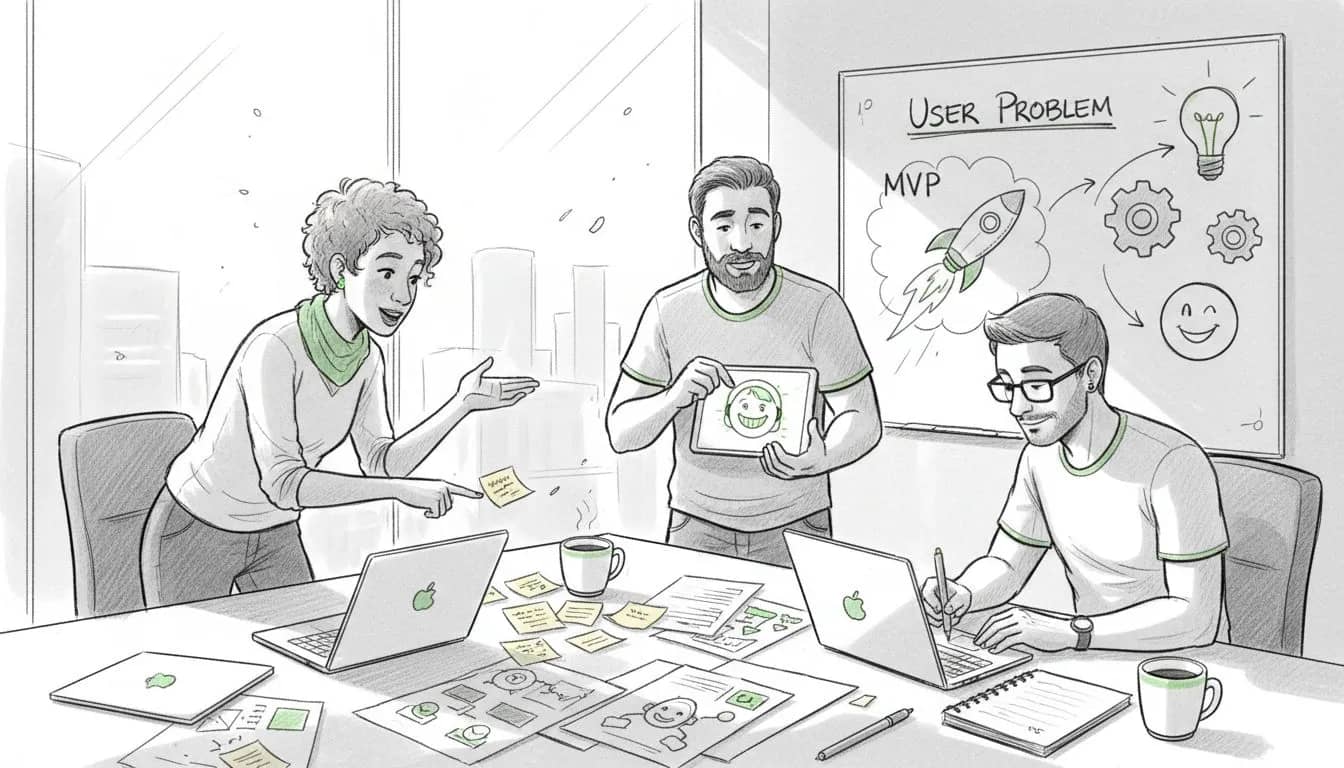
Most american founders discover that even the best ideas can fail without real user insight. Building a startup is not just about inspiration but about understanding specific problems, testing bold assumptions, and listening to honest feedback. By following a step-by-step process rooted in proven techniques—interviewing potential customers, rapid prototyping, and open analysis—you dramatically increase your chances of product success. In fact, startups that talk with users early are twice as likely to find true traction and avoid costly missteps.
Table of Contents
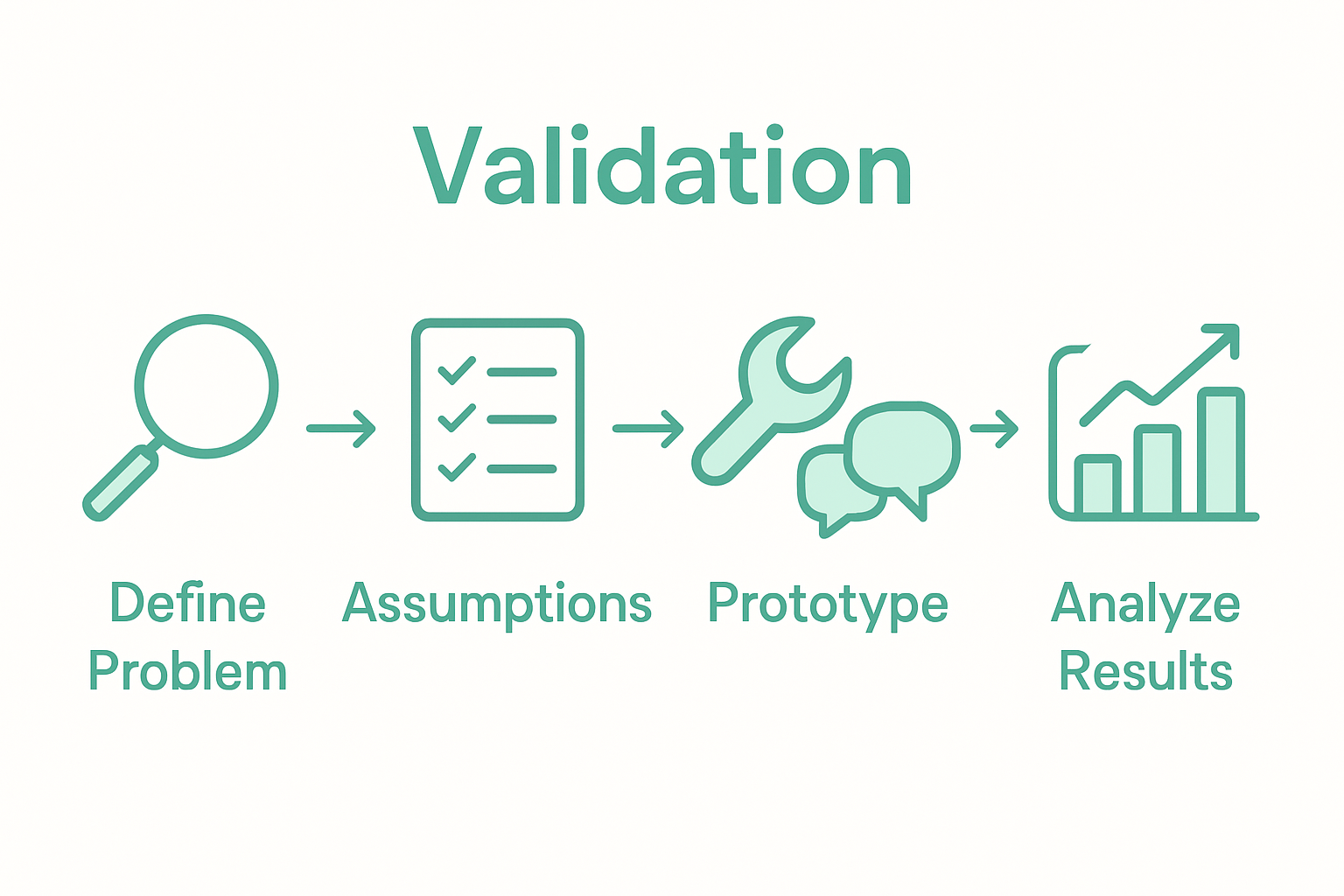
- Step 1: Define Your Target User And Identify Core Problems
- Step 2: Formulate Testable Assumptions And Success Criteria
- Step 3: Create Rapid Prototypes Or Minimum Viable Solutions
- Step 4: Engage Real Users To Gather Honest Feedback
- Step 5: Analyze Results To Verify Traction And Refine Your Idea
Quick Summary
| Key Insight | Explanation |
|---|---|
| 1. Define your target user | Create detailed user personas to understand real needs and pain points. |
| 2. Formulate testable assumptions | Develop specific, measurable hypotheses linked to user problems and business value. |
| 3. Build minimum viable products | Create a simple prototype that addresses one core problem effectively for user feedback. |
| 4. Gather honest user feedback | Conduct in-depth interviews to collect candid insights about your solution and user needs. |
| 5. Analyze results for improvement | Systematically review feedback to refine your solution and identify necessary changes. |
Step 1: Define your target user and identify core problems
Let’s get crystal clear about who will actually want your solution. Market segmentation isn’t just fancy business talk it’s your roadmap for understanding potential customers. Your goal is to transform a vague idea into a laser-focused vision of exactly who you’re serving.
Start by creating detailed user personas that go beyond basic demographics. Think deeper than age and location. What are their professional challenges? What keeps them up at night? What solutions have they already tried and found lacking? Your personas should feel like real people with specific frustrations and aspirations.
Here’s a practical approach: Interview 5-10 potential users in your target market. Ask open-ended questions about their workflows, pain points, and current workarounds. Listen more than you talk. Pro tip: People will often reveal more interesting problems than the ones you initially assumed existed. This isn’t just research it’s your first real product validation step. Your next move? Take those insights and map out precise user problems that your solution could potentially solve.
Step 2: Formulate testable assumptions and success criteria
Transforming your startup idea into a robust strategy requires more than just intuition. Cognitive mapping techniques help you break down complex ideas into clear, actionable hypotheses that can be systematically tested and validated.
Craft your assumptions with precision. High-quality assumptions should be specific, measurable, and critically linked to your core business value. Start by asking yourself: What must be true for my solution to work? What are the minimum conditions that prove customer interest? Each assumption needs a clear success metric that transforms abstract ideas into concrete tests.
A powerful approach is the ‘three strikes’ rule. Create multiple assumptions about your target market, customer behavior, and solution effectiveness. Design quick, low-cost experiments to validate each one. If two or more assumptions fail, it might signal a need to pivot your concept. Remember the goal isnt perfection but learning. Every failed assumption is valuable insight that brings you closer to a winning strategy. Your next step will be designing precise validation experiments that can quickly confirm or challenge these foundational business hypotheses.
Step 3: Create rapid prototypes or minimum viable solutions
Developing Minimum Viable Products (MVPs) is your critical bridge between theory and real world validation. Think of your prototype not as a polished product but as a strategic learning tool designed to test your core assumptions quickly and efficiently.
Customer development demands that you build something tangible yet intentionally minimal. Your MVP should solve one core problem exceptionally well rather than attempting to be everything for everyone. Start by stripping your concept down to its most essential feature set. Consider low fidelity options like mockups, wireframes, landing pages, or even manual service simulations that can help you gather meaningful user feedback without massive upfront investment.

A pro tip for prototype development: embrace imperfection. Your first version will be rough and that is precisely the point. Aim to spend no more than two weeks creating your initial prototype. The faster you can put something in front of potential users, the quicker you can learn and iterate. Your prototype is a conversation starter not a final product. Its sole purpose is to generate actionable insights that will help you understand whether your core value proposition genuinely resonates with your target market. Your next step will be to systematically test this prototype with real potential users and meticulously document their reactions and feedback.
Step 4: Engage real users to gather honest feedback
Customer development requires more than casual conversations it demands structured yet authentic interactions that reveal deep insights about your potential solution. Your goal is to create an environment where users feel comfortable sharing unfiltered perspectives about their real challenges and your proposed approach.
User personas will be your secret weapon in understanding genuine user needs. Design your feedback sessions to go beyond surface level responses. Use open ended questions that invite storytelling rather than simple yes or no answers. Pay attention to body language subtle hesitations and emotional reactions these often reveal more than verbalized feedback. Aim to conduct at least five to seven in depth interviews where you listen 80% of the time and speak only 20%.
A pro tip for gathering honest feedback: remove yourself emotionally from the process. Your prototype is not your baby it is a potential solution waiting to be refined. When users critique your idea treat it as valuable intelligence not personal rejection. The most successful founders view negative feedback as a gift that prevents costly mistakes down the road. Your next step will be analyzing these insights systematically to determine whether your solution truly addresses a meaningful market need.
Step 5: Analyze results to verify traction and refine your idea
Analyzing failure dynamics is not about dwelling on what went wrong but understanding precisely why certain approaches did not work. Your goal is to transform raw feedback and experimental results into actionable insights that incrementally improve your solution.
Start by creating a clear problem statement that objectively captures the core challenge your idea aims to solve. Map each piece of feedback against this statement. Look for patterns not individual data points. Are users consistently struggling with a specific aspect of your prototype? Do their comments reveal underlying needs you had not initially considered? Your analysis should be ruthlessly honest triangulating user perspectives technical feasibility and market potential.
A pro tip for effective result analysis: detach your ego completely. Treat your initial concept as a hypothesis waiting to be proven or disproven rather than a personal masterpiece. The most successful founders view each iteration as an opportunity to get closer to a breakthrough solution. Your prototype is a learning tool not a final product. Categorize feedback into clear buckets like must change potentially improve and works well. This systematic approach transforms subjective reactions into a strategic roadmap for your next prototype iteration. Your next step will involve making targeted refinements based on these meticulously gathered insights.
Turn Your Validation Steps into Business Success with siift.ai
Validating your startup idea can feel overwhelming when faced with unknowns like accurately defining user personas or testing assumptions. The article highlights critical challenges such as gathering honest user feedback and analyzing results objectively to avoid costly mistakes. If you want to navigate this process with clarity and confidence, siift.ai Intelligent Business Canvas is designed to help you tackle these exact pain points.
With its step-by-step AI guidance through ideation, validation, and go-to-market strategies, siift.ai helps you create precise user profiles, formulate testable assumptions, and develop minimum viable products with prioritized actions that de-risk your journey. Ready to skip guesswork and unlock personalized insights that push your idea forward? Explore how Intelligent Business Canvas transforms your validation process into a proven roadmap. Start refining your business vision today with siift.ai and turn every feedback into your next breakthrough.
Frequently Asked Questions
What is the first step to validate my startup idea?
Start by defining your target user and identifying their core problems. Conduct interviews with 5-10 potential users to create detailed user personas that reflect their challenges and needs.
How do I create testable assumptions for my idea?
Formulate specific, measurable assumptions linked to your core business value. Utilize the ‘three strikes’ rule and design low-cost experiments to validate these assumptions quickly, using feedback to learn and refine your idea.
What is a Minimum Viable Product (MVP) and how do I create one?
An MVP is a simplified product version designed to test your core business assumptions. Focus on including just one essential feature that addresses a significant problem, and aim to create your first prototype in no more than two weeks.
How can I gather honest feedback from potential users?
Engage with users through structured feedback sessions that encourage open-ended responses. Listen 80% of the time, and pay attention to body language to gain deeper insights into their perspectives.
What should I do with the feedback I receive?
Analyze the feedback systematically to identify patterns and insights. Create a clear problem statement, map the feedback against it, and categorize responses into actionable items for refining your prototype.
How can I ensure that my idea resonates with the target market?
Conduct multiple iterations of your prototype and test each version with real users. Use their feedback to make targeted improvements, aiming to confirm your core value proposition resonates within 30-60 days.
Recommended
- blog | siift | How to Validate Idea in 2025: A Simple Guide for New Founders
- blog | siift | What Is Business Validation? A Simple Guide for New Founders
- blog | siift | Master Business Idea Validation: Steps to Success in 2025
- blog | siift | How to Find Business Ideas in 2025: Proven Steps for Students and New Grads