
More than 90 percent of American startups encounter major business risks within their first three years. The reality is that founders must navigate constant threats that can derail growth at any moment. Recognizing how risks like market shifts, financial shocks, and technological disruption impact new ventures helps American entrepreneurs prepare for long-term resilience and growth. This guide breaks down the most relevant challenges and offers practical insights for anyone building a business in today’s unpredictable climate.
Table of Contents
- Defining New Business Risk For Founders
- Major Types Of Risks For Startups
- How Business Risks Affect Early Ventures
- Key Mistakes And How To Avoid Them
- De-Risking Tactics Using Modern Tools
Key Takeaways
| Point | Details |
|---|---|
| Understanding Business Risks | Founders must navigate various business risks, including operational, financial, and technological challenges, to ensure sustainable growth. |
| Implement Risk Mitigation Strategies | Developing a comprehensive risk assessment matrix and regularly updating it is essential for identifying and managing potential threats. |
| Leverage Modern Tools | Utilizing advanced risk management technologies, such as financial tracking and compliance monitoring, can enhance decision-making and reduce vulnerabilities. |
| Avoid Common Startup Mistakes | Recognizing pitfalls like cybersecurity negligence and inadequate market research is crucial for maintaining operational stability and achieving success. |
Defining New Business Risk for Founders
Modern founders face an increasingly complex landscape of potential business risks that can derail even the most promising ventures. Business risk represents the potential for financial, strategic, or operational challenges that could compromise a company’s ability to achieve its objectives. At its core, business risk encompasses everything from market volatility to internal operational breakdowns.
Understanding these risks requires a nuanced approach. Operational risks represent a critical category, highlighting potential losses arising from inadequate internal processes, human errors, system failures, or unexpected external events. These risks can emerge from multiple sources: technological infrastructure, team dynamics, regulatory environments, and unpredictable market shifts. For startups and new businesses, these risks are particularly pronounced, often determining the difference between sustainable growth and premature failure.
Especially in early-stage ventures, financial risk is paramount. Angel investors recognize this complexity, understanding that startup environments carry inherently high failure rates. Their investment strategies reflect a deep comprehension of risk management, typically providing capital in exchange for equity while fully acknowledging the substantial uncertainties involved. This means founders must develop robust risk mitigation strategies that anticipate potential challenges and create flexible response mechanisms.
Pro Tip for Risk Management: Develop a comprehensive risk assessment matrix that categorizes potential threats by likelihood and potential impact, then create specific mitigation strategies for each identified risk scenario. Review and update this matrix quarterly to maintain strategic adaptability.
Key Business Risks to Monitor:
- Market demand fluctuations
- Technological disruption
- Competitive landscape shifts
- Regulatory compliance challenges
- Financial resource constraints
- Operational system vulnerabilities
Major Types of Risks for Startups
Startups navigate a minefield of potential risks that can dramatically impact their survival and growth trajectory. Business risks manifest in multiple dimensions, each presenting unique challenges that require strategic awareness and proactive management. Understanding these risk categories is crucial for founders seeking to build resilient and sustainable enterprises.
Startup risks encompass a complex ecosystem of potential challenges, ranging from financial constraints to operational vulnerabilities. Cash flow management represents a critical risk zone, where insufficient capital can quickly derail even the most promising business concepts. Market entry strategy missteps can equally devastate early-stage companies, making careful strategic planning essential for navigating competitive landscapes.

Additionally, technological and market risks pose significant threats to new ventures. Rapid technological shifts can render business models obsolete almost overnight, while unpredictable market dynamics create substantial uncertainty. High attrition rates in specific business sectors further compound these challenges, demanding founders maintain extraordinary adaptability and strategic flexibility.
Pro Tip for Risk Mitigation: Develop a comprehensive risk dashboard that tracks key performance indicators across financial, operational, and market risk categories, allowing for real-time monitoring and rapid strategic adjustments.
Critical Risk Categories for Startups:
- Financial risks
- Market entry risks
- Technological disruption risks
- Operational complexity risks
- Regulatory compliance risks
- Human capital and talent acquisition risks
How Business Risks Affect Early Ventures
Early ventures operate in an exceptionally fragile ecosystem where business risks can rapidly transform promising opportunities into catastrophic failures. The margin between success and complete shutdown is razor-thin, with multiple interconnected risk factors constantly threatening a startup’s fundamental stability and growth potential.
Financial vulnerabilities represent a particularly acute challenge for emerging businesses. The collapse of Silicon Valley Bank dramatically illustrates how external financial infrastructure can instantaneously compromise a startup’s operational capacity. When critical financial institutions experience systemic failures, young companies can suddenly find themselves unable to access essential capital, meet payroll obligations, or sustain basic operational expenses. This scenario underscores the critical importance of maintaining financial redundancy and diversified funding strategies.
Funding mechanisms like crowdfunding introduce their own complex risk landscapes for early ventures. Information asymmetry creates significant challenges, where potential investors possess limited ability to conduct comprehensive due diligence. This knowledge gap can lead to misaligned expectations, potential legal complications, and increased uncertainty for both founders and early-stage financial supporters. Successful startups must therefore develop transparent communication strategies and robust risk management frameworks to navigate these intricate financial ecosystems.
Pro Tip for Financial Resilience: Maintain a minimum of three months of operational expenses in diversified, easily accessible financial instruments to create a critical buffer against unexpected economic disruptions.
Primary Risk Impact Areas for Early Ventures:
Here’s a summary of how key risk categories uniquely impact early-stage startups:
| Risk Category | Unique Impact on Startups | Example Challenge |
|---|---|---|
| Financial | Limited reserves for unexpected expenses | Bank failure cuts funding |
| Operational | Lean teams amplify mistakes | Key staff error halts progress |
| Technological | Vulnerable to rapid obsolescence | New tech disrupts model |
| Regulatory | Lack of dedicated compliance staff | Missed legal changes |
- Funding volatility
- Operational cash flow
- Investor confidence
- Market perception
- Technological adaptability
- Regulatory compliance
Key Mistakes and How to Avoid Them
The entrepreneurial journey is fraught with potential pitfalls that can derail even the most promising business ventures. Recognizing and proactively addressing common startup mistakes represents a critical strategy for founders seeking sustainable growth and long-term success.
One of the most dangerous yet frequently overlooked risks involves technological vulnerabilities. Cybersecurity negligence can expose startups to devastating data breaches that compromise not just sensitive information, but the entire organization’s reputation and financial stability. Small businesses often mistakenly believe they are too insignificant to attract cybercriminal attention, a misconception that can lead to catastrophic security failures. Implementing robust security protocols, conducting regular comprehensive audits, and maintaining a proactive approach to digital protection are essential defensive strategies.
Beyond technological risks, founders frequently stumble through strategic miscalculations that undermine their potential. Common mistakes include inadequate market research, overestimating initial market demand, underestimating operational costs, and failing to develop a flexible business model capable of adapting to rapid market changes. Successful entrepreneurs understand that initial business plans are living documents requiring constant refinement and strategic pivoting based on real-world feedback and evolving market dynamics.
Pro Tip for Strategic Resilience: Create a quarterly business model review process that systematically assesses your initial assumptions, market conditions, and strategic alignment, allowing for data-driven adjustments before small problems escalate.
Critical Mistakes Founders Must Avoid:
- Ignoring cybersecurity fundamentals
- Underestimating financial requirements
- Lack of market validation
- Poor cash flow management
- Resistance to strategic pivoting
- Inadequate risk management practices
De-Risking Tactics Using Modern Tools
Founders today have unprecedented access to technological solutions that can dramatically reduce business risks and enhance strategic decision-making. The modern entrepreneurial landscape offers sophisticated tools designed to provide transparency, predictability, and proactive risk management across multiple business dimensions.
Modern accounting solutions represent a powerful arsenal for financial risk mitigation. These advanced platforms enable real-time financial insights, allowing founders to track cash flow, anticipate potential financial challenges, and make data-driven decisions with unprecedented precision. By integrating predictive analytics and automated reporting, entrepreneurs can identify potential fiscal vulnerabilities before they transform into critical problems.
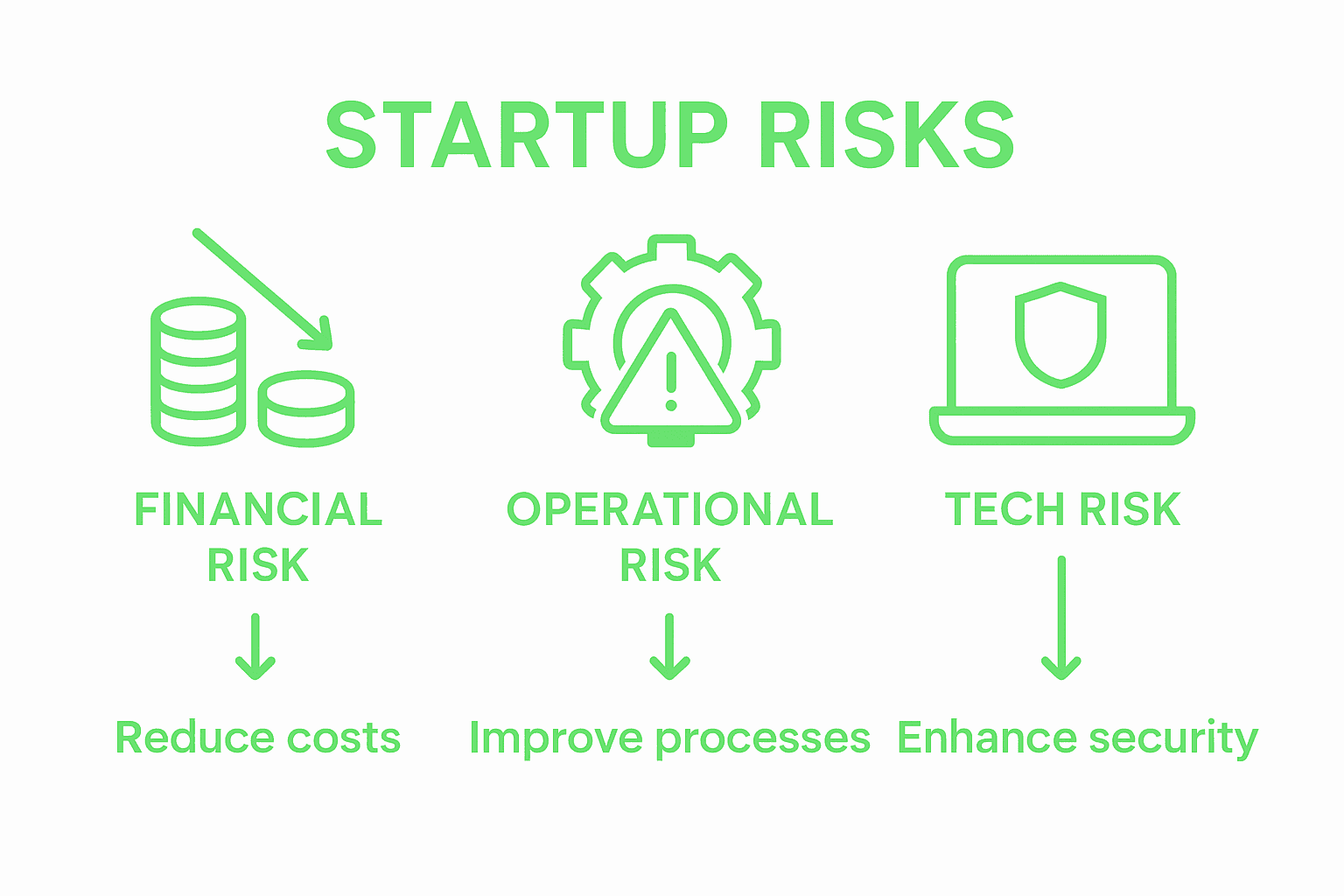
Compliance monitoring technologies have revolutionized how startups navigate complex regulatory environments. Automated systems now provide comprehensive tracking of legal requirements, sending timely alerts about changing regulations, potential compliance gaps, and emerging legal risks. This technological approach transforms regulatory navigation from a reactive challenge into a proactive strategic advantage, helping founders stay ahead of potential legal complications that could otherwise derail their business initiatives.
Pro Tip for Risk Management Technology: Implement a quarterly technology audit that assesses your current risk management tools, identifying potential gaps and emerging solutions that can provide more comprehensive protection.
Key De-Risking Tool Categories:
Modern risk management tools can provide critical startup advantages:
| Tool Category | Key Function | Startup Benefit |
|---|---|---|
| Financial tracking | Real-time cash flow monitoring | Prevents sudden shortfalls |
| Compliance monitoring | Alerts on legal changes | Avoids costly penalties |
| Predictive analytics | Forecasts trends and threats | Enables proactive decisions |
| Cybersecurity management | Protects sensitive company data | Reduces data breach risks |
- Financial tracking platforms
- Compliance monitoring systems
- Predictive analytics software
- Cybersecurity management tools
- Legal risk assessment technologies
- Strategic planning applications
Take Control of New Business Risks with Intelligent Strategy
Facing the complex challenges of modern entrepreneurship requires more than just good ideas. This article highlights key risks like financial volatility, operational vulnerabilities, and technological disruptions that can quickly threaten your startup’s success. Founders need a clear, step-by-step approach to identify and de-risk these issues to confidently turn their vision into viable businesses.
Our Intelligent Business Canvas at siift.ai is designed precisely for founders who want to navigate these risks without blind spots or bias. This AI-powered platform offers personalized feedback, new insights, and prioritized actions that help you handle market uncertainties, manage financial risks, and adapt your strategy in real time. If you are ready to transform challenges into opportunities, visit siift.ai now and start securing your startup’s future with smart, systematic validation and go-to-market planning.
Frequently Asked Questions
What are the main types of business risks that founders should monitor?
Founders should monitor various business risks, including market demand fluctuations, technological disruption, competitive landscape shifts, regulatory compliance challenges, financial resource constraints, and operational system vulnerabilities.
How can founders develop effective risk mitigation strategies for their startups?
Founders can develop effective risk mitigation strategies by creating a comprehensive risk assessment matrix that categorizes potential threats by likelihood and impact, followed by specific mitigation strategies for each risk. It’s also essential to review and update this matrix regularly.
What impact does financial risk have on early-stage ventures?
Financial risk can significantly affect early-stage ventures by limiting their ability to access capital, meet payroll, and sustain operations, especially in the event of external financial infrastructure failures, like those seen with banks.
What technology tools can help startups manage business risks more effectively?
Startups can benefit from various technology tools, including financial tracking platforms for cash flow monitoring, compliance monitoring systems for legal adherence, predictive analytics software for forecasting trends, and cybersecurity management tools to protect sensitive data.
Recommended
- blog | siift | What Is Business Risk? A Simple Guide for New Entrepreneurs 2025
- blog | siift | Top Reasons Businesses Fail in 2025: A Guide for New Founders
- blog | siift | Business Opportunity Analysis for First-Time Founders 2025
- blog | siift | Business Plan Essentials 2025: A Beginner’s Guide for New Founders
- Confidential Waste Risk Management: Essential Guide for UK Businesses 2025 - Venture Waste