
Solopreneurs are rewriting the rules of entrepreneurship. Now almost 16 million Americans run a business entirely on their own without a single employee. That sounds risky and overwhelming to most. Yet these solo business owners are thriving and shaping entire industries in ways even large teams cannot pull off.
Table of Contents
Defining Solopreneurs: Who Are They And What They Do
The Core Definition
Typical Solopreneur Domains
The Importance Of Solopreneurship In Today’s Economy
Economic Flexibility And Innovation
Digital Platforms And Global Opportunities
Key Concepts Behind Successfully Operating As A Solopreneur
Personal Capability And Skill Development
Strategic Business Management
Navigating The Challenges And Rewards Of Solopreneurship
Confronting Professional Challenges
Embracing Professional Rewards
Quick Summary
Takeaway | Explanation |
|---|---|
Solopreneurs operate independently. | They handle all aspects of their business alone, from strategy to client relations. |
Continuous learning is essential. | Success requires ongoing skill development and adaptability to stay competitive. |
Establish a robust professional network. | Building connections can enhance opportunities and provide support within the solopreneur community. |
Balance responsibilities effectively. | Managing diverse tasks is crucial for maintaining productivity and motivation. |
Embrace technology for growth. | Digital platforms facilitate global reach and scalable business models in solopreneurship. |
Defining Solopreneurs: Who Are They and What They Do
Solopreneurs represent a unique breed of entrepreneurs who single-handedly manage every aspect of their business. Unlike traditional business owners who might hire employees or teams, solopreneurs operate as independent professionals who wear multiple hats simultaneously.
The Core Definition
At its essence, a solopreneur is an individual who creates and runs a business entirely by themselves. According to research from ResearchGate, these professionals are characterized by their remarkable adaptability and self-driven innovation, often emerging from knowledge economies worldwide.
Key characteristics of solopreneurs include:
Complete ownership and control of their business operations
Personal responsibility for all strategic and tactical decisions
Direct relationship with clients or customers
Minimal overhead and operational expenses
Typical Solopreneur Domains
Solopreneurs thrive in diverse professional landscapes, often leveraging digital platforms and specialized skills. Common domains include:
The following table summarizes typical domains where solopreneurs thrive, along with a brief description for each area. This can help readers quickly understand the landscape of solo business opportunities.
Domain | Description |
|---|---|
Freelance writing & content | Creating articles, blogs, or copy for businesses and media. |
Digital marketing consultancy | Helping brands grow through digital ads and strategies. |
Web design & development | Building or managing websites for various clients. |
Online coaching & education | Providing instruction or mentorship via digital platforms. |
Photography & creative services | Offering visual content and creative solutions independently. |
Software development & indie products | Designing and launching unique digital tools or apps. |
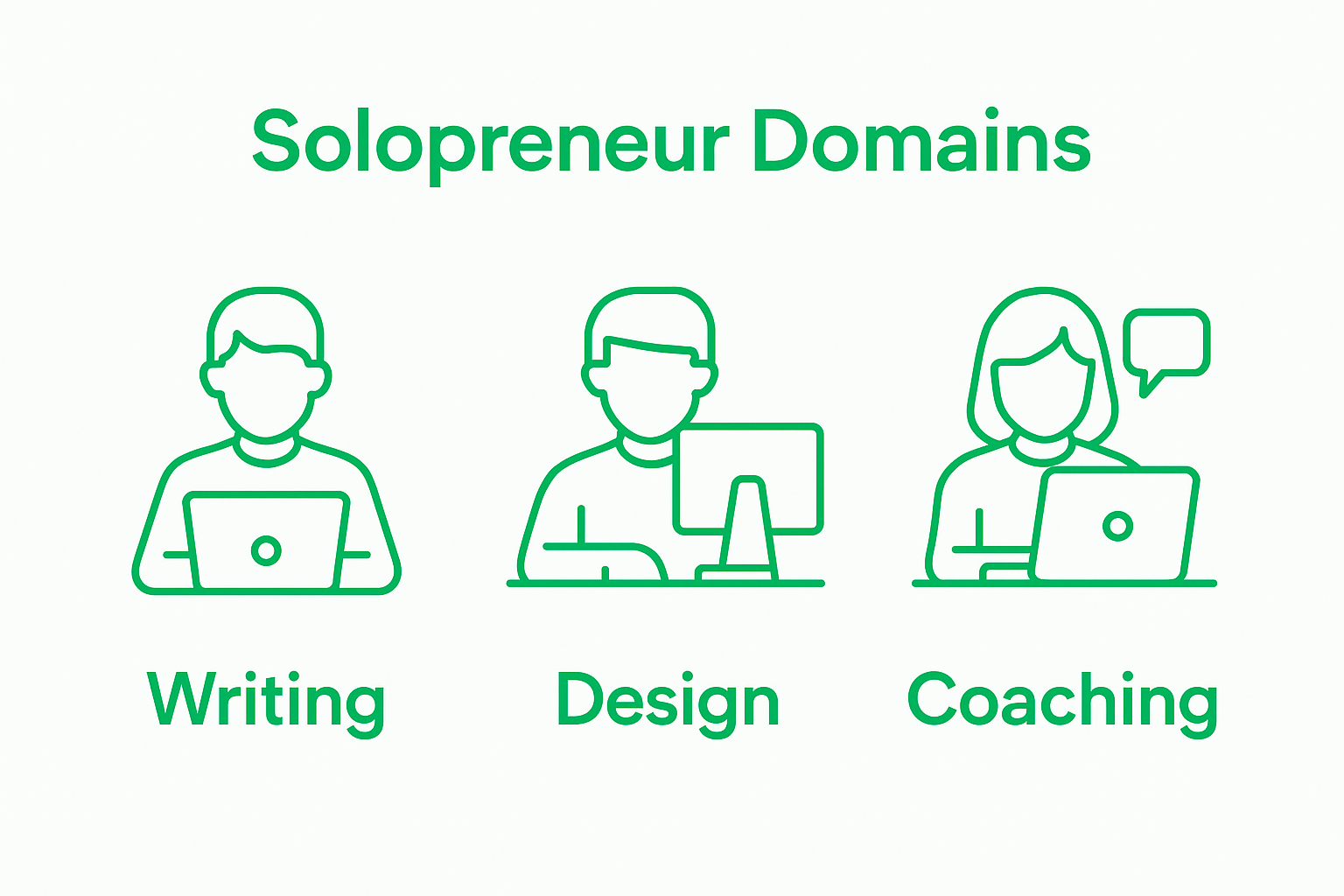
Freelance writing and content creation
Digital marketing consultancy
Web design and development
Online coaching and education
Photography and creative services
Software development and indie product creation
The modern solopreneur ecosystem has been dramatically transformed by technology, enabling professionals to read more about work from home strategies and build scalable businesses from anywhere in the world.
While solopreneurship offers immense freedom, it also demands exceptional self-management, continuous learning, and the ability to balance multiple professional responsibilities simultaneously. Success requires not just technical expertise, but also strong personal discipline, strategic thinking, and adaptable problem-solving skills.
The Importance of Solopreneurship in Today’s Economy
Solopreneurship has emerged as a critical component of modern economic landscapes, transforming traditional notions of work and entrepreneurship. These independent professionals are not just creating personal income streams but are actively reshaping economic structures and workforce dynamics.
Economic Flexibility and Innovation
According to the OECD’s ‘The New World of Work’ report, solopreneurs contribute significantly to job creation, economic diversification, and innovation. They represent a nimble workforce capable of adapting quickly to changing market demands and technological shifts.
Key economic contributions of solopreneurs include:
Generating diverse income opportunities
Reducing unemployment through self-employment
Introducing innovative business models
Promoting skill-based economic participation
Digital Platforms and Global Opportunities
Technology has dramatically expanded solopreneurship possibilities. Digital platforms have eliminated traditional geographical and infrastructural barriers, enabling professionals to explore startup and small business strategies with minimal initial investment.
The digital economy has created unprecedented opportunities for solopreneurs to:
Access global markets
Offer specialized services internationally
Create scalable digital products
Build personal brand ecosystems
Moreover, solopreneurship represents more than an economic strategy. It embodies a profound shift towards individual empowerment, professional autonomy, and flexible work arrangements that align with emerging workforce expectations. By embracing entrepreneurial independence, solopreneurs are not just earning income but actively constructing more dynamic, personalized professional futures.
Key Concepts Behind Successfully Operating as a Solopreneur
Successful solopreneurship extends beyond having a great business idea. It requires a strategic approach that combines personal skills, professional knowledge, and adaptive capabilities to navigate the complex entrepreneurial landscape.
Personal Capability and Skill Development
According to research published in the journal Sustainability, variables such as age, education, prior work experience, and professional networking significantly impact entrepreneurial success. Solopreneurs must continuously invest in their human capital to remain competitive and resilient.
Key personal development strategies include:
Continuously upgrading technical and business skills
Building a robust professional network
Developing adaptable problem solving capabilities
Maintaining a growth mindset
Strategic Business Management
Successful solopreneurs understand that managing a solo business requires more than technical expertise. They must become multifaceted professionals capable of handling various business functions simultaneously. Learn more about essential entrepreneurial habits to elevate your professional strategy.
Critical business management skills encompass:

Effective time and project management
Financial planning and cash flow monitoring
Marketing and personal branding
Client relationship development
Technological proficiency
Ultimately, solopreneurship is about creating a sustainable professional ecosystem where individual know-how, strategic thinking, and continuous learning converge. By embracing a holistic approach to business and personal development, solopreneurs can transform their independent ventures into dynamic, successful enterprises that reflect their unique vision and capabilities.
Navigating the Challenges and Rewards of Solopreneurship
Solopreneurship is a complex journey filled with profound opportunities and significant challenges, from getting expert advice on your business model to validating your business ideas or managing your financial risk. Understanding these dynamics is crucial for anyone considering or currently operating a solo business venture, helping them minimize financial risk while improving their chances of sustainable entrepreneurship.The path requires resilience, strategic thinking, and a balanced perspective on professional independence.
Here is a table highlighting key challenges and rewards of solopreneurship, allowing for a clear side-by-side comparison to better understand what to expect from the solo business path.
Challenges | Rewards |
|---|---|
Unpredictable income | Professional autonomy |
Managing multiple responsibilities | Flexible work schedules |
Maintaining motivation | Unlimited income potential |
Professional isolation | Personal growth and development |
Balancing personal/professional life | Direct control over business direction |
Confronting Professional Challenges
According to research in the International Journal of Retail & Distribution Management, solopreneurs consistently face unique professional obstacles that test their entrepreneurial spirit. These challenges demand both psychological preparedness and practical problem solving techniques.
Significant challenges include:
Managing unpredictable income streams
Handling multiple business responsibilities
Maintaining consistent motivation
Combating professional isolation
Balancing personal and professional boundaries
Embracing Professional Rewards
Despite the challenges, solopreneurship offers remarkable rewards that traditional employment cannot match. Learn more about solving business problems strategically to maximize these professional advantages.
Key rewards of solo entrepreneurship encompass:
Complete professional autonomy
Flexible work schedules
Unlimited income potential
Personal growth and development
Direct control over business direction
Successful solopreneurs recognize that navigating this professional landscape requires continuous learning, emotional intelligence, and a willingness to adapt. By maintaining a growth mindset and developing robust personal strategies, they transform potential obstacles into opportunities for unprecedented professional fulfillment and success.
Ready to Take Charge of Your Solo Business Journey?
Managing every aspect of your solo business, from daily decision making to unpredictable income, can feel overwhelming. The article explores what it means to be a solopreneur or own a small business—the independence, the freedom, and the tough realities like staying motivated, growing your know-how, and keeping your business on track when you’re on your own. If you have ever wished for a guide that offers personalized, step-by-step feedback with no bias or pressure, you are not alone.
Bring clarity and confidence to your founder’s journey. Now siift can become your virtual business ideas partner with its expert business artificial intelligence, automations and structured approach to data-driven entreprenuership. Skip the guesswork and get a tailored plan with prioritized actions that help you de-risk your path and maximize your professional growth. Discover how the siift founder’s compass can support your goals as a solopreneur, helping you make a successful and modern venture with artificial intelligence that offers personalized insights continuously to ensure productivity not just busy-ness. Don’t wait to move your business forward—try siift today and start building a smarter, stronger solo business.
Frequently Asked Questions
What is a solopreneur?
A solopreneur is an individual who runs and manages their own business without hiring employees. They are responsible for all aspects of the business, from strategy to execution, often leveraging their unique abilities.
What are the key characteristics of solopreneurs?
Key characteristics include complete ownership of their business, personal responsibility for decisions, direct relationships with clients, and minimal operational costs.
What industries do solopreneurs commonly operate in?
Solopreneurs thrive in various fields, such as freelance writing, digital marketing, web design, coaching, photography, and software development, often utilizing digital platforms to expand their reach.
What challenges do solopreneurs typically face?
Solopreneurs may encounter challenges such as unpredictable income, managing multiple responsibilities, maintaining motivation, professional isolation, and finding a balance between personal and professional life.
Recommended