
TL;DR:
- Modern customer loyalty is driven by emotional connection and feeling valued, not just transactions.
- Well-designed loyalty programs significantly increase purchase frequency and revenue, reducing acquisition costs.
- Building emotional loyalty through personalized experiences and genuine gratitude creates a durable competitive advantage.
Customer loyalty is one of those concepts most founders think they understand until the numbers tell a different story. You might have repeat buyers, a rewards program, and decent retention rates, yet still feel like your best customers could walk away tomorrow. That tension is real, and it points to a deeper truth: loyalty is no longer just about transactions. It’s about connection, gratitude, and the kind of relationship that makes customers choose you even when a cheaper option is one click away. Loyalty programs drive 4.8x ROI on average, and members spend significantly more. So why do so many businesses still treat loyalty as an afterthought?
Table of Contents
- Understanding customer loyalty: Definitions and misconceptions
- How customer loyalty drives business growth
- Types of customer loyalty: Transactional and emotional
- Building customer loyalty: Strategies and pitfalls
- What most business owners miss about customer loyalty
- Grow your business with smarter loyalty solutions
- Frequently asked questions
Key Takeaways
| Point | Details |
|---|---|
| Loyalty is evolving | Modern customer loyalty now includes emotional connection, gratitude, and trust—not just repeat purchasing. |
| Impact on growth | Loyal customers drive higher revenue, retention, and sustainable business expansion. |
| Strategies matter | Implementing smart loyalty programs and personalizing experiences is critical for business success. |
| Avoid engagement pitfalls | Focus on active participation and balance between new and loyal customers to prevent alienation. |
Understanding customer loyalty: Definitions and misconceptions
Most entrepreneurs define customer loyalty the same way they were taught in business school: a customer who buys from you more than once. Simple, measurable, done. But that definition is dangerously incomplete in 2026, and clinging to it could be quietly costing you growth.
Modern customer loyalty operates on two levels. The first is behavioral loyalty, which is what most people track. It shows up in purchase frequency, subscription renewals, and repeat orders. The second, and far more powerful, is emotional loyalty. This is when a customer genuinely identifies with your brand, defends it in conversations, and feels a sense of belonging when they buy from you. Emotional loyalty is harder to measure but far more durable.
Here’s where the misconceptions start to pile up:
- Loyalty is not the same as habit. A customer who buys from you because switching feels like a hassle is not loyal. They’re just inert.
- A loyalty card does not create loyalty. It creates a transaction incentive. The moment a competitor offers a better deal, those customers are gone.
- Satisfaction does not equal loyalty. You can have perfectly satisfied customers who feel zero attachment to your brand.
- Retention metrics alone won’t tell you if customers love you or just haven’t left yet.
The research is clear on this. Gratitude trumps traditional loyalty as a driver of long-term customer behavior, meaning the emotional experience of feeling valued and appreciated by a brand is more predictive of future spending than any points system. When customers feel genuinely seen and recognized, they reciprocate. That’s not a soft concept. It’s a behavioral pattern backed by data.
“Customer experience must move beyond ‘good enough’ to ‘love.’ Gratitude and reciprocity are the new loyalty currency.”
This shift has enormous implications for how you design your customer journey. It means your service interactions, your follow-up emails, your packaging, and even how you handle complaints all become loyalty-building moments. If you want to go deeper on how AI is reshaping this, AI-driven loyalty strategies are already changing what’s possible for small businesses.
The bottom line: loyalty is an emotional state, not a behavioral metric. Build for the feeling, and the behavior follows.
How customer loyalty drives business growth
Let’s get concrete. Customer loyalty isn’t just a feel-good concept. It is one of the most powerful levers for sustainable business growth, and the numbers back that up decisively.
Consider what loyalty programs actually produce when designed well:
| Metric | Impact of loyalty programs |
|---|---|
| Purchase frequency | 30 to 60% higher for members |
| Revenue from members | 12 to 25% boost |
| Average ROI | 4.8x return |
| Likelihood to spend | 72% more likely with preferred brand |
These aren’t marginal gains. A 30 to 60% frequency increase means your existing customers are doing more of the heavy lifting for your revenue, which dramatically reduces your dependence on expensive customer acquisition.
Think about it this way. Acquiring a new customer typically costs five to seven times more than retaining an existing one. Every dollar you invest in loyalty is working harder than every dollar you spend on ads chasing cold audiences. Understanding your customer lifetime value impact is essential here because loyal customers don’t just buy more often. They buy more per transaction, refer friends, and are far more forgiving when things go wrong.
Pro Tip: Run a simple cohort analysis on your customer base. Compare the average annual spend of customers who have been with you for two or more years versus those acquired in the last six months. The gap will likely surprise you and clarify exactly where your retention investment should go.
Retention also has a compounding effect on your marketing costs. When you reduce churn by even 5%, you can increase profits by 25 to 95% depending on your business model. Getting sharp on your churn analysis insights is one of the highest-leverage moves a founder can make, especially in the early stages when every dollar counts.
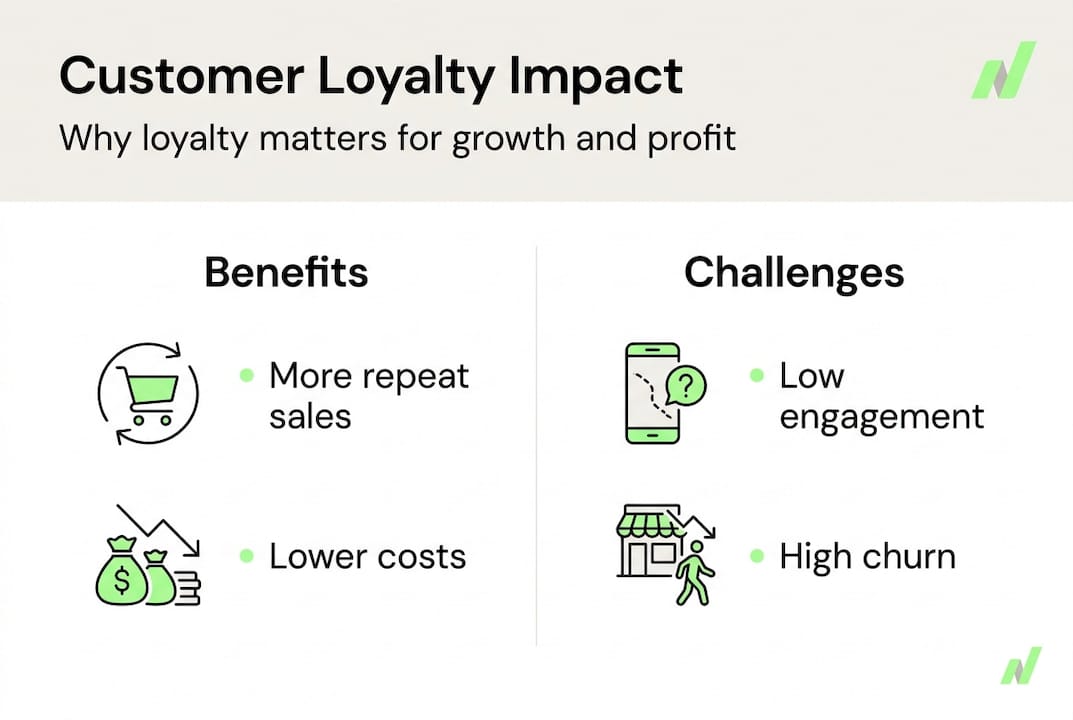
The practical scenario is straightforward: a loyal customer base gives you predictable revenue, lower acquisition costs, and organic word-of-mouth growth. That combination is what allows you to scale without burning through capital.
Types of customer loyalty: Transactional and emotional
Not all loyalty is created equal. Understanding the difference between transactional and emotional loyalty will fundamentally change how you allocate your retention budget and design your customer experience.
Transactional loyalty is built on incentives. Points, discounts, cashback, free items after a certain number of purchases. It works, up to a point. Customers participate because the math makes sense for them. The moment a competitor offers a better deal, that loyalty evaporates. It’s rational, not relational.
Emotional loyalty is built on identity and feeling. These customers buy from you because they believe in what you stand for. They feel recognized, valued, and part of something. Think about brands like Patagonia or Apple. Their most devoted customers don’t just buy products. They advocate, defend, and recruit others. That’s emotional loyalty at scale.
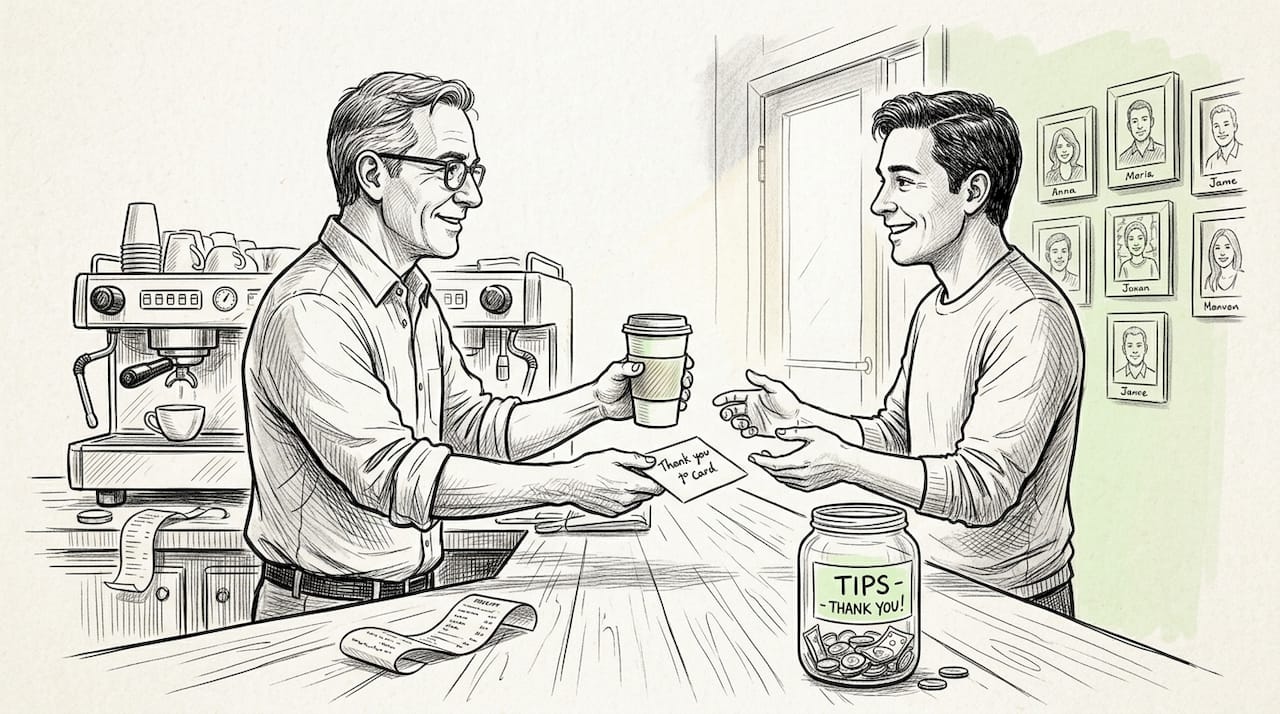
Here’s a direct comparison:
| Dimension | Transactional loyalty | Emotional loyalty |
|---|---|---|
| Primary driver | Rewards and incentives | Values and connection |
| Switching risk | High (price sensitive) | Low (brand committed) |
| Advocacy potential | Low | Very high |
| Lifetime value | Moderate | Significantly higher |
| Cost to maintain | Ongoing discounts | Relationship investment |
The research reinforces this clearly. Emotional and gratitude-based loyalty consistently outperforms transactional models in long-term retention and customer lifetime value. Gratitude, specifically, triggers a reciprocity loop where customers feel compelled to give back, whether through repeat purchases, referrals, or positive reviews.
So how do you build emotional loyalty as a small business? Here’s a practical sequence:
- Start with deep customer understanding. Know their goals, fears, and values before designing any loyalty touchpoint.
- Create moments of genuine recognition. Personalized thank-you notes, anniversary acknowledgments, or surprise upgrades go further than any points system.
- Align your brand story with your customers’ identity. People are loyal to brands that reflect who they want to be.
- Make it easy to give feedback and act on it visibly. Customers who see their input shape your product become co-owners of your brand.
For founders still in the validation phase, customer validation steps are the foundation on which both types of loyalty are built.
Building customer loyalty: Strategies and pitfalls
Knowing the theory is one thing. Executing it without falling into common traps is where most businesses stumble. Let’s look at what actually works and what quietly undermines your efforts.
The strategies that consistently drive loyalty for small businesses and startups:
- Loyalty programs with real value. Not just points for purchases, but tiered rewards, early access, and exclusive experiences that make members feel special rather than just tracked.
- Exceptional, personalized service. Customers remember how you made them feel far longer than what you sold them. Speed, empathy, and follow-through are non-negotiable.
- Personalization at scale. Use purchase history, preferences, and behavior data to make every interaction feel tailored. Generic communications erode loyalty quietly.
- Community building. Create spaces, online or in-person, where your best customers connect with each other. Shared identity deepens individual loyalty.
- Proactive outreach. Don’t wait for customers to come back. Reach out with relevant content, check-ins, or offers before they start drifting.
Now for the pitfalls, because they’re just as important. One in three loyalty program members don’t actively participate, which means high enrollment numbers can mask a deeply disengaged base. If you’re measuring loyalty program success by sign-ups alone, you’re flying blind.
Another trap: obsessing over new customer acquisition while neglecting your existing base. Aggressive promotions aimed at new buyers can feel like a slap in the face to loyal customers who paid full price. The risk of alienating loyal customers is real, and the damage is often invisible until those customers quietly disappear.
Pro Tip: Audit your last three major promotions. Did loyal customers receive equal or better value than new customers? If not, build a parallel offer for your existing base every time you run an acquisition campaign.
For founders still figuring out how to attract their first wave of buyers, getting early customers is the essential first step. And once you’re scaling, tracking the right startup growth metrics will tell you whether your loyalty investments are actually moving the needle.
What most business owners miss about customer loyalty
Here’s the uncomfortable truth we’ve seen play out repeatedly: most business owners treat loyalty as a program rather than a culture. They launch a points system, check the box, and move on. Then they wonder why churn stays stubbornly high.
The businesses that build genuinely loyal customer bases don’t rely on mechanics. They build relationships. They express gratitude consistently, not just during onboarding or when a customer is about to leave. They make their best customers feel like insiders, not just buyers.
What separates the founders who get this right? They stop asking “how do we retain customers?” and start asking “how do we make customers feel valued every single week?” That reframe changes everything from how you write emails to how you train your team to how you respond to complaints.
Emotional loyalty is not a soft metric. It’s a competitive moat. And in a market where competitors can copy your product in months, the feeling customers have when they interact with your brand is often the last thing that can’t be replicated. Explore how AI loyalty insights can help you systematize that emotional connection at scale.
Grow your business with smarter loyalty solutions
Building real customer loyalty requires more than good intentions. It takes a validated strategy, the right frameworks, and tools that help you act on data rather than gut feel. That’s exactly where siift comes in. siift’s Intelligent Business Canvas is designed to help founders like you move from idea to traction with a clear, structured approach to customer strategy, including retention and loyalty. Whether you’re mapping your customer journey, identifying churn risks, or designing your first loyalty program, siift gives you the agentic AI support to do it faster and smarter. Explore loyalty growth tools and start building the kind of business your best customers never want to leave.
Frequently asked questions
How does customer loyalty affect business revenue?
Customer loyalty directly increases purchase frequency and delivers a 12 to 25% revenue boost from program members, with an average ROI of 4.8x for well-designed loyalty programs.
What are the biggest mistakes entrepreneurs make with customer loyalty?
The most common mistake is treating loyalty as a sign-up metric rather than an engagement one. One in three members don’t actively participate in loyalty programs, meaning enrollment numbers often mask a disengaged base.
How can small businesses build emotional loyalty?
Small businesses build emotional loyalty by personalizing every customer interaction and expressing genuine gratitude consistently. Gratitude-based reciprocity is more predictive of long-term retention than any points or discount system.
Are loyalty programs effective for startups?
Yes, but only when designed for active participation rather than passive enrollment. High enrollment with low engagement is a common failure mode that wastes resources and signals a program that isn’t delivering real value to members.