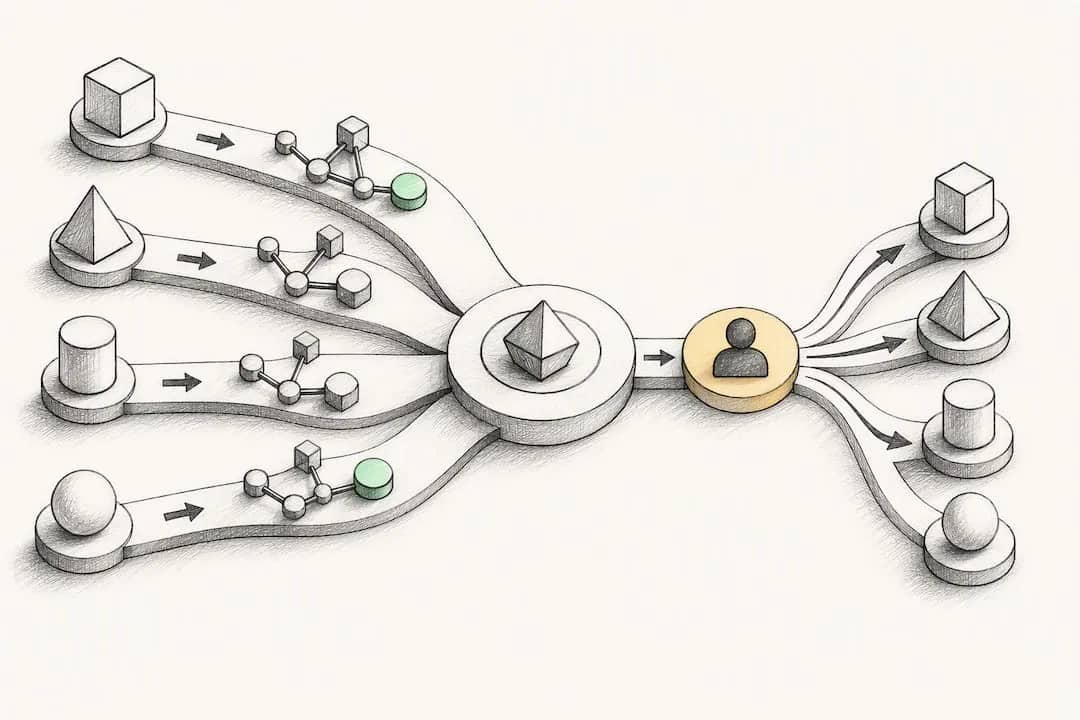
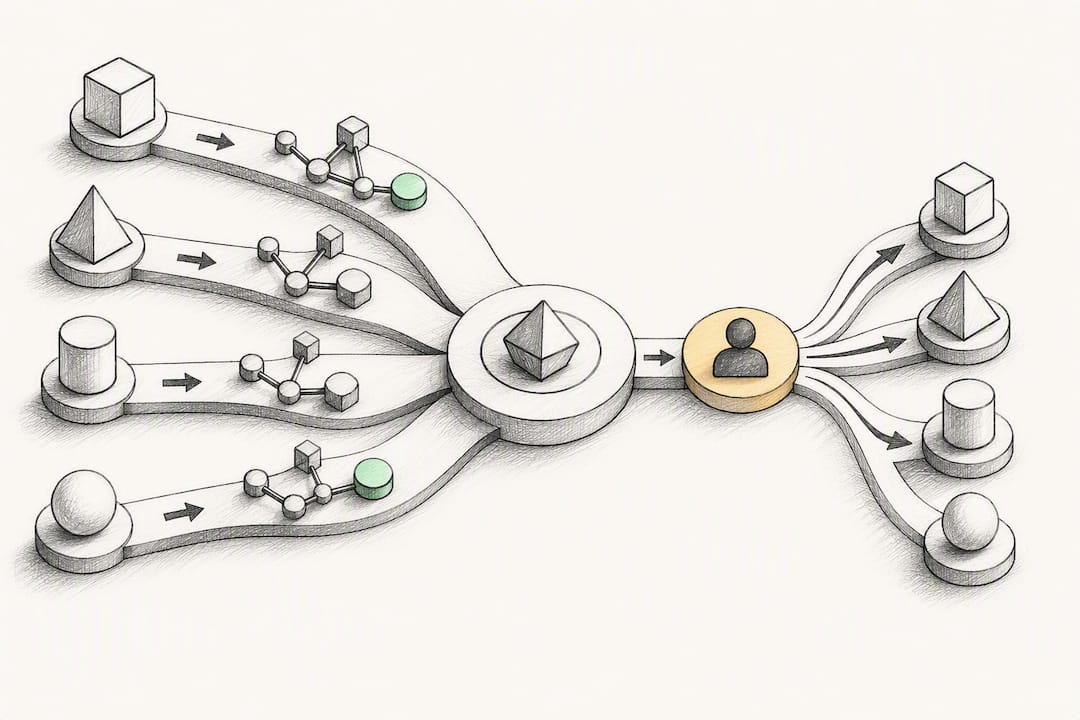
AI collaboration means embedding AI agents and assistants directly into shared team workflows, so people and machines split the work based on what each does best. The payoff isn’t automation for its own sake. It’s speed, better drafts, and sharper decisions, with humans still holding the wheel. IBM’s research on human-AI collaboration frames this as augmentation, not replacement, and siift builds its entire New Business OS around that same principle for founders.
TL;DR:
- Most AI collaboration patterns are focused on support roles like advising, augmenting, or delegating tasks, with agentic AI being the most autonomous and risky.
- Teams should allocate tasks based on risk, ambiguity, and scale, assigning routine, low-risk work to AI and high-risk, nuanced decisions to humans.
- Collaboration platforms require infrastructure like shared memory, role-based permissions, and audit logs to enable safe and effective human-AI teamwork.
- Starting small with high-value pilots, defining clear scope, and measuring results ensures successful AI adoption without disrupting existing workflows.
- Leaders should prioritize implementing agentic AI carefully, with governance, accountability, and structured decision-making to support long-term strategic growth.
Table of Contents
- What Is AI Collaboration, Really? The Four Patterns
- Where AI Collaboration Actually Pays Off for Teams
- Who Should Do What? Splitting Work Between Humans and AI
- What Should a Team AI Platform Actually Do?
- How Do You Keep AI Collaboration Safe and Trustworthy?
- How to Roll Out AI Collaboration Without Breaking Things
- What Leaders Should Actually Prioritize Next
- Ready to Put This Into Practice?
- Sources
- FAQ
What Is AI Collaboration, Really? The Four Patterns
Most leaders think “AI collaboration” means one thing: a chatbot answering questions. It’s actually four distinct patterns, and mixing them up is why so many AI pilots stall out.
- Advisor. AI offers analysis or options; a human decides. Example: an AI flags three pricing strategies based on competitor data, and your team picks one.
- Augmenter. AI does the heavy lifting on a task a human owns start to finish. Example: drafting a first-pass investor deck that a founder then edits and refines.
- Delegator. A human hands off a bounded task and reviews the output. Example: “summarize these 40 customer interviews into five themes.”
- Agentic. AI executes multi-step work autonomously within guardrails, checking back at defined points. Example: an agent researches a market, drafts a positioning brief, and flags it for approval, without you prompting each step.
That last pattern is the newest and the riskiest, because the AI is taking action, not just producing text. It’s also where interoperability standards like the Model Context Protocol matter behind the scenes. MCP lets different AI tools share context about a project instead of starting from zero every time, which is what makes agentic workflows practical instead of chaotic. You don’t need to understand the plumbing. You do need to know which pattern fits which job before you hand something off.
Where AI Collaboration Actually Pays Off for Teams
The benefits aren’t abstract. They show up in hours saved, faster research cycles, and fewer meetings that go nowhere. CMU’s research on AI and team dynamics found that AI strengthens collaboration specifically when it’s designed to preserve human connection and oversight, not sideline it.
By the numbers: Gartner projects that 75% of enterprise software engineers will use AI code assistants by 2028, up from under 10% in early 2023. That’s not a niche trend. That’s an entire profession restructuring how it works in under five years.
The clearest wins cluster around a handful of use cases:
- Research synthesis. Turning a pile of interviews, reviews, or market reports into a digestible brief in minutes instead of days.
- Meeting notes with action items. No more “wait, who owns that?” three days after the call.
- Customer support copilots. AI drafts responses; humans handle judgment calls and escalations.
- Ideation and experimentation. Generating and stress-testing more strategic options than a small team could brainstorm alone.
- Competitive analysis. Continuous monitoring instead of a one-time report that’s stale by next quarter.
None of these replace a founder’s judgment. They just clear the runway so judgment gets applied to the right decisions, faster.
Who Should Do What? Splitting Work Between Humans and AI
Here’s the mistake I see constantly: teams either dump everything on AI (“just have it write the strategy”) or refuse to hand off anything meaningful. Both waste the tool. The smarter move is matching tasks to strengths.
AI tends to win at:
- Processing large volumes of data fast
- Spotting patterns across messy, unstructured information
- Producing first drafts and structured summaries
- Repeating a process consistently without fatigue
Humans tend to win at:
- Reading ambiguity, politics, and nuance in a room
- Making calls with incomplete or conflicting information
- Empathy, negotiation, and relationship-building
- Owning accountability for a decision’s consequences
IBM’s framing puts it plainly: AI handles the data processing and routine execution, humans bring the judgment and complex decision-making. Use that as your filter. Ask three questions before assigning a task: How risky is a wrong answer? How ambiguous is the input? How much scale does this need? High risk and high ambiguity stay with humans. High volume and low ambiguity go to AI first, with a human checking the output.
Pro Tip: Build an approval gate before you build the workflow. Decide upfront which outputs need a human sign-off before they go anywhere near a customer, investor, or public channel. Retrofitting approval steps after something goes sideways is a much worse conversation.
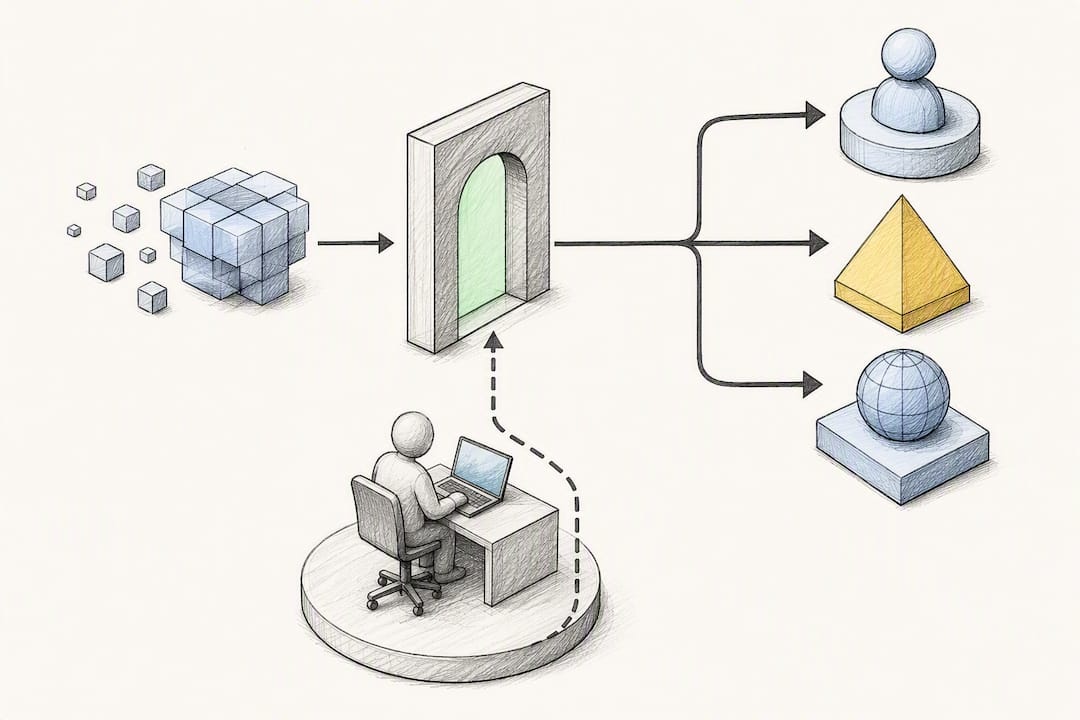
Research on supervised AI in high-stakes domains backs this up: outcomes improve when a human stays in the loop on decisions that carry real consequences. That’s not a knock on AI. It’s just where the line belongs.
What Should a Team AI Platform Actually Do?
Most “collaboration” tools are really just chat windows with extra branding. That’s not collaboration, that’s a faster typo generator. A platform built for teams needs infrastructure that a single-user chatbot never had to worry about.
- Shared, project-scoped memory. The AI should remember your project’s context, not just your last message. This keeps institutional knowledge with the team instead of trapped in one person’s chat history.
- Tenant isolation. One team’s data never bleeds into another’s, especially for agencies or platforms serving multiple clients.
- Role-based execution. Not everyone should be able to trigger the same actions. Junior team members might draft; only a lead approves and executes.
- Audit logs. Every action an AI agent takes should be traceable, who requested it, what it did, when.
- Integrations that matter. Calendar, project management, and communication tools need to plug in, or the AI becomes another silo instead of removing one.
Interoperability standards matter here too. A platform that supports something like MCP can hand context between tools instead of forcing your team to re-explain the project every time you switch apps. When you’re evaluating a platform, that checklist above is your shortlist. If a vendor can’t answer how they handle scoped memory or audit trails, that’s your answer right there.
How Do You Keep AI Collaboration Safe and Trustworthy?
Governance sounds like a buzzkill until the week something goes wrong without it. Keep the checklist short enough that people actually follow it.
- Define execution scope. Spell out exactly what an AI agent is allowed to do without asking, and what always needs a human nod first.
- Assign owner accountability. Someone’s name is attached to every AI-driven decision. “The AI did it” is never an acceptable answer to a client or a board.
- Set data boundaries. Know what information the AI can access and what’s off-limits, especially anything involving customer or financial data.
- Keep logs and rollback procedures. If an agent takes a wrong action, you need to see exactly what happened and undo it fast.
- Train for clarity, not fear. Teams need to know their role didn’t disappear, it shifted. Say that out loud, often.
The World Economic Forum’s Future of Jobs Report makes the training point sharply: the skills gap from AI adoption is real, and leaders who skip retraining conversations end up with a team that either resists the tool or trusts it blindly. Neither is good. Measure trust the same way you’d measure any other outcome, with feedback loops, not assumptions.
How to Roll Out AI Collaboration Without Breaking Things
Skip the company-wide “AI transformation” memo. Start small, measure hard, then scale what actually works.
- Pick one high-value pilot. Choose a workflow with a clear, measurable pain point, not “let’s try AI on everything.” Define 2 to 3 outcome metrics upfront: speed, output quality, or customer satisfaction. Vague goals produce vague results.
- Set scope, ownership, and rollback criteria before launch. Who owns this pilot? What’s the security sign-off? What conditions trigger pulling the plug? Answer these before day one, not after a problem forces the question.
- Measure, gather feedback, iterate, then formalize. Run the pilot for a fixed window. Talk to the people using it daily, not just the leadership dashboard. Only write formal governance policy once you know what actually needs governing.
An external case study on AI-driven research workflows showed a 60% cut in research time when teams restructured their process around AI instead of bolting AI onto an unchanged process. That’s the real lesson: the tool matters less than the workflow redesign around it.
Pro Tip: Over-communicate the “why” before the rollout, not during the complaints.
For founders mapping this onto early-stage execution, siift’s team alignment tools are built around exactly this shift, moving AI from a passive assistant to an accountable participant with scoped context and real-time visibility into who owns what. And if the pilot itself is a new business idea rather than an internal process, siift’s business strategy platform applies the same structured, step-by-step approach to validation instead of an unscoped brainstorm.
What Leaders Should Actually Prioritize Next
Agentic AI is going to keep pushing further into execution, not just advice. That’s the direction every serious platform is heading, and it means the operating model question, who owns what, who approves what, isn’t optional anymore. It’s the actual work of leadership in the next few years.
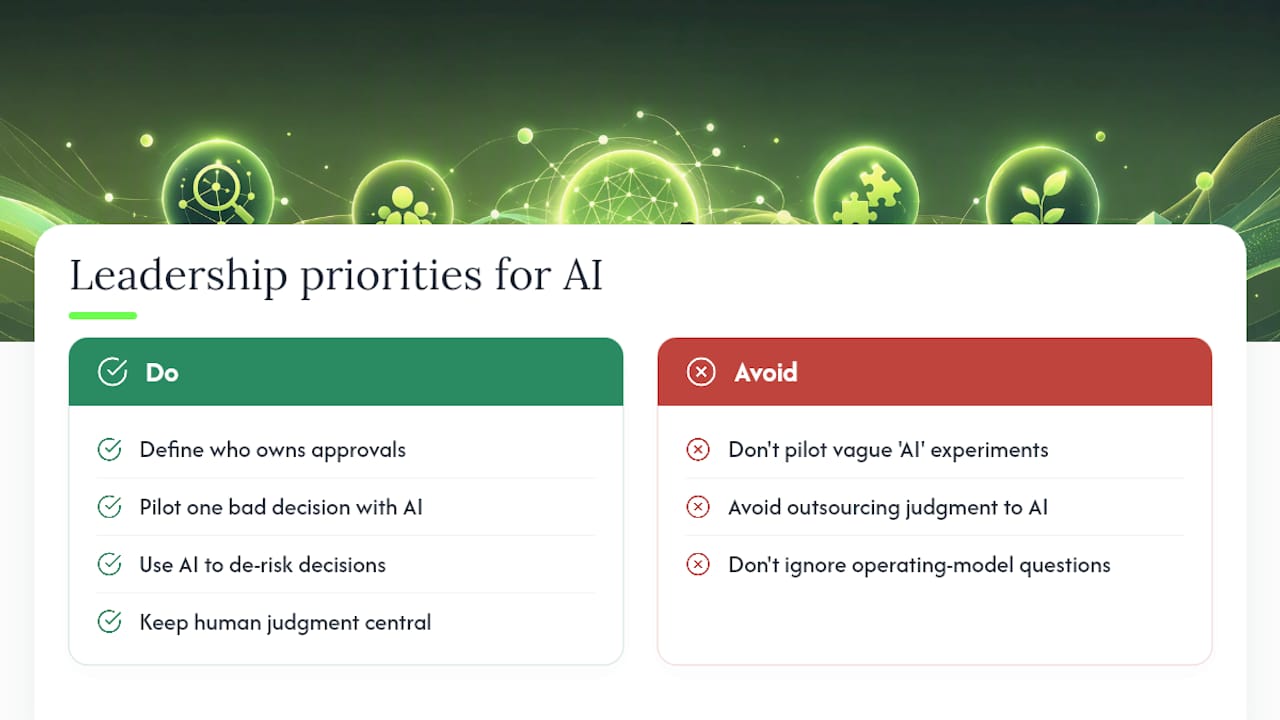
siift offers a platform designed to guide founders through a step-by-step path from idea to validated strategy, aiming to keep human judgment central while AI assists with research, market mapping, and go-to-market structuring. The goal isn’t a faster chatbot. It’s derisking the decisions that actually determine whether a business survives its first year.
My one recommendation if you’re starting from zero: don’t pilot “AI.” Pilot one decision you make badly today, and see if structured AI collaboration makes that one decision better. Everything else follows from there.
— Samim Safaei
Ready to Put This Into Practice?
Most AI tools hand you a blank chat box and call it a strategy platform. siift is different: it’s a structured, step-by-step system that walks founders through ideation, validation, and go-to-market planning, so you’re never staring at a cursor wondering what to ask. If your team collaborates informally with AI but lacks scoped context and governance to trust it with real decisions, there are platforms designed to close that gap for early-stage builders.
It suits solo founders, startup teams, and intrapreneurs who want less guesswork and more structure when turning an idea into a validated business. Start with siift’s startup idea validation tool to see how a guided process compares to an open-ended prompt, or head straight to siift’s go-to-market planning platform if validation is already behind you and execution is the next hurdle.
Sources
A few sources anchor the research in this piece and reward a closer read. IBM’s overview of human-AI collaboration lays out the augmentation framework in plain terms. CMU’s research digs into how AI can strengthen team dynamics without displacing them. Gartner’s adoption forecast quantifies the momentum. The WEF Future of Jobs Report covers the skills shift leaders need to plan around.
- Human-AI Collaboration: What is it and Why is it Important? | IBM
- Researchers Explore How AI Can Strengthen, Not Replace, Human Collaboration | Carnegie Mellon University
- Gartner: 75% of enterprise software engineers will use AI code assistants by 2028 | Gartner
- Future of jobs report 2025 — WEF
FAQ
What is collaboration in AI?
Collaboration in AI refers to humans and AI systems working together on shared tasks, with AI handling data processing and pattern recognition while humans provide judgment and final decisions, as IBM’s research describes.
What is the 30% rule in AI?
There’s no single, widely recognized “30% rule” in AI collaboration research; if you’ve seen this term, it likely refers to a specific vendor’s internal benchmark rather than an industry standard.
What are the main types of AI collaborators?
The most practical framework groups AI collaboration into four patterns: advisor, augmenter, delegator, and agentic, each defined by how much autonomy the AI has and how directly a human stays involved in the task.
What are the top AI tools used for collaboration today?
Adoption varies heavily by function, but Gartner’s research shows AI code assistants are on track for use by 75% of enterprise software engineers by 2028, with similar momentum in research synthesis and drafting tools across other business functions.
Does siift offer AI collaboration features for teams?
Yes. siift’s team alignment tools are built specifically to move AI from a passive assistant into an accountable, scoped participant in a founding team’s day-to-day execution.