
Turning a raw idea into a real business is never a straight line. Founders chase clarity while juggling research, planning, feedback, and constant pivots. Every tool claims to make this process easier, but which one actually helps you organize your thoughts, plan with confidence, and connect with the right people at the right time? With so many platforms and solutions designed for early-stage creators, picking the right type of tool can shape your journey from first brainstorm to launch. Curious about what sets these options apart and which features matter as you map out your next move?
Table of Contents
Siift.ai
At a Glance
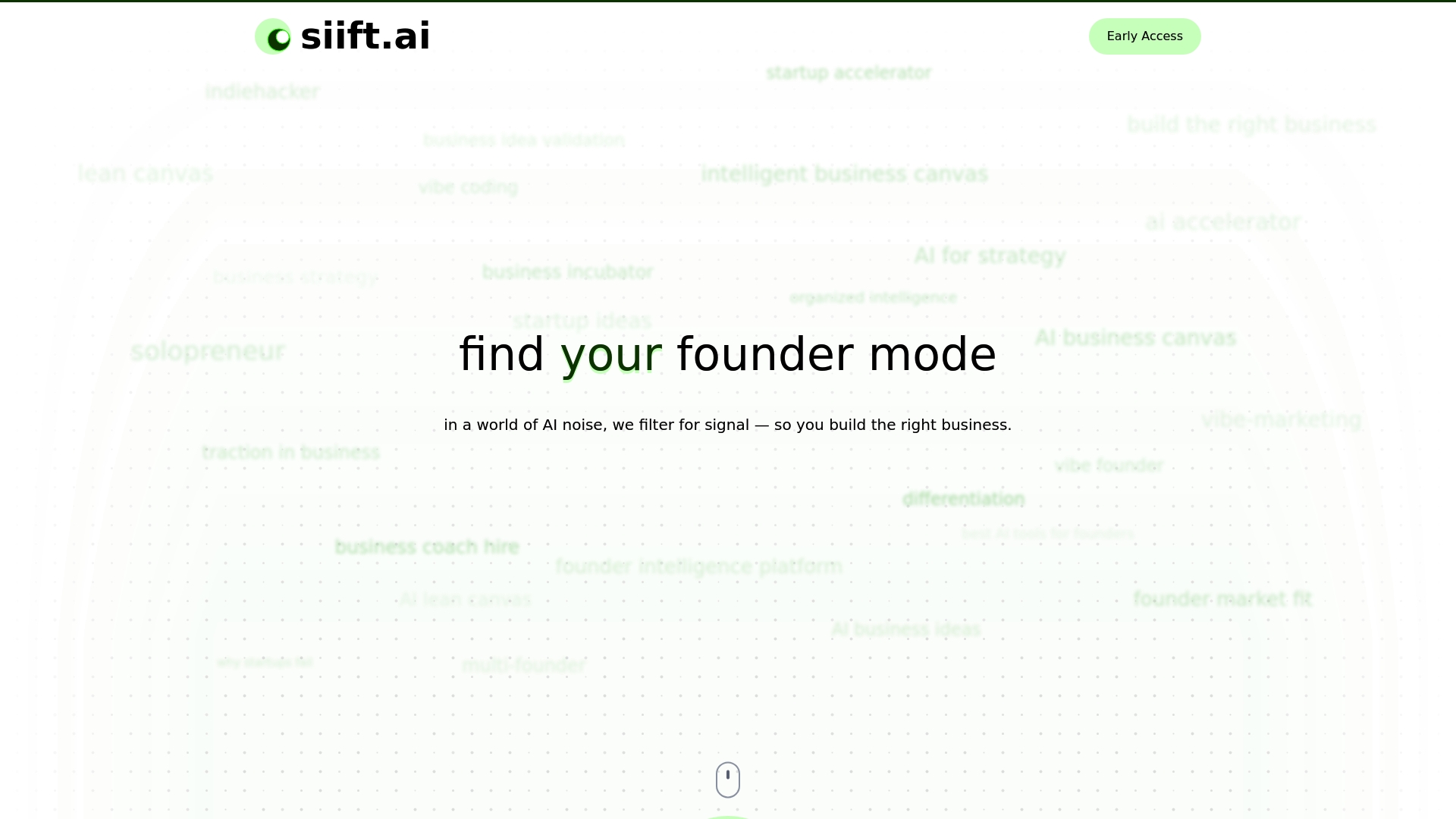
Siift is an agentic AI operating system for building a business, designed to help founders gain clarity, validate assumptions, make better decisions, and coordinate execution across their existing tools. Its approach combines an Intelligent Business Canvas, living business context, evidence-backed feedback, proactive guidance, and human-in-the-loop automations. For solopreneurs, Siift is most relevant when the challenge is connecting strategy, validation, priorities, and execution rather than completing a single isolated task.
Core Features
Siift combines several layers of business support in one system. The Intelligent Business Canvas helps founders map areas such as the market, problem, audience, alternatives, solution, positioning, and company strategy. Its Living Memory System maintains business context as the company evolves, while evidence-backed feedback helps founders distinguish validated areas from assumptions and risks. Siift also provides proactive guidance and human-in-the-loop automations that can work across connected applications, allowing founders to move from strategic decisions toward execution without losing business context.
Pros
Connects strategy and execution: Helps founders move from business context and validation to prioritized actions.
Maintains business context: Its Living Memory System is designed to keep relevant business information available as the company evolves.
Evidence-backed feedback: Helps founders identify what is validated, what remains uncertain, and where more research may be needed.
Works across connected tools: Human-in-the-loop automations can extend workflows across connected applications.
Free entry point: The Explore plan provides access without requiring a paid subscription or credit card.
Who It’s For
Siift.ai is suited to solopreneurs and serious business builders who need help connecting idea validation, business strategy, prioritization, and execution. It is particularly relevant when a founder is managing multiple business decisions and wants AI to maintain context across those decisions rather than using separate AI tools for isolated tasks.
Unique Value Proposition
Siift combines business context, validation, strategy, prioritization, and execution within one AI operating system. Rather than focusing on a single task such as writing a business plan or generating content, it is designed to help founders maintain a connected view of the business and decide what to investigate or act on next.
This makes Siift relevant for solopreneurs who want an AI system that supports the broader business-building process rather than a standalone tool for one stage of planning.
Considerations
Siift is designed as a broader business operating system rather than a specialized tool for every individual workflow. Solopreneurs may still need dedicated products for functions such as accounting, fundraising CRM, design, or other specialist tasks.
Illustrative Use Case
For example, a solopreneur developing a new SaaS idea could use Siift to map the target market, problem, audience, alternatives, solution, and positioning in the Intelligent Business Canvas. The founder could then use the platform's evidence-backed feedback to identify weaker assumptions and determine which areas require more validation before prioritizing the next actions.
This is an illustrative workflow example, not a documented customer result or guaranteed outcome.
Pricing
Siift offers a free Explore plan with 50 credits per user per month. Paid plans include Discover at $29/user/month and Focus at $99/user/month when billed monthly, with a current launch promotion displayed on the pricing page. Enterprise pricing is custom. Annual billing is also available.
Check Siift's current pricing page for the latest plan details and promotional terms.
LeanStack
At a Glance
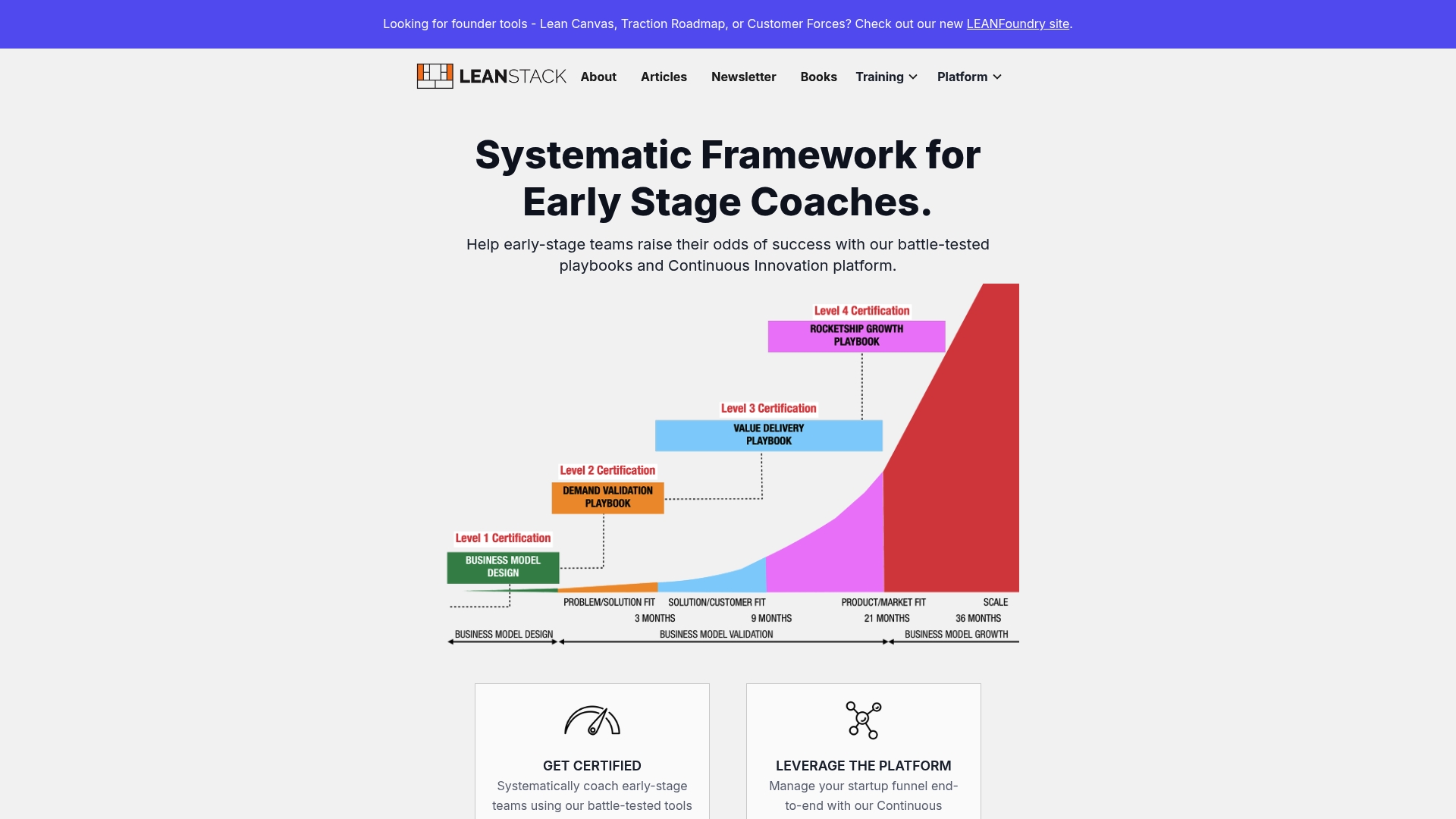
LeanStack is a systematic innovation platform that helps early-stage teams turn ideas into repeatable startup progress. It combines stage-based playbooks, coaching frameworks, and certification to push teams from concept to validated learning. If you value structured processes and mindset change over bolt-on tools, LeanStack is built for that workflow. It’s practical and coaching-forward, though pricing and long-term community support details are sparse.
Core Features
LeanStack centers on a continuous innovation platform paired with systematic, stage-based playbooks that guide product teams through discovery, validation, and early traction. Core offerings include Lean Canvas-style tools, a traction roadmap, customer forces analysis, and the LeanFoundry coaching framework for hands-on founder support. They also offer certification programs and an email course, “Coaching Lean Meta-Skills,” designed to teach the behavioral and coaching practices that drive lasting innovation.
Pros
Structured playbooks: LeanStack provides stage-based playbooks and frameworks for early-stage innovation.
Mindset and behavior focus: LeanStack emphasizes mindset change and behavioral design, helping teams adopt habits that sustain long-term innovation.
Coaching and certification: The availability of certification programs and coach training makes it easier to scale consistent coaching practices across teams and organizations.
Comprehensive early-stage resources: The bundle of LeanFoundry, playbooks, and targeted courses provides a cohesive toolkit for founders starting from zero to product-market fit.
Cons
Pricing transparency is limited, as specific details on cost are not provided on the site.
Prior knowledge required: Users may need some familiarity with Lean Startup methodologies to extract maximum value from the platform.
Unclear long-term support: Information about ongoing community features or long-term support structures is limited on the public site.
Who It’s For
LeanStack is best for early-stage startup teams, startup coaches, mentors, educators, and product managers who want a disciplined, repeatable approach to innovation. If you run or advise an accelerator, teach entrepreneurship, or lead a small founding team that benefits from structured playbooks and coach-driven processes, LeanStack fits naturally into your workflow.
Unique Value Proposition
LeanStack combines practical playbooks with coaching frameworks and certification pathways. This makes it particularly relevant for organizations that use structured coaching and innovation frameworks across teams or startup programs.
Real World Use Case
A startup program or accelerator can use LeanStack’s playbooks and coaching frameworks to structure discovery, validation, and early-stage innovation.
Pricing
Pricing is not specified on the website.
Website: https://leanstack.com
IdeaBuddy
At a Glance
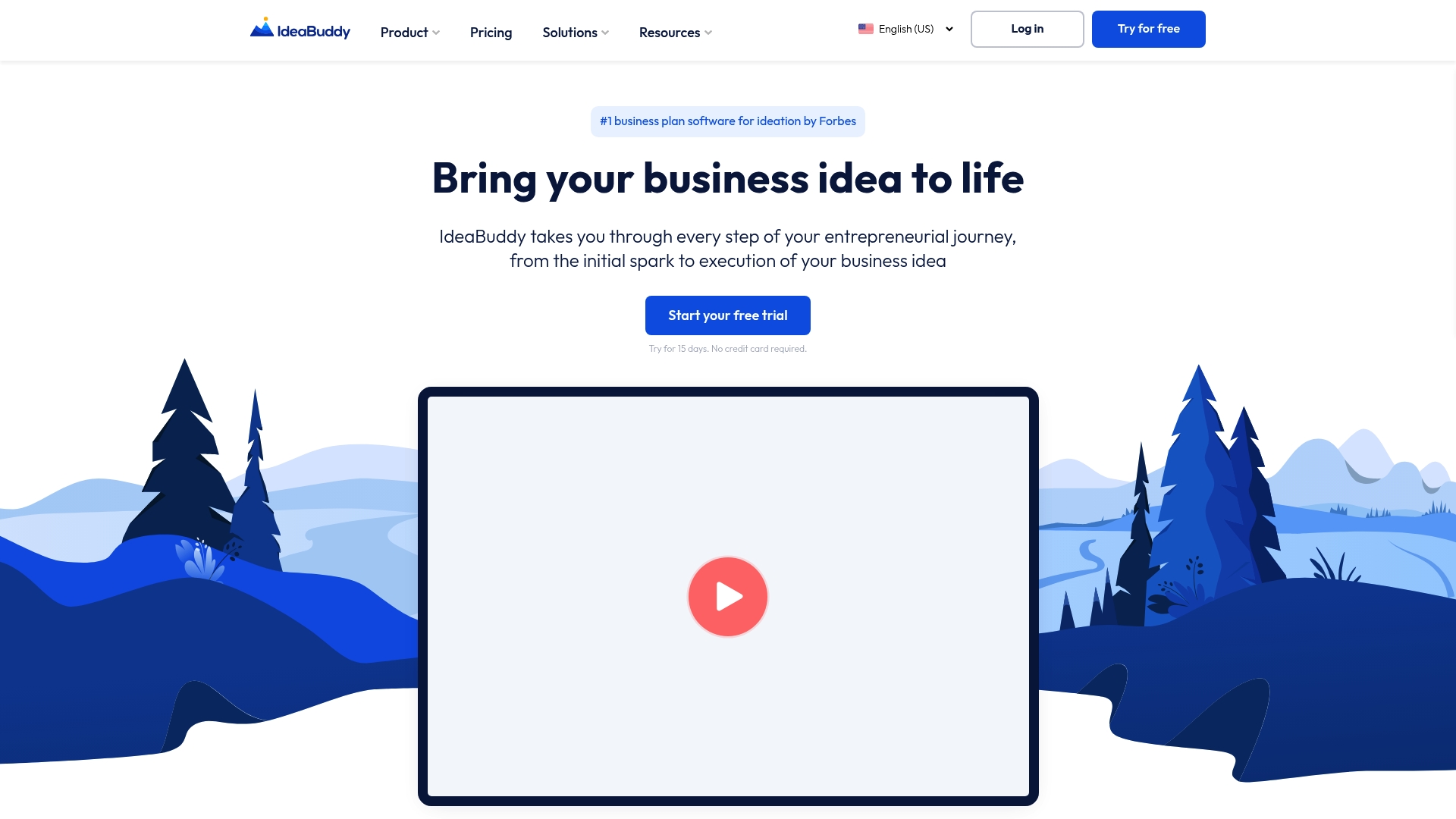
IdeaBuddy is an all-in-one, AI-assisted business planning workspace that guides solopreneurs from idea validation to investor-ready plans. It balances approachable templates and step-by-step workflows with financial forecasting tools that beginners can follow and more experienced founders can customize. If you want a single place to test assumptions, build a coherent plan, and produce financial projections without juggling spreadsheets, IdeaBuddy is relevant for founders who want guided business planning, idea validation, and financial projections in one workspace.
Core Features
IdeaBuddy combines guided workflows and hands-on tools: industry-specific, step-by-step business planning guides; a customizable business plan builder; a business model canvas for mapping early ideas; idea validation tools to test feasibility; and financial projections and forecasting modules. The platform layers AI assistance across these features to generate writing suggestions, templates, and preliminary financial estimates, speeding up tasks that normally require hours of research or consulting.
Pros
User-friendly interface: The layout and guided steps make the platform approachable for first-time founders, reducing friction when you’re drafting a plan for the first time.
AI-powered assistance: Built-in AI helps you write sections, generate templates, and produce initial financial estimates, which speeds up iteration and reduces blank-page anxiety.
Industry-tailored templates: Templates for multiple industries provide a starting structure for developing a business plan and refining an early-stage idea.
Collaboration support: The platform allows collaboration with team members and mentors, which keeps feedback centralized and simplifies version control during planning.
Data protection and confidentiality: IdeaBuddy states that user ideas and personal information are protected with encryption and confidentiality measures.
Cons
Some features and projects are limited in the free trial version, which can hinder comprehensive evaluation before committing to a paid plan.
The platform may require a learning curve for users unfamiliar with structured business planning, and mastering the financial forecasting tools can take time.
Subscription costs can vary based on selected plans, so long-term budgeting for the tool requires checking which features you truly need.
Who It’s For
IdeaBuddy is aimed at entrepreneurs, startup founders, small business owners, and business students who need an integrated platform to validate ideas and create investor-ready plans. It fits solopreneurs who want a guided, all-in-one approach rather than stitching together multiple apps, especially founders in tech or creative fields who value speed and structured feedback while bootstrapping.
Unique Value Proposition
IdeaBuddy’s strength is its combination of guided workflows, industry templates, and AI-assisted writing and forecasting in one platform. Rather than a collection of disconnected tools, it gives founders a single workspace to test assumptions, draft plans, and produce financial projections, helping them move from early idea development to a structured business plan and financial projection.
Real World Use Case
A founder uses IdeaBuddy to validate a SaaS concept: they walk through the idea validation modules, draft a focused business model canvas, generate a customized business plan, and produce financial projections to share with early advisors before an investor pitch.
Pricing
IdeaBuddy offers a 15-day free trial with no credit card required. The trial includes access to Canvas, Guide, Financial Plan, and AI assistance, while paid plans unlock additional features and higher usage limits. Check IdeaBuddy’s current pricing page for the latest plan options and pricing.
Website: https://ideabuddy.com
FounderSuite
At a Glance
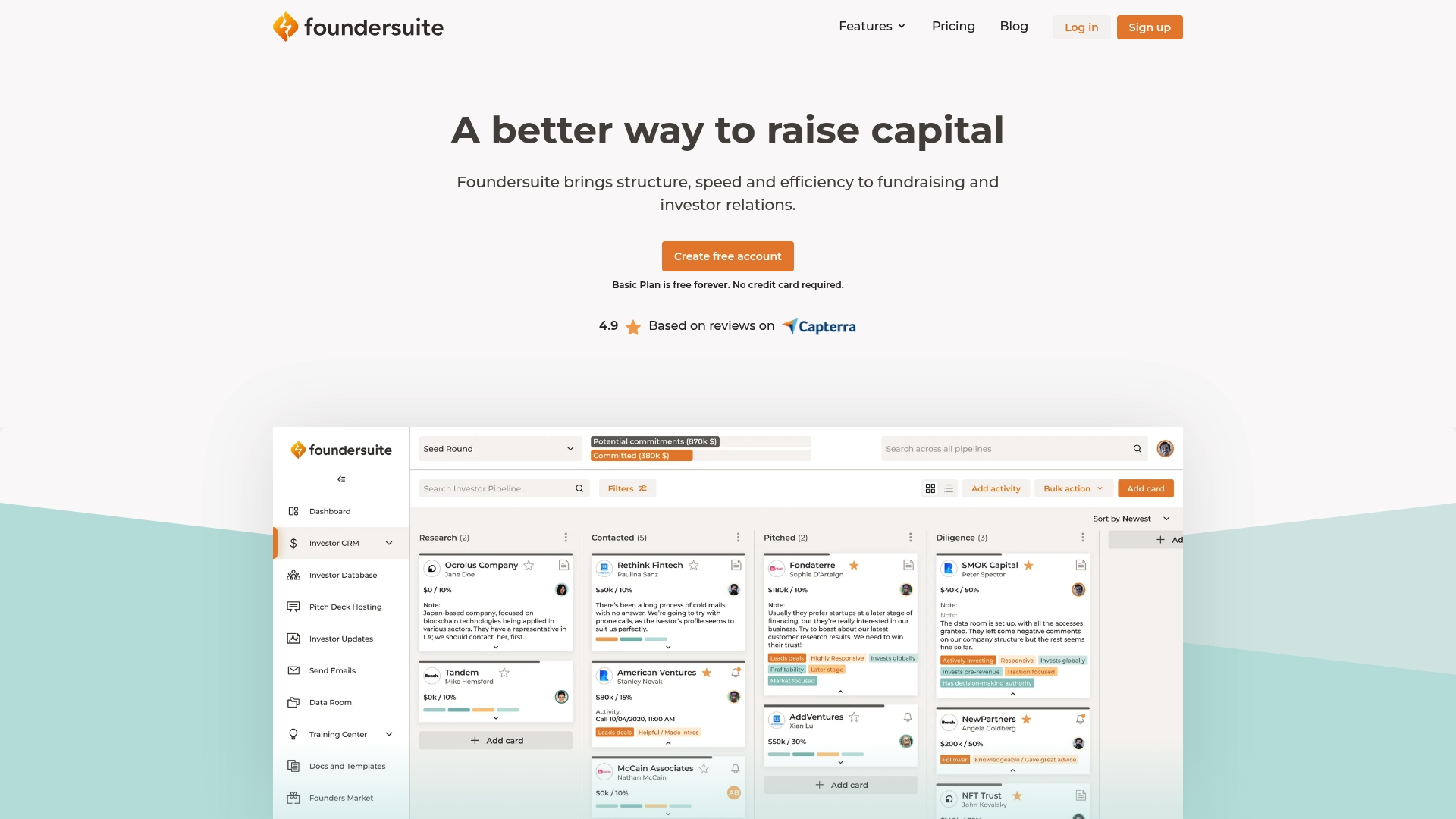
FounderSuite is a focused fundraising and investor-relations platform that packs database power, CRM workflows, pitch hosting, and outreach tools into one place. It gives startups structured ways to find, prioritize, and engage investors through a combination of investor research, CRM, pitch hosting, and outreach tools. If you need a single system to run investor pipelines and track engagement, FounderSuite delivers; if you want a frictionless, one-click experience across every advanced feature, expect some setup and potential add-on costs.
Core Features
FounderSuite combines a searchable investor database, relationship management, pitch deck hosting, outreach, and deal-management features into a unified workflow. The platform provides access to a large proprietary database of global investors. The CRM organizes pipelines and investor touchpoints, pitch deck hosting provides view tracking, and built-in email outreach supports personalization, templates, and bulk sends with engagement tracking. Additional capabilities include investor updates/newsletters, a data room for due diligence, document templates, and integrations to pull everything into your existing stack.
Pros
Extensive investor coverage: The database provides investor profiles that founders can use to research and build targeted investor lists within the platform.
Integrated fundraising workflow: CRM, pitch hosting, outreach, and deal tracking live together, reducing context switching between tools and keeping investor history centralized. That matters when you’re juggling multiple rounds.
Flexible pricing entry point: A free basic plan with unlimited pipelines and database access lets you test core features before committing to an annual plan.
Templates and resources: Built-in document templates and fundraising resources can help founders structure common investor-facing workflows.
Cons
Complex pricing and tiers: The tiered plan structure plus add-ons can be confusing and requires diligence to map features to your exact needs. Expect to compare Silver, Gold, and Platinum carefully.
Add-on fees for some features: Useful capabilities such as data room access may incur extra charges beyond plan prices, which raises total cost during diligence.
Learning curve for depth: The platform’s breadth means new founders unfamiliar with fundraising mechanics may need time to learn best practices and workflows before realizing full value.
Who It’s For
FounderSuite is ideal for founders, accelerators, and early-stage investors who need an integrated, scalable platform for raising capital and managing investor relations. If you’re a first-time founder focused on building repeatable outreach and tracking investor engagement, this tool helps you move methodically from research to close.
Unique Value Proposition
FounderSuite’s unique value is the combination of a large, vetted investor database with workflow tools designed specifically for fundraising. Instead of cobbling together spreadsheets, email, and file storage, you get a single environment optimized for pipeline velocity and investor follow-up.
Real World Use Case
A seed-stage startup could use FounderSuite to identify target investors from its database, host its pitch deck with view tracking, run personalized outreach, and centralize responses in the CRM.
Pricing
The platform offers a free basic plan with unlimited pipelines and database access. Paid annual plans are Silver at $745 per year, Gold at $1,069 per year, and Platinum at $1,609 per year, each unlocking higher investor capacities and additional features.
Website: https://foundersuite.com
Business Planning and Startup Tools Comparison
The table below compares these platforms by their primary use case, core features, target users, and pricing structure.
Platform | Primary Use Case | Key Features | Best Fit | Pricing |
|---|---|---|---|---|
Siift | Business strategy, validation & execution | Intelligent Business Canvas, Living Memory, evidence-backed feedback, proactive guidance, human-in-the-loop automations | Solopreneurs managing multiple business decisions | Free Explore plan; paid plans available |
LeanStack | Structured innovation & startup coaching | Lean Canvas, stage-based playbooks, coaching frameworks, traction roadmap | Startup teams, coaches, mentors & accelerator programs | Pricing not publicly specified |
IdeaBuddy | Business planning & idea validation | Business plan builder, idea validation, business model canvas, financial projections, AI assistance | Founders who want guided business planning in one workspace | 15-day free trial; paid plans available |
FounderSuite | Fundraising & investor relations | Investor database, CRM, pitch hosting, outreach, investor updates & data room | Founders and startups managing investor pipelines | Free basic plan; paid annual plans available |
Choosing AI Tools for Solopreneurs
The right AI tool depends on the problem a solopreneur is trying to solve. Business-planning platforms can help structure an idea and financial plan, fundraising tools focus on investor workflows, and broader business operating systems can connect strategy, validation, and execution.
Siift is designed for the latter use case. Its Intelligent Business Canvas, business memory, evidence-backed feedback, proactive guidance, and human-in-the-loop automations are intended to help founders maintain context while moving from business questions to prioritized actions.
If your main need is broader business strategy and execution rather than a single specialized workflow, you can explore Siift's current plans and capabilities on its website.
Frequently Asked Questions
Which AI tools are useful for solopreneurs in 2026?
AI tools for solopreneurs serve different workflows, including business planning, idea validation, fundraising, productivity, and marketing. The right option depends on whether you need a specialized tool for one task or a broader platform that connects multiple parts of the business-building process.
How can I choose the right AI tool for my needs as a solopreneur?
To choose the right AI tool, clearly identify your business requirements, such as managing ideas, creating financial projections, or handling customer outreach. Evaluate the tools based on their core features and how well they fit your specific workflows to ensure they add value to your daily tasks.
Are there any AI tools that help with idea validation for startups?
Yes, several AI tools focus on idea validation, providing templates and structured workflows to test your business concepts. Look for platforms that offer guided processes to help you refine and assess the feasibility of your ideas more systematically as you prepare to launch.
How do these AI tools improve productivity for solopreneurs?
AI tools improve productivity by automating repetitive tasks, offering intelligent insights, and helping prioritize high-impact activities. Implementing these tools can reduce time spent on repetitive or administrative tasks, allowing founders to focus more on strategy, customers, and execution.
What factors should I consider when comparing AI tools for solopreneurs?
When comparing AI tools, consider ease of use, pricing structure, available features, and customer support. Conduct a thorough evaluation of these factors to choose a tool that aligns with your business goals and enhances your efficiency.
Can AI tools help me with fundraising as a solopreneur?
Some AI and startup platforms support fundraising workflows such as investor research, relationship management, outreach, pitch-deck sharing, and investor updates. Dedicated fundraising platforms such as FounderSuite are more focused on these workflows than general business-planning tools.