

Most american startups struggle to turn big ideas into real momentum, yet only a small fraction ever achieve lasting growth. Clear traction goals and meaningful metrics can make the difference between stalling out and building a sustainable business. With so many moving parts and data points to manage, founders need simple, proven steps to set priorities, choose what to measure, and track real progress. Unlock practical guidance designed to give any american entrepreneur a smarter way to accelerate results.
Table of Contents
- Step 1: Identify Key Traction Goals
- Step 2: Select Actionable Business Traction Metrics
- Step 3: Set Up Simple Tracking Tools
- Step 4: Collect And Analyze Real User Data
- Step 5: Validate Traction With Actionable Insights
Quick Summary
| Insights | Explanation |
|---|---|
| 1. Define Specific Traction Goals | Establish clear, measurable targets for customer acquisition, revenue, and product development to guide your startup’s growth strategy. |
| 2. Choose Actionable Metrics | Select metrics that reflect actual business performance, such as customer acquisition cost and user engagement, to facilitate informed decisions. |
| 3. Implement Simple Tracking Tools | Use intuitive tools like spreadsheets or lightweight dashboards to systematically track key performance indicators without becoming overwhelmed. |
| 4. Analyze Real User Data | Collect diverse user data through surveys and analytics to understand behaviors, ultimately informing product improvements and growth strategies. |
| 5. Validate Insights with Data | Regularly assess your data to confirm product market fit by measuring user engagement and retention, enabling necessary pivots. |
Step 1: Identify key traction goals
Identifying your business’s key traction goals is the critical first step in transforming your entrepreneurial vision into measurable progress. This process helps you define specific, actionable metrics that will guide your startup’s growth strategy and track meaningful advancement.
According to research from arxiv, successful startups develop a progression model that aligns strategic goals with different business lifecycle stages. This means your traction goals should evolve as your business matures. Start by mapping out realistic milestones across three core dimensions: customer acquisition, revenue generation, and product development.
To effectively set traction goals, leverage the Market Opportunity Navigator methodology. Break down your objectives into quantifiable targets like monthly user growth, conversion rates, customer retention percentages, and revenue benchmarks. Prioritize goals that directly demonstrate your business model’s viability and potential for scalability.
A pro tip: Be specific and realistic. Instead of vague goals like “grow users,” target something concrete such as “acquire 100 paid users within the first 3 months” or “increase monthly recurring revenue by 20% quarter over quarter.” This approach transforms abstract ambitions into trackable, motivating milestones that keep your entrepreneurial journey focused and purposeful.
Step 2: Select actionable business traction metrics
Selecting the right business traction metrics transforms vague aspirations into concrete, measurable goals that drive your startup forward. This step is about identifying specific indicators that accurately reflect your business progress and potential for growth.
According to GQM+Strategies, creating a robust link between organizational goals and strategies is crucial for meaningful metric selection. Your traction metrics should directly connect to your core business objectives. For most startups, this means focusing on key performance indicators such as customer acquisition cost, lifetime value, monthly recurring revenue, user engagement rates, and conversion percentages.
Research from arxiv suggests using the SYMBIOSIS methodology to map business objectives to precise measurement goals. This approach helps you develop metrics that are not just numbers but strategic insights. When selecting metrics, ask yourself: Does this measurement provide actionable intelligence? Can it help me make better business decisions? Will it reveal meaningful trends about my startup’s performance?
Pro tip: Avoid vanity metrics that look impressive but don’t drive real growth. Instead, choose metrics that demonstrate real value creation.
 For example, track the percentage of users who become paying customers or the average revenue per user, rather than total signup numbers. The most powerful traction metrics tell a story about your business potential and guide your strategic choices.
Ready to dive deeper? Understanding Growth Metrics for Startups can provide additional insights into crafting a comprehensive measurement strategy.
Step 3: Set up simple tracking tools
Setting up simple tracking tools is your gateway to transforming business insights from abstract concepts into actionable data. This step empowers you to monitor your startup’s progress systematically and make informed strategic decisions.
According to the Lean Startup methodology, iterative tracking is crucial for validated learning. Start by selecting tools that are intuitive and directly aligned with the key performance indicators you established earlier. Consider using spreadsheet templates, lightweight project management platforms, or purpose built analytics dashboards that allow you to log and visualize your core metrics with minimal complexity.
Research from arxiv introduces HyMap, a cognitive mapping technique that provides visual language for tracking founder hypotheses. This approach suggests creating a centralized tracking system where you can map your initial assumptions, record actual performance, and quickly identify gaps between expected and real outcomes. Your tracking tools should be flexible enough to adapt as your understanding of the business evolves.
Pro tip: Avoid overengineering your tracking system. Begin with a minimalist approach that captures essential data without becoming a time consuming administrative burden. Choose tools that offer easy data entry, basic visualization, and the ability to export information for deeper analysis.
For a comprehensive walkthrough of establishing effective tracking mechanisms, check out our Business Goal Tracking Made Simple guide that will help you streamline your monitoring process.
Step 4: Collect and analyze real user data
Collecting and analyzing real user data transforms your startup from guesswork to strategic decision making. This crucial step helps you understand how users actually interact with your product and uncover insights that drive meaningful improvements.
Research from arxiv reveals that successful software startups frequently pivot based on authentic user data. This means going beyond surface level metrics and diving deep into user behavior patterns. Start by implementing multiple data collection methods such as user surveys, in app analytics, customer interviews, and usage tracking tools that capture both quantitative and qualitative information about user experiences.
According to the Lean Startup methodology, customer feedback trumps founder intuition. Focus on capturing granular details like user engagement time, feature adoption rates, pain points, and unexpected usage patterns. Create structured feedback mechanisms that encourage honest user input and make it easy for customers to share their genuine experiences and suggestions.
Pro tip: Segment your user data carefully. Not all feedback is equal. Prioritize insights from power users and paying customers who represent your ideal target market. Look for recurring themes and patterns rather than getting distracted by isolated comments or outlier experiences.
Ready to take your user research to the next level? Our comprehensive guide on understanding customer insights can help you transform raw data into actionable business strategy.
Step 5: Validate traction with actionable insights
Validating traction with actionable insights transforms raw data into strategic understanding that can make or break your startup’s trajectory. This critical step helps you move beyond surface level metrics to truly comprehend your business potential.
Research from arxiv reveals a progression model that demonstrates how startups can align software engineering goals with concrete user insights. Begin by creating a systematic framework for interpreting your collected data. Look for patterns that reveal not just what users are doing but why they are doing it. Identify key indicators that suggest genuine product market fit such as increasing user retention rates, growing engagement metrics, and positive qualitative feedback.
According to the Lean Startup methodology, validated learning requires an iterative approach to product development. This means treating each data point as a hypothesis to be tested and refined. Develop a process where you continually cross reference user behavior with your initial business assumptions and be prepared to pivot quickly when the data suggests a different direction.
Pro tip: Quantify your insights wherever possible. Instead of vague statements like users seem interested, translate observations into measurable statements such as 67 percent of beta users completed the core workflow in under 5 minutes. These precise measurements provide clarity and credibility to your traction validation process.
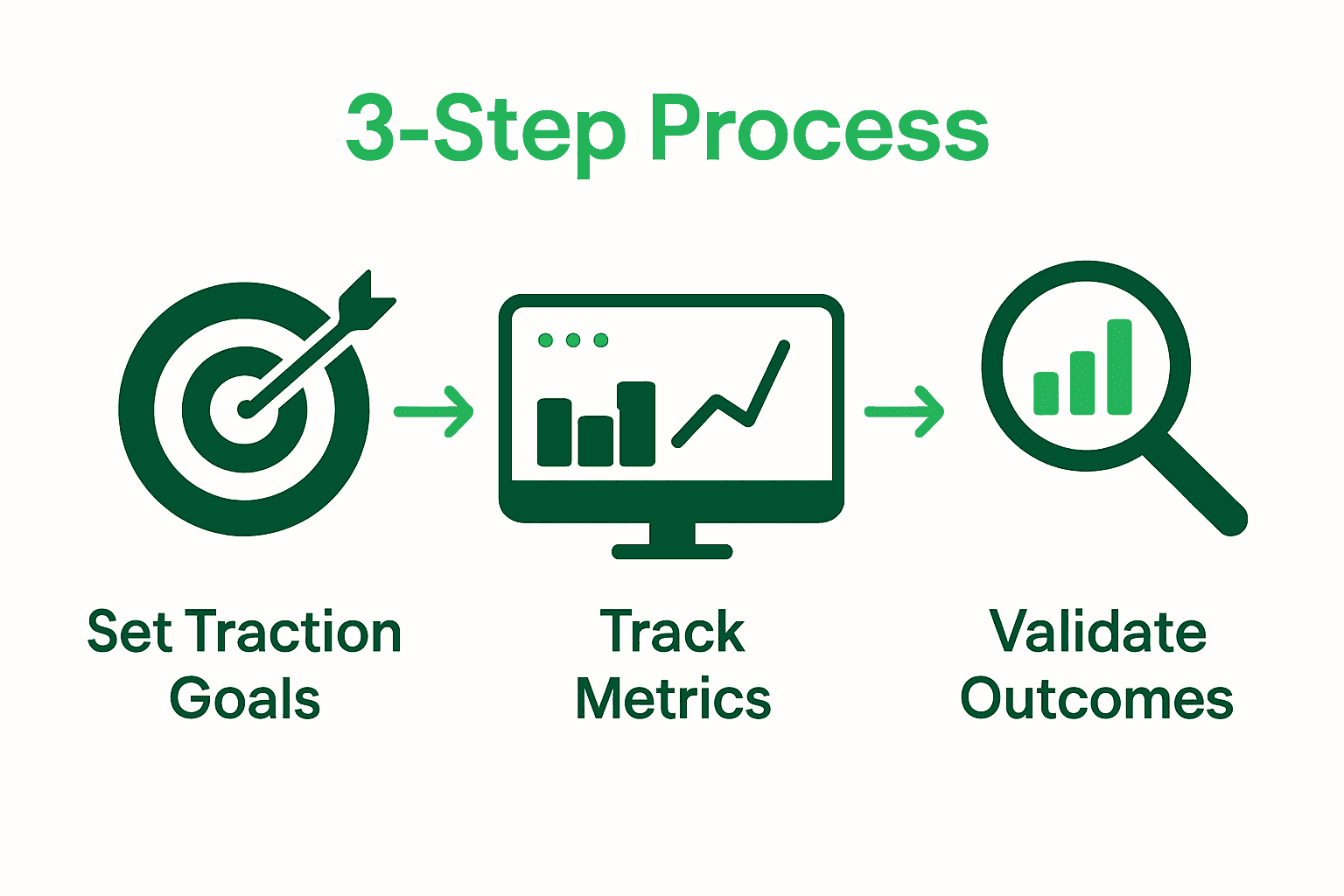
Ready to dive deeper into understanding how to validate your business idea? Check out our business idea validation guide for additional strategic frameworks.
Unlock Your Startup’s True Potential with Smart Traction Tracking
Mastering early business traction metrics means overcoming the challenge of turning uncertain ideas into clear, measurable progress. This article highlights key pain points that every founder faces such as setting realistic goals, choosing meaningful metrics, and validating traction with real user data. Concepts like customer acquisition cost, monthly recurring revenue, and validated learning are critical to avoid costly blindspots and wasted effort.
Our siift.ai Intelligent Business Canvas is designed precisely to tackle these challenges. With personalized AI-driven feedback and prioritized action plans, it guides you step-by-step through building a data-backed growth strategy. Imagine having a bias-free partner that helps you track your key traction metrics and provides insights that keep your startup focused and scalable. Don’t let vague ambitions hold you back. Explore how Business Goal Tracking Made Simple can transform your measurement approach today.
Take control of your founder’s journey now with siift.ai. Start turning visionary ideas into validated, actionable results before inertia sets in.
Frequently Asked Questions
What are the key traction goals I should focus on for my startup?
Your key traction goals should center around customer acquisition, revenue generation, and product development. Map out specific milestones such as acquiring 100 paid users within the first 3 months to provide clarity and direction for your growth strategy.
How do I select the right traction metrics for my business?
Focus on key performance indicators that directly relate to your core business objectives, such as customer acquisition cost and lifetime value. Choose metrics that provide actionable insights to support your growth decisions, aiming to track relevant trends over time.
What tools can I use to track my business traction metrics effectively?
Begin with simple, intuitive tools like spreadsheet templates or basic project management platforms that allow easy logging and visualization of your core metrics. Aim for a minimalistic approach to avoid overwhelming yourself with overly complex systems.
How can I gather real user data to inform my business strategy?
Implement a mix of user surveys, in-app analytics, and customer interviews to collect both quantitative and qualitative data on user experiences. Focus on capturing detailed feedback to identify pain points and patterns in user behavior.
What does it mean to validate traction with actionable insights?
Validating traction means interpreting your collected data to understand user behavior and product market fit. Create a process for aligning your user insights with your business assumptions, and quantify your findings to demonstrate clear evidence of potential growth.
How often should I review my traction metrics?
Regularly review your traction metrics on a monthly basis to track progress and make necessary adjustments to your strategy. This frequent assessment helps ensure that your goals remain relevant and that you’re on track to achieve your objectives.