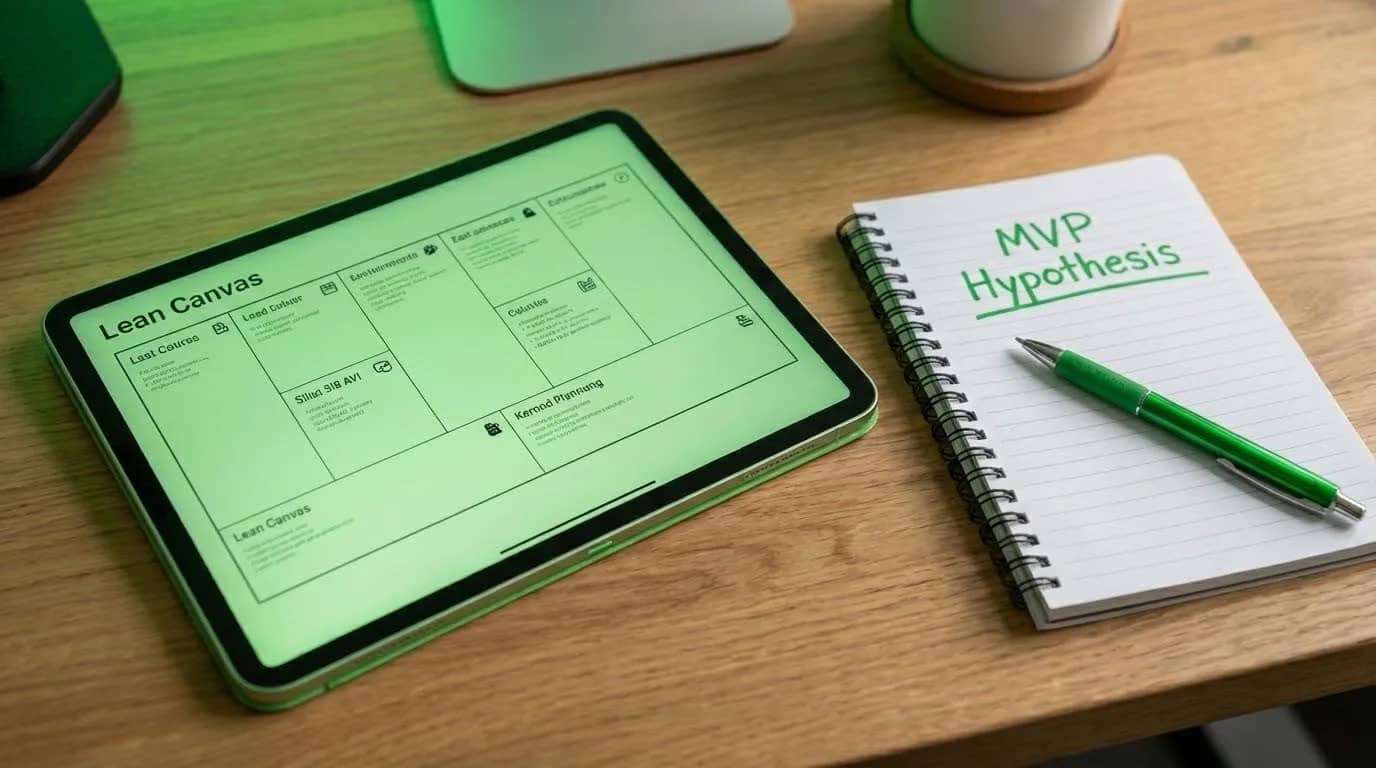
You can apply lean startup methodology effectively today only if you combine the right business frameworks with tools that support fast experimentation, validation, and decision-making.
The original Lean Startup ideas—build–measure–learn, MVPs, validated learning—are still correct. What’s changed is how founders execute them. AI tools, faster prototyping, and solo-founder workflows have collapsed the cost of experimentation and overcome many of the practical issues with such classic frameworks. The bottleneck is no longer building—it’s choosing the right things to focus on and doing them with discipline without running out of resources.
This modern, high-quality guide explains:
The best tools for applying lean startup methodology today
How to choose between Lean Canvas and Business Model Canvas
Which business frameworks work best for solo founders
How AI tools support lean experiments and validation sprints
Whether and how siift.ai supports lean startup methodology
Quick Summary of Modern Startup Methodologies
This table summarizes the essential takeaways from the article on Lean Startup Methodology and Business Framework Tools, as a quick reference for understanding the core concepts.
Key Takeaways | Explanation |
|---|---|
Execution is the new bottleneck | The core Lean Startup principles are sound, but modern execution requires combining business frameworks with tools for fast, disciplined experimentation and decision-making, especially with low-cost AI and prototyping. |
Tools Must Connect the Loop | Effective tools reduce friction between Hypothesis → experiment → evidence → decision, supporting assumption-mapping, validation sprints, and learning synthesis. |
Lean Canvas vs. Business Model Canvas | Use Lean Canvas for early-stage validation and high uncertainty; use Business Model Canvas for later-stage operational optimization in known markets. Both fail if not continuously updated. |
Solo Founders Need Prioritization | Solo founders should favor frameworks that reduce cognitive load, make assumptions explicit, and automatically surface next actions, such as a focused Lean Canvas approach supplemented by AI. |
AI is a Learning Accelerator | AI supports Lean Startup by accelerating hypothesis testing, summarizing feedback, and highlighting inconsistencies, but it should guide structure, not replace founder judgment or decide strategy. |
Adaptive Frameworks are Essential | Static snapshots like traditional canvases are insufficient for the dynamic Lean Startup process. Success depends on using adaptive systems (like siift's Intelligent Business Canvas) that connect experiments directly to evolving strategy. |
What Tools Are Best for Applying Lean Startup Methodology?
The best tools for applying lean startup methodology are the ones that help you run fast experiments, capture assumptions, and update decisions continuously.
Lean startup fails when founders turn it into documentation instead of learning. Tools should reduce friction between:
Hypothesis → experiment → evidence → decision
Categories of tools that actually support lean execution
1. Assumption-mapping tools
You need a place to externalize beliefs about users, value, pricing, and channels.
Lean Canvas (popularized by Ash Maurya)
Living business model systems like siift.ai’s Intelligent Business Canvas
2. Experiment and validation tools
Landing page builders (Webflow, Framer)
Analytics (PostHog, Mixpanel)
Payment tests (Stripe, Gumroad)
3. Learning synthesis tools
This is where most founders fail. Data exists, but insights don’t accumulate.
Decision logs
Validation summaries
Structured canvases that evolve
CTA: If your lean process feels scattered, the problem isn’t discipline—it’s missing a system that connects assumptions to evidence. siift.ai is designed to support lean startup execution as a continuous loop, not a one-time exercise.
→ https://siift.ai/blog/intelligent-business-canvas-ai
How to Choose Between Lean Canvas and Business Model Canvas
You should choose Lean Canvas for early-stage validation and Business Model Canvas for later-stage optimization.
This distinction matters more than most founders realize.
Lean Canvas (Ash Maurya)
Lean Canvas replaces the traditional Business Model Canvas with a startup-first lens:
Problem
Solution
Key metrics
Unfair advantage
It is optimized for:
Early-stage founders
High uncertainty
Rapid iteration
→ Lean Canvas Explained by Ash Maurya
Business Model Canvas (Osterwalder)
Business Model Canvas is better suited for:
More mature businesses
Known markets
Operational optimization
→ Business Model Canvas Overview
The real problem with both
Both are static snapshots. Lean startup is dynamic.
Founders don’t fail because they chose the wrong canvas—they fail because:
Canvases don’t update as evidence changes
Assumptions aren’t revisited
Decisions aren’t tracked
This is why adaptive systems like the Intelligent Business Canvas exist: they preserve the strengths of lean frameworks while allowing continuous updates as experiments run.
→ https://siift.ai/blog/what-is-an-intelligent-business-canvas-and-why-use-it
Which Business Framework Is Best for Solo Founders?
Solo founders benefit most from frameworks that reduce cognitive load and force prioritization automatically.
Solo founders face unique constraints:
No one to sanity-check assumptions
Limited time for documentation
High risk of confirmation bias
The best framework for solo founders:
Makes assumptions explicit
Surfaces blind spots
Produces next actions
What doesn’t work for solo founders
Long business plans
Multi-canvas juggling
Frameworks that require workshops or teams
What does work
Lean Canvas as a starting point
Validation-first frameworks
AI-assisted reflection and prioritization
Case study – Indie SaaS founders:
Multiple Indie Hackers case studies show that solo founders who define one clear ICP and validation metric early reach revenue faster than those who “build until something sticks.”
→ https://www.indiehackers.com/post/how-i-found-product-market-fit-as-a-solo-founder
CTA: If you’re a solo founder running lean experiments alone, siift.ai acts as a second brain—challenging assumptions and keeping your lean process focused.
→ https://siift.ai/blog/best-ai-for-founders
AI Tools That Support Lean Startup Frameworks
AI tools support lean startup methodology by accelerating hypothesis testing, synthesis, and prioritization—not by replacing judgment.
Where AI helps:
Generating experiment ideas
Summarizing user feedback
Highlighting inconsistent assumptions
Reducing analysis paralysis
Where AI hurts:
Auto-generating features without validation
Creating false confidence
Increasing scope creep
AI + Lean done right
The best AI tools:
Ask better questions
Surface risks
Compress learning cycles
This aligns with modern interpretations of lean startup, including Eric Ries’ later emphasis on organizational learning, not just MVPs.
→ Eric Ries on Continuous Innovation
siift.ai is explicitly designed to support lean startup principles with AI guidance—by turning conversations into structured business learning instead of disconnected advice.
→ https://siift.ai/blog/does-siift-support-lean-startup-methodology
Tools for Running Lean Experiments and Validation Sprints
You can run lean experiments effectively by structuring them as short, hypothesis-driven sprints.
A simple lean validation sprint
Define the riskiest assumption
Design the smallest test
Run for 7–14 days
Measure one success metric
Decide: pivot, persevere, or kill
Data point:
According to a First Round Capital analysis, startups that run structured experiments reach product-market fit faster than those that rely on ad hoc iteration.
→ https://review.firstround.com/how-superhuman-built-an-engine-to-find-product-market-fit/
Tools that help
Landing pages + analytics
Lightweight CRM or feedback tracking
A system to capture outcomes and decisions
This is where most teams lose learning. siift.ai’s Intelligent Business Canvas ties experiments directly back to assumptions and strategy.
→ https://siift.ai/blog/intelligent-business-canvas-ai-startup
How to Implement Lean Startup Principles with AI Guidance
You implement lean startup principles with AI by using it as a learning accelerator, not a decision-maker.
AI should:
Help frame hypotheses
Highlight contradictions
Summarize results
Suggest next experiments
AI should not:
Decide strategy in isolation
Replace founder judgment
Generate roadmaps without evidence
This is the philosophical gap siift.ai fills: AI-guided structure that preserves founder agency while reducing guesswork.
→ https://siift.ai/blog/what-is-business-validation-en
Conclusion: Lean Startup Works Best with Adaptive Frameworks
Lean startup methodology still works—but only when paired with frameworks and tools that evolve as fast as your business.
Static canvases, disconnected tools, and ad hoc experiments create false momentum. Modern founders need:
Continuous learning loops
Adaptive business frameworks
AI that supports thinking, not replaces it
If you’re applying lean startup principles today, siift.ai’s Intelligent Business Canvas is built to operationalize them—helping you run experiments, validate assumptions, and make better decisions without slowing down.
→ https://siift.ai/blog/what-is-an-intelligent-business-canvas-and-why-use-it
Dive Deeper with these Articles
Other Premium siift Guides
-Building a Successful Business with Vibe Coding
-AI Tools for MVP Planning and Prototyping
-Founder Productivity and Decision-Making Frameworks
-Pre-Launch Business Idea Validation Methods
-Investment Readiness and Pitch deck Preparation
-Affordable and Free tools for Bootstrapped Founders