

TL;DR:
- Public speaking anxiety is a treatable social fear characterized by physical symptoms and negative thoughts. Using cognitive-behavioral therapy, exposure, preparation, and breathing techniques can effectively reduce this anxiety. Overcoming avoidance and practicing in realistic conditions build confidence and diminish long-term fears.
Public speaking anxiety is defined clinically as a form of social anxiety disorder in which fear of negative evaluation during presentations triggers physical and psychological symptoms including trembling, rapid heartbeat, and intrusive negative thoughts. The good news? This is one of the most treatable fears humans experience. Evidence-based approaches like cognitive-behavioral therapy (CBT), exposure therapy, and structured preparation routines have strong track records. Sources like the Merck Manual and Verywell Mind confirm that the right combination of techniques genuinely works. These public speaking anxiety tips cut through the noise and give you what actually moves the needle.
1. recognize distorted thinking first
The most effective public speaking anxiety tips start in your head, not on the stage. CBT teaches you to identify and challenge distorted thoughts like “everyone will judge me” or “I’ll forget everything.” These predictions feel true but rarely are. CBT combines cognitive work with direct exposure to the feared situation, making it the clinical gold standard for social anxiety.
The key insight here is that CBT does not work by telling yourself to feel confident. It works by testing your fear-based predictions through repeated experience. When you speak and the catastrophe does not happen, your brain updates its threat model. That is how lasting change happens.
2. build an exposure hierarchy
Exposure therapy is the gold-standard treatment for public speaking anxiety, and it works through a simple but powerful principle: face the fear gradually, not all at once. You build a ranked list of situations from least to most anxiety-provoking. Speaking to one friend sits at the bottom. Presenting to 200 strangers sits at the top.
Gradual exposure practice with consistent scheduling and anxiety tracking is what makes this approach effective over time. Each step on your hierarchy should feel manageable but still uncomfortable. That discomfort is the signal that learning is happening.
Pro Tip: Stay in each exposure situation for roughly 45 minutes. Research shows this is enough time for anxiety to peak and then naturally decline, which is exactly the experience your brain needs to stop treating the situation as a threat.
3. practice out loud in realistic conditions
Most people prepare by reading their notes silently. That is not practice. Confidence comes from mastery, not memorization, and mastery requires speaking out loud in conditions that mirror the real thing. Time yourself. Stand up. Use the same slides you will use on the day.
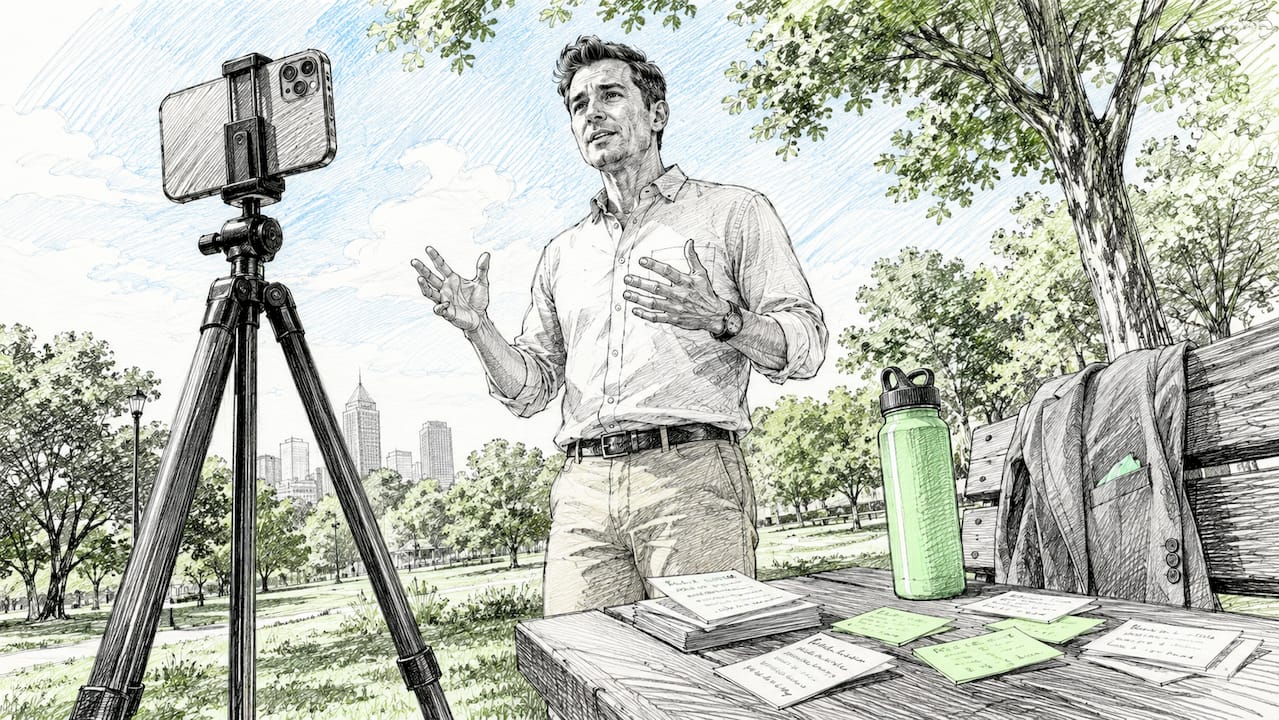
Recording yourself is uncomfortable, but it is one of the fastest feedback loops available. You will notice filler words, pacing issues, and nervous habits you did not know you had. Fix those in practice, and they will not ambush you on stage.
4. use deep breathing to manage physical symptoms
Rapid heartbeat, shallow breathing, and trembling are your nervous system’s stress response, not evidence that something is wrong with you. Diaphragmatic breathing directly counters this response by activating the parasympathetic nervous system. Breathe in for four counts, hold for four, exhale for six.
Do this before you walk into the room, not while you are already at the podium. The goal is to lower your baseline arousal level so that the natural spike of speaking does not push you into panic. Think of it as pre-loading your calm.
5. stop avoiding the stage
Avoidance is the single biggest reason public speaking anxiety persists. Every time you decline a presentation, skip a meeting contribution, or hand off a pitch, you teach your brain that the situation was genuinely dangerous. Avoidance keeps social anxiety alive. Behavioral activation, which means scheduling speaking opportunities even when you do not feel ready, is what breaks the cycle.
Start small. Volunteer to speak at a team meeting. Join a Toastmasters chapter. Take a local improv class. The venue does not matter. The repetition does.
6. prepare for tough questions in advance
Anticipating difficult questions is one of the most underrated day-of-speech strategies available. Most speaking anxiety spikes not during the prepared content but during the Q&A, when you feel exposed and unprepared. Write down the five hardest questions your audience could ask. Draft honest, clear answers. Practice saying them out loud.
This approach also shifts your mindset from performance to conversation. You stop trying to be perfect and start trying to be useful. That reframe alone reduces pressure significantly.
7. familiarize yourself with the venue and tech
Walking into an unfamiliar room with unfamiliar equipment is a guaranteed anxiety amplifier. Arrive early. Test the microphone. Advance through your slides. Stand at the podium and look at the empty seats. This process, sometimes called environmental familiarization, removes a layer of uncertainty before the stakes are real.
Founders pitching investors know this instinctively. Checking out the pitch deck setup in advance is standard practice before high-stakes presentations. The same logic applies to any speaking situation.
8. use positive self-talk and visualization
Visualization is not wishful thinking. It is a rehearsal tool used by elite athletes, surgeons, and professional speakers. Before your presentation, close your eyes and walk through the entire experience: entering the room, beginning your talk, handling a stumble gracefully, finishing strong. Your brain processes vivid mental rehearsal similarly to actual experience.
Pair this with specific positive self-talk. Not vague affirmations like “I am great,” but concrete statements like “I know this material” and “I have prepared for this.” Specificity is what makes self-talk credible to your own mind.
9. understand when therapy or medication makes sense
Self-help strategies work well for situational speaking nerves. When anxiety is marked and persistent for six months or more, it may meet the diagnostic threshold for social anxiety disorder, and professional support becomes the smarter path.
Here is a quick breakdown of clinical options:
- CBT with a therapist: Combines cognitive restructuring and structured exposure. Best for persistent anxiety patterns that self-help has not resolved.
- Beta-blockers: Prescribed for physical symptoms like rapid heartbeat and trembling. They do not reduce psychological anxiety but can prevent the physical spiral that worsens it.
- SSRIs: Used for broader social anxiety disorder. Take weeks to reach full effect and are typically combined with therapy for best results.
- Group CBT: A 12-week group CBT program for adolescents with social anxiety showed measurable behavioral improvement, including increased eye contact with audiences during speaking tasks.
“Therapy targets persistent anxiety patterns beyond situational fears. If speaking anxiety is limiting your career, relationships, or daily life, that is the signal to seek professional evaluation.”
10. comparing techniques: which to try first
Not every approach fits every situation. Here is a practical comparison to help you choose:
| Technique | Best For | Effort Level | Speed of Results |
|---|---|---|---|
| Preparation routines | All speakers | Low | Fast (same session) |
| Deep breathing | Acute symptom management | Low | Immediate |
| Cognitive restructuring | Negative thought patterns | Medium | Weeks |
| Exposure therapy | Persistent, avoidance-driven anxiety | High | Months |
| Beta-blockers | High-stakes, infrequent speeches | Low (with prescription) | Immediate |
| CBT with therapist | Clinical social anxiety disorder | High | Months |
For most people, the right starting point is preparation routines combined with breathing techniques. Add cognitive restructuring as you build awareness of your thought patterns. Reserve formal exposure therapy or medication for anxiety that is genuinely limiting your life.
Pro Tip: Combining two or more approaches consistently outperforms any single method. Pair breathing exercises with gradual exposure and you get faster results than either technique alone.
Key takeaways
Overcoming speaking anxiety requires a layered approach: cognitive tools to address distorted thinking, exposure to build real tolerance, and preparation routines to reduce uncertainty before you ever step on stage.
| Point | Details |
|---|---|
| CBT is the clinical gold standard | It works by testing fear predictions through exposure, not by building generic confidence. |
| Avoidance makes anxiety worse | Scheduling speaking opportunities, even small ones, breaks the avoidance cycle over time. |
| Mastery beats memorization | Practice out loud in realistic conditions; recording yourself accelerates improvement. |
| Physical symptoms are manageable | Deep breathing and beta-blockers address the physiological side of speaking nerves. |
| Seek professional help when needed | Anxiety lasting six months or more may indicate social anxiety disorder requiring therapy. |
What i have learned about speaking anxiety after years of watching founders pitch
Here is the uncomfortable truth I keep coming back to: most people with speaking anxiety are not bad speakers. They are overthinkers who have never been given a structured way to practice. They prepare by reading notes, avoid every speaking opportunity that feels optional, and then wonder why the fear never shrinks.
The research on exposure therapy outcomes confirms what I have observed anecdotally: progress is gradual and variable. Some people see dramatic improvement in weeks. Others need months of consistent exposure before the fear meaningfully shifts. The mistake is treating slow progress as evidence that the approach is not working.
The other misconception worth naming is that anxiety before a speech means something is wrong. It does not. Reframe that nervous energy as your body preparing to perform. The goal is not to eliminate the feeling. The goal is to stop letting it make decisions for you.
Mix the clinical methods with personal tweaks. Use meditation apps for daily baseline anxiety management. Join a speaking group for regular low-stakes exposure. Track your anxiety levels before and after each speaking event. Progress becomes visible when you measure it, and visible progress is its own motivation.
Lean on your support network. Tell a trusted colleague you are working on this. Ask for feedback after presentations. The people around you are almost never as critical as the voice in your head.
— Samim
Build speaking confidence faster with Siift
Preparation is the most controllable variable in public speaking anxiety. The clearer your thinking and the sharper your communication, the less room fear has to operate. Siift’s AI platform helps founders and entrepreneurs clarify their ideas, structure their pitches, and practice presenting with more precision than generic tools allow. Whether you are preparing for an investor pitch or a team presentation, structured rehearsal with objective feedback changes the game. Start building your confidence with Siift today and see what happens when preparation meets the right system. You can also explore AI tools for entrepreneurs that support sharper communication at every stage.
FAQ
What is the most effective treatment for public speaking anxiety?
CBT combined with exposure therapy is the most evidence-backed treatment. The Merck Manual identifies this combination as the clinical standard for social anxiety disorder affecting public speaking.
How long does exposure therapy take to reduce speaking fear?
Progress varies, but consistent exposure over several weeks to months produces meaningful results. A 2026 BMC Psychology study notes that fear extinction is gradual and depends on session frequency and anxiety tracking.
Can i manage speaking nerves without seeing a therapist?
Yes, for situational anxiety. Preparation routines, deep breathing, and gradual self-directed exposure work well for most people. Seek professional support if anxiety has persisted for six months or more.
Do beta-blockers actually help with public speaking?
Beta-blockers reduce physical symptoms like rapid heartbeat and trembling but do not address the psychological component of anxiety. They are most useful for infrequent, high-stakes speeches when physical symptoms are the primary problem.
Why does avoiding speeches make anxiety worse?
Avoidance reinforces the brain’s threat signal. Each time you skip a speaking opportunity, your nervous system concludes the situation was genuinely dangerous, making the next opportunity feel even more threatening.