
Vibe coding is turning the software world upside down. Forget years spent learning complex code because AI-driven vibe coding now lets people with barely any technical training create digital products just by chatting with a bot. Most folks expect computers to do the heavy lifting but here the real shift is in who gets to build with them. Suddenly, entrepreneurs, creatives, and even kids can join the innovation game with almost no barriers at all.
Table of Contents
- What Is Vibe Coding And Its Core Concept?
- Why Vibe Coding Matters In Today’s Digital Landscape
- How Vibe Coding Influences User Experience And Engagement
- Key Principles And Techniques Of Vibe Coding
- Real-World Applications: Success Stories And Use Cases
Quick Summary
| Takeaway | Explanation |
|---|---|
| Vibe coding democratizes technology creation | This approach allows non-programmers to develop digital solutions through AI, lowering entry barriers in software development. |
| Promotes user-centric design | Vibe coding emphasizes enhancing user experience by enabling rapid prototyping based on user feedback and needs. |
| Facilitates dynamic collaboration with AI | It encourages a dialogue between human creators and AI, transforming software development into an interactive process. |
| Accelerates innovation cycles | By reducing technical complexity, vibe coding allows for faster iteration and market validation of digital concepts. |
| Enables diverse contributions to technology | This method empowers individuals from various backgrounds to participate in software development, fostering inclusivity in tech solutions. |
What is Vibe Coding and Its Core Concept?
Vibe coding represents a transformative approach to software development that leverages artificial intelligence to democratize technology creation. This innovative method enables individuals with minimal technical background to design and develop digital solutions through intuitive, conversational interactions with AI assistants.
The Fundamental Philosophy
At its core, vibe coding shifts the traditional programming paradigm from rigid, syntax-driven coding to a more fluid, natural language-based collaboration.
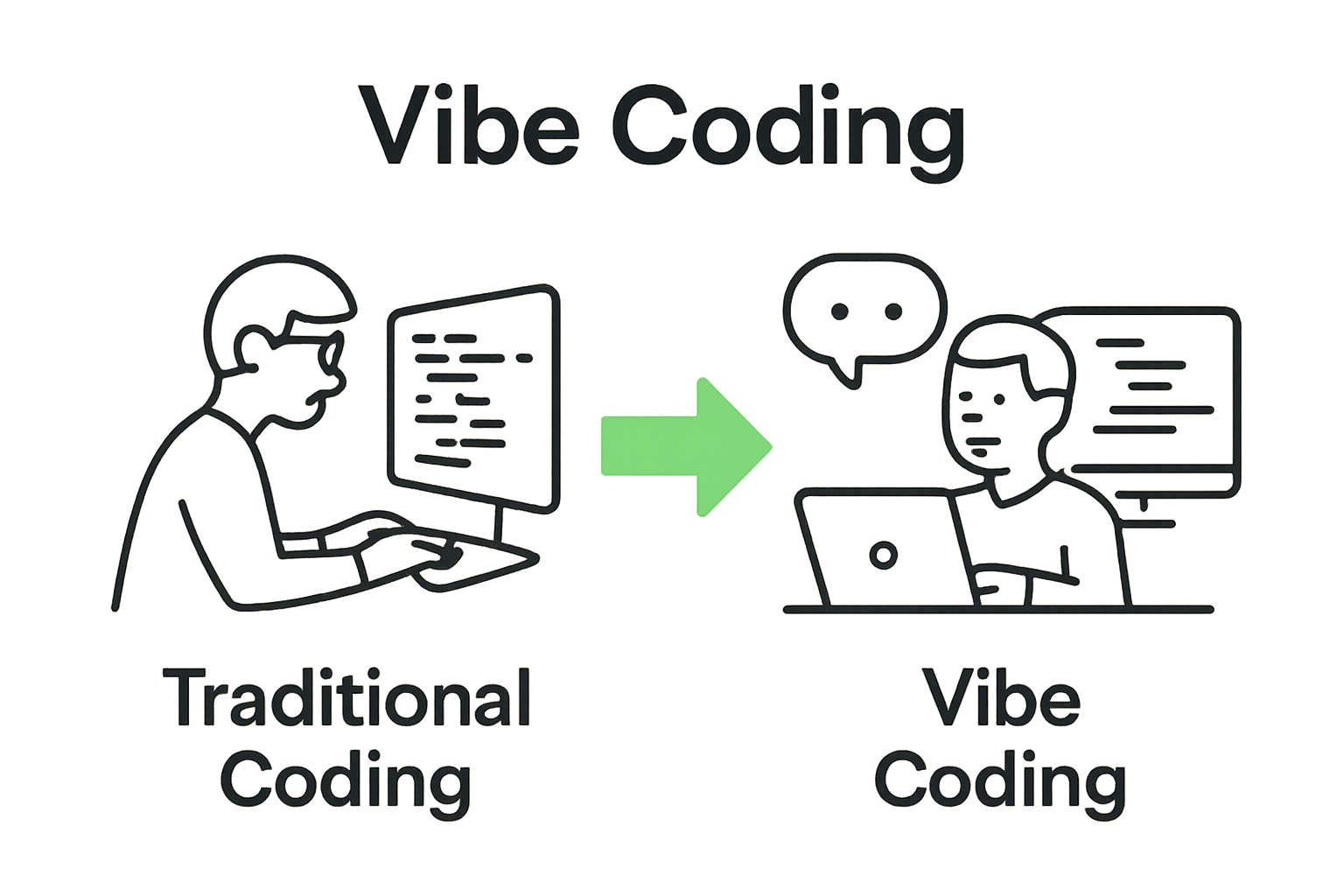 Emerging tech trends suggest this approach allows creators to articulate their vision more freely, with AI translating conceptual ideas directly into functional code.
The key characteristics of vibe coding include:
- Prioritizing developer intent over strict technical implementation
- Enabling rapid prototyping through AI-assisted generation
- Reducing traditional barriers to entry in software development
How Vibe Coding Operates
Unlike conventional coding methods, vibe coding involves a dynamic dialogue between human creators and AI systems. Developers describe their project goals, design preferences, and functional requirements conversationally. The AI then generates code iterations, which the developer reviews, refines, and adjusts in real-time.
This approach fundamentally transforms software creation from a linear, structured process to an adaptive, collaborative experience. By lowering technical barriers, vibe coding empowers entrepreneurs, designers, and creative professionals to bring their digital concepts to life without extensive programming knowledge.
The following table compares traditional coding with vibe coding, summarizing their main differences for readers seeking a quick overview.
| Feature | Traditional Coding | Vibe Coding |
|---|---|---|
| Approach | Syntax-driven programming | Conversational AI collaboration |
| Required Skill Level | High technical expertise | Minimal technical background needed |
| Developer-AI Interaction | Low (manual code writing) | High (dialogue-based intent translation) |
| Prototyping Speed | Slower, requires more time | Rapid, AI-assisted generations |
| Barrier to Entry | High | Low |
| Focus | Technical implementation details | Developer intent and user outcomes |
| Flexibility | Limited to coding skills | Accessible to non-programmers and diverse users |
For those interested in exploring innovative startup methodologies, learn more about emerging founder strategies that complement this groundbreaking approach to technology development.
Why Vibe Coding Matters in Today’s Digital Landscape
The digital landscape is rapidly transforming, and vibe coding emerges as a critical catalyst for democratizing technological innovation. By breaking down traditional barriers to software development, this approach enables a broader range of creators to participate in digital solution design.
Democratizing Technology Creation
Research from MIT Technology Review reveals that vibe coding addresses significant technological accessibility challenges. Traditional software development requires extensive technical training, which limits participation to a small group of specialized professionals. Vibe coding fundamentally disrupts this model by allowing individuals with diverse backgrounds to translate their ideas into functional digital products.
Key advantages of vibe coding include:
- Reducing entry barriers for non-technical entrepreneurs
- Accelerating prototype development cycles
- Enabling faster market validation for innovative concepts
- Promoting inclusivity in technology creation
Economic and Innovation Implications
Vibe coding represents more than a technological trend it signifies a profound shift in how innovation occurs. By empowering individuals who previously lacked technical skills, this approach creates opportunities for diverse perspectives and creative problem solving. Entrepreneurs, designers, and domain experts can now directly transform their unique insights into digital solutions without extensive programming knowledge.
The economic potential is substantial. Small businesses and individual creators can rapidly experiment with digital concepts, test market viability, and iterate quickly. This approach minimizes traditional investment risks associated with software development.
For entrepreneurs interested in navigating these emerging technological paradigms, explore our insights on founder strategies that complement innovative development approaches like vibe coding.
How Vibe Coding Influences User Experience and Engagement
Vibe coding transforms traditional software development by placing user experience at the forefront of digital product creation. This innovative approach shifts the paradigm from technical complexity to intuitive, human-centered design that prioritizes seamless interaction and user engagement.
Enhancing User-Centric Design
Research from Dartmouth College demonstrates that vibe coding enables developers to focus more intensely on defining application functionality and user goals, rather than getting bogged down in low-level implementation details. By leveraging AI-assisted development, creators can rapidly prototype and iterate designs that directly address user needs and preferences.
Key user experience advantages include:
- Faster translation of user feedback into functional features
- More intuitive interface design driven by natural language interactions
- Reduced technical barriers between concept and implementation
- Increased flexibility in responding to user requirements
Engagement and Accessibility Dynamics
Vibe coding fundamentally democratizes digital product development by making technological creation more accessible to designers, entrepreneurs, and domain experts who might not have traditional programming skills. This approach enables a more diverse range of perspectives to contribute to digital solution design, potentially leading to more innovative and inclusive user experiences.
The collaborative nature of vibe coding means that user engagement can be more dynamic and responsive.
 Developers can quickly adjust and refine products based on real-time feedback, creating a more interactive and adaptive development process.
For entrepreneurs looking to understand how emerging technologies can transform their approach to product development, explore our insights on innovative founder strategies that complement these cutting-edge design methodologies.
Key Principles and Techniques of Vibe Coding
Vibe coding introduces a revolutionary approach to software development that reimagines how technological solutions are conceived, designed, and implemented. By establishing a dynamic collaboration between human creativity and artificial intelligence, this methodology fundamentally transforms traditional programming paradigms.
Collaborative Intent Translation
Research from computational linguistics experts reveals that vibe coding operates on a principle of probabilistic intent inference. Unlike traditional coding, where developers must precisely articulate every technical detail, vibe coding allows creators to communicate project goals conversationally, with AI systems interpreting and translating abstract concepts into functional code.
Key collaborative principles include:
- Prioritizing human intent over strict syntactical requirements
- Enabling natural language communication between developers and AI
- Facilitating iterative, adaptive development processes
- Reducing cognitive load associated with technical implementation
Prompt Engineering and Workflow Dynamics
The success of vibe coding hinges on sophisticated prompt engineering techniques. Developers must craft precise, contextually rich prompts that guide AI systems toward desired outcomes. This requires a nuanced understanding of both project objectives and AI language models’ capabilities.
The workflow typically involves continuous iteration: developers provide initial conceptual guidance, AI generates code snippets, and humans review, refine, and redirect the development process. This dynamic, conversational approach transforms software creation from a linear process to an interactive, collaborative journey.
For entrepreneurs eager to explore innovative technological strategies, discover more about emerging founder methodologies that complement these cutting-edge development techniques.
Real-World Applications: Success Stories and Use Cases
Vibe coding is transforming how entrepreneurs, designers, and innovators approach digital product development. By bridging the gap between conceptualization and implementation, this approach enables rapid prototyping and innovative solutions across multiple domains.
Startup and Entrepreneurial Innovations
Research from IEEE Spectrum reveals compelling examples of how vibe coding accelerates technological innovation. Entrepreneurs are now able to transform abstract concepts into functional prototypes with unprecedented speed, bypassing traditional barriers of technical complexity.
Notable application domains include:
- Rapid marketplace platform development
- Interactive customer engagement tools
- Personalized health and wellness applications
- Innovative educational technology solutions
- Custom productivity and workflow management systems
Enterprise and Professional Use Cases
Beyond startup environments, large organizations are leveraging vibe coding to enhance internal innovation processes. Companies can now empower non-technical employees to contribute directly to digital solution design, breaking down traditional silos between technical and creative teams.
Enterprise applications range from creating custom internal dashboards to developing specialized communication tools that address specific organizational needs.
This table outlines some key application domains and real-world uses of vibe coding as discussed in the article.
| Application Domain | Example Use Cases |
|---|---|
| Startup & Entrepreneurial Innovations | Rapid marketplace platforms, customer engagement tools, health apps, education tech, productivity tools |
| Enterprise & Professional Use Cases | Internal dashboards, custom communication tools, employee-driven digital solutions |
| User Experience & Engagement | Intuitive UI/UX, fast user feedback implementation, adaptive feature iteration |
| Technology Accessibility | Non-technical entrepreneurs contributing to software, inclusivity in product design |
| The ability to quickly iterate and prototype means businesses can respond more dynamically to changing market requirements. |
For entrepreneurs interested in understanding how emerging technologies can revolutionize their approach to product development, explore our insights on innovative founder strategies that complement these cutting-edge methodologies.
Ready to Turn Vibe Coding into Real Startup Results?
You just learned how vibe coding unlocks new possibilities for founders and creators, making tech innovation accessible without traditional barriers. But the hardest part is often knowing what steps to take next and how to translate big ideas into real business traction. Many people face the frustration of endless uncertainty, unclear priorities, and stalling momentum even when armed with groundbreaking concepts like vibe coding.
That is exactly where siift can help. Our intuitive AI was built for entrepreneurs like you who want to leverage tools such as vibe coding but need a clear path from idea to execution. With siift, you get personalized feedback, prioritized tasks, and insight-driven actions tailored to your journey. You will always know what to focus on next, with no gatekeepers or hidden hurdles in your way. Get started immediately and let your vision take shape with step-by-step expert support.
Bring your digital dreams to life today. Visit siift to start your own founder journey, or check out our founder strategy insights for more guidance specific to vibe coding and new tech approaches. Why wait and risk falling behind when the tools to build your future are right here?
Frequently Asked Questions
What is vibe coding?
Vibe coding is an innovative approach to software development that uses artificial intelligence to enable individuals with minimal technical skills to create digital solutions through natural language interactions with AI assistants.
How does vibe coding differ from traditional coding methods?
Unlike traditional programming, vibe coding prioritizes developer intent over strict syntax and allows for a more fluid, conversational collaboration with AI. This process transforms coding from a linear, structured task to an adaptive, interactive experience.
What are the key benefits of vibe coding for entrepreneurs?
Vibe coding lowers traditional barriers to software development, enabling non-technical individuals to participate in creating digital products. It accelerates prototyping, reduces entry barriers, and fosters inclusivity in technology creation.
How can vibe coding enhance user experience in digital product development?
Vibe coding focuses on user-centric design by allowing developers to quickly respond to user feedback and needs, facilitating faster iterations and creating more intuitive interfaces that enhance overall user engagement.