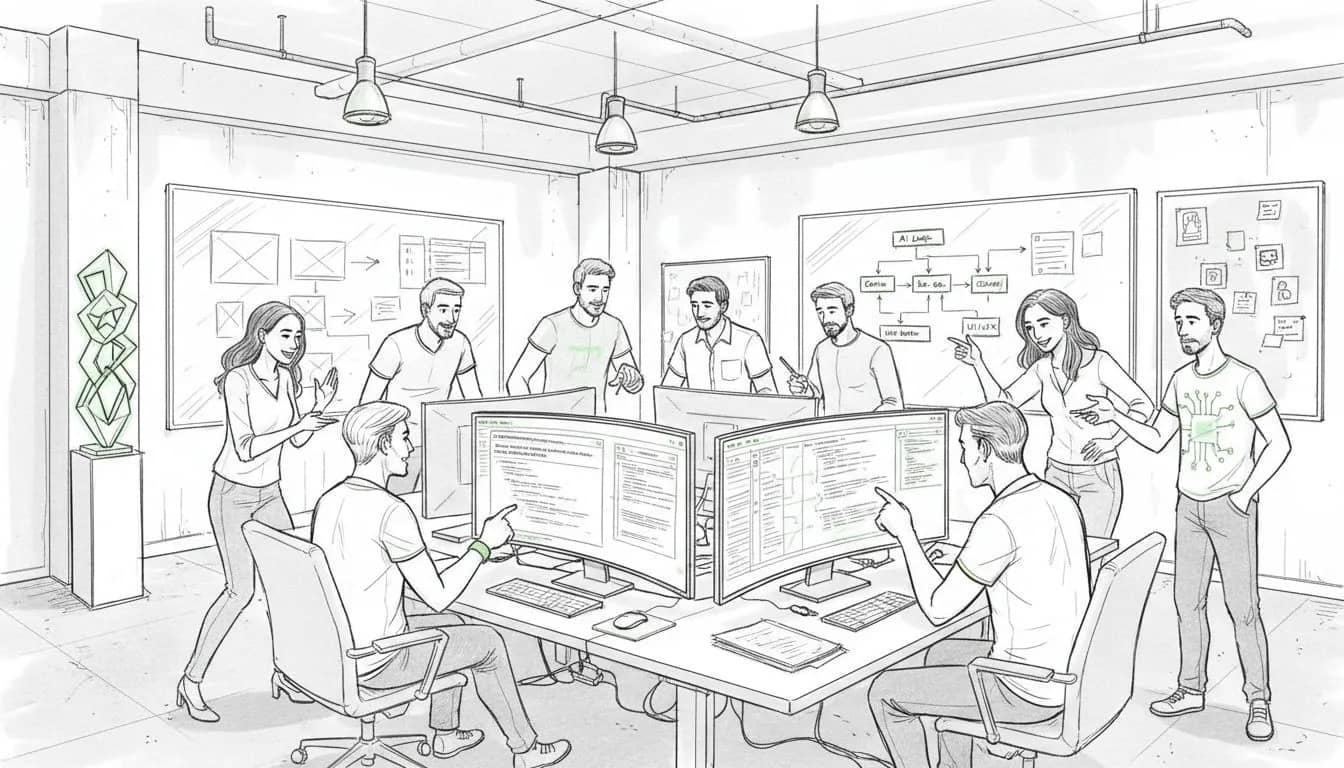
Over half of american startups now rely on AI tools to accelerate software development and lower technical barriers. As technology evolves, many find themselves searching for ways to transform their ideas into real products without mastering traditional coding. Vibe coding introduces a conversational approach that lets anyone create and iterate software faster than ever. Here, you will discover the concepts shaping this bold new direction in american digital innovation.
Table of Contents
- What Is Vibe Coding? Essential Concepts
- Common Vibe Coding Styles and Approaches
- Key Benefits of Vibe Coding for Entrepreneurs
- Drawbacks and Limitations of Vibe-First Development
- When to Choose Vibe Coding Strategies
Key Takeaways
| Point | Details |
|---|---|
| Vibe Coding’s Definition | Vibe coding uses natural language prompts for AI-driven code generation, simplifying software development for allskill levels. |
| Key Components | It includes natural language processing, adaptive learning, and contextual understanding, enhancing developer interaction with AI. |
| Benefits for Entrepreneurs | Enables rapid prototyping and low technical barriers, facilitating faster concept validation and collaboration. |
| Considerations and Limitations | While innovative, vibe coding poses challenges related to security, long-term planning, and scalability in complex projects. |
What Is Vibe Coding? Essential Concepts
Vibe coding represents a groundbreaking shift in software development, transforming how programmers interact with code generation through artificial intelligence. According to IBM, this innovative approach enables developers to use natural language prompts to instruct AI tools to generate code, effectively moving from traditional manual coding to an AI-assisted development paradigm.
At its core, vibe coding is about creating a conversational relationship between developers and AI systems. Wikipedia notes that the concept was introduced by Andrej Karpathy in February 2025, emphasizing a radical approach where developers can describe project requirements directly to large language models, which then generate corresponding code. This method dramatically reduces the technical barrier to entry for software development.
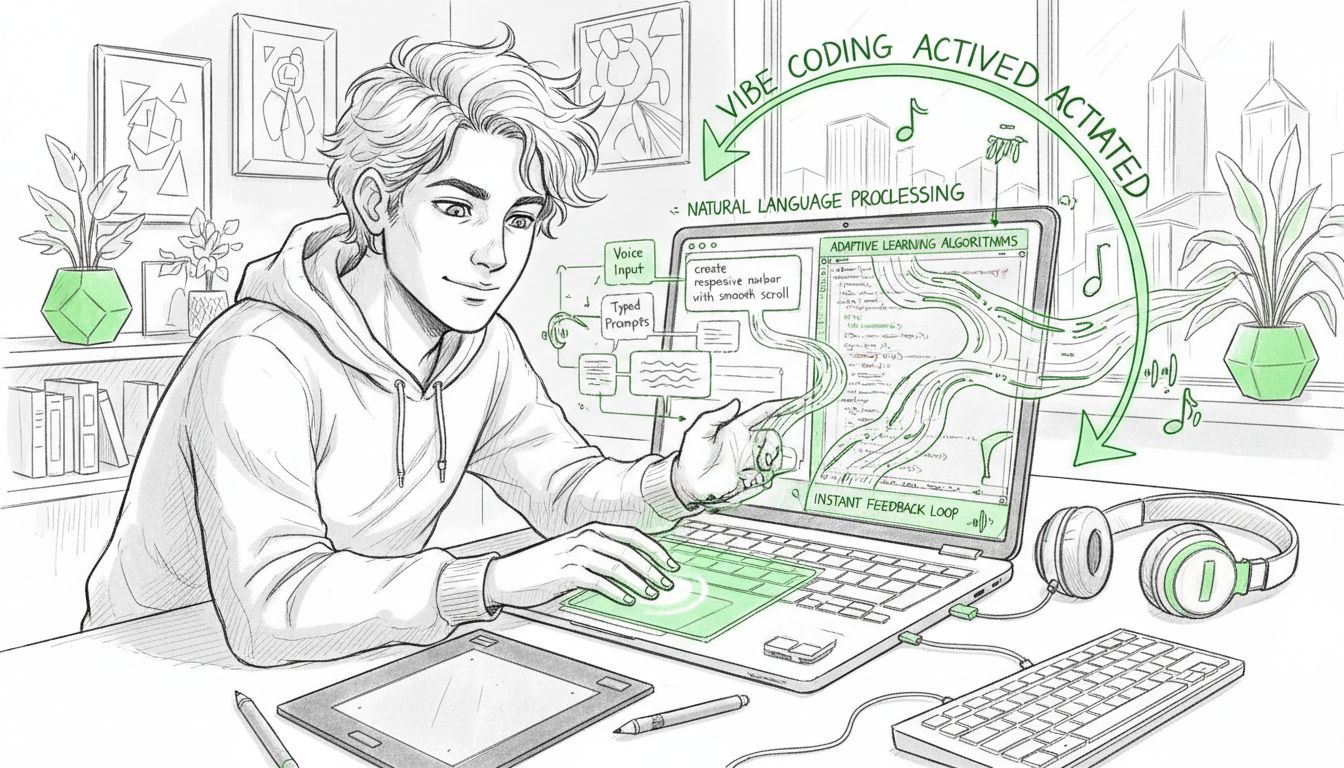
The fundamental mechanics of vibe coding involve several key components:
- Natural Language Processing: Translating human descriptions into executable code
- AI Code Generation: Using machine learning models to interpret and create programming logic
- Contextual Understanding: Comprehending project requirements beyond simple syntax
- Adaptive Learning: Improving code generation based on previous interactions and feedback
For entrepreneurs and indie developers, vibe coding isn’t just a technical innovation—it’s a democratization of software creation. By reducing the complexity of traditional coding, this approach allows more people to bring their digital ideas to life, regardless of their prior programming experience. As technology continues to evolve, our outlook on founders, business & AI suggests that tools like these will play an increasingly critical role in how we conceptualize and build digital solutions.
Common Vibe Coding Styles and Approaches
Vibe coding represents a dynamic and adaptive approach to software development that prioritizes flexibility and creative problem-solving. IBM highlights that this methodology emphasizes rapid prototyping and experimentation, enabling developers to quickly adapt to uncertainty and brainstorm ideas without extensive upfront planning. This approach fundamentally transforms traditional software development by encouraging continuous innovation and reducing the rigidity of conventional coding practices.
According to research from arXiv, vibe coding centers on iterative co-design with AI assistants, focusing on conversational interactions and maintaining developer flow throughout the development process. This collaborative style introduces several distinctive approaches:
- Prompt-Driven Development: Generating code through natural language conversations with AI
- Exploratory Coding: Allowing fluid exploration of potential solutions without strict constraints
- Adaptive Iteration: Continuously refining code based on real-time feedback and AI suggestions
- Flow-Centric Design: Prioritizing developer creativity and engagement over rigid methodologies
For modern entrepreneurs and indie developers, these vibe coding styles represent more than just a technical approach—they’re a philosophy of creative problem-solving. By embracing flexibility and leveraging AI-powered tools, developers can transform complex technical challenges into opportunities for innovation.
Vibe Marketing: What It Is and Why It Matters further reinforces how adaptive, conversational approaches are reshaping technological development across various domains.
Key Benefits of Vibe Coding for Entrepreneurs
Entrepreneurs are discovering that vibe coding offers a revolutionary approach to transforming innovative ideas into tangible digital solutions. Alaimo Labs highlights a critical advantage: the ability to rapidly prototype product ideas without requiring deep technical expertise. This approach enables founders to quickly validate concepts and efficiently communicate with stakeholders through interactive demonstrations, effectively bridging the gap between vision and execution.
According to Figma, vibe coding accelerates the creative process by fundamentally reimagining product development. By starting with the desired user experience and leveraging AI tools to generate initial designs or code, entrepreneurs can dramatically reduce the time and complexity traditionally associated with bringing new ideas to market. This methodology offers several transformative benefits:
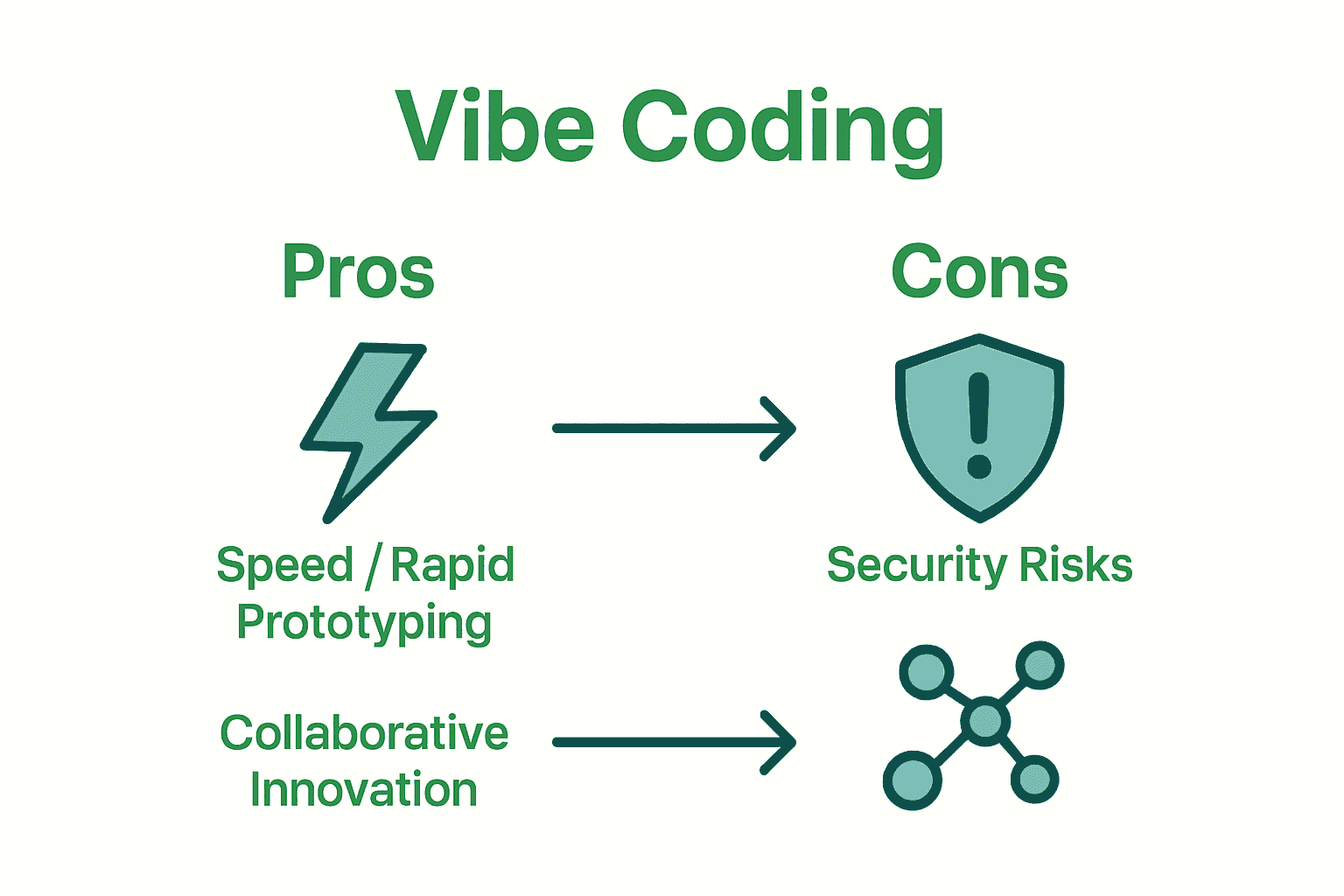
- Rapid Prototyping: Create functional prototypes in hours instead of weeks
- Low Technical Barrier: Develop products without extensive coding knowledge
- Cost Efficiency: Minimize upfront development expenses
- Faster Iteration: Quickly test and refine product concepts
- Enhanced Collaboration: Improve communication between technical and non-technical team members
For aspiring entrepreneurs looking to navigate the complex landscape of digital innovation, understanding these advantages is crucial. 10 Essential Habits of Successful Entrepreneurs Explained reinforces that adaptability and quick execution are key traits of successful founders. Vibe coding represents more than just a coding approach—it’s a strategic tool that democratizes technology development, empowering entrepreneurs to transform their most ambitious ideas into reality with unprecedented speed and accessibility.
Drawbacks and Limitations of Vibe-First Development
Vibe coding, while innovative, is not without significant challenges that entrepreneurs and developers must carefully consider. IT Pro warns that AI-generated code can introduce critical security vulnerabilities, potentially creating serious risks through injection errors and improper authorization mechanisms. These vulnerabilities emerge because AI-driven code generation often lacks the rigorous planning and comprehensive compliance checks fundamental to traditional software development approaches.
IBM highlights another crucial limitation: while vibe coding excels at promoting creativity and speed, it struggles significantly with long-term planning and developing complex systems requiring precision and scalability. The methodology’s inherent flexibility can become a weakness when confronting intricate technological challenges that demand structured, methodical approaches.
The primary drawbacks of vibe-first development include:
- Security Vulnerabilities: Potential gaps in code that could expose systems to cyber risks
- Limited Scalability: Difficulty maintaining code quality in large, complex projects
- Reduced Code Predictability: Inconsistent output from AI-generated solutions
- Compliance Challenges: Potential issues meeting industry-specific regulatory standards
- Technical Debt: Higher likelihood of creating inefficient or non-optimized code
Understanding Founder Mode: Your Guide to Entrepreneurship reinforces that successful entrepreneurs must balance innovation with strategic caution. Vibe coding demands a nuanced approach—leveraging its creative potential while implementing robust review processes to mitigate inherent technological risks.
When to Choose Vibe Coding Strategies
Vibe coding represents a strategic approach that thrives in specific technological and creative environments. IBM identifies that this methodology is particularly effective in fast-paced, ambiguous contexts such as design, marketing, and early-stage startup ecosystems where rapid prototyping and continuous experimentation are essential for survival and innovation.
According to research from arXiv, vibe coding becomes most powerful when developers prioritize maintaining creative flow and engagement through conversational interactions with AI. The approach is ideally suited for scenarios that demand iterative development, collaborative problem-solving, and dynamic adaptation to emerging requirements. This makes it especially valuable for certain professional scenarios:
- Startup Prototyping: Quickly validating product concepts with minimal resources
- Design-Driven Projects: Creating interactive mockups and user experience prototypes
- Creative Problem-Solving: Exploring multiple solution paths simultaneously
- Exploratory Software Development: Investigating novel technological approaches
- Collaborative Innovation: Bridging communication between technical and non-technical team members
Building Entrepreneurial Mindset: Steps for Beginners in 2025 reinforces that successful innovation requires flexibility and strategic experimentation. Vibe coding emerges as a powerful tool for entrepreneurs and developers who want to transform abstract ideas into tangible digital solutions with unprecedented speed and creativity.
Unlock the Full Potential of Vibe Coding for Your Startup Journey
The article highlights the exciting promise and challenges of vibe coding as a new way to quickly prototype and innovate using AI. Yet it also points out key pain points such as security risks, scalability issues, and the need for careful strategic planning to avoid common pitfalls. If you are an entrepreneur or indie developer eager to leverage vibe coding without getting overwhelmed by these complexities, you need a guided solution that helps you navigate from idea to execution seamlessly.
Our siift.ai Intelligent Business Canvas is designed precisely for founders who want to transform innovative ideas into viable businesses while minimizing blindspots and risks that vibe coding alone cannot solve. With personalized feedback, clear validation steps, and prioritized actions, it empowers you to rapidly test concepts while managing technology challenges effectively. Ready to move beyond just coding and build a business with confidence Visit siift.ai now to start your founder’s journey with a proven AI strategy platform tailored for your success.
Frequently Asked Questions
What is vibe coding?
Vibe coding is an innovative approach in software development that allows programmers to use natural language prompts to instruct AI tools in generating code, significantly shifting from traditional manual coding.
What are the main benefits of vibe coding for entrepreneurs?
Vibe coding offers rapid prototyping, low technical barriers, cost efficiency, faster iteration, and enhanced collaboration, making it easier for entrepreneurs to bring their digital ideas to life.
What are some drawbacks of vibe-first development?
Key drawbacks include potential security vulnerabilities, limited scalability, reduced code predictability, compliance challenges, and a higher likelihood of technical debt due to inconsistent AI-generated code.
When should I consider using vibe coding strategies?
Vibe coding is particularly effective in fast-paced environments such as startup prototyping, design-driven projects, creative problem-solving, exploratory software development, and collaborative innovation, where rapid adaptation and iteration are essential.