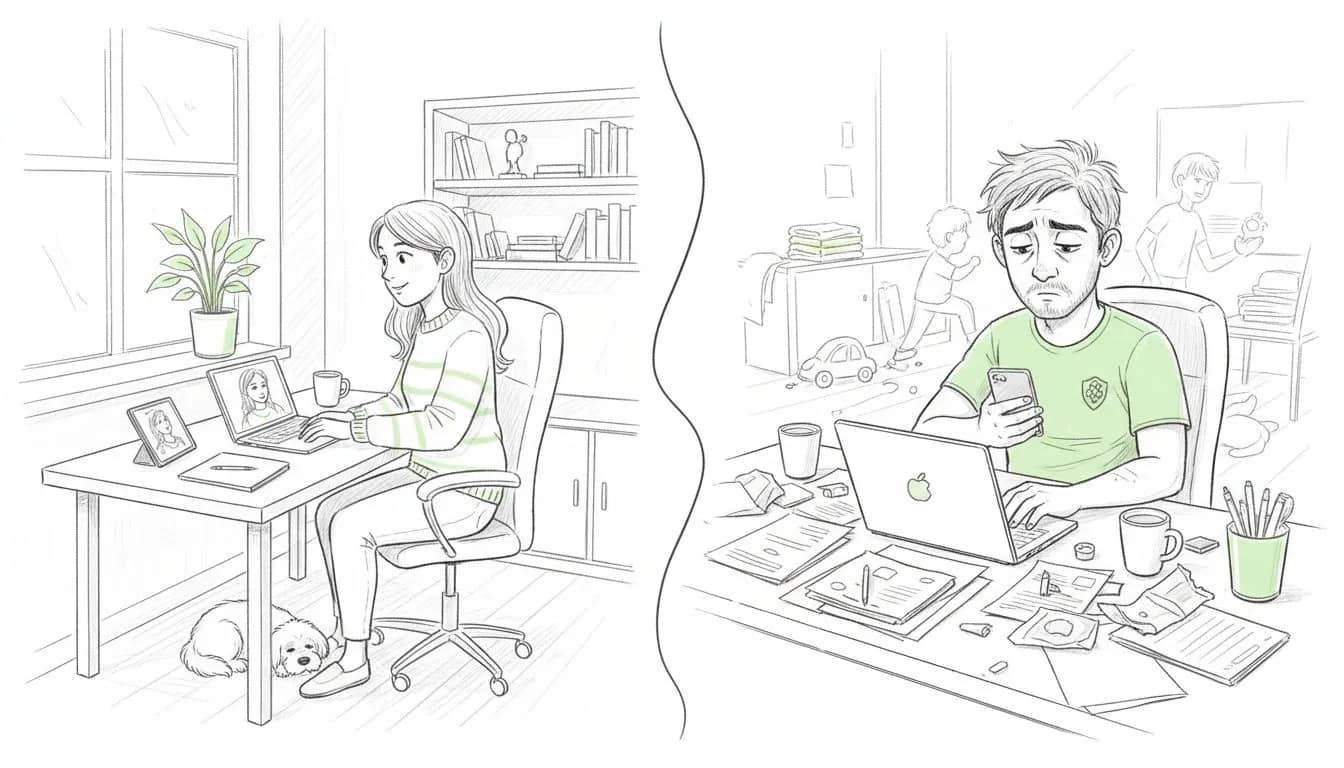

Over a third of american professionals say flexible work has changed how they approach creativity and productivity. As remote work becomes the norm, founders face fresh challenges and benefits that can reshape their success. Understanding how to harness flexibility, manage distractions, and balance costs with well-being is now more relevant than ever. This guide reveals key research-backed strategies that empower american entrepreneurs to thrive in a shifting work landscape.
Table of Contents
- Flexible Work Hours and Their Impact on Creativity
- Managing Distractions and Staying Productive
- Cost Savings Versus Home Office Expenses
- Remote Networking: Opportunities and Challenges
- Communication Gaps and Solutions for Remote Teams
- Work-Life Balance: Benefits and Pitfalls
- Building Discipline and Self-Motivation Remotely
Quick Summary
| Key Insight | Explanation |
|---|---|
| 1. Align work hours with personal energy rhythms | Identify your most productive hours and schedule important tasks then to enhance creativity and productivity. |
| 2. Set clear boundaries to minimize distractions | Establish physical and mental boundaries to protect your focus, ensuring a conducive work environment at home. |
| 3. Be strategic about home office expenses | Track and manage costs to ensure your home office setup is efficient and financially sustainable for productivity. |
| 4. Cultivate genuine relationships through networking | Focus on meaningful interactions rather than the quantity of connections to build a supportive professional network remotely. |
| 5. Implement routine and accountability for self-motivation | Create a structured daily routine and utilize accountability measures to foster self-discipline in a remote setting. |
1. Flexible Work Hours and Their Impact on Creativity
Flexible work hours aren’t just a perk they are a powerful strategy for unlocking your creative potential. Research indicates that when founders control their work schedules, they dramatically boost innovation and productivity.
According to research from Life of School, early career professionals with flexible schedules reported a 25% increase in overall productivity. This significant jump stems from reduced stress and more dedicated time for generating innovative ideas.
The magic of flexible work hours lies in understanding your personal energy rhythms. Some entrepreneurs are morning dynamos who generate brilliant concepts at 5 AM. Others hit peak creativity after midnight. By aligning work hours with your natural cognitive cycles, you transform work from a draining obligation into an inspired exploration.
To implement this strategy, start tracking your most productive hours. Use a simple journal or productivity app to note when you feel most alert and creative. Customize your work schedule around these peak performance windows. This might mean:
- Blocking deep work time during your most focused hours
- Scheduling meetings when your energy naturally dips
- Creating buffer zones for unexpected creative breakthroughs
Remember, flexible work is about quality over quantity. It’s not about working more hours but working smarter during your optimal times. Your creativity isn’t a machine that runs on a fixed schedule it’s a dynamic ecosystem that thrives when given space and freedom.
2. Managing Distractions and Staying Productive
Remote work presents a unique challenge for founders: maintaining razor sharp focus when your home becomes your office. Understanding and neutralizing productivity killers is not just helpful it is essential for survival in the entrepreneurial world.
Research from ArXiv exploring software professionals during the COVID-19 pandemic revealed critical insights into remote work productivity. The study found that distractions significantly impact work performance, with social contacts and stress levels playing pivotal roles in maintaining professional effectiveness.
Successful remote founders develop strategic approaches to minimize interruptions. Think of your focus like a delicate muscle that requires consistent training and protection. Your physical workspace matters just as much as your mental preparation. Create a dedicated work zone that signals to your brain it is time to concentrate.
To combat distractions effectively, implement these targeted strategies:
- Establish clear work boundaries with family or roommates
- Use noise cancelling headphones to block environmental sounds
- Schedule focused work blocks with zero interruptions
- Practice digital minimalism by turning off unnecessary notifications
- Rotate work locations to prevent monotony and maintain mental freshness
Interestingly, a companion ArXiv study highlighted that task management tools are not a universal productivity cure. The key is personalization finding systems that genuinely match your unique workflow and thinking patterns.
Remember productivity is not about working harder but working smarter. By consciously designing your environment and developing disciplined focus techniques, you transform potential distractions into opportunities for exceptional performance.
3. Cost Savings Versus Home Office Expenses
The dream of working remotely often comes with a financial puzzle: do the cost savings outweigh the hidden expenses of setting up a home office? Understanding this economic equation is crucial for future founders navigating the remote work landscape.
According to research from IJRAR, the telecommunication sector revealed an intriguing financial dynamic. While organizations can significantly reduce overhead costs through remote work, individual employees frequently encounter unexpected expenses associated with creating a functional home workspace.
Home office expenses can quickly accumulate and include more than just equipment. Your financial considerations might encompass upgraded internet plans, ergonomic furniture, dedicated workspace electricity, and potential tax implications. Smart founders approach these costs strategically rather than reactively.
To manage these potential financial challenges, consider these practical strategies:
- Track all home office related expenses for potential tax deductions
- Invest in multipurpose furniture that serves professional and personal needs
- Negotiate internet and utility cost allocations with your household
- Research affordable technology alternatives before making major purchases
- Create a dedicated budget specifically for home office investments
Research from International Journal of Emerging Management emphasizes that organizations must balance cost savings with employee well-being. As a founder, you are both the employee and the organization make decisions that serve both your professional growth and financial sustainability.
Remember that a well-designed home office is an investment not an expense. By approaching your workspace with strategic financial planning, you transform potential costs into opportunities for enhanced productivity and professional development.
4. Remote Networking: Opportunities and Challenges
Networking in the remote work era is less about cocktail parties and more about strategic digital connections. The landscape of professional relationships has transformed dramatically, presenting founders with unique opportunities and complex challenges.
Research from ArXiv highlights a critical insight: while digital networking provides essential social interactions, excessive digital engagement can lead to potential mental health risks. The key is finding a balanced approach that maximizes connection without causing digital burnout.
Successful remote networking requires intentional strategy. Think of your professional network as a living ecosystem that needs careful cultivation. Virtual platforms have democratized access to global talent and potential collaborators, but meaningful connections demand more than just clicking the connect button.
To build a robust remote network, implement these targeted strategies:
- Prioritize quality interactions over quantity of connections
- Schedule regular virtual coffee chats with industry peers
- Engage meaningfully in online professional communities
- Create value for others before seeking personal gains
- Develop a consistent personal brand across digital platforms
Furthermore, ArXiv research suggests that organizational support significantly impacts networking effectiveness. Work-family policies that provide flexibility can enhance overall well-being, which directly translates into more authentic and productive professional relationships.
Remember networking is not about collecting contacts it is about building genuine relationships. Your digital presence should reflect your authentic professional identity, creating connections that transcend physical boundaries.
5. Communication Gaps and Solutions for Remote Teams
Remote teams operate in an invisible ecosystem where communication can either be your greatest strength or your most significant vulnerability. Bridging digital communication gaps requires more than just fancy software it demands intentional strategy and human understanding.
Research from ArXiv examining software professionals during the COVID-19 pandemic revealed a critical insight: quality social interactions directly correlate with team well-being. When communication breaks down, stress levels rise and productivity plummets.
The most successful remote teams treat communication as an art form not just a technical exchange of information. This means creating intentional spaces for both professional updates and genuine human connection. Think beyond status reports and embrace conversations that build trust and psychological safety.
To transform your remote communication strategy, implement these targeted approaches:
- Establish clear communication protocols and expectations
- Schedule regular video meetings with both work and non work discussion time
- Use asynchronous communication tools that respect different time zones
- Create dedicated channels for casual conversations and team bonding
- Practice radical transparency and overcommunication
Interestingly, ArXiv research suggests that traditional task management tools might not be the silver bullet for productivity. The key is finding communication methods that feel natural and authentic to your specific team dynamics.
Remember communication in remote teams is less about constant contact and more about meaningful connection. Your goal is to create an environment where team members feel heard, valued, and genuinely connected despite physical distance.
6. Work-Life Balance: Benefits and Pitfalls
Work-life balance is not a luxury it is a strategic necessity for modern founders. In the remote work era, the lines between professional and personal spaces have become increasingly blurred, creating both unprecedented opportunities and complex challenges.
Research from ArXiv reveals a critical insight: work-family policies positively impact employee well-being when they are genuinely accessible. Simply having flexible policies on paper does not guarantee real benefits founders must actively design and implement these strategies.
The most successful remote entrepreneurs treat work-life balance as a dynamic system, not a static destination. This means creating intentional boundaries, recognizing personal energy rhythms, and designing a workflow that respects both professional ambitions and personal wellness.
To navigate the work-life balance tightrope, consider these strategic approaches:
- Establish clear physical and digital work boundaries
- Create dedicated workspaces that can be closed off after hours
- Use time blocking to protect personal and professional time
- Implement strict start and end times for work activities
- Practice regular self-assessment of your mental and physical energy
Additionally, Scientific Research Publishing highlights that flexible working hours can simultaneously empower and challenge professionals. The key is recognizing that work-life balance is not about perfect equilibrium but about intentional integration.
Remember your goal is not to eliminate work stress entirely but to create a sustainable rhythm that allows both personal growth and professional excellence. Treat your energy as your most valuable asset and design your remote work strategy accordingly.
7. Building Discipline and Self-Motivation Remotely
Self-motivation in the remote work world is not a superpower it is a skill you can systematically develop. The digital workspace demands a radical approach to personal accountability where traditional office structures no longer provide external motivation.
Research from ArXiv exploring software professionals during the pandemic revealed a fascinating insight: individuals can successfully adapt to remote environments through intentional coping strategies. The key is understanding that self-discipline is less about willpower and more about creating supportive systems.
Successful remote founders treat self-motivation like a muscle that requires consistent training. This means designing an environment and routine that naturally propels you toward your goals, rather than constantly fighting against internal resistance.
To build robust remote discipline, implement these strategic approaches:
- Create a consistent daily routine with clear start and end times
- Design a dedicated workspace that signals professional mode
- Use visual progress tracking and accountability systems
- Break large projects into small measurable milestones
- Reward yourself for completing challenging tasks
Interestingly, ArXiv research suggests that standard task management tools are not universal productivity solutions. The most effective motivation strategies are deeply personal and require continuous experimentation.
Remember discipline is not about perfection but about consistent progression. Your remote work success depends on understanding your unique motivational triggers and creating an ecosystem that naturally supports your entrepreneurial journey.
Below is a comprehensive table summarizing the main topics and strategies discussed throughout the article.
| Topic | Description | Key Considerations |
|---|---|---|
| Flexible Work Hours | Boosts creativity and productivity by aligning work schedules with personal energy cycles. | Track peak performance windows; focus on quality work time. |
| Managing Distractions | Essential for maintaining focus and productivity in remote work settings. | Create work boundaries; use noise-canceling tools; reduce digital clutter. |
| Cost Savings vs. Home Expenses | Evaluates the financial dynamics of remote work, balancing savings with home office costs. | Track expenses for deductions; plan strategically for investments. |
| Remote Networking | Emphasizes strategic digital connections and managing engagement levels. | Prioritize meaningful interactions; schedule regular virtual meetings. |
| Communication for Remote Teams | Focuses on maintaining effective communication for team well-being. | Use clear protocols; balance work and personal interactions; practice transparency. |
| Work-Life Balance | Highlights the importance of boundaries and intentional workflow design. | Set physical and digital boundaries; protect personal time. |
| Self-Motivation and Discipline | Develops personal accountability systems for remote work success. | Establish routines; use visual tracking and accountability measures. |
Unlock Your Remote Founder’s Potential with Intelligent Strategy
Working remotely presents unique challenges like managing flexible hours, communication gaps, and maintaining work-life balance as highlighted in the article “7 Key Working Remotely Pros and Cons for Future Founders.” These hurdles often create uncertainty, distraction, and overwhelm that can stall your entrepreneurial journey. Pain points such as maximizing productivity during peak energy times, minimizing distractions, and building self-discipline require tailored support and clear guidance.
Discover how siift.ai Intelligent Business Canvas empowers founders to navigate these challenges confidently. Our AI-driven platform offers personalized feedback, actionable insights, and a step-by-step approach to refine your ideas into a viable business with no guesswork. Whether you want to turn flexible work hours into a creative advantage or strategize your go-to-market plan despite a remote setup, siift.ai guides you through every stage without biases or pressure. Take control of your remote work dynamics and accelerate growth by visiting siift.ai now and transforming uncertainty into unstoppable progress.
Frequently Asked Questions
What are the main benefits of flexible work hours for founders?
Flexible work hours can significantly enhance creativity and productivity for founders. Tracking your peak performance times can help you schedule deep work sessions when you’re most alert.
How can I effectively manage distractions while working remotely?
To manage distractions effectively, establish clear boundaries with household members and create a dedicated workspace. Consider implementing focused work blocks where interruptions are minimized, allowing you to concentrate for extended periods.
What expenses should I consider when setting up a home office?
Home office expenses can include everything from ergonomic furniture to upgraded internet plans. Track these costs carefully to identify potential tax deductions while planning a budget that serves both your personal and professional needs.
How does remote networking differ from traditional networking?
Remote networking focuses on building digital connections rather than in-person interactions. To succeed, prioritize quality over quantity in your networking efforts, and engage meaningfully within online professional communities.
What are effective strategies for maintaining work-life balance while working remotely?
Maintaining work-life balance requires setting clear physical and digital boundaries for your work environment. Create dedicated times for work and personal activities to ensure a sustainable and fulfilling workflow.
How can I develop self-discipline while working from home?
Developing self-discipline in a remote work setting can be achieved by creating a consistent daily routine and a dedicated workspace. Set measurable goals and reward yourself as you achieve milestones to maintain motivation.
Recommended
- blog | siift | Work From Home Tips for Future Entrepreneurs and Solopreneurs
- blog | siift | What are Multi-Founders?
- blog | siift | What is a Solopreneur?
- blog | siift | 7 Innovative Business Ideas for Students to Start Now
- Remote Work Productivity Tips: Achieve Maximum Efficiency | Prodcast
- Turn Your Home into a Business Hub with E-Commerce