
Artificial intelligence can support business planning, but its impact depends on how it is used. Salesforce’s 2024 global SMB survey found that 91% of AI-using respondents said AI boosted their revenue. This is self-reported feedback from existing AI users, not evidence that a particular strategy tool will improve a startup’s results. Understanding Business Strategy AI starts with matching its capabilities to a clear business problem.
Table of Contents
Key Takeaways
Point | Details |
|---|---|
Business Strategy AI Revolutionizes Decision Making | By leveraging advanced machine learning, businesses can enhance strategic planning and reduce uncertainty in decision making. |
AI Benefits Need Validation | Reported benefits can guide what to test, but founders should evaluate each AI tool against their own costs, goals, and business outcomes. |
Personalized Insights Transform Business Planning | AI enables hyper-personalized recommendations that adapt to unique market contexts, improving strategy development. |
Cautious Implementation Needed | Entrepreneurs must avoid common pitfalls, such as overestimating AI’s capabilities and neglecting human oversight, for successful integration. |
What Is Business Strategy AI Technology?
Business Strategy AI represents a transformative technological approach that leverages advanced machine learning algorithms to enhance strategic decision making for startups and enterprises. Emerging research demonstrates how artificial intelligence can now generate and evaluate strategic frameworks with remarkable precision, effectively augmenting traditional entrepreneurial planning methods.
At its core, Business Strategy AI Technology integrates sophisticated computational techniques to analyze massive datasets, predict market trends, and generate strategic recommendations that would traditionally require extensive human expertise. Comprehensive studies reveal six distinct sources of competitive advantage enabled by these technologies, fundamentally reshaping how organizations approach strategic planning and innovation.
The key capabilities of Business Strategy AI include:
Rapid market scenario modeling
Predictive competitive intelligence analysis
Automated strategic option generation
Real time risk assessment
Personalized strategic recommendation engines
Dynamic strategy optimization
Unlike traditional strategic planning tools, Business Strategy AI can process exponentially more information, identify nuanced patterns, and generate insights at unprecedented speeds. This technological leap allows founders and entrepreneurs to make more informed decisions, reduce strategic uncertainty, and accelerate their pathway to market success.
Key Tools And Approaches In Business Strategy AI
Business Strategy AI encompasses a sophisticated ecosystem of technological tools designed to transform how entrepreneurs approach strategic planning and decision making. To assess their value, start with a defined decision, reliable inputs, and a measurable outcome rather than assuming that adoption alone creates a strategic advantage.

The key approaches in Business Strategy AI include advanced machine learning models, predictive analytics platforms, and intelligent recommendation systems. Comprehensive startup studies reveal that AI capabilities can substantially enhance product innovation when integrated with methodologies like the Lean Startup approach, enabling more dynamic and responsive strategic development.
Primary tools in the Business Strategy AI toolkit include:
Predictive market analysis platforms
AI-powered competitive intelligence systems
Machine learning strategy optimization engines
Automated scenario modeling tools
Strategic risk assessment algorithms
Data visualization and trend prediction software
Entrepreneurs can effectively utilize these AI tools by understanding their specific strategic challenges and selecting technologies that align with their unique business objectives. The most advanced AI tools for founders provide not just data analysis, but actionable insights that can dramatically accelerate startup growth and strategic decision making.
How AI Personalizes Startup Business Planning
Personalized Business Planning represents a groundbreaking frontier where artificial intelligence transforms traditional entrepreneurial strategy development. Innovative research demonstrates that AI tools can now write and evaluate business plans with unprecedented precision, potentially surpassing human capabilities in strategic analysis and strategic insight generation.
Strategic decision-making models powered by AI enable startups to receive hyper-personalized recommendations that adapt dynamically to their unique business contexts. These intelligent systems analyze complex datasets, including market trends, competitive landscapes, and individual business characteristics, to generate tailored strategic insights that traditional planning methods could never achieve.
Key personalization strategies in AI-driven business planning include:
Dynamic risk assessment algorithms
Contextual market trend prediction
Individualized growth trajectory modeling
Adaptive strategy recommendation engines
Personalized competitive intelligence mapping
Real-time strategic pivot suggestions
Understanding the startup business model becomes dramatically more effective when entrepreneurs leverage AI’s ability to process vast amounts of information and generate nuanced, context-specific strategic recommendations. By treating each startup as a unique ecosystem, AI transforms business planning from a generic template approach to a sophisticated, data-driven personalization journey.
Common Pitfalls When Using AI For Strategy
Strategic AI Implementation requires far more nuance than simply adopting the latest technological solution. In McKinsey’s October–November 2024 US executive survey, 1% of the 118 C-suite respondents described their organization’s generative-AI rollout as mature; these respondents all worked at companies with at least $1 billion in annual revenue. Separately, S&P Global’s 2025 AI-use-case survey, fielded in late 2024, found that 42% of respondents at organizations with AI in production or proof of concept reported abandoning most AI proofs of concept before production. Neither statistic is a startup-specific success or failure rate.
AI adoption studies demonstrate complex performance implications for startups, indicating that while AI-enabled firms attract higher funding, they often experience lower per-employee productivity during early implementation stages. This suggests entrepreneurs must approach AI strategy with careful, strategic consideration rather than treating it as a magical solution.
Common AI strategic pitfalls include:
Overestimating AI capabilities
Neglecting human expertise and oversight
Insufficient data quality management
Ignoring ethical and bias considerations
Underestimating implementation complexity
Lack of clear performance metrics
Understanding founder challenges becomes crucial when navigating AI strategy, as successful implementation requires a balanced approach that combines technological innovation with pragmatic business insight. Entrepreneurs must recognize that AI is a powerful tool, not a replacement for strategic thinking and human creativity.
Maximizing Value And De-risking Your Founder Journey
Startup Risk Management represents a critical challenge for entrepreneurs seeking sustainable growth and innovation. Treat AI outputs as hypotheses to test against customer evidence, implementation costs, and measurable business outcomes. Revenue survey results alone do not establish that a tool reduces a startup’s underlying business risks.
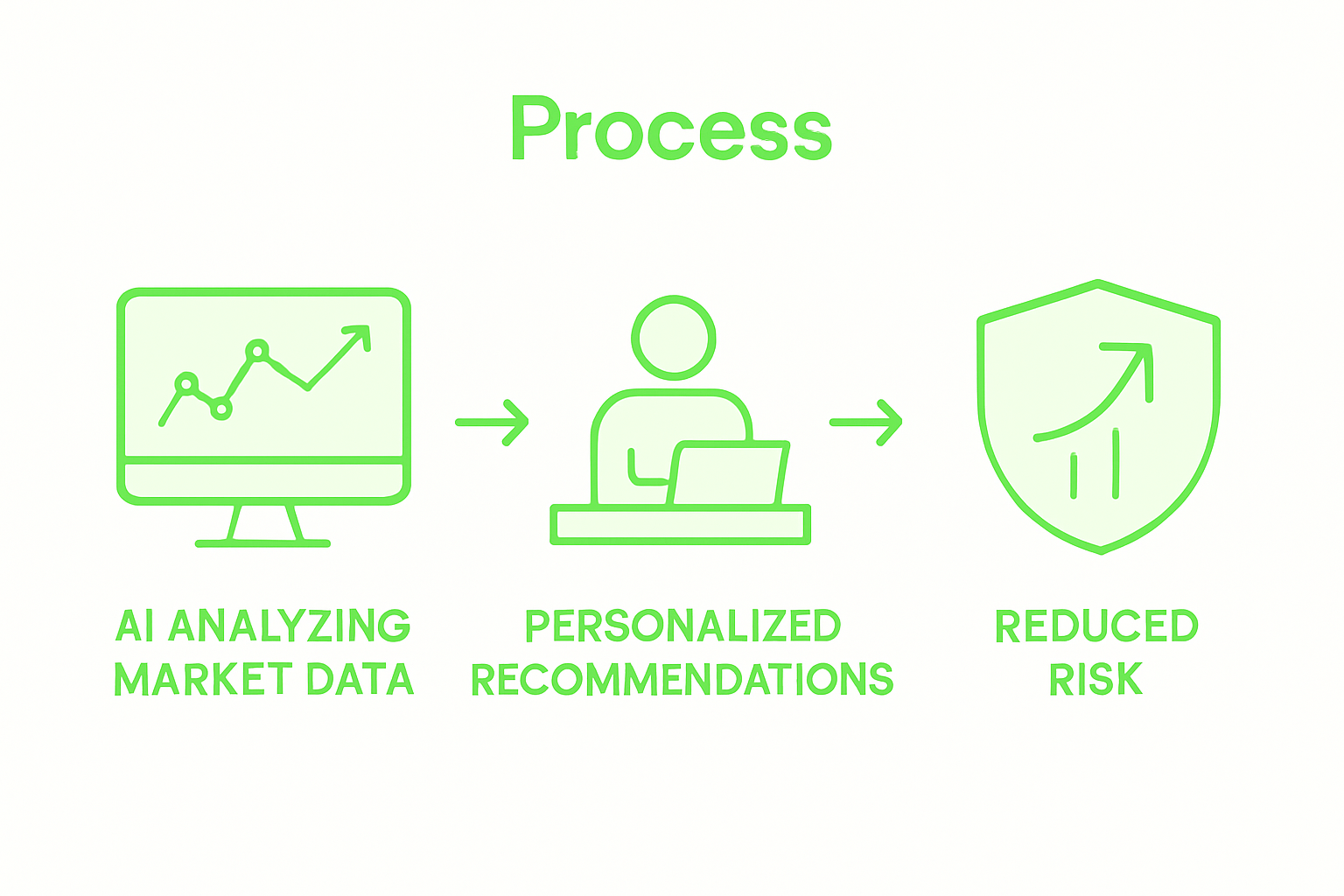
Advanced startup methodologies reveal that integrating AI capabilities with structured innovation frameworks like the Lean Startup Method can dramatically enhance product development and strategic decision making. By systematically combining technological intelligence with disciplined entrepreneurial approaches, founders can create more resilient and adaptive business models.
Key strategies for maximizing startup value and reducing risks include:
Implementing data-driven decision frameworks
Utilizing predictive market analysis tools
Developing flexible, iterative business models
Conducting continuous market validation
Maintaining agile product development cycles
Creating robust risk mitigation protocols
Bootstrapping strategies for first-time founders become significantly more effective when entrepreneurs embrace a systematic approach to risk management. Success depends not just on innovative ideas, but on the ability to intelligently navigate uncertainty through strategic planning and technological empowerment.
Unlock Smarter Startup Growth with AI-Powered Strategy
Navigating the complexities of business strategy AI technology can feel overwhelming with challenges like overestimating AI capabilities and managing data quality. If you want to move beyond generic templates and tackle critical issues such as dynamic risk assessment, personalized growth modeling, and real-time strategic pivoting, you need a solution that truly understands your unique startup journey. The article highlights how AI-driven personalization and predictive analytics are essential for reducing uncertainty and accelerating success.
Discover how the siift.ai Intelligent Business Canvas addresses these exact pain points by offering an intuitive AI platform that guides founders through ideation, validation, and go-to-market steps with personalized feedback and prioritized actions. Designed to eliminate biases and blindspots, it helps you build resilient strategies and maximize value while minimizing risk. Start transforming your business planning by exploring the siift.ai Intelligent Business Canvas and learn more about how to understand your startup business model so you can turn ideas into viable, scalable ventures. Don’t wait to unlock smarter growth—visit siift.ai now and take the first step toward a data-driven, confident founder journey.
Frequently Asked Questions
What is Business Strategy AI Technology?
Business Strategy AI Technology refers to the use of advanced machine learning algorithms that enhance strategic decision-making for startups and enterprises by analyzing data, predicting trends, and generating strategic recommendations.
How can AI personalize startup business planning?
AI personalizes startup business planning by providing hyper-personalized recommendations that adapt to unique business contexts, analyzing complex datasets, and generating tailored strategic insights.
What are common pitfalls when using AI for strategy?
Common pitfalls include overestimating AI capabilities, neglecting human oversight, poor data management, ethical considerations, underestimating implementation complexity, and lacking clear performance metrics.
How can startups maximize value and reduce risks using AI?
Startups can maximize value and reduce risks by implementing data-driven decision frameworks, utilizing predictive market analysis tools, maintaining agile product development cycles, and creating robust risk mitigation protocols.