
College costs significantly more than most students anticipate. The average undergraduate now faces over $27,000 in annual expenses, creating financial pressure that affects academic performance and mental health. Many students underestimate monthly costs beyond tuition, from food and housing to subscriptions and impulse purchases. This guide provides practical strategies to budget effectively, create multiple income streams, and graduate debt-free while building savings. You’ll learn how to take control of your finances, reduce stress, and make informed money decisions throughout your college years.
Table of Contents
- Understanding The True Cost Of College And Student Budgets
- Mastering Budgeting: Control Spending And Reduce Financial Stress
- Creating Income Streams: Part-Time Jobs, Apps, And Side Hustles
- Strategies To Graduate Debt-Free And Build Savings Early
- Explore Siift.ai Tools To Boost Your Student Finances
- FAQ
Key takeaways
| Point | Details |
|---|---|
| College expenses average over $27,000 per year | Total costs include tuition, fees, housing, food, and personal expenses that many students underestimate |
| Budgeting reduces financial stress and improves academic performance | Students who budget regularly report 20% less stress and 15% higher GPAs |
| Multiple income streams can significantly supplement student budgets | Combining work-study, part-time jobs, and app earnings can generate $550-$1,200 monthly |
| Smart money management includes controlling impulse spending | Tracking subscriptions and avoiding unnecessary purchases saves hundreds monthly |
| Debt-free graduation is achievable with careful planning | Living below means and consistent savings enable students to graduate without loans |
Understanding the true cost of college and student budgets
The financial demands of college extend far beyond tuition bills. The average full-time undergraduate student spends $27,091 per year on tuition, fees, room, board, and personal expenses. This total often shocks students and families who focus primarily on advertised tuition rates. After financial aid and scholarships, typical out-of-pocket costs still range from $14,000 to $18,000 annually.
Major expense categories consume student budgets quickly. Housing represents the largest non-tuition cost, whether living on campus or renting off-campus apartments. Food expenses accumulate through meal plans, grocery shopping, and frequent dining out with friends. Textbooks and course materials add hundreds per semester. Transportation costs include gas, parking permits, or public transit passes. Personal expenses cover everything from laundry and toiletries to entertainment and clothing.
Students frequently underestimate the small, recurring expenses that drain budgets. Streaming subscriptions for music, video, and entertainment can total $50-$100 monthly. Coffee shop visits, convenience store snacks, and impulse purchases add up faster than expected. Late-night food delivery and weekend social activities create additional unplanned spending. These seemingly minor costs compound throughout the semester, often leaving students financially stressed before finals.
Monthly expense breakdown for typical college students:
| Category | Typical Monthly Cost |
|---|---|
| Housing (rent or dorm) | $600-$1,200 |
| Food (groceries and dining) | $300-$500 |
| Transportation | $100-$200 |
| Textbooks and supplies | $50-$150 |
| Personal expenses | $150-$300 |
| Subscriptions and entertainment | $50-$100 |
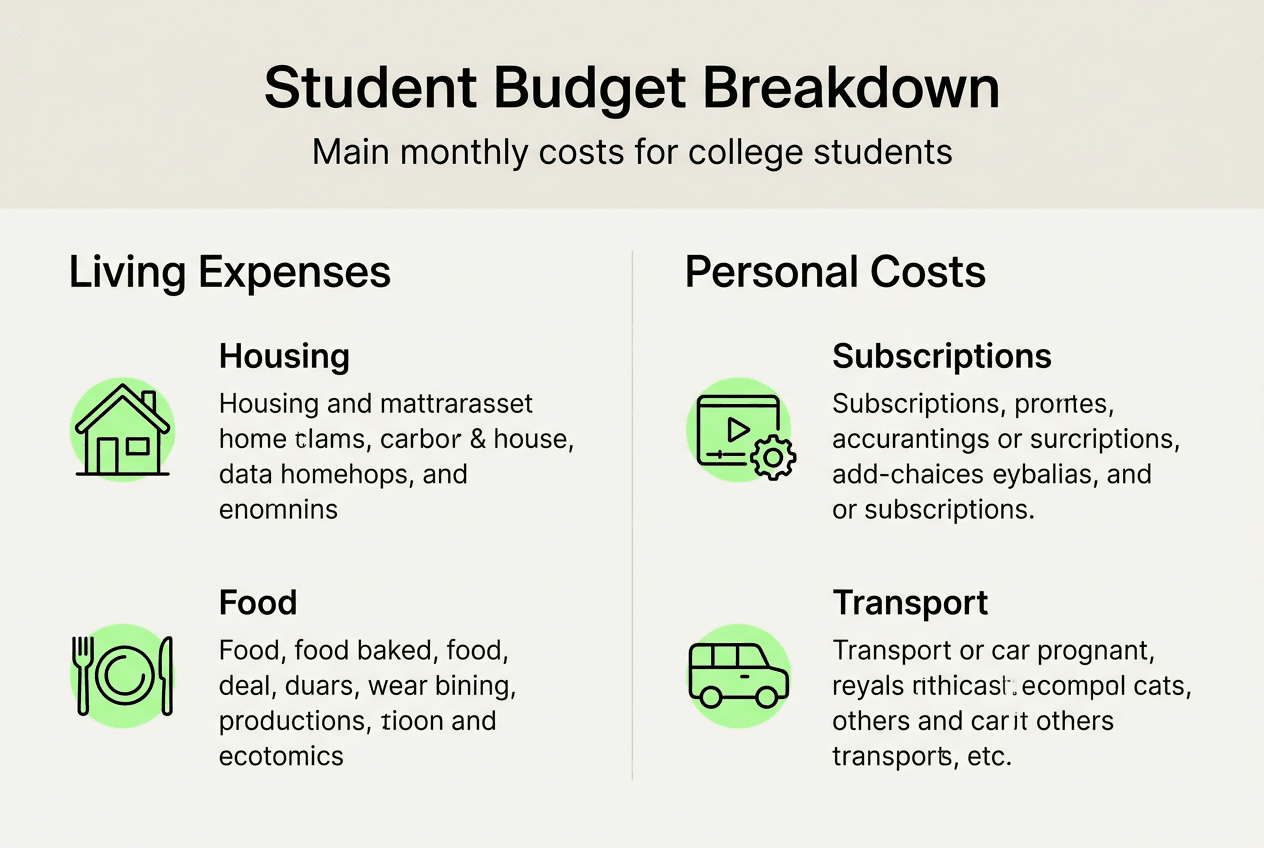
Recognizing these true costs allows you to plan realistically. Understanding where money goes each month represents the first step toward financial control. The next section shows how budgeting transforms this awareness into actionable strategies that reduce stress and improve your academic performance.
Mastering budgeting: control spending and reduce financial stress
Budgeting isn’t about restriction or deprivation. It’s about gaining freedom to spend money on what truly matters while eliminating waste on things you don’t value. When you budget effectively, you decide where your money goes instead of wondering where it went. This proactive approach reduces anxiety and creates space for academic focus.
Students who budget regularly report 20% less financial stress and a 15% higher GPA. The correlation makes sense because financial worry consumes mental energy needed for studying and class participation. When you know exactly how much money you have and where it’s allocated, you can concentrate on learning instead of constantly worrying about overdraft fees or declined cards.
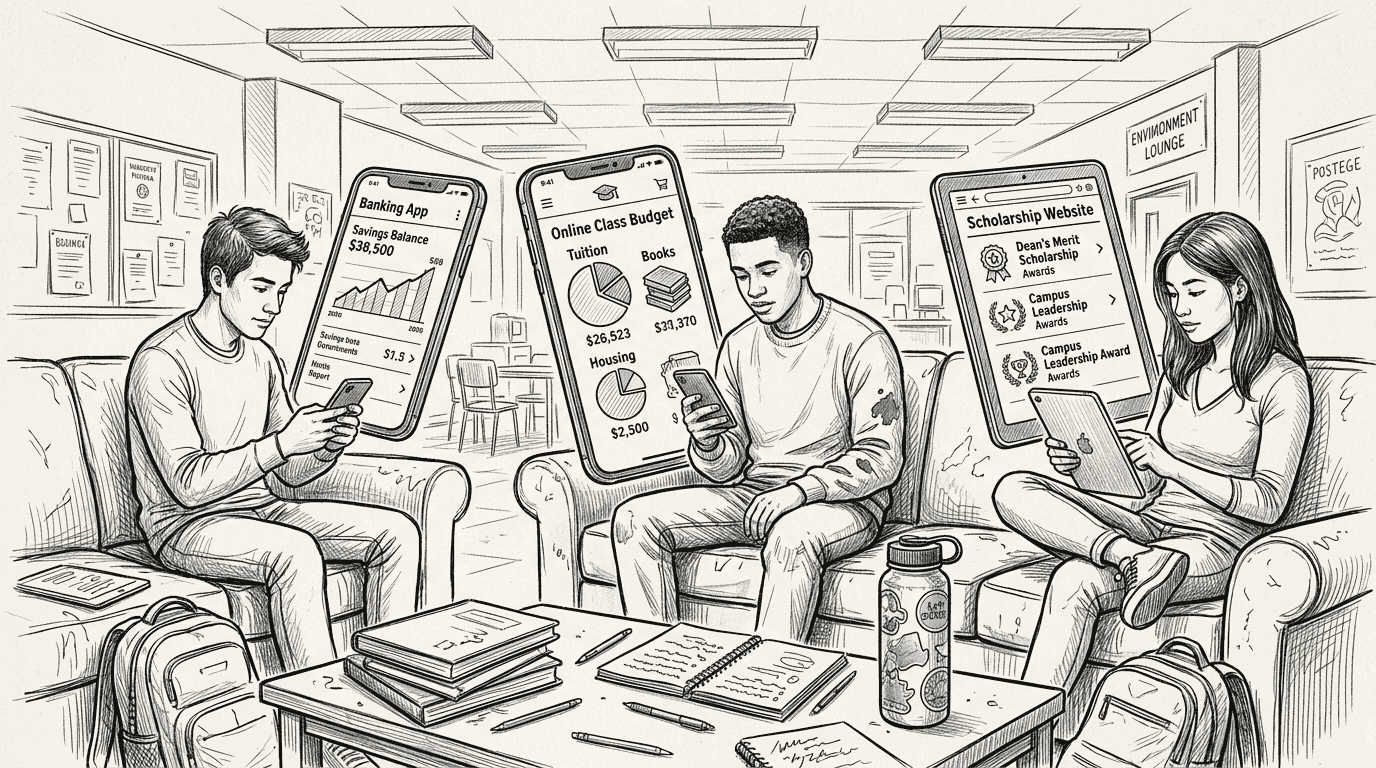
Common spending traps drain student budgets unnecessarily. Food and beverages beyond meal plans represent the biggest culprit, with students spending $100-$200 monthly on coffee shops, restaurants, and late-night snacks. Subscription services pile up quickly when you forget about trials that auto-renew or maintain multiple streaming platforms you rarely use. Impulse purchases at campus bookstores, convenience stores, or online retailers add hundreds in unplanned expenses. Social pressure to keep up with peers’ spending habits creates additional financial strain.
Essential steps to create and maintain your student budget:
- Track every expense for two weeks to understand current spending patterns
- List all income sources including financial aid, work earnings, and family support
- Categorize expenses as essential (housing, food, tuition) or discretionary (entertainment, dining out)
- Set realistic spending limits for each category based on your income
- Review spending weekly and adjust categories as needed
- Use the 50/30/20 rule: 50% needs, 30% wants, 20% savings
Pro Tip: Download budgeting apps like Mint, YNAB, or PocketGuard to automate expense tracking. These tools connect to your bank accounts and categorize transactions automatically, making it effortless to see exactly where your money goes each month. Set up alerts when you approach spending limits in specific categories.
“Financial literacy through budgeting doesn’t just improve your bank balance. It directly correlates with academic success because students who control their finances experience less stress, sleep better, and maintain focus on their studies instead of money worries.”
The budgeting habit you build now extends beyond college. These skills prepare you for managing larger financial responsibilities like rent, car payments, and retirement savings after graduation. Start small, stay consistent, and watch both your savings and academic performance improve simultaneously.
Creating income streams: part-time jobs, apps, and side hustles
Increasing your income provides more financial flexibility than cutting expenses alone. Students today have unprecedented opportunities to earn money through diverse channels that fit academic schedules. Combining multiple income sources creates financial stability while building valuable work experience and entrepreneurial skills.
Federal work-study programs offer campus-based employment tailored to student schedules. These positions pay $10-$15 per hour for 10-15 hours weekly, generating $400-$900 monthly. Library assistants, research aides, and administrative support roles provide steady income without requiring transportation off campus. Work-study jobs often allow studying during slower periods, maximizing productivity.
App-based earning platforms provide ultimate flexibility for students. Food delivery through DoorDash or Uber Eats, grocery shopping via Instacart, and task completion on TaskRabbit let you work whenever your schedule permits. These opportunities typically generate $150-$300 monthly with minimal time commitment. The flexibility proves invaluable during exam weeks when you need to reduce work hours temporarily.
Traditional part-time jobs in retail, food service, or tutoring remain viable options. Evening and weekend shifts accommodate class schedules while providing consistent paychecks. Tutoring fellow students or local high schoolers in subjects where you excel pays $15-$30 per hour. Many students discover innovative business ideas that transform skills into profitable ventures.
Income source comparison for college students:
| Income Source | Typical Hourly Rate | Hours per Week | Monthly Potential | | — | — | — | | Federal work-study | $10-$15 | 10-15 | $400-$900 | | Part-time retail/food service | $12-$16 | 15-20 | $720-$1,280 | | App-based delivery/tasks | $15-$25 | 6-10 | $360-$1,000 | | Tutoring | $15-$30 | 5-10 | $300-$1,200 | | Freelance services | $20-$50 | 5-15 | $400-$3,000 |
Steps to combine multiple income sources effectively:
- Prioritize academic schedule and identify available time blocks for work
- Start with one reliable income source that provides base monthly income
- Add flexible app-based earnings during free hours between classes or weekends
- Develop a specialized skill (design, writing, coding) for higher-paying freelance opportunities
- Track time spent earning versus studying to maintain academic performance
- Automate savings by transferring 10-20% of earnings immediately to savings account
Pro Tip: Focus on strategies for earning secondary income streams that leverage skills you’re already developing in classes. Computer science students can build websites, business majors can offer social media management, and design students can create graphics for local businesses at premium rates.
Combining a work-study position ($600 monthly) with app-based earnings ($200 monthly) and occasional tutoring ($300 monthly) creates $1,100 in monthly income. This amount covers typical out-of-pocket expenses while allowing savings for emergencies or post-graduation goals. The key lies in balancing earning opportunities with academic responsibilities to avoid burnout.
Strategies to graduate debt-free and build savings early
Debt-free graduation seems impossible to many students, but real examples prove otherwise. A 28-year-old paid off $19,000 in student loan debt in less than 2 years by living frugally and directing every extra dollar toward principal payments. Even more impressively, Ben von Werder will graduate debt-free with over $100,000 saved through aggressive saving, smart investing, and living well below his means throughout college.
These success stories share common strategies anyone can implement. Living below your means doesn’t require extreme sacrifice, just intentional choices about housing, transportation, and discretionary spending. Choosing a less expensive apartment with roommates instead of a luxury complex saves thousands annually. Cooking meals instead of dining out regularly cuts food costs by 60-70%. Walking or biking instead of maintaining a car eliminates insurance, gas, and maintenance expenses.
Consistent saving habits compound over time through the power of starting early. Setting aside even $50-$100 monthly during college builds emergency funds and investment accounts. Automating transfers to savings accounts removes the temptation to spend money sitting in checking accounts. Many students discover that startup success stories begin with small side projects during college that grow into significant income sources.
Key strategies for debt-free graduation:
- Choose affordable housing options and minimize rent through roommates
- Cook meals instead of eating out, saving $200-$400 monthly
- Apply for every scholarship and grant opportunity, even small ones
- Make extra payments on student loans to reduce principal and interest
- Avoid credit card debt by using debit cards or cash for purchases
- Build an emergency fund of $500-$1,000 before investing
- Start investing small amounts in index funds or retirement accounts
- Decline unnecessary student loans even when offered
The mindset shift proves as important as specific tactics. View college as an investment in your future earning potential, not a time to live beyond your means. Set specific financial goals like graduating with zero debt, saving $10,000 by graduation, or building a side business that generates passive income. These goals provide motivation during moments when you’re tempted to splurge on unnecessary purchases.
Explore loan forgiveness programs and income-driven repayment options if you already have student debt. Public service careers, teaching positions, and nonprofit work often qualify for partial or complete loan forgiveness after specified service periods. Understanding these options helps you make informed decisions about career paths and repayment strategies.
Starting early creates exponential advantages through compound growth. A 20-year-old who invests $100 monthly at 7% annual returns accumulates over $260,000 by age 65. The same investment starting at age 30 grows to only $120,000. Every dollar you save and invest during college multiplies significantly over your lifetime, making current sacrifices worthwhile for future financial freedom.
Explore siift.ai tools to boost your student finances
Managing student finances requires organization, planning, and the right tools to track expenses and discover income opportunities. The siift.ai platform provides powerful resources specifically designed to help students take control of their financial journey. Whether you’re budgeting monthly expenses or exploring entrepreneurial ventures, siift.ai offers expert-backed solutions.
Discover practical business ideas for students that fit academic schedules while generating meaningful income. The platform’s Intelligent Business Canvas guides you through validating ideas, understanding markets, and launching ventures systematically. Students use these tools to transform skills into profitable side hustles that continue growing after graduation.
Track spending patterns and optimize your budget using siift’s analytics capabilities. Learn proven methods for business expense tracking that apply equally to personal finance management. The platform helps you identify spending leaks, set realistic goals, and monitor progress toward financial independence throughout your college years.
FAQ
How can I start budgeting effectively as a college student?
Begin by listing all monthly income sources including financial aid, work earnings, and family support. Track every expense for two weeks using a budgeting app or spreadsheet to understand current spending patterns. Categorize expenses as essential or discretionary, then set realistic limits for each category based on available income.
What are the best ways for students to earn extra money without affecting their studies?
Consider federal work-study positions that accommodate class schedules and often allow studying during downtime. Explore app-based opportunities like food delivery or task completion that offer complete flexibility to work during free hours. Focus on innovative income ideas for students and secondary income strategies that leverage skills you’re developing in classes.
How can I graduate college without student loan debt?
Save aggressively from part-time earnings by automating transfers to dedicated savings accounts. Apply for every available scholarship, grant, and work-study opportunity regardless of award size. Live within a strict budget by choosing affordable housing, cooking meals instead of dining out, and avoiding unnecessary expenses that don’t align with your financial goals. Learn from business success and debt-free graduation examples.
Should I use credit cards as a college student?
Use credit cards only if you can pay the full balance monthly to avoid interest charges and build credit history. Start with one card that has no annual fee and offers rewards on categories you already spend money on like groceries or gas. Never charge more than you can immediately pay off, as credit card debt at 18-25% interest rates quickly spirals out of control.
How much should college students save each month?
Aim to save 10-20% of your total monthly income, adjusting based on expenses and financial goals. Start with a minimum emergency fund of $500-$1,000 before focusing on other savings objectives. Even saving $50-$100 monthly builds significant reserves over four years while establishing lifelong financial habits that compound after graduation.