
Poor financial management can create serious challenges for startups. When founders don't have clear visibility into spending, it becomes harder to make informed decisions about pricing, budgets, hiring, and growth.
Mastering expense tracking isn’t just about organization; it supports better financial visibility, tax preparation, and informed business decisions. This guide delivers practical, step-by-step methods to track your business expenses efficiently, avoid costly mistakes, and build the financial foundation your startup needs to thrive in 2026.
Table of Contents
Why Tracking Business Expenses Matters: Avoid Costly Mistakes
Prepare To Track: What You Need Before Starting Your Expense Records
How To Track Business Expenses Efficiently: Step-By-Step Guide
Common Mistakes And Verification: Ensuring Your Expense Tracking Works
Choose the Right Expense Tracking Tool for Your Startup
Why tracking business expenses matters: avoid costly mistakes
New entrepreneurs often underestimate how quickly poor expense tracking can sink a business. Poor financial management can create serious challenges for startups, especially when founders lack clear visibility into spending.
The stakes get even higher over time. Business establishments born in 2013 had only a 34.7% survival rate by 2023. This highlights the importance of building sound financial processes as a business grows.
Understanding why startups fail helps you avoid these pitfalls from day one.
Investors notice your financial discipline immediately. Investors and other stakeholders may also expect founders to have clear financial records and a good understanding of how the business is using its capital.
The IRS consequences are equally serious:
Mixing personal and business expenses can make record-keeping more difficult and complicate the substantiation of business deductions.
Late tax payments accumulate penalties at 0.5% monthly, capping at 25% of your tax bill
Poor documentation can disqualify legitimate business expenses entirely
Think of expense tracking as your business’s financial immune system. It catches problems early, prevents costly infections from spreading, and keeps your startup healthy enough to grow. Without it, small issues become fatal fast.
Prepare to track: what you need before starting your expense records
Before you can track expenses effectively, you need the right setup. Start by separating your business and personal finances completely. Open a dedicated business bank account and get a business credit card. This separation isn’t optional—it’s essential for IRS compliance and audit protection.
Gather these essential materials:
Physical or digital storage system for receipts
Business bank account statements
Business credit card records
Software or spreadsheet for expense categorization
Calendar or scheduling tool for regular reviews
Understand IRS expense categories before you start recording. Common deductible categories include office supplies, business travel, professional services, marketing costs, and equipment purchases. Knowing these upfront ensures you organize expenses correctly from the beginning, maximizing your tax benefits.

Consider your tracking method carefully. The best way to track business expenses depends on your business size, transaction volume, and technical comfort. Digital tools offer automation and accuracy, while manual methods give you hands-on control.
Preparation Step | Why It Matters | Time Investment |
|---|---|---|
Separate accounts | Prevents IRS issues | 1-2 hours setup |
Choose tracking method | Determines daily workflow | 2-3 hours research |
Learn IRS categories | Maximizes deductions | 1 hour study |
Set up storage system | Ensures record retention | 1 hour setup |
Pro Tip: Photograph receipts immediately after purchases using your smartphone. Thermal receipts fade quickly, and digital backups prevent lost deductions. Store photos in a dedicated folder organized by month and category.
Digital tools can automatically scan receipts, extract key information, and categorize expenses based on vendor patterns. This automation reduces manual data entry and minimizes human error. Even if you prefer manual tracking, maintaining digital backups protects you when paper receipts deteriorate or get lost.
How to track business expenses efficiently: step-by-step guide
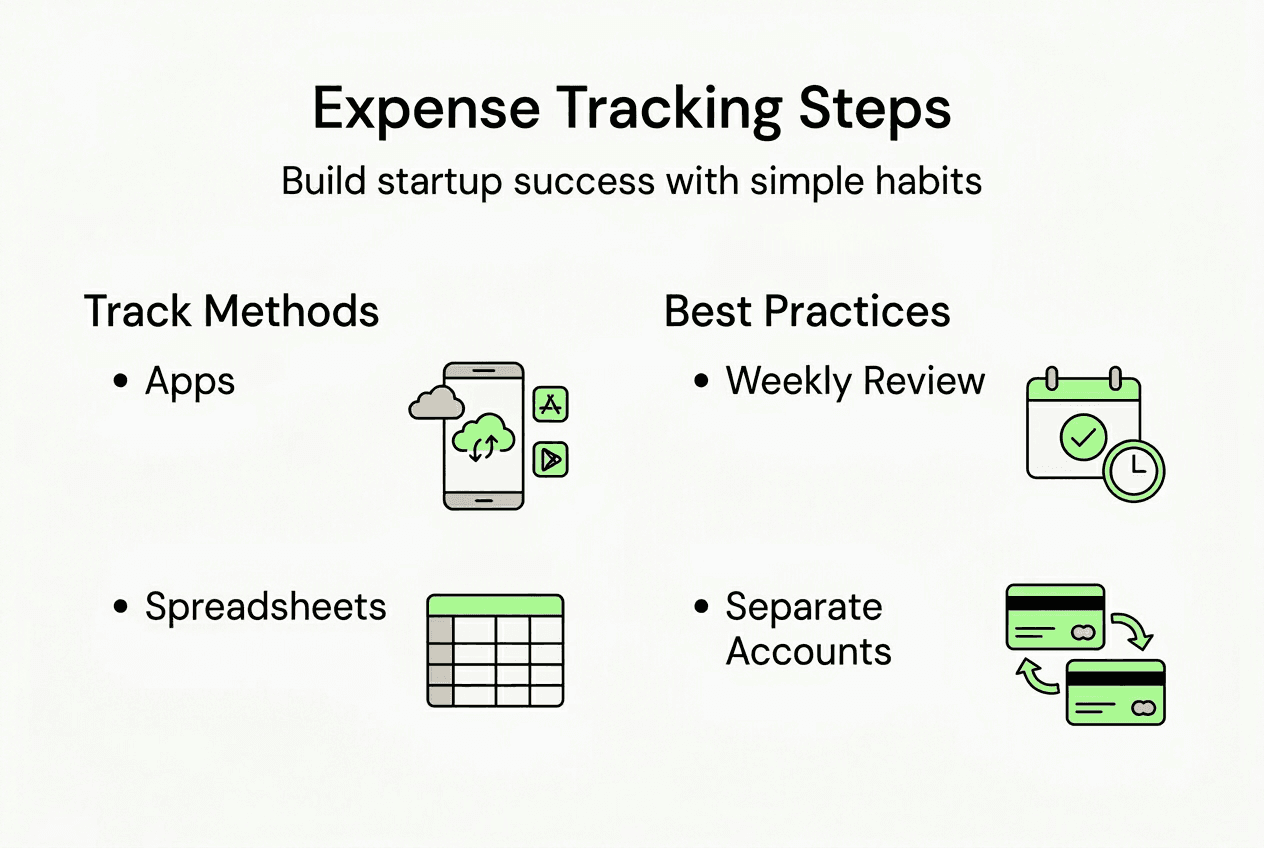
Effective expense tracking follows a consistent process that becomes automatic with practice. Digital expense-tracking tools can reduce repetitive data entry and make it easier to capture, categorize, reconcile, and review transactions.
Follow these steps in order:
Choose your primary tracking method based on transaction volume and technical preference
Record every business purchase within 24 hours while details remain fresh
Attach the receipt and note the specific business purpose for each expense
Categorize the expense according to IRS standards immediately
Review and reconcile all records weekly to catch discrepancies early
Store digital copies securely and retain records for the period required for your tax and accounting obligations.
Generate monthly expense reports to analyze spending patterns
When recording each expense, capture these critical details:
Transaction date and amount
Vendor name and location
Business purpose (be specific: “client meeting” beats “meal”)
Payment method used
IRS category assignment
Any relevant project or client codes
Pro Tip: Set a recurring calendar reminder every Friday afternoon for your weekly reconciliation. This 15-minute habit prevents month-end scrambles and catches bank errors while they’re fresh.
Point | Details |
|---|---|
Digital tracking saves time | Digital tools can reduce manual data entry and make expense records easier to organize. |
Consistent categorization matters | Categorizing expenses consistently makes financial reporting and tax preparation easier. |
Clear records support compliance | Organized receipts and business-purpose documentation can help support legitimate business expenses. |
Regular reviews improve visibility | Weekly and monthly reviews help identify discrepancies and unusual spending earlier. |
Financial transparency matters | Clear and organized financial records make it easier to understand business performance and communicate financial information to stakeholders. |
Never mix personal and business expenses on the same credit card or account. This practice creates documentation nightmares during tax preparation and raises immediate red flags during IRS audits. The few minutes you save aren’t worth the risk of disqualified deductions or penalties.
Review your expense categories monthly to ensure consistency. You might classify similar purchases differently over time, which complicates tax preparation and financial analysis. Standardize your approach early and stick with it.
Common mistakes and verification: ensuring your expense tracking works
Even experienced entrepreneurs make expense tracking errors that cost them deductions and invite scrutiny. Knowing these pitfalls helps you avoid them before they damage your business.
The most common mistakes include:
Mixing personal and business expenses on the same accounts or cards
Failing to retain required documentation for business expenses
Not documenting the business purpose for meals, travel, and entertainment
Waiting weeks or months to record expenses when memory fades
Using vague category names that don’t align with IRS standards
Forgetting to back up digital records regularly
Skipping weekly reconciliation until tax season arrives
Mixing personal and business finances is particularly dangerous. Mixing personal and business expenses can make record-keeping more difficult and may complicate the substantiation of business deductions. Keeping separate accounts makes financial records easier to maintain and review.
Startup mistakes to avoid often include financial record-keeping failures that seem minor until tax season arrives. Missing or incomplete documentation can make it harder to substantiate otherwise legitimate business expenses.
Verify your tracking system works by testing these checkpoints monthly:
Every business bank transaction has a corresponding expense record
All credit card charges are documented with receipts and purposes
Category totals match your budget expectations for the month
No personal expenses appear in your business records
Digital and physical backups exist for all receipts
Year-to-date totals align with your financial projections
According to Complete Controller’s startup expense tracking guide, proactive record-keeping eliminates last-minute panic and reduces accounting fees substantially. Your tax preparer can work efficiently with organized records, saving you billable hours.
Set up automatic alerts in your accounting software to flag unusual spending patterns, duplicate entries, or miscategorized expenses. These automated checks catch errors before they compound into serious problems. Review flagged items immediately rather than letting them accumulate.
Schedule a quarterly deep review where you examine three months of expenses at once. Look for patterns, identify wasteful spending, and ensure your categorization remains consistent. This broader perspective helps you spot trends that weekly reviews might miss.
Choose the Right Expense Tracking Tool for Your Startup
Once you have a consistent process for recording and reviewing expenses, the right expense-tracking software can reduce manual work and improve visibility into business spending.
When evaluating a tool, consider features such as:
Receipt capture and storage
Automatic expense categorization
Corporate card and bank integrations
Accounting software integrations
Expense approvals and reporting
Budget and spending controls
Multi-currency support if your startup operates internationally
Pricing and scalability as transaction volume grows
Siift is designed for a different part of the startup workflow. Its focus is on helping founders organize business context, validate ideas, prioritize decisions, and coordinate strategic actions. For recording transactions, managing receipts, reconciling expenses, or maintaining accounting records, founders should use dedicated financial or expense-management software.
FAQ
What documents are essential for tracking business expenses?
You must keep receipts, invoices, and bank statements plus detailed notes explaining the business purpose for each expense. The IRS requires this documentation to support deductions during audits. Digital copies are acceptable if they’re clear and complete, but maintain backups in multiple locations.
How often should I update and review my business expenses?
Record expenses immediately after transactions occur, then reconcile records weekly to catch errors while details remain fresh. Monthly deep reviews help identify spending patterns and budget variances. This regular cadence prevents year-end scrambles and ensures continuous accuracy throughout the year.
Can mixing personal and business finances affect my taxes?
Absolutely. Mixing personal and business finances is a major IRS red flag that can trigger audits and disqualify legitimate deductions. It also undermines your legal business structure and complicates accounting significantly. Maintain completely separate accounts from day one to avoid these serious consequences.
What are the benefits of digital expense tracking tools?
Digital expense-tracking tools can reduce repetitive data entry and make it easier to capture, categorize, reconcile, and review transactions.