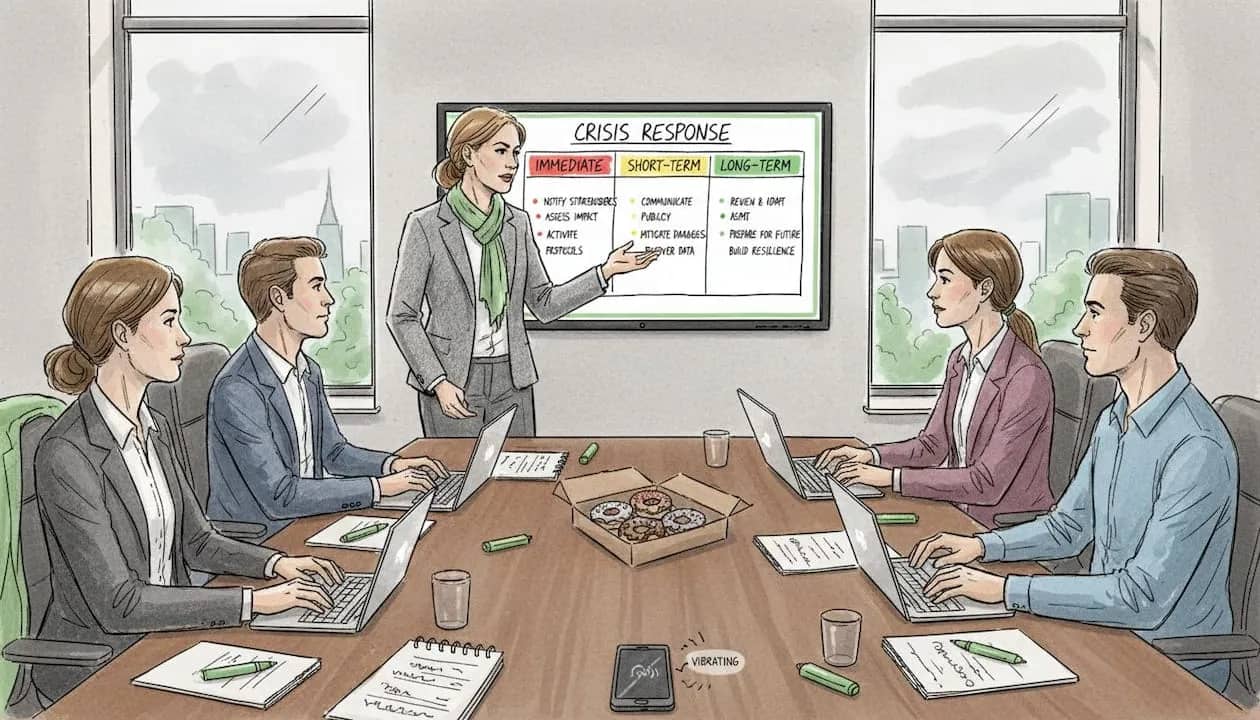
Small businesses face unexpected crises that can threaten survival, from supply chain disruptions to sudden market shifts. Effective crisis management transforms these challenges into opportunities for growth and resilience. This guide delivers actionable crisis management tips specifically designed for entrepreneurs and small business owners. You’ll learn how to evaluate strategies, implement proven tactics, and build systems that protect your venture when uncertainty strikes.
Table of Contents
- Key takeaways
- Essential criteria for effective crisis management
- Top 7 practical crisis management tips for small businesses
- Comparing crisis management strategies: choosing what fits your business
- How to implement crisis management tips effectively in your business
- Explore siift tools to build your crisis resilience
- FAQ
Key Takeaways
| Point | Details |
|---|---|
| Clear communication channels | Establish emergency channels and spokespersons to prevent misinformation and keep stakeholders aligned during crises. |
| Defined crisis team | Create a team with defined roles, authority, and escalation paths so decisions can be made quickly. |
| Regular risk assessments | Regularly map vulnerabilities across operations and supply chains to identify threats before they materialize. |
| Flexible response plans | Develop modular, adaptable plans that can be customized quickly for different crisis types. |
Essential criteria for effective crisis management
Selecting crisis management strategies requires evaluating four core criteria that determine success. Communication clarity tops the list because clear communication and teamwork protocols prevent confusion when seconds matter. Speed follows closely, as delayed responses amplify damage and erode customer confidence.
Cost effectiveness matters deeply for small businesses operating on tight margins. The best strategies deliver maximum protection without draining resources needed for recovery. Flexibility rounds out the criteria because crises rarely follow predictable patterns.
Consider these evaluation factors when choosing strategies:
- Communication infrastructure: Can your team share updates instantly across all channels?
- Response time: How quickly can you activate protocols and make decisions?
- Budget alignment: Does the strategy fit within operational constraints?
- Adaptability: Can you modify the approach for different crisis types?
- Technology integration: Do digital tools enhance or complicate your response?
Your business context shapes which criteria matter most. A tech startup might prioritize speed and digital tools, while a retail business focuses on customer communication and supply chain flexibility. Business resilience strategies work best when tailored to your specific operational reality.
AI-powered platforms now offer real-time risk monitoring and automated communication systems. These tools reduce manual workload during high-stress situations. Tech leaders increasingly rely on structured risk management to maintain competitive advantage during disruptions.
Top 7 practical crisis management tips for small businesses
These seven strategies form the foundation of effective crisis response for entrepreneurs. Each tip addresses specific vulnerabilities while building overall organizational resilience.
-
Establish dedicated communication channels that bypass normal workflows. Create emergency contact lists, set up mass notification systems, and designate official spokespersons. This prevents misinformation and keeps everyone aligned.
-
Build a crisis response team with clearly defined roles and authority levels. Assign decision makers for different scenarios, establish escalation paths, and document responsibilities. Team members should know exactly what actions they can take independently.
-
Conduct regular risk assessments to identify threats before they materialize. Map vulnerabilities across operations, supply chains, and customer touchpoints. Business risk derisking strategies help you spot patterns others miss.
-
Create flexible response plans adaptable to various crisis types. Generic templates fail because each situation demands unique actions. Build modular frameworks you can customize quickly.
-
Maintain radical transparency with stakeholders during crises. Share what you know, acknowledge uncertainties, and provide regular updates. Silence breeds speculation and damages trust faster than bad news.
-
Schedule quarterly crisis drills testing different scenarios. Practice activates muscle memory and reveals gaps in your plans. Teams that train together respond faster under pressure.
-
Leverage data analytics for real-time decision making. Digital dashboards tracking key metrics help you spot problems early and measure response effectiveness. Cybersecurity measures protect the data systems you’ll rely on during crises.
Pro Tip: Start with communication and team building before investing in complex technology. Human coordination beats sophisticated tools every time when systems fail.
The most effective approaches combine multiple strategies. Communication channels work better when backed by trained teams. Risk assessments become actionable when paired with flexible response plans. Derisking your business requires integrating these elements into daily operations, not treating them as separate initiatives.

Comparing crisis management strategies: choosing what fits your business
Different strategies suit different business stages and risk profiles. This comparison helps you match tactics to your specific situation.
| Strategy | Cost | Complexity | Speed | Impact | Best For |
|---|---|---|---|---|---|
| Communication channels | Low | Low | Fast | High | All businesses |
| Response team | Medium | Medium | Medium | High | 10+ employees |
| Risk assessment | Low | Medium | Slow | Medium | Planning-focused founders |
| Flexible plans | Low | High | Medium | High | Dynamic markets |
| Transparency protocols | Low | Low | Fast | Medium | Customer-facing businesses |
| Crisis drills | Medium | Medium | Slow | High | Established operations |
| Data analytics | High | High | Fast | High | Tech-savvy businesses |
Startups benefit most from low-cost, high-impact strategies like communication systems and transparency protocols. These require minimal resources while delivering immediate protection. Established small businesses should add crisis drills and dedicated response teams as they grow.
Case studies demonstrate that combining complementary strategies multiplies effectiveness. Communication channels plus trained teams outperform either approach alone. The synergy creates redundancy when primary systems fail.
Budget constraints don’t prevent effective crisis management. Focus on these affordable combinations:
- Communication infrastructure plus transparency protocols
- Risk assessment paired with flexible planning frameworks
- Team training combined with regular drill schedules
Pro Tip: Invest 5% of operational budget in crisis preparation. This ratio provides substantial protection without sacrificing growth capital.
Startup risk management using AI offers cost-effective alternatives to expensive consulting services. Automated monitoring tools track threats 24/7 while keeping expenses predictable. Data security practices protect the digital infrastructure supporting these systems.
How to implement crisis management tips effectively in your business
Successful implementation follows a structured process that builds capability without disrupting operations. Start by honestly assessing your current crisis readiness across all business functions.
-
Audit existing protocols to identify gaps and redundancies. Document what happens when problems occur today. Most businesses discover informal systems that need formalization.
-
Select three priority strategies matching your risk profile and resources. Trying to implement everything simultaneously guarantees nothing gets done well. Focus creates momentum.
-
Document procedures with team input to ensure buy-in and practical applicability. People support what they help create. Collaborative planning reveals insights leadership might miss.
-
Schedule monthly reviews for the first quarter, then quarterly afterward. Regular checkpoints keep crisis management visible and evolving. Adjust based on what works in practice.
-
Create feedback loops capturing lessons from near-misses and actual incidents. Every challenge teaches something valuable about your systems and team dynamics.
Pro Tip: Assign a crisis management champion who owns implementation and keeps the team accountable. This person doesn’t need executive authority, just organizational skills and persistence.
Creative problem solving strengthens crisis response by helping teams think beyond standard procedures. The best plans balance structure with space for innovative solutions when situations demand adaptation.
Integration works best when crisis systems align with existing workflows. Don’t create parallel processes that compete for attention. Embed crisis protocols into daily operations so they become habitual rather than exceptional.
Explore siift tools to build your crisis resilience
siift’s Intelligent Business Canvas provides entrepreneurs with AI-powered tools specifically designed for crisis preparedness and business resilience. The platform guides you through systematic risk assessment, helping identify vulnerabilities before they become emergencies.
Our strategic planning frameworks integrate crisis management into your overall business strategy rather than treating it as a separate concern. You’ll access communication templates, response playbooks, and scenario planning tools that adapt to your specific industry and business model.
The siift community connects you with fellow entrepreneurs who’ve navigated crises successfully. Learn from real experiences, share challenges, and discover solutions tested in actual business situations. This ongoing support system ensures you’re never alone when facing uncertainty.
Using siift increases your readiness and confidence to handle whatever challenges emerge. The platform filters out noise and focuses your attention on actions that genuinely protect your business. Explore our business resilience strategies guide to start building your crisis management foundation today.
FAQ
What are the most impactful crisis management tips for startups?
Startups should prioritize communication systems and flexible planning over expensive infrastructure. Establish clear channels for team coordination and customer updates first. Build a small crisis response team with defined roles, even if people wear multiple hats. Regular risk assessment helps you spot threats early when resources are limited. These fundamentals create resilience without draining capital needed for growth.
How often should I update my crisis management plans?
Update plans annually at minimum, or immediately after any major business change like new product launches, market expansions, or team restructuring. Review and revise within 30 days following any actual crisis to capture fresh insights. Quarterly reviews keep plans aligned with evolving risks and operational realities. Static plans become obsolete quickly in dynamic business environments.
What digital tools can help small businesses manage crises better?
AI-driven platforms monitor risks continuously and alert you to emerging threats before they escalate. Collaboration tools like Slack or Microsoft Teams enable instant communication across distributed teams. Data analytics dashboards track key performance indicators in real time, helping you make informed decisions under pressure. Cloud-based document systems ensure critical information remains accessible even when physical offices become unavailable.
How can entrepreneurs manage stress during a crisis?
Practice mindfulness techniques and schedule regular breaks, even during intense situations. Exhausted leaders make poor decisions that compound problems. Delegate responsibilities to trusted team members, trusting their judgment rather than micromanaging every detail. Maintain boundaries between work and personal life to preserve mental and physical health. Your business needs you functioning at full capacity, which requires protecting your wellbeing deliberately.
Can small businesses afford comprehensive crisis management?
Comprehensive crisis management doesn’t require large budgets when you focus on high-impact, low-cost strategies first. Communication systems and transparency protocols cost almost nothing beyond time investment. Free risk assessment frameworks and templates provide structure without consulting fees. Start small, prove value, then expand capabilities as resources allow. The cost of inadequate preparation far exceeds investment in basic crisis readiness.
Recommended
- Business Resilience Strategies for Beginners 2025 Guide | siift
- 6 Practical Ways to Reduce the Risk of a New Business | siift
- Best Ways to De-Risk a Business for Founders | siift
- Building Resilience in Business: A 2025 Guide for New Entrepreneurs | siift
- Cybersecurity Tips for Start-ups | Re-Solution Experts
- 7 Essential Risk Management Tips for Tech Leaders