
Most american startups fail long before reaching profitability, yet a clear process can stack the odds in your favor. As aspiring founders and recent graduates from Canada to India search for proven ways to avoid costly mistakes, knowing how to define your audience and validate your concept offers a real advantage. This guide lays out step-by-step strategies to help you build a startup that truly meets market needs while minimizing risk along the way.
Table of Contents
Quick Summary
Key Point | Explanation |
|---|---|
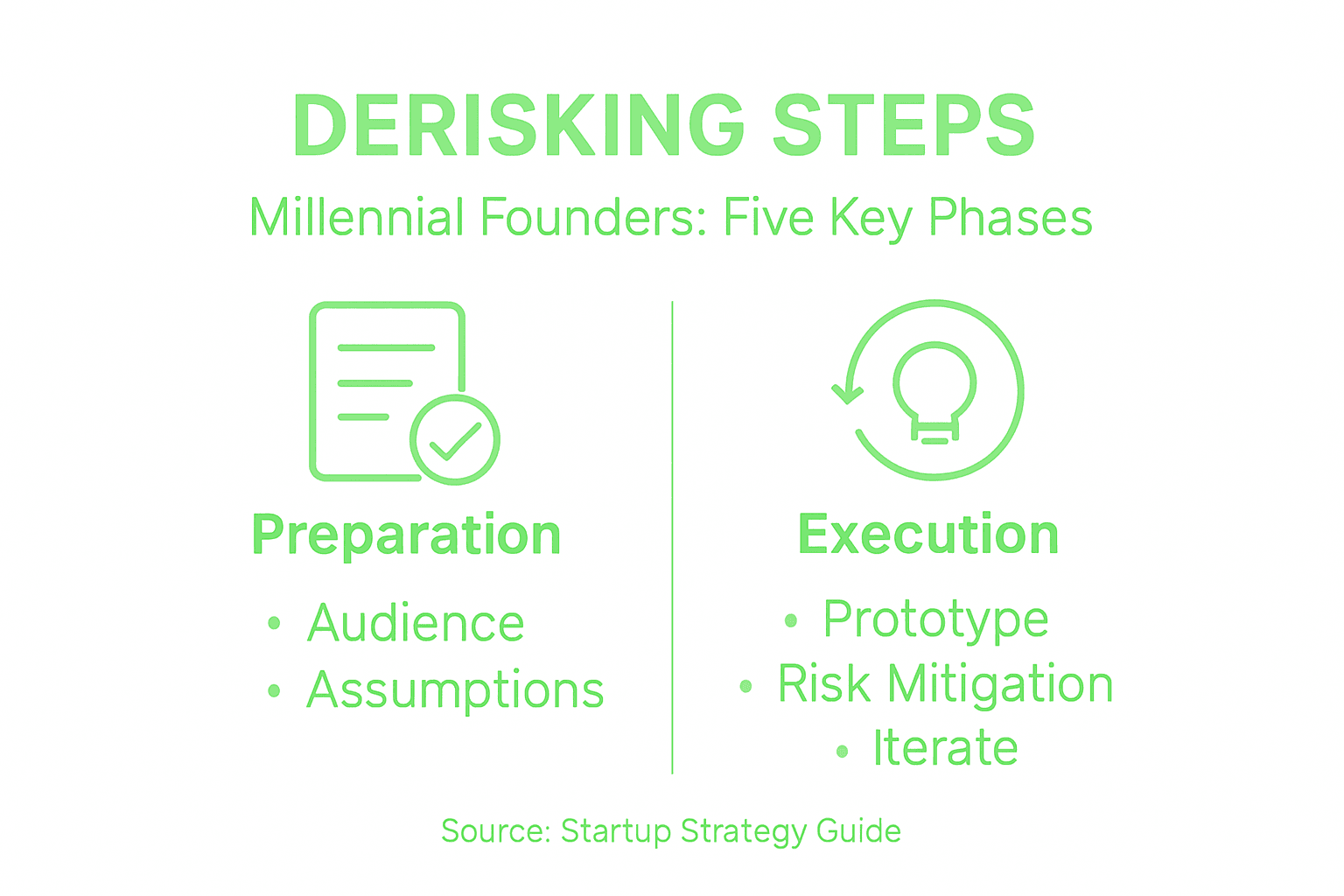
1. Define Target Audience Clearly | Create detailed personas of your ideal customers to understand their demographics and challenges effectively. |
2. Validate Assumptions with Customers | Conduct interviews and surveys to confirm that your product addresses real pain points identified in the market. |
3. Use Rapid Prototyping for Testing | Develop a minimum viable prototype to test core functionalities and gather user feedback for refinement. |
4. Proactively Manage Financial and Operational Risks | Build a risk management framework that categorizes potential threats and sets up mitigation strategies. |
5. Implement Iterative Validation for Improvement | Establish a feedback loop with key performance indicators to continuously refine and optimize your business strategy. |
Step 1: Define target audience and problem statement
Demystifying your startup’s potential starts with pinpointing exactly who you will serve and what specific problem you are solving. This critical step transforms abstract ideas into a concrete business strategy that resonates with real customers.
To define your target audience effectively, start by creating a detailed persona representing your ideal customer. Research reveals systematic guidelines for articulating your target group’s characteristics. Ask yourself precise questions: What are their demographics? What challenges do they face daily? What solutions have they already tried? By understanding their pain points deeply, you create a foundation for a solution that truly matters.
A compelling problem statement acts as your strategic north star. Break this down into three core elements: the specific problem, who experiences it, and why solving it matters. For instance, instead of saying “people need better communication tools,” refine it to “remote software engineers struggle with async collaboration that leads to project delays and increased team friction.” This level of specificity transforms a vague idea into an actionable business concept.
Pro tip: Validate your target audience and problem statement by conducting at least 10 interviews with potential customers to confirm your assumptions and uncover nuanced insights.
Step 2: Validate assumptions with customer feedback
Customer validation is where your startup hypothesis transforms from theory into tangible reality. This crucial stage helps you understand whether your product actually solves the problem you believe exists in the market.
Experimental validation techniques emphasize disproving your assumptions quickly and systematically. Start by designing targeted interviews and surveys that challenge your initial concept. Prepare a structured approach where you ask open ended questions that reveal genuine customer pain points rather than leading questions that confirm your preconceived notions. For example, instead of asking “Would you like this product?” ask “Walk me through how you currently solve this specific challenge in your workflow.”
Categorize the feedback you receive into clear segments: validated assumptions, invalidated assumptions, and areas requiring further investigation. Look for consistent patterns across multiple conversations rather than getting swayed by individual opinions. Pay close attention to the language customers use, the specific examples they share, and the emotional intensity behind their responses. This nuanced approach helps you distinguish between surface level feedback and meaningful insights that can reshape your business strategy.
Pro tip: Aim to conduct at least 20 customer interviews across different segments to ensure your feedback represents a diverse and statistically relevant sample.
Step 3: Test solution fit using rapid prototyping
Rapid prototyping transforms your startup concept from a theoretical idea into a tangible model that can be tested, refined, and validated with real potential users. This step is your opportunity to breathe life into your business concept and understand its real world viability.
Prototyping aspects model emphasizes creating early models that simulate your product’s core functionality. Begin by developing a minimum viable prototype that captures the essence of your solution without overwhelming complexity. Focus on building a simple version that addresses the primary problem you identified in your earlier customer research. This might be a basic wireframe, a simple mobile app mockup, or a rudimentary working model that demonstrates your core value proposition.
Evaluate your prototype through structured user testing sessions. Observe how potential customers interact with your solution, paying close attention to their intuitive responses, points of confusion, and moments of genuine excitement. Document everything meticulously tracking not just what users say, but how they actually engage with your prototype. Look for patterns that suggest where your concept resonates and where it needs refinement. Remember that a prototype is not a final product but a learning tool designed to help you iterate and improve.
Pro tip: Design your prototype with intentional imperfections to encourage honest feedback and avoid making users feel hesitant about critiquing your idea.
Step 4: Mitigate financial and operational risks proactively
Successful startup founders understand that risk management is not about eliminating all risks but strategically navigating potential challenges before they become critical obstacles. Your goal in this step is to build a resilient business framework that anticipates and neutralizes potential financial and operational threats.

Risk management strategies emphasize integrating proactive monitoring systems that allow early detection of potential disruptions. Start by creating a comprehensive risk register that categorizes potential threats into financial risks (cash flow problems, funding gaps), operational risks (supply chain vulnerabilities, technological failures), and market risks (competitor actions, changing customer preferences). For each identified risk, develop specific mitigation strategies that include preventative measures and contingency plans. This might involve establishing emergency funding reserves, creating flexible vendor contracts, or developing rapid pivot strategies for your business model.
Implement a quarterly risk assessment process where you systematically review and update your risk management approach. This is not a one time exercise but an ongoing dialogue with your business’s potential vulnerabilities. Use data analytics tools to track key performance indicators that might signal emerging risks. Consider creating scenario planning documents that outline potential responses to different market conditions. Remember that adaptability is your greatest asset your ability to recognize and respond to risks quickly can transform potential threats into opportunities for innovation and growth.
Pro tip: Allocate at least 10% of your initial capital as a dedicated risk management and contingency fund to provide financial breathing room during unexpected challenges.
Consider this comparison of risk types and example mitigation strategies for startups:
Risk Type | Common Examples | Mitigation Strategy |
|---|---|---|
Financial | Cash flow shortfall | Emergency funding reserves |
Operational | Supply chain disruption | Flexible vendor contracts |
Market | Shifting customer trends | Scenario planning, rapid pivots |
Step 5: Verify results and optimize with ongoing iteration
Iterative validation is the heartbeat of sustainable business development transforming your initial concept into a robust solution that continuously improves. This stage is where you transform raw insights into strategic actions that refine your startup’s trajectory.
Systematic validation approaches recommend establishing a structured feedback loop that integrates multiple data sources and perspectives. Create a comprehensive tracking system that monitors key performance indicators across customer satisfaction, product functionality, financial metrics, and market response. Develop a quarterly review process where you systematically analyze these metrics comparing actual performance against your original hypotheses. Pay attention to both quantitative data hard numbers that reveal performance and qualitative insights that capture user experiences and emotional responses.
Embrace a mindset of continuous learning and adaptation. Your goal is not perfection but progressive improvement. Break down your optimization process into clear stages: collect data, analyze patterns, generate hypotheses, test interventions, and repeat. Build feedback mechanisms that allow quick pivots when something is not working and rapid scaling when you discover a winning strategy. Remember that successful founders do not wait for complete information they make informed decisions with available data and remain agile enough to course correct.
Pro tip: Create a dedicated dashboard that visualizes your key metrics in real time, allowing you to spot trends and make swift strategic adjustments.
Here’s a summary of core startup validation steps and their primary objectives:
Step | Main Objective | Typical Methods |
|---|---|---|
Define Audience & Problem | Identify real customer needs | Persona creation, interviews |
Validate Assumptions | Confirm problem actually exists | Surveys, customer feedback |
Test Solution Fit | Ensure product solves the problem | Rapid prototyping, user testing |
Mitigate Risks | Prevent major business setbacks | Risk registers, contingency planning |
Ongoing Iteration | Continuously refine solutions | Metric tracking, feedback loops |
Master Risk Management with the Right Strategy Platform
The article “How to Derisk a Business Step by Step for Millennial Founders” highlights the challenges new founders face when defining their target audience, validating assumptions, prototyping solutions, mitigating risks, and continuously optimizing their business. Pain points like avoiding costly mistakes, building resilience, and removing blind spots are at the core of every early-stage startup journey. These are exactly the obstacles that siift.ai Intelligent Business Canvas is designed to tackle. With its personalized AI-driven guidance, you gain clear, unbiased insights that help you validate your assumptions and create contingency plans that safeguard your venture.
If you want to move beyond uncertainty and develop a confident, data-backed business strategy, explore how the Intelligent Business Canvas provides a step-by-step path for founders seeking to turn ideas into viable ventures. Don’t wait until risks become realities. Start building your startup with powerful tools that sharpen your focus and minimize surprises by visiting siift.ai today and transform uncertainty into opportunity.
Frequently Asked Questions
How can I define my target audience as a Millennial founder?
To define your target audience, create a detailed persona that reflects your ideal customer. Start by researching their demographics, challenges, and previous solutions they have tried. This will give you a clear understanding of who you are serving and what problems they face.
What steps should I take to validate my business assumptions?
To validate your business assumptions, conduct targeted interviews and surveys with potential customers. Ask open-ended questions that reveal their genuine pain points to confirm or challenge your initial ideas, aiming to complete at least 20 interviews to ensure a diverse perspective.
How do I create a minimum viable product for my startup?
Start by developing a minimum viable prototype that captures the essence of your solution without unnecessary complexity. Focus on addressing the primary problem identified in your research to test your concept with real users and gather feedback for improvements.
What are effective strategies to mitigate financial risks in my business?
To mitigate financial risks, create a comprehensive risk register categorizing potential threats and develop specific strategies for each risk type. This may include establishing an emergency funding reserve to cover unexpected cash flow issues, ideally allocating around 10% of your initial capital.
How can I use customer feedback to improve my startup?
Establish a structured feedback loop that collects customer insights and monitors key performance indicators. Regularly analyze this data against your original hypotheses, allowing for continuous adaptations to your product based on user experiences and satisfaction levels.
What is the importance of ongoing iteration in business development?
Ongoing iteration is crucial for refining your startup and ensuring it meets customer needs. Embrace a mindset of continuous improvement by regularly collecting, analyzing, and responding to customer feedback, allowing for quick pivots and adjustments to your strategy.