
Managing business expenses can feel overwhelming when every transaction needs attention and accuracy. As transactions pile up and receipts get misplaced, the need for reliable business credit card expense tracking becomes even more important. The right corporate credit card expense management software can turn hours of number crunching into minutes of clarity. Imagine having an easier way to monitor spending, organize records, and spot trends before they become problems. Get ready to explore the best corporate credit card management systems and their features in 2026 to find the solution that keeps your business finances organized and under control.
Table of Content
Expensify
At a Glance
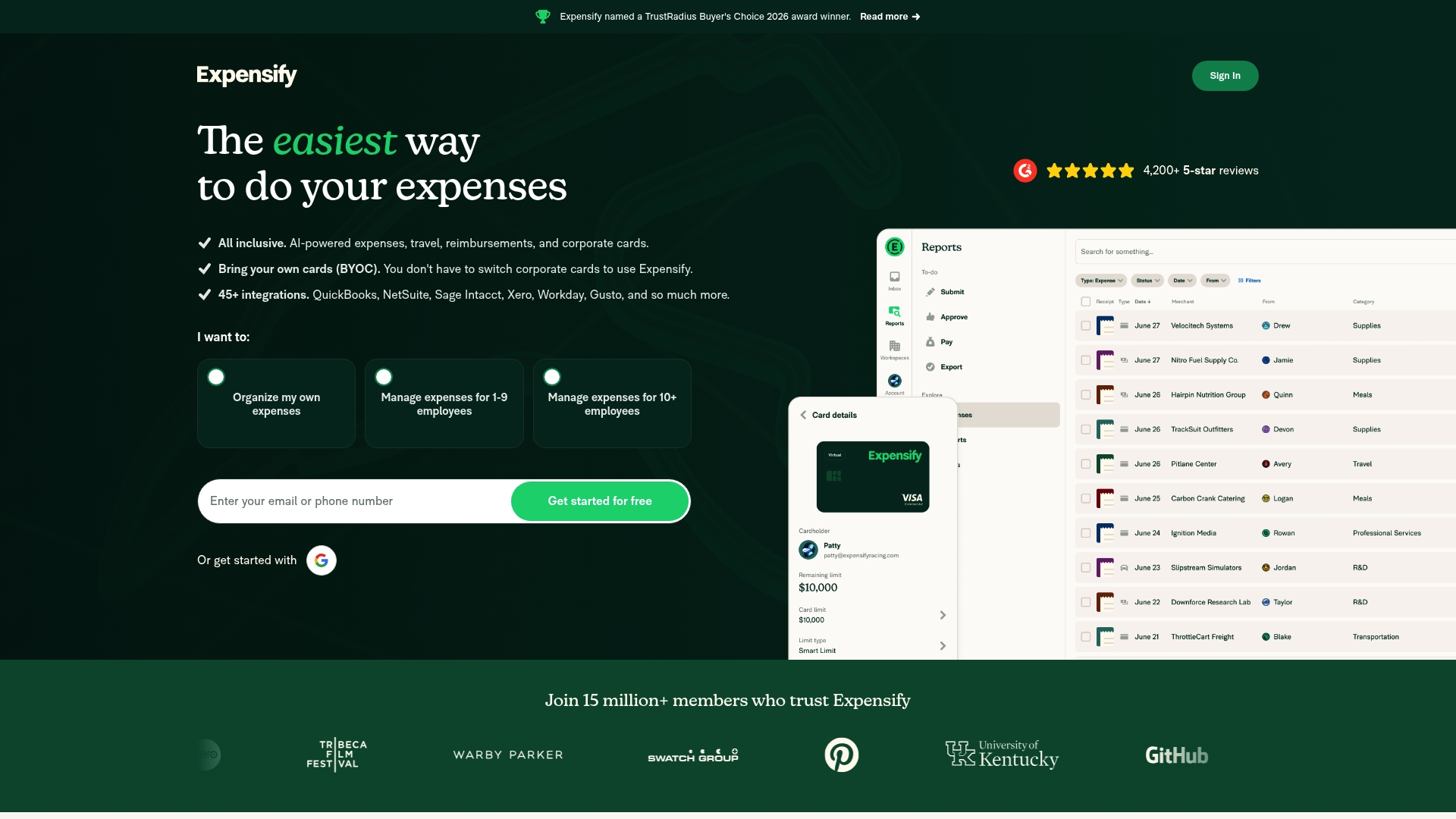
Expensify is an all in one business credit card expense management software that simplifies receipt capture, approvals, reimbursements, and travel expenses for businesses and individuals. It combines mobile receipt scanning with corporate cards and accounting integrations to reduce manual bookkeeping time.
Core Features
Expensify centralizes receipt scanning, expense reporting, travel booking, and the Expensify Card into a single workflow. It also supports Bring Your Own Cards for automatic reconciliation and connects with over 45 accounting and financial systems to keep books aligned.
Pros
Comprehensive feature set. The platform covers expenses, travel, reimbursements, and corporate cards in one place, so teams do not juggle multiple apps.
Bring Your Own Cards support. You can link company and personal cards for automatic reconciliation across more than 10,000 banks worldwide.
Wide accounting integrations. Expensify connects with over 45 accounting and financial tools, which reduces manual export and import work for finance teams.
Mobile friendly receipt capture. Employees can scan receipts by photo, email, or upload, which speeds up reporting and lowers lost receipt risk.
Cons
Some features require a paid plan. Critical capabilities for teams may be restricted to paid tiers which raises total cost of ownership.
Advanced features add cost. Integrations and higher level controls can incur additional fees beyond basic business plans.
Onboarding complexity for larger teams. While the platform is friendly for individuals, larger teams face some setup and policy configuration work.
Who It’s For
Expensify fits businesses of all sizes and individual users who want a single system for expenses, travel booking, and card reconciliation. Small teams value quick receipt capture while larger finance teams benefit from the integrations and approval controls.
Unique Value Proposition
Expensify combines travel booking, virtual and corporate cards, and automatic expense reconciliation into one workflow. That combination reduces handoffs between travel, card, and accounting tools and keeps expense data centralized for faster close cycles.
Real World Use Case
A small company uses Expensify for daily expense reporting where employees scan receipts in the mobile app and submit reports. Managers review and approve digitally, and finance exports reconciled data to accounting software, saving hours of manual entry.
Pricing
A free tier exists for individual receipt scanning, while business plans start at $5 per member per month for the Collect plan. Advanced options like Control are available at custom pricing and can be as low as $9 per active member per month.
Website: https://expensify.com
Brex
At a Glance
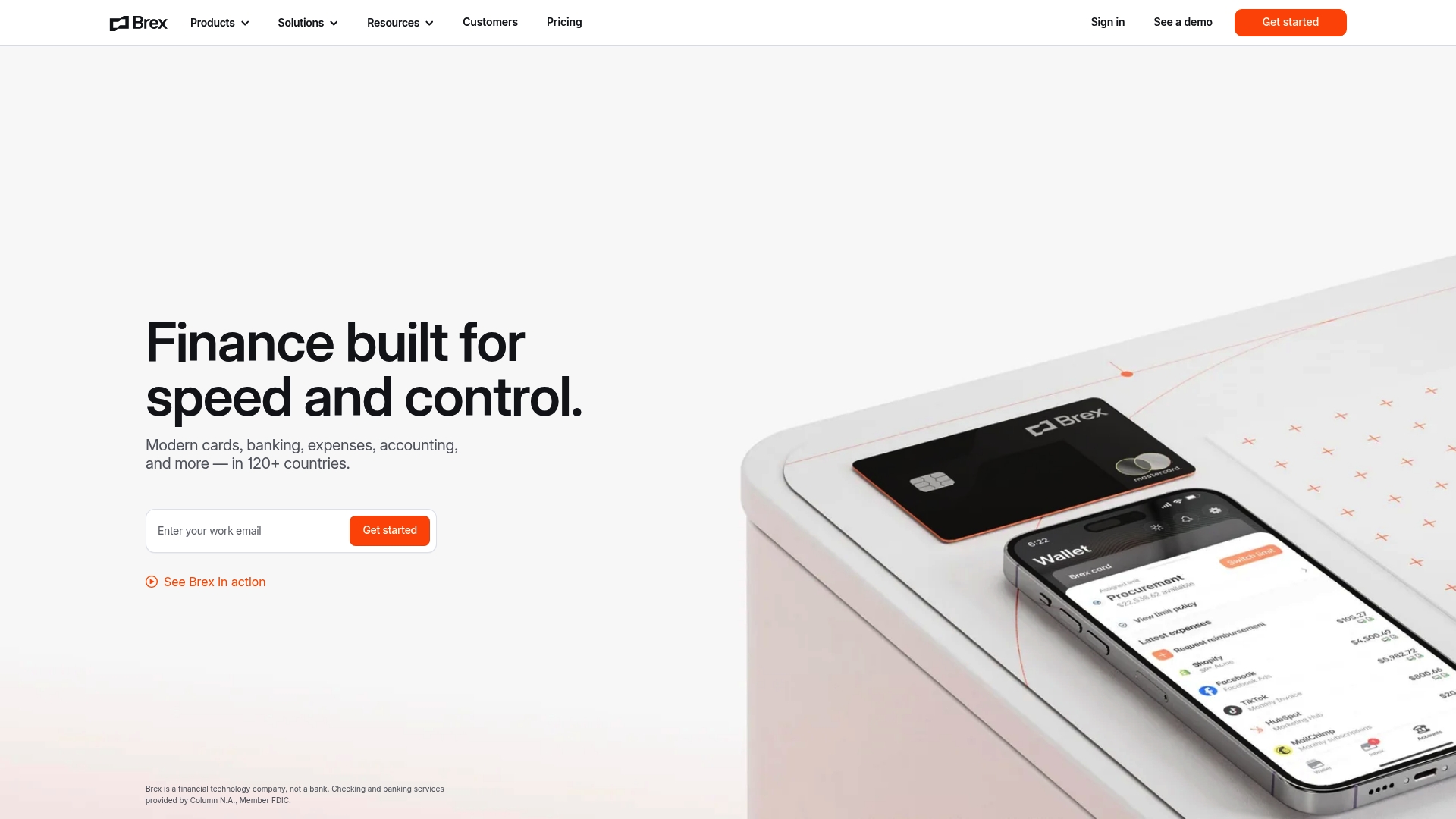
Brex bundles corporate cards, banking, expense management, and accounting integrations into a single platform aimed at growing global companies. Its AI powered controls and automation help teams reduce manual work while keeping multi entity and multi currency operations aligned.
Core Features
Brex offers corporate cards accepted worldwide, business banking and cash management, expense management with AI automation, and accounting automation integrations. Additional capabilities include bill pay with AI invoice processing, travel management with policy controls, and yield on cash balances.
Pros
Global acceptance of corporate cards: Brex cards work across borders which simplifies international spend for teams operating in multiple countries.
AI powered automation improves efficiency: Automated expense categorization and invoice processing reduce manual reconciliation and speed month end close.
Wide range of financial tools in one platform: Cards, banking, bill pay, travel, and accounting tools live together which lowers context switching for finance teams.
Supports multiple entities and currencies: Native multi entity and local currency billing makes consolidation easier for companies scaling internationally.
Customizable policies and integrations: ERP and HRIS integrations plus configurable spend controls let you align Brex to internal workflows and compliance needs.
Cons
Not a bank, services depend on partner banks and brokerages: Brex relies on partner institutions which means product behavior and protections vary by region and partner.
Pricing plans vary and may involve additional fees for advanced features: Advanced automation and enterprise features sit behind paid tiers which increases total cost as usage grows.
Complex feature set may require onboarding and training: Getting the most from Brex requires setup and user training which can lengthen time to value for small teams.
Who It’s For
Brex fits growing and mid size companies that need integrated financial tools, global expense management, and automation to scale operations. Finance teams that manage multiple entities or currencies will extract the most value from its centralized toolset and controls.
Unique Value Proposition
Brex combines card issuance, banking style cash management, and AI driven expense and invoice automation into one platform tailored for global scale. That combination reduces tool fragmentation and gives finance teams tighter spend control across entities and currencies.
Real World Use Case
DoorDash used Brex to improve travel and expense efficiency, helping employees make compliant choices and simplifying T and E workflows. The result is clearer spend visibility and faster reconciliation for a distributed workforce.
Pricing
Brex offers an Essentials plan that starts at $0 per user per month and a Premium plan starting at $12 per user per month, with Enterprise plans available at custom pricing. Feature access and fees vary by plan and region.
Website: https://brex.com
Zoho Expense
At a Glance
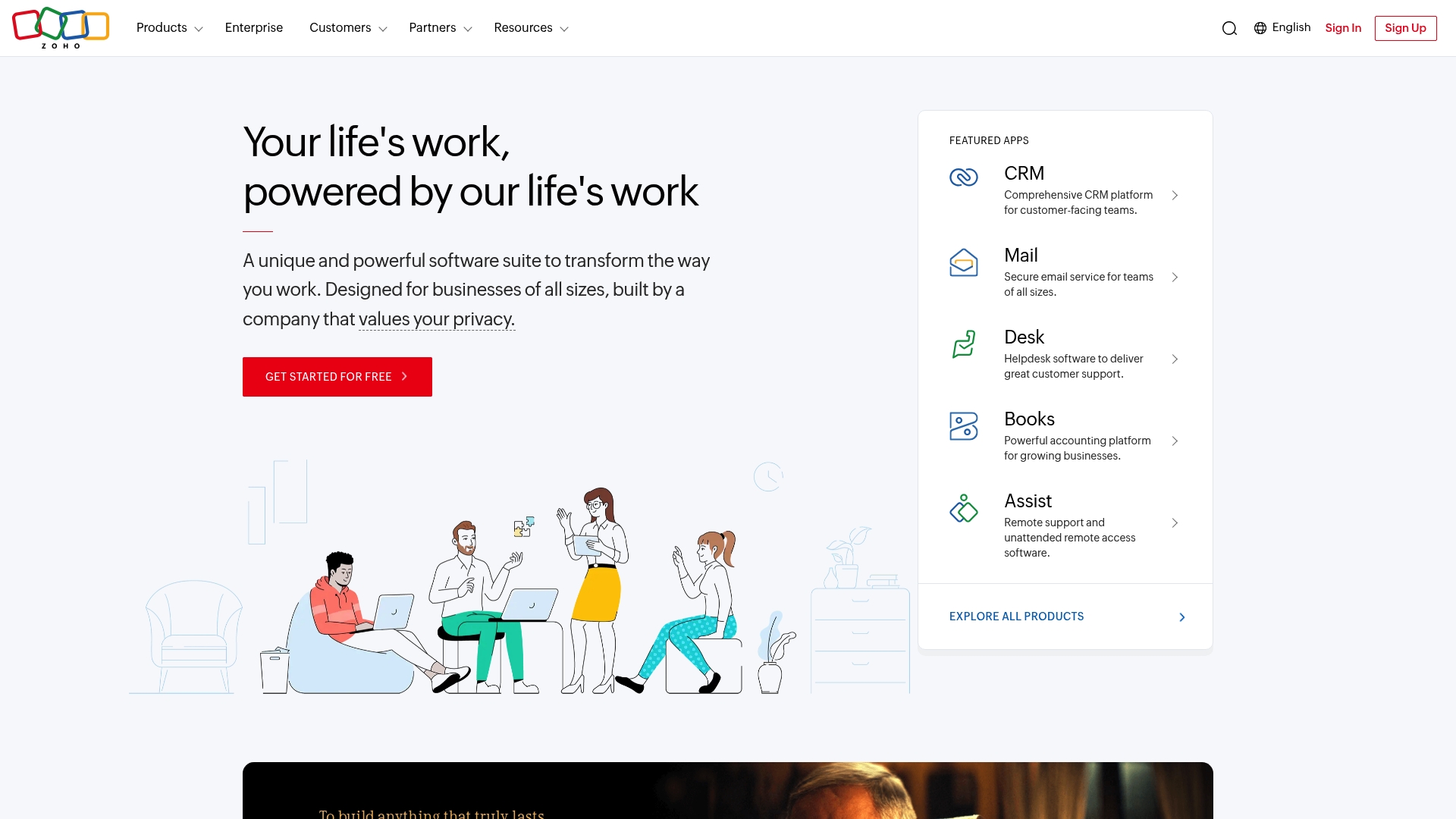
Zoho Expense is an expense-management platform focused on receipt capture, expense reporting, corporate card management, approvals, reconciliation, and accounting integrations. It lets businesses track corporate card transactions and connect them with receipts and expense reports.
Core Features
Zoho Expense supports receipt capture with AI-powered OCR, corporate card management, real-time card feeds, automatic expense creation, receipt matching, expense reports, approval workflows, and accounting integrations. Corporate card transactions can be automatically fetched, converted into expenses, matched with receipts, and reconciled within the expense workflow.
Pros
Receipt capture and OCR: Captures receipt details and automatically extracts expense information.
Corporate card tracking: Supports corporate card feeds and real-time transaction visibility.
Automatic reconciliation: Matches card transactions with expenses and receipts to reduce manual reconciliation work.
Approval workflows: Supports customizable approval workflows for reviewing and approving expenses.
Accounting integrations: Connects with accounting platforms including Zoho Books, QuickBooks, Xero, and Sage Accounting.
Cons
Primarily an expense-management platform: Businesses looking for broader financial or business-management functionality may need additional Zoho products or other tools.
Plan limits vary: Features and usage limits depend on the selected plan.
Setup may require configuration: Businesses may need to configure cards, policies, approval workflows, and accounting integrations before using the platform at full scale.
Who It’s For
Zoho Expense is relevant for businesses that need a dedicated workflow for tracking receipts, corporate card transactions, expense reports, approvals, and accounting connections. It can be particularly useful for finance teams that want to automate card-expense reconciliation rather than manually match transactions and receipts.
Unique Value Proposition
Zoho Expense combines receipt capture, corporate card feeds, expense reporting, approval workflows, and reconciliation in one expense-management workflow. Its corporate card features can automatically fetch transactions, create expenses, match receipts, and support reconciliation without requiring businesses to replace their existing corporate card program.
Real World Use Case
A finance team can connect its corporate cards to Zoho Expense, capture receipts as employees make purchases, automatically match receipts with card transactions, and route expense reports through approval workflows before syncing expense data with its accounting system. This describes the product workflow rather than a specific documented customer result.
Pricing
Zoho Expense currently offers a Free plan for up to 3 users. The Standard plan is $4/user/month when billed monthly or $3/user/month when billed annually. Zoho also offers higher-tier plans with additional features and usage limits.
Pricing verified September 23, 2026.
Emburse
At a Glance
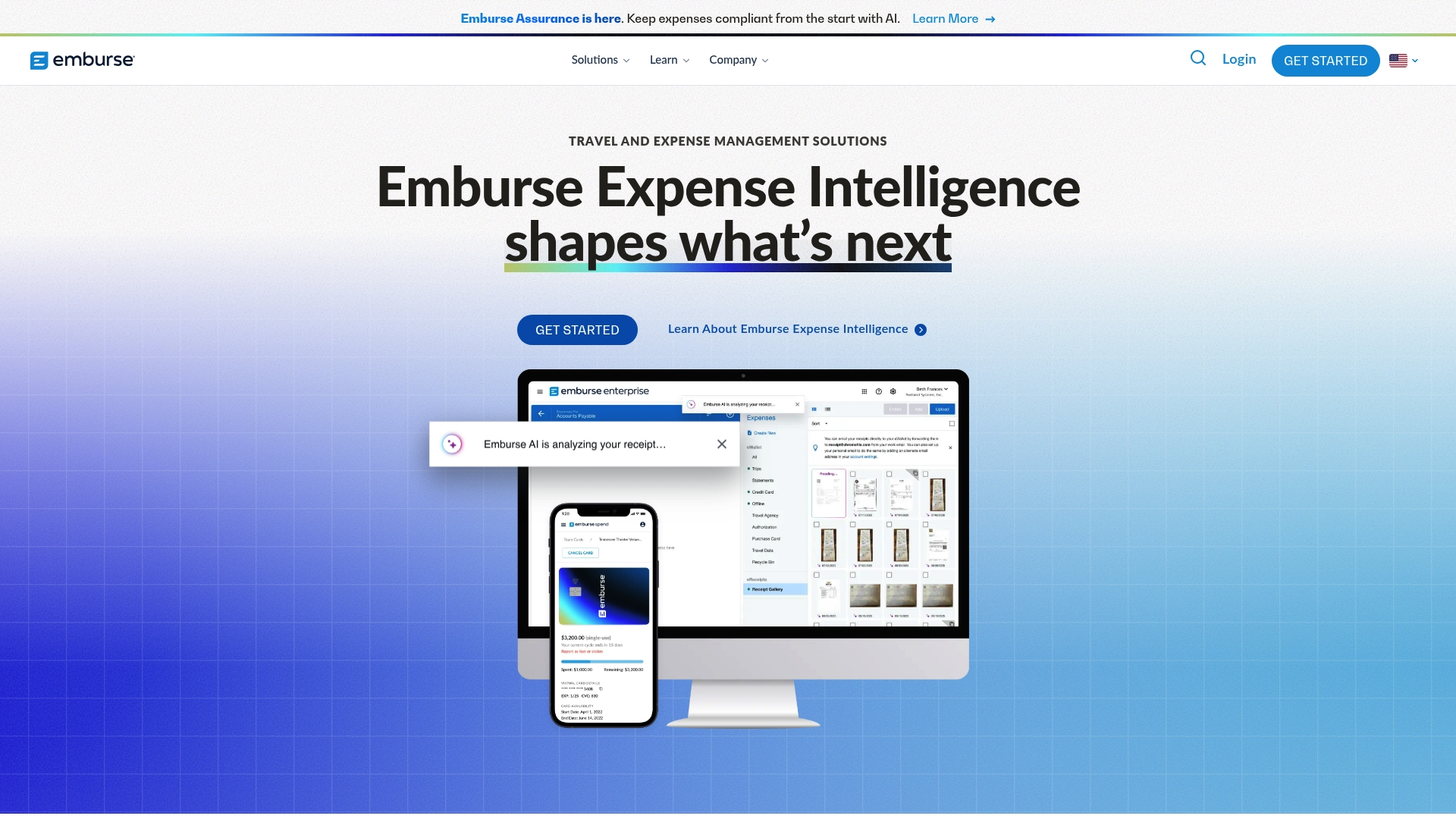
Emburse delivers a broad, AI powered suite for travel and expense management that focuses on compliance and real time spend visibility. The platform shines for finance teams that need centralized control across expense, travel, invoice, and payment workflows.
Core Features
Emburse combines AI powered expense compliance with real time policy guidance and enforcement to reduce manual review. The platform offers a unified platform for travel, expense, invoice, and payment management and supports localized features across 100 plus countries.
Emburse also delivers real time visibility across channels plus automated categorization, VAT reconciliation, and multi currency support to simplify global operations.
Pros
Comprehensive AI driven functionality: The system uses AI to automate compliance checks and categorize expenses which reduces review time and human error.
Strong security and compliance certifications: Emburse lists ISO 27001, PCI DSS, and SOC 2 Type II as part of its security posture to protect sensitive financial data.
Recognized industry leadership: The product has awards and positive customer testimonials that indicate market validation and trusted deployments.
Wide integration and customization options: Emburse supports many integrations and configurable workflows so finance teams can adapt the platform to existing systems.
Cons
Potential complexity for teams: The breadth of features and integration options can create a steep setup and configuration process for smaller teams.
No public pricing transparency: Pricing details are not specified on the website which forces interested buyers to contact Emburse for a quote and adds friction to vendor comparison.
Who It’s For
Emburse fits mid to large sized organizations that need advanced automation across expense, travel, and accounts payable. Finance teams that require consistent policy enforcement, multi region support, and consolidated spend reporting will find the platform valuable.
Unique Value Proposition
Emburse stands out by combining a single platform for travel, expense, invoice, and payment management with enterprise grade security standards and AI driven compliance. That combination offers finance leaders a way to reduce manual work while maintaining centralized control over global spend.
Real World Use Case
A multinational corporation can deploy Emburse to automate expense tracking, enforce global policy compliance, and surface real time spend insights across multiple currencies and regions. The result is faster approvals, more accurate VAT reconciliation, and tighter fraud controls.
Pricing
Pricing details are not specified on the website. Interested organizations are expected to contact Emburse directly for a tailored quote based on scope and integrations.
Website: https://emburse.com
Airbase
At a Glance
Airbase is a unified spend management platform that bundles expense management, corporate cards, and accounts payable automation into a single workflow. It gives finance teams faster control and clearer, real-time visibility across company spend while requiring some initial setup.
Core Features
Airbase combines AI-powered expense management with touchless reports, corporate cards with policy controls and automated reconciliation, and accounts payable automation into one platform. It also supports guided procurement for centralized purchase requests and headcount planning with collaborative, real-time data.
Pros
Streamlined expense and spend management processes make approvals and reconciliation faster for finance teams.
Real-time visibility into financial data helps teams spot trends and control budgets across departments.
Automation reduces manual work and errors by handling reporting, reconciliation, and accounts payable tasks.
Integrations with many business systems let Airbase sit inside existing tech stacks without rebuilding workflows.
Supports multiple industries and company sizes so finance teams from different sectors can adopt the platform.
Cons
Requires initial setup and integration effort which can extend time to value for teams without technical support.
Pricing details are not publicly displayed and may vary based on organization needs, making procurement planning harder.
Complexity of features might require training for effective use, increasing onboarding time for smaller teams.
Who It’s For
Airbase targets finance teams and CFOs in medium to large organizations that need centralized control over company spending. It fits teams that want corporate card controls, automated AP, and guided procurement under one roof rather than stitching multiple tools together.
Unique Value Proposition
Airbase’s strength is its integrated approach: expense management, corporate cards, and AP automation work together to reduce manual reconciliation and give finance leaders a single source of truth. That combined workflow reduces friction between spend request, approval, and payment.
Real World Use Case
A company integrates Airbase to automate expense reporting, centralize purchase requests, and improve spend visibility and control across departments. The platform replaces fragmented expense workflows and manual AP steps so finance teams spend less time on reconciliations and more time on analysis.
Pricing
Pricing details are not publicly available; interested users can request a quote or demo. Prospective buyers should plan for implementation and potential training costs given the platform’s breadth of features.
Website: https://airbase.com
One category the roundup doesn't cover is European-licensed spend platforms with a full procurement layer. Spendesk sits alongside the tools above but adds a native procure-to-pay workflow (purchase requests, PO generation, three-way matching, and "No PO, No Pay" enforcement) on top of prepaid Mastercard cards, invoice payments, and reimbursements, all under an FCA and ACPR licensed European payment institution. For teams running multiple UK or EU entities, that shifts spend control from post-hoc reconciliation to pre-approved commitment.
Business Expense Tracking Tools Comparison
Tool | Core Features | Best For | Pricing | Unique Value |
|---|---|---|---|---|
Expensify | Expense tracking, receipt capture, corporate cards | Businesses managing expenses, individual freelancers | Free individual plan; business plans starting at $5/month per user | Integrates expense management with accounting and corporate cards |
Brex | Corporate cards, centralized controls for expenses, AI tools | Mid-size to global companies managing expenses | From $0-12/month per user, enterprise options at custom rates | Combines financial tools in a single, AI-enabled platform suitable for global operations |
Zoho Expense | Receipt capture with AI OCR, corporate card feeds, expense reports, approval workflows, automatic matching and accounting integrations | Businesses that need structured receipt, card and expense-management workflows | Free for up to 3 users; Standard from $4/user/month monthly or $3/user/month annually | Combines receipt capture, corporate card feeds, expense reporting, matching, reconciliation, and approvals in one workflow |
Emburse | Travel and expense management, AI compliance solutions | Large organizations requiring policy control | Contact directly for pricing | Centralizes spend, payment, and compliance management with enterprise standards |
Airbase | Corporate cards, AP automation, guided procurement, expense controls | Finance teams at scaling organizations | Visit website for a quote | Provides a unified spend management solution with enhanced automation capabilities |
Streamline Your Business Expense Tracking with Intelligent Guidance
Managing business credit card expenses can be challenging as transaction volume grows. Expense management tools can help with receipt capture, categorization, approvals, reconciliation, and accounting workflows.
Siift serves a different layer of the business workflow. Its Intelligent Business Canvas helps founders organize business context, evaluate evidence, prioritize strategic questions, and connect decisions to next steps.
Siift does not replace dedicated expense-management or accounting software. Instead, founders can use it alongside financial tools when they need strategic guidance around broader business decisions.
Explore Siift to learn more about its New Business OS approach.
Frequently Asked Questions
What features should I look for in business credit card expense tracking tools?
Look for features that enable automatic expense categorization, receipt scanning, and integration with accounting software. Prioritize tools that can simplify approvals and provide real-time visibility into spending patterns.
How can expense tracking improve financial management?
Expense tracking can improve financial management by reducing manual bookkeeping and giving businesses clearer visibility into spending.
What are the key benefits of using corporate cards for expense tracking?
Using corporate cards for expense tracking helps streamline expense reporting and facilitates easier reconciliation. By assigning specific budgets to different departments, companies can maintain control and visibility of spending, leading to better budget adherence.
How do I choose the right business credit card for expense tracking?
Evaluate expense-tracking tools based on receipt capture, automatic categorization, accounting integrations, approval workflows, reporting, corporate card controls, and pricing. If you're choosing a business credit card as well, separately compare rewards, fees, spending controls, and international transaction costs.
How often should I review and analyze credit card expenses?
Review and analyze credit card expenses at least monthly to identify trends and discrepancies. Set a routine, such as the first week of each month, to reconcile statements and adjust budgets accordingly.
Can I integrate expense tracking with other financial management systems?
Yes, many modern expense tracking tools offer integrations with accounting and financial management systems. Look for solutions that provide seamless data transfer to centralize your financial processes, potentially saving you hours of manual entry each month.