
TL;DR:
- Learning to sell is the highest-leverage skill for founders to validate and grow their business.
- Founders must prioritize personal sales experience to understand customer needs before scaling with tools.
- AI tools enhance sales efficiency but cannot replace founder-led customer engagement and iteration.
Most founders build something they believe in, then hit a wall the moment they try to sell it. You’ve got a great idea, maybe even a working product, but customers aren’t showing up and revenue feels like a distant dream. Here’s the uncomfortable truth: the gap between a side hustle and a real business isn’t the product. It’s sales. Learning to sell is the single highest-leverage skill you can develop as an early-stage founder, and the good news is that it’s learnable, repeatable, and increasingly AI-assisted. This guide walks you through the mindset shifts, proven frameworks, and practical steps to go from zero customers to a validated, scalable sales engine.
Table of Contents
- What you need before you start: Mindset, basics, and tools
- Step 1: Validate your idea with real-world sales
- Step 2: Build your repeatable sales process
- Step 3: Scale smarter with AI tools and common pitfalls to avoid
- Our take: Why you need to sell before you can scale
- Scale your sales learning with siift.ai
- Frequently asked questions
Key Takeaways
| Point | Details |
|---|---|
| Founder-led sales first | You must personally sell and validate your idea before delegating sales or building a team. |
| Use proven frameworks | Hybrid sales methodologies and clear qualification steps greatly improve your close rates. |
| Scale with smart AI | Leverage today’s best AI tools to automate tasks but keep the human touch in building trust. |
| Document your process | Turn early wins and losses into a playbook for consistent, repeatable sales. |
What you need before you start: Mindset, basics, and tools
Before you pitch anyone, you need to rewire how you think about sales. Most founders treat it as a necessary evil, something to hand off the moment they can afford to. That instinct will cost you. Founder-led sales success stories consistently show that doing the reps yourself before hiring is what builds the intuition no playbook can teach. You learn what language resonates, which objections are real versus polite rejections, and what your customers actually value versus what you assumed they would.
The mindset shift that matters most is treating sales as validation, not persuasion. Every conversation is a data point. You’re not trying to convince someone to buy something they don’t need. You’re discovering whether your solution genuinely solves a painful problem. That reframe changes everything, from how you open conversations to how you handle a “no.”
On the methodology side, three frameworks dominate high-performance sales teams and are worth understanding before you build your own approach.
| Methodology | Core focus | Best for |
|---|---|---|
| SPIN Selling | Situation, Problem, Implication, Need-payoff questions | Discovery-heavy, complex B2B sales |
| Challenger Sale | Teaching, tailoring, taking control | Disruptive products, new categories |
| MEDDPICC | Metrics, Economic buyer, Decision criteria, Decision process, Identify pain, Champion, Competition | Enterprise deals, multi-stakeholder |
A hybrid approach combining elements of all three consistently outperforms single-method strategies, with fully-qualified opportunities closing at 307 to 324% higher rates, and top performers being 588% more likely to follow structured methodologies.
For AI tools in 2026, the essentials include:
- Outreach AI for sequencing and reply-rate optimization
- Kaia AI for real-time call coaching and objection handling
- Clay for prospect research and personalization at scale
- Notion AI or Coda for documenting your sales learnings like product docs
Pro Tip: Don’t start with tools. Start with conversations. Use a simple spreadsheet for your first 20 prospects. Tools amplify process. They can’t create it.
For more on building strong founder best practices from day one, and on applying startup growth strategies that compound over time, those resources are worth bookmarking before you move forward.
Step 1: Validate your idea with real-world sales
Equipped with the right mindset and tools, let’s walk through the first decisive move: selling to validate, not just ship a product.
The fastest way to know if your idea has legs is to sell it before it’s fully built. Not a survey. Not a landing page with a waitlist. An actual conversation where someone hands you money, or clearly explains why they won’t. This is the core of customer validation done right.
Here’s a practical process to run your first validation sprint:
- Define your target customer with painful specificity. Not “small business owners” but “solo consultants billing under $10K/month who struggle to follow up with leads.”
- Write 10 outreach messages tailored to that exact pain. Use LinkedIn, cold email, or warm intros. Keep it under 75 words.
- Book discovery calls, not demos. Your goal is to understand their world, not showcase your product.
- Ask problem-first questions: What’s the hardest part of X? What have you tried? What did it cost you to not solve this?
- Make a soft offer at the end of the call. Even a paid pilot or letter of intent counts as validation.
- Repeat with 10 to 20 prospects, not just 2 or 3. Patterns only emerge at volume.
The benchmark that matters: aim to close your first paying customers within 60 to 90 days. One side hustle validation case showed a founder going from $200 to $5K months in 90 days purely through direct sales conversations, with no paid ads and no fancy funnel.
| Validation signal | What it means |
|---|---|
| First paid customer | Problem is real and urgent |
| Repeat purchase | Solution delivers ongoing value |
| Unprompted referral | Product-market fit is forming |
| Customer expands usage | Strong retention signal |
For a deeper look at step-by-step idea validation and how to validate product market fit as a new entrepreneur, those guides will sharpen your approach considerably.
Pro Tip: Record every discovery call (with permission). Listening back reveals the exact words customers use to describe their pain, which become your best copywriting and sales messaging.
Step 2: Build your repeatable sales process
Once your idea is validated with actual customers, the next goal is building a repeatable system that reliably produces sales.
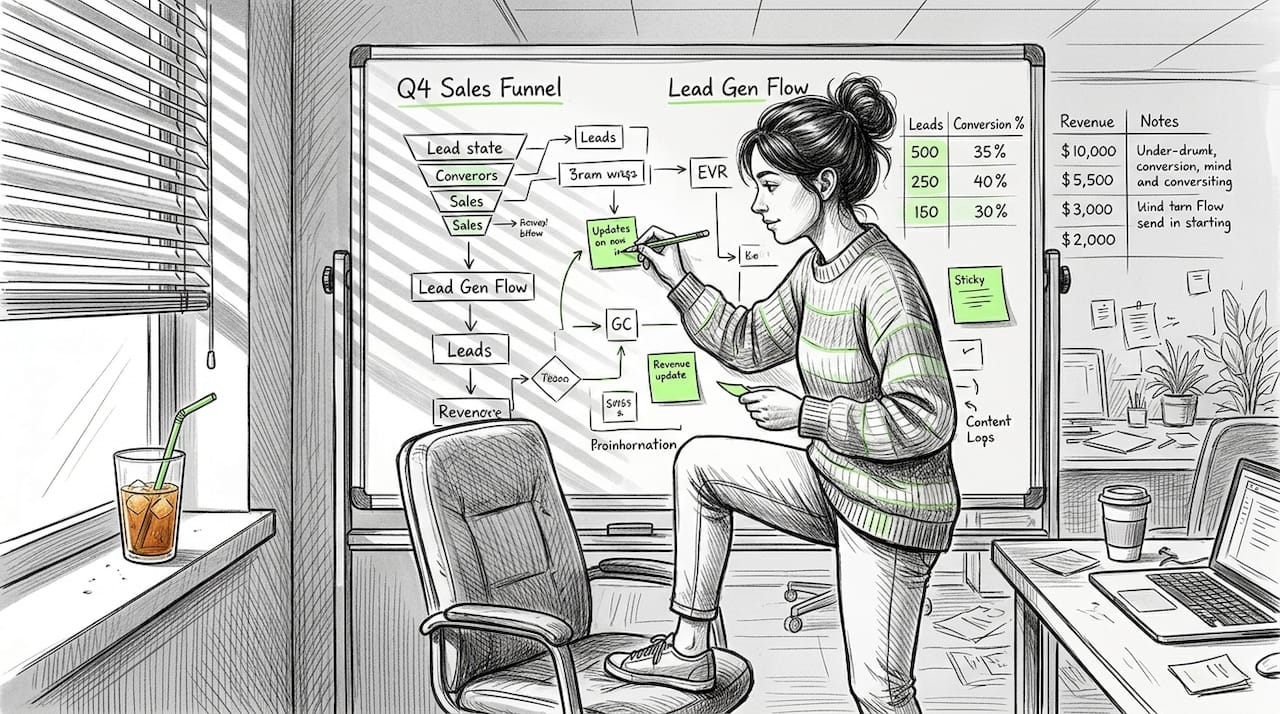
Your first few deals will feel like magic. You said the right thing at the right time to the right person. But magic doesn’t scale. What scales is a documented, iterable process that any future hire, or your future self on a bad day, can follow and improve.
Think of your sales process the way great engineering teams think about product documentation. Every win gets captured. Every loss gets a postmortem. Over time, you build a living playbook that compounds in value. Research confirms that poor qualification is the root cause of 61% of sales losses, which means most deals aren’t lost at the close. They’re lost much earlier, when you failed to confirm the prospect was actually a fit.
“The best sales teams don’t wing it. They follow structured methodologies and document what works. That discipline is what separates the top 10% from everyone else.”
Here’s what every early-stage sales playbook must include:
- Ideal Customer Profile (ICP): Who you’re targeting and why, with firmographic and behavioral detail
- Qualification criteria: The minimum conditions a prospect must meet before you invest time in a full sales cycle
- Discovery question bank: 10 to 15 questions that consistently surface pain, urgency, and budget
- Objection map: The 5 most common objections and your tested responses
- Follow-up cadence: Exactly when and how you follow up after each stage
- Win/loss log: A simple record of every deal, outcome, and key learning
For guidance on building startup traction systematically, and a step-by-step idea validation guide that complements your sales process, both are worth reading alongside this section.
You can layer in SPIN-style discovery questions for early-stage conversations, Challenger-style insights for prospects who don’t yet recognize their problem, and MEDDPICC for any deal involving multiple stakeholders or significant budget. The methodologies comparison shows how hybrid approaches outperform rigid single-framework adoption across almost every deal type.
Step 3: Scale smarter with AI tools and common pitfalls to avoid
With repeatable systems in place, scaling up means using technology wisely without cutting corners or losing the personal touch.
AI tools in 2026 are genuinely powerful. They can compress weeks of prospect research into hours and help you personalize outreach at a scale that was impossible for solo founders just three years ago. AI tools like Outreach AI and Kaia AI reduce research time by 60% and boost reply rates by 10 to 25%. That’s not marginal. That’s the difference between a full pipeline and an empty one.
| AI tool | Primary use | Impact |
|---|---|---|
| Outreach AI | Sequencing, follow-up automation | 10-25% reply rate lift |
| Kaia AI | Real-time call coaching | Faster objection handling |
| Clay | Prospect enrichment and personalization | 60% research time reduction |
| Gong | Conversation intelligence and analytics | Win rate pattern identification |
Here’s how to integrate AI into your weekly sales workflow without losing authenticity:
- Monday: Use Clay to build a prospect list of 20 to 30 highly targeted leads with enriched data
- Tuesday: Draft personalized opening messages using AI, then edit each one manually for genuine relevance
- Wednesday and Thursday: Run discovery calls. Use Kaia AI for real-time prompts and post-call summaries
- Friday: Review your win/loss log, update your playbook, and queue next week’s outreach in Outreach AI
Now, 45% of sales teams use hybrid AI-SDR (Sales Development Representative) approaches with measurable pipeline gains. But the teams that fail with AI share a common pattern: they automate too early, before they have a validated message, and they let volume replace quality.
The most common pitfalls to avoid:
- Over-automating before you have a proven message: AI amplifies what works. It also amplifies what doesn’t.
- Skipping qualification: No tool fixes a weak ICP. Garbage in, garbage out.
- Neglecting documentation: If you’re not capturing what works, you’re starting over every quarter.
Pro Tip: Use AI for research and sequencing, but write your first message to each prospect as if you’re sending it to one person. That specificity is what gets replies. For more on using AI tools for early customers and a practical early startup validation guide, those resources will help you move faster with fewer wasted cycles.
Our take: Why you need to sell before you can scale
Here’s the contrarian view we hold at siift, and it runs counter to a lot of “automate everything” advice you’ll find online: no tool, framework, or AI platform replaces the founder doing the reps.
We’ve seen founders invest in expensive sales stacks before they’ve had 20 real customer conversations. They build elaborate sequences, hire SDRs, and wonder why nothing converts. The answer is almost always the same. They skipped the part where you personally learn what your customer actually cares about.
AI augments but doesn’t replace the need for hands-on founder sales. The founders who scale to $10M, $50M, and beyond almost universally did their own selling first. They carry that customer intuition into every hiring decision, every product choice, and every go-to-market pivot.
The real edge isn’t the tool. It’s the iteration loop: talk to customers, learn, adjust, repeat. Frameworks give you structure. AI gives you leverage. But the reps give you wisdom. And wisdom is what separates founders who scale from those who stall. Explore founder-led sales practices to see how the best in the game approach this.
Scale your sales learning with siift.ai
If you’re ready to move beyond trial and error and build a sales strategy grounded in real validation, siift.ai is built for exactly this stage of the founder journey. The Intelligent Business Canvas guides you step-by-step through ideation, customer validation, and go-to-market strategy, using agentic AI to filter out the noise and surface what actually matters. Whether you’re mapping your ICP, stress-testing your positioning, or building your first traction playbook, siift gives you the structure that generic AI tools simply can’t. It’s not just a chat interface. It’s a systematic co-founder that helps you derisk your business and accelerate your path to product-market fit.
Frequently asked questions
What is the fastest way to learn sales as a new founder?
The fastest way is to talk to prospects directly and close your first 10 to 20 deals yourself, focusing on genuine customer pain points. Founders who do the reps themselves before hiring build the intuition that no playbook can teach.
Which sales methodology works best for startups?
A hybrid approach combining SPIN, Challenger, and MEDDPICC works best, adapting to your market and sales process complexity. Hybrid methodologies consistently outperform rigid single-framework adoption across deal types.
How can AI help me with sales if I have no team?
AI tools automate prospect research, outreach, and personalization, letting you run full-cycle sales with minimal headcount. Using the right stack can boost reply rates by 10 to 25% while cutting research time significantly.
How do I know when I’m ready to scale my sales process?
You’re ready when your early sales are repeatable, customers return or refer others, and you have clear messaging that consistently closes deals. Signals like revenue growth, repeatability, and referrals are the clearest indicators that it’s time to build out your system.
Recommended
- Inbound vs outbound sales: choose the best strategy | siift
- Sales funnel basics for solopreneurs: boost conversions | siift
- How to Get Business Referrals: Simple Steps for New Entrepreneurs 2025 | siift
- 10 Habits of Successful Entrepreneurs: Guide for 2026
- Why AI is essential for entrepreneurs in 2026 | Artificial Intelligence