
Many entrepreneurs believe inbound and outbound sales are opposing forces where you must pick one or the other. This misconception costs businesses real growth. The truth is these strategies work best together, each filling gaps the other leaves. Understanding when to attract leads and when to pursue them actively transforms how fast you fill your pipeline and close deals.
Table of Contents
- Understanding Inbound Sales: Attracting And Converting Prospects
- Exploring Outbound Sales: Speed, Targeting, And Persistence
- Comparing Inbound And Outbound Sales: Strengths, Costs, And Ideal Use Cases
- Choosing And Applying The Right Sales Strategy For Your Business
- How Siift Can Help Accelerate Your Sales Growth
- Frequently Asked Questions
Key takeaways
| Point | Details |
|---|---|
| Inbound converts higher with lower costs | Inbound leads convert at 14.6% and cost 60% less but need fast response and upfront marketing investment. |
| Outbound delivers speed and control | Outbound generates meetings within days and targets precisely but requires 5 or more touches per deal. |
| Hybrid models accelerate growth | Companies using both strategies see 38% higher revenue growth and fill pipelines 2x faster. |
| Lead intent differs dramatically | Inbound leads show buying intent and convert quickly; outbound leads need nurturing but reach untapped markets. |
| Tailored processes maximize results | Treating inbound and outbound leads identically wastes opportunities; customize your approach for each type. |
Understanding inbound sales: attracting and converting prospects
Inbound sales work by pulling prospects toward you through valuable content, SEO optimization, webinars, and referrals. These tactics capture people already searching for solutions like yours. The beauty of inbound is it targets existing intent.
Building an effective inbound engine requires significant upfront investment. You need quality content, optimized landing pages, lead capture forms, and nurturing sequences. This infrastructure takes months to build momentum. But once running, it compounds over time.
Inbound leads typically arrive further along their buying journey. They’ve consumed your content, downloaded resources, or requested demos. Inbound leads convert at up to 14.6% because they’ve pre-qualified themselves through engagement. Demo requests convert at 70 to 80% when handled properly.
Speed matters enormously with inbound leads. Contacting an inbound lead within 5 minutes increases conversion rates by up to 9 times compared to waiting longer. These prospects are hot right now. Delay kills momentum.
Cost efficiency makes inbound attractive for bootstrapped founders. Inbound leads cost roughly 60% less on average than outbound contacts. Over time, this difference compounds into substantial savings. Your sales funnel basics need optimization to maximize these conversions.
Pro Tip: Implement real-time lead enrichment tools that automatically pull company data and trigger instant notifications when prospects submit forms. Pair this with one-click calendar scheduling to eliminate friction and respond within minutes.
The challenge with inbound is unpredictability. You can’t control when leads arrive or their exact fit. Some months deliver floods of inquiries; others trickle. Quality varies too. Not every download represents a qualified buyer. Understanding inbound versus outbound pros and cons helps you set realistic expectations.
Inbound sales reward patience and consistency. The leads you generate today come from content you published months ago. Trust the compound effect.
Exploring outbound sales: speed, targeting, and persistence
Outbound sales flip the script by proactively reaching potential buyers through cold calls, targeted emails, LinkedIn messages, and paid campaigns. You control who you contact and when. This precision makes outbound powerful for filling specific pipeline gaps fast.

Outbound strategies can generate meetings faster than inbound, often within days or weeks of launching campaigns. No waiting for SEO to rank or content to spread. You identify your ideal customer profile and go get them. This speed proves critical when you need revenue quickly.
Persistence defines outbound success. About 80% of deals require 5 or more touches before prospects respond. Most salespeople quit after two attempts, leaving opportunities on the table. Multichannel sequences combining email, calls, and LinkedIn improve engagement by over 40% compared to single-channel approaches.
Effective outbound follows a systematic process:
- Research prospects thoroughly to understand their pain points and trigger events.
- Craft personalized messaging that speaks directly to their specific challenges.
- Execute multichannel outreach sequences across email, phone, and social platforms.
- Follow up consistently with value-added touches, not generic check-ins.
- Track results meticulously to identify what resonates and optimize continuously.
Outbound leads cost more per contact than inbound and demand more nurturing. Cold prospects haven’t raised their hand or consumed your content. You’re interrupting their day, so your value proposition must land immediately. Your go-to-market strategy should clarify exactly who you target and why.
Pro Tip: Build hyper-targeted lists of 100 to 200 ideal prospects rather than blasting thousands. Research each account, personalize your first touch with specific references to their business, and track engagement to refine your approach.
Outbound sales offer immediate results and targeting precision, making them ideal when you know exactly who needs your solution. Unlike inbound’s passive waiting, outbound lets you hunt specific accounts at enterprise companies or niche verticals. You decide the pace.
Outbound rewards boldness and persistence. Most opportunities hide behind objections and gatekeepers. Push through with value and you’ll reach decision makers.
Comparing inbound and outbound sales: strengths, costs, and ideal use cases
Understanding when each strategy shines helps you allocate resources effectively and set realistic expectations. Here’s how inbound and outbound stack up across key metrics:
| Metric | Inbound Sales | Outbound Sales |
|---|---|---|
| Conversion rate | 10 to 14.6% from qualified leads | 1 to 3% from cold outreach |
| Cost per lead | 60% lower on average | Higher per contact |
| Timeline to meeting | Weeks to months (compound growth) | Days to weeks (immediate) |
| Response speed needed | Within 5 minutes for 9x boost | Multiple touches over weeks |
| Buyer intent level | High; self-qualified through engagement | Low initially; requires nurturing |
| Average touches required | 1 to 3 for warm leads | 5+ for cold prospects |
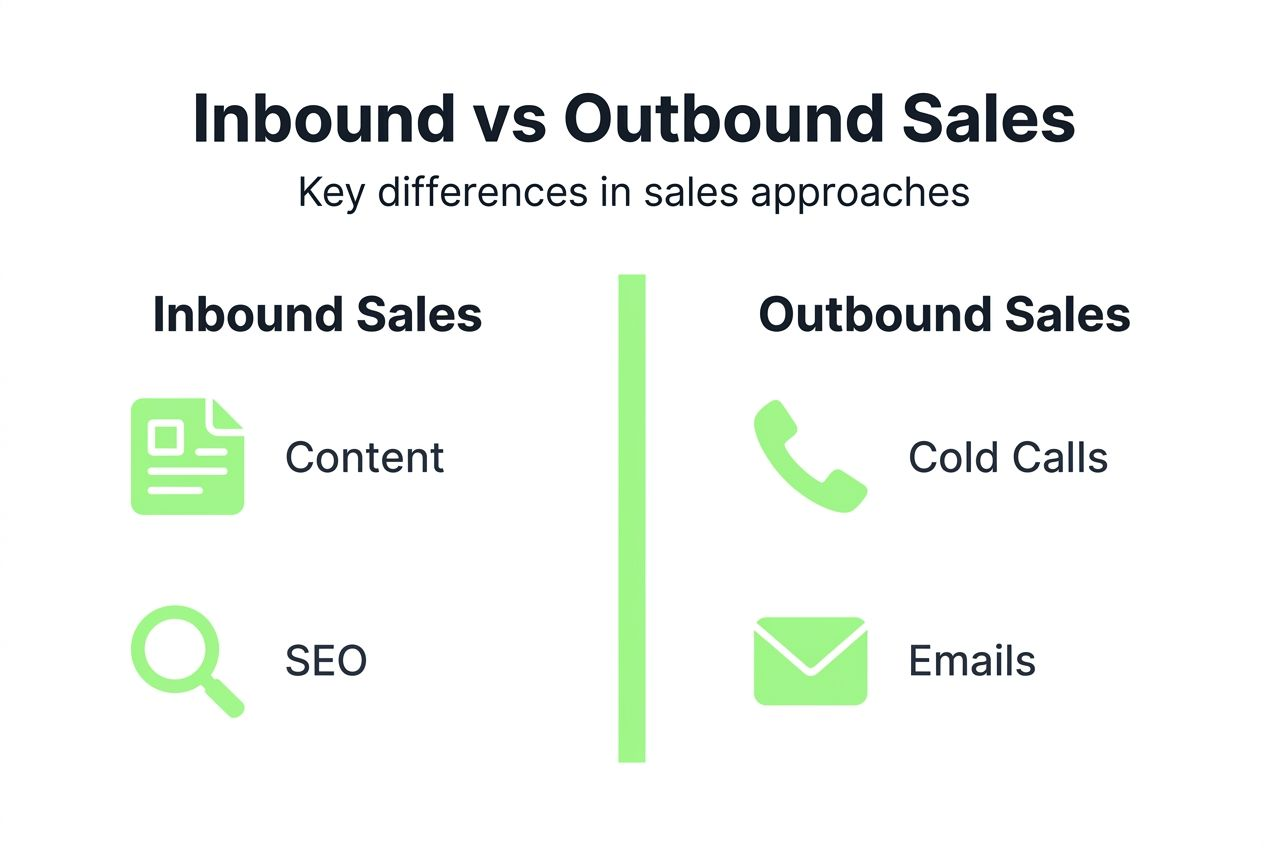
Companies using integrated inbound and outbound see up to 38% higher revenue growth compared to those relying on one approach. The synergy matters. Inbound builds brand authority and trust while outbound fills gaps and targets unreachable accounts. Together they create unstoppable momentum.
Inbound leads often show higher intent because they’ve actively sought you out. They’re further along mentally, having researched options before contacting you. This head start shortens sales cycles dramatically. Meanwhile, outbound can deliver meetings in days, perfect for quarterly pipeline gaps or launching new products.
Ideal use cases for each strategy:
- Inbound works best when: You have time to build, your audience actively searches for solutions, you can invest in content creation, and you want sustainable long-term growth with lower per-lead costs.
- Outbound excels when: You need immediate pipeline, you’re targeting specific accounts or verticals, your solution serves a niche market that doesn’t search actively, or you’re launching and can’t wait for inbound momentum.
- Hybrid approaches win when: You have resources for both, you want to maximize growth rate, you’re scaling past early stage, or you need predictable pipeline while building inbound assets.
Understanding B2B and B2C differences also influences strategy choice. B2B often benefits more from targeted outbound to reach decision makers directly. B2C can leverage inbound’s scalability if traffic volume justifies the investment. Learning the full scope of inbound and outbound differences helps you customize your approach.
The strongest sales teams treat inbound as a signal of market demand and outbound as a tool to fill specific gaps or target ideal accounts proactively. Neither replaces the other. Both deserve dedicated processes and optimization.
Choosing and applying the right sales strategy for your business
Your business stage heavily influences which strategy makes sense now. Early startups often favor outbound to generate quick validation conversations and initial revenue. You can’t wait six months for SEO to work when you’re proving product-market fit. Outbound lets you test messaging and learn fast.
Mature businesses with established brands benefit more from inbound’s compounding returns. If you already have traffic and authority, converting that attention into leads costs less than cold outreach. The investment in content pays dividends for years. But even mature companies use outbound to enter new markets or target enterprise accounts.
Assess your resources honestly. Inbound demands upfront investment in content production, SEO expertise, marketing automation tools, and patience. You won’t see results for months. Outbound needs skilled sales development reps, contact data, multichannel tools, and persistence to execute 5+ touch sequences. Both require commitment.
Tailoring your process for each lead type maximizes conversions. Treating inbound and outbound leads the same is ineffective because their mindsets differ completely. Inbound leads expect fast responses and relevant next steps. Outbound leads need education and multiple value touches before considering a meeting.
Integrating both strategies into a complementary pipeline:
- Define your ideal customer profile precisely so inbound content and outbound targeting align on the same audience.
- Unify messaging across channels so prospects hear consistent value propositions whether they find you or you find them.
- Track inbound and outbound separately in your CRM to measure performance accurately and optimize each funnel independently.
- Optimize continuously by testing email subject lines, call scripts, content topics, and follow-up timing based on data.
Pro Tip: Schedule quarterly reviews of both inbound and outbound performance. Calculate cost per meeting, conversion rates, and revenue attribution for each. Double down on what works and cut what doesn’t. Avoid the trap of neglecting one strategy because the other feels easier.
The fastest growing companies in 2026 use hybrid inbound and outbound to create exponential growth. They recognize inbound builds over time while outbound delivers immediate activity. The combination smooths revenue predictability and maximizes total addressable market coverage.
Set realistic expectations for each approach. Inbound takes three to six months to gain traction but then compounds. Outbound generates activity within weeks but requires constant effort to maintain. Budget accordingly and don’t panic if one lags while the other ramps. Getting early customers for your startup often requires blending both strategies creatively.
Leverage modern tools and AI to automate lead enrichment, scoring, and follow-up sequences. Technology handles repetitive tasks so your team focuses on high-value conversations. Real-time alerts, automated multichannel sequences, and intelligent routing transform both inbound and outbound efficiency.
How siift can help accelerate your sales growth
Siift provides AI-powered tools that optimize both your inbound and outbound sales workflows systematically. Our platform helps you respond instantly to inbound leads with intelligent routing and automated enrichment, nurturing them effectively to close faster. We offer automated multichannel outbound sequences that improve engagement rates and generate qualified meetings rapidly.
Integrate your entire sales funnel with Siift to boost conversions and streamline lead management across both strategies. Our AI canvas guides you through building repeatable processes that scale as you grow. Explore our sales funnel basics to see how strategic insights translate into practical implementation. Siift turns confusion into clarity and clarity into revenue.
Frequently asked questions
What are inbound and outbound sales?
Inbound sales attract customers through valuable content, SEO, webinars, and referrals that capture existing search intent and interest. Prospects come to you after consuming your resources and qualifying themselves. Outbound sales involve proactively reaching potential buyers through cold calls, targeted emails, LinkedIn outreach, and paid campaigns where you control timing and targeting. Each strategy suits different buyer intent levels and business timelines.
Which sales strategy is best for startups and solopreneurs?
Startups often benefit from outbound tactics initially because they generate pipeline quickly and enable fast learning about messaging and product-market fit. You can’t afford to wait months for inbound momentum when validating your business. Solopreneurs with limited budgets may prefer inbound for its cost-effectiveness and sustainable growth, but must plan for delayed results and invest time in content creation. Hybrid models provide balanced growth but require coordination and sufficient resources to execute both strategies effectively.
How can I improve conversion rates for inbound leads?
Respond to inbound leads within 5 minutes to maximize conversion potential, as speed increases close rates up to 9 times compared to slower follow-up. Use concise forms with only essential fields like name, email, and company that enable proper routing and personalization without creating friction. Qualify leads effectively by asking targeted questions that reveal budget, timeline, and decision-making authority so you focus energy on high-quality conversations. Implement automated scheduling tools that let prospects book meetings instantly while they’re engaged.
What are common challenges with outbound sales?
Outbound leads start cold and require multiple touches, usually 5 or more, before they respond or agree to meetings, demanding significant persistence. Effective outreach demands multichannel strategies combining email, phone, and LinkedIn with consistent follow-up over weeks, not just single attempts. Higher cost per contact and time investment compared to inbound can strain resources, but you manage this through hyper-targeted lists, personalized messaging, and automation tools that scale your efforts efficiently.
Can I use both inbound and outbound sales together?
Absolutely, and you should. Companies using integrated inbound and outbound strategies see up to 38% higher revenue growth and 2x faster pipeline filling than those relying on just one approach. Inbound builds sustainable momentum and brand authority while outbound fills immediate gaps and targets specific high-value accounts. The key is tailoring your process for each lead type since inbound prospects need fast response while outbound contacts require patient nurturing. Track both separately to optimize performance and allocate resources based on what drives the most revenue for your specific business stage and market.