
Every Millennial solopreneur knows the struggle of adapting a business idea to unpredictable market shifts. Static strategies often limit growth, but Artificial Intelligence offers flexible, adaptive tools that transform decision-making. Research shows AI now enables real-time market analysis, personalization at scale, and dynamic business models. This article reveals how AI-driven business model innovation empowers global startups and indie hackers to refine strategy and reach product-market fit faster than ever.
Table of Contents
- How AI Redefines Business Model Strategy
- Types of AI-Driven Business Models Today
- Step-by-Step Process for AI Adoption
- Real-World AI Applications for Solopreneurs
- Risks, Bias, and How AI Mitigates Uncertainty
Key Takeaways
| Point | Details |
|---|---|
| AI Transforms Business Strategy | Organizations are redefining their strategic models with AI, moving towards dynamic, adaptive frameworks that enable real-time decision-making. |
| Emerging AI-Driven Business Models | Four innovative AI-driven business models are revolutionizing value creation: Supplier, Omnichannel, Modular Producer, and Ecosystem Driver. |
| Systematic AI Adoption | A methodical approach to AI adoption includes stages like assessment, strategy development, and continuous learning for sustainable integration. |
| AI Risks and Mitigations | Recognizing and mitigating risks such as algorithmic bias and data privacy are crucial for leveraging AI as a strategic asset while ensuring ethical practices. |
How AI Redefines Business Model Strategy
Artificial Intelligence is radically transforming how businesses conceptualize, develop, and execute their strategic models. Unlike traditional approaches that rely on static planning, AI introduces dynamic, adaptive capabilities that fundamentally reshape strategic decision-making. Emerging research on AI’s strategic potential reveals a profound shift in corporate strategy development.
At its core, AI redefines business model strategy through several key transformative mechanisms:
- Predictive Intelligence: Enables real-time market trend analysis
- Personalization at Scale: Allows hyper-targeted value propositions
- Operational Optimization: Automates complex strategic workflows
- Risk Assessment: Provides advanced scenario modeling capabilities
Businesses are now moving beyond traditional linear strategy frameworks. AI empowers organizations to create more flexible, responsive models that can rapidly adapt to changing market conditions. AI-driven business model innovations are expanding value creation opportunities by enabling unprecedented levels of strategic agility.
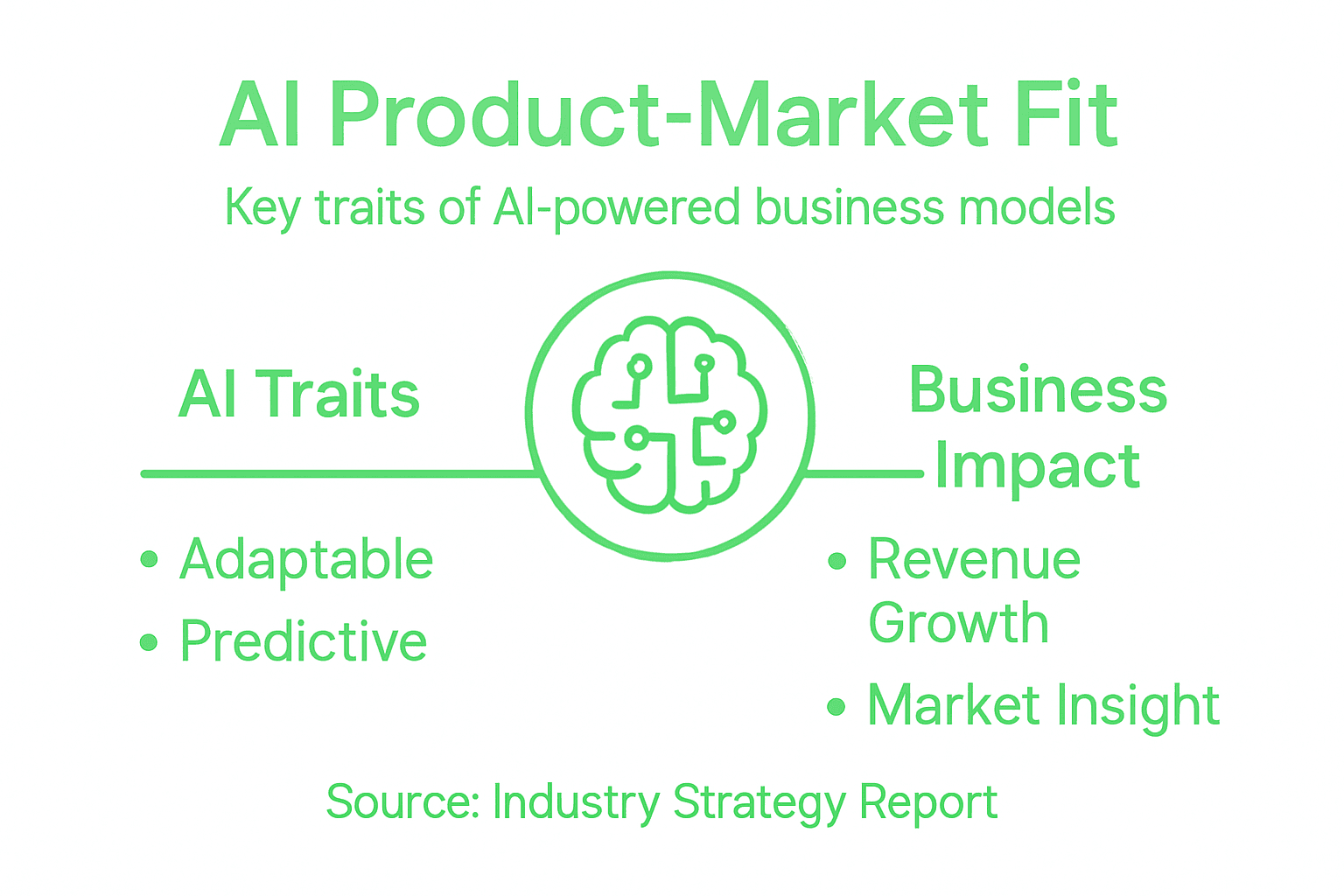
This technological evolution means startups and enterprises can now develop more intelligent, data-driven business strategies. AI transforms strategic planning from a periodic exercise into a continuous, dynamic process of learning and optimization. Companies leveraging AI can make more nuanced decisions, predict market shifts, and create more resilient business models.
Pro tip: Integrate AI tools that offer real-time strategic insights and predictive modeling to stay ahead of market dynamics.
Types of AI-Driven Business Models Today
As artificial intelligence continues to reshape the business landscape, organizations are developing innovative models that leverage AI’s transformative potential. Emerging research from MIT’s Center for Information Systems Research has identified four distinct types of AI-driven business models that are revolutionizing how companies create and deliver value.
These AI-driven business model archetypes include:
- Supplier Models: Focus on providing AI-enhanced products and services
- Omnichannel Models: Create seamless, intelligent customer experiences across multiple platforms
- Modular Producer Models: Develop flexible, adaptable production systems
- Ecosystem Driver Models: Build interconnected platforms that leverage collective intelligence
Each model represents a unique approach to integrating AI capabilities. AI-driven business models in the new economy are characterized by their ability to transform traditional linear strategies into dynamic, predictive systems that continuously learn and adapt.
The most successful AI-driven business models share common characteristics: they prioritize data-driven decision-making, enable real-time personalization, and create value through intelligent automation. Startups and enterprises alike are discovering that AI is not just a technology upgrade, but a fundamental reimagining of how businesses can operate, compete, and innovate in an increasingly complex global marketplace.
Here’s how the four main AI-driven business models differ:
| Model Type | Core Focus | Typical Benefits | Example Industry |
|---|---|---|---|
| Supplier | AI-enhanced products/services | Streamlined offerings, innovation | Manufacturing, Retail |
| Omnichannel | Multi-platform customer interaction | Improved experience, consistency | E-commerce, Banking |
| Modular Producer | Flexible production systems | Customization, scalable growth | Tech, Automotive |
| Ecosystem Driver | Interconnected platform networks | Collective intelligence, synergy | Healthcare, Logistics |
Pro tip: Assess your current business model against these AI-driven archetypes to identify potential transformation opportunities and competitive advantages.
Step-by-Step Process for AI Adoption
Successful AI integration demands a strategic, methodical approach that transforms technological potential into tangible business value. Systematic AI adoption research reveals a comprehensive framework for organizations looking to leverage artificial intelligence effectively.
The AI adoption process typically involves several critical stages:
- Assessment Stage: Evaluate current technological infrastructure and AI readiness
- Strategy Development: Define clear objectives and potential AI application areas
- Technology Selection: Identify appropriate AI tools and platforms
- Pilot Implementation: Launch small-scale AI initiatives to test and validate
- Scalability Planning: Design strategies for broader organizational integration
- Continuous Learning: Establish mechanisms for ongoing AI performance monitoring
Each stage requires careful consideration and alignment with broader organizational goals. Successful AI adoption is not about implementing the most advanced technology, but about strategically integrating intelligent systems that solve specific business challenges and create measurable value.
Implementing AI is fundamentally a cultural transformation as much as a technological one. Organizations must cultivate a data-driven mindset, upskill their workforce, and create an environment that embraces technological innovation while maintaining human creativity and critical thinking.
Pro tip: Start with targeted, low-risk AI pilot projects that demonstrate clear value and build organizational confidence in artificial intelligence capabilities.
Real-World AI Applications for Solopreneurs
In today’s rapidly evolving digital landscape, solopreneurs have unprecedented opportunities to leverage artificial intelligence as a powerful strategic tool. AI tools for solopreneurs are transforming how independent professionals develop, market, and scale their businesses with remarkable efficiency.
Key AI applications for solopreneurs span multiple critical business domains:
- Content Creation: Generate marketing copy, blog posts, and social media content
- Customer Service: Implement AI chatbots for 24/7 client interaction
- Market Research: Analyze industry trends and competitor strategies
- Product Development: Use predictive modeling to refine business offerings
- Financial Planning: Automate invoicing, expense tracking, and budget forecasting
- Marketing Personalization: Create targeted campaigns with intelligent segmentation
The true power of AI for solopreneurs lies not in replacing human creativity, but in augmenting and accelerating entrepreneurial capabilities. These intelligent tools can handle repetitive tasks, provide data-driven insights, and free up critical mental bandwidth for strategic thinking and innovation.
Successful solopreneurs view AI as a collaborative partner, using these technologies to punch above their weight class. By strategically integrating AI tools, independent professionals can compete with larger organizations, deliver exceptional value, and continuously adapt to changing market dynamics.
Pro tip: Start with one AI tool that directly addresses your most time-consuming business challenge and gradually expand your technological ecosystem.
Risks, Bias, and How AI Mitigates Uncertainty
AI is simultaneously a powerful tool and a complex challenge, introducing both transformative potential and inherent risks for businesses navigating technological uncertainty. Global AI risk management strategies reveal critical insights into mitigating algorithmic biases and decision-making uncertainties.
Key risks and mitigation strategies include:
- Algorithmic Bias: Implement continuous monitoring and diverse training datasets
- Data Privacy: Develop robust encryption and transparent data handling protocols
- Ethical Considerations: Establish human oversight and clear AI governance frameworks
- Decision Transparency: Create explainable AI systems with clear decision pathways
- Predictive Limitations: Recognize and design around potential AI prediction errors
- Performance Variability: Build flexible systems that can adapt and learn dynamically
Understanding AI risks requires a nuanced approach that balances technological innovation with human critical thinking. By recognizing potential biases and implementing strategic safeguards, organizations can transform AI from a potential liability into a powerful strategic asset.
Successful AI integration is not about eliminating uncertainty entirely, but creating intelligent systems that can navigate complexity with increasing sophistication. This means developing AI tools that are not just technically proficient, but ethically aligned and contextually aware.
The following table summarizes key risks of AI adoption and corresponding mitigation strategies:
| Risk Area | Typical Challenge | Best Practice Mitigation |
|---|---|---|
| Algorithmic Bias | Unfair or skewed outcomes | Diverse datasets and monitoring |
| Data Privacy | Unauthorized data exposure | Encryption and transparency |
| Decision Transparency | Opaque AI logic | Explainable models and oversight |
| Performance Variability | Inconsistent or unpredictable AI | Dynamic adaptation processes |
Pro tip: Regularly audit your AI systems for potential biases, maintaining a human-in-the-loop approach to validate and refine algorithmic decision-making.
Unlock AI-Driven Business Model Success with siift.ai
The article highlights the challenge of transforming traditional business strategies into dynamic, AI-powered models to achieve product-market fit. Many founders struggle with navigating market uncertainty, identifying blindspots, and applying continuous learning to their business models. Concepts like predictive intelligence, AI-driven personalization, and risk mitigation are vital but complex to implement without guidance.
siift.ai’s Intelligent Business Canvas directly addresses these pain points by offering a step-by-step, AI-powered platform designed to accelerate your Founder’s Journey. It provides personalized feedback and new insights that help filter out biases and distractions so you can build a resilient, market-ready business faster. By integrating the same strategic concepts discussed in the article, siift.ai helps you ideate, validate, and go-to-market with confidence.
Ready to transform your business idea with intelligent AI guidance? Explore how siift.ai’s Intelligent Business Canvas can empower you to achieve product-market fit through data-driven strategy and prioritized actions. Start unlocking new growth opportunities today and stay ahead of market dynamics with siift.ai.
Frequently Asked Questions
What is the role of AI in redefining business model strategy?
AI redefines business model strategy by introducing dynamic capabilities that enhance predictive intelligence, personalization, operational optimization, and risk assessment, allowing businesses to adapt to changing market conditions more effectively.
How can solopreneurs benefit from AI in their business strategies?
Solopreneurs can leverage AI for various applications, including content creation, customer service automation, market research, and financial planning, ultimately enhancing efficiency and competitive edge without replacing human creativity.
What are the main types of AI-driven business models?
The four main types of AI-driven business models are Supplier Models, Omnichannel Models, Modular Producer Models, and Ecosystem Driver Models, each focusing on unique approaches to integrating AI capabilities and creating value.
What steps should a business take for successful AI adoption?
Successful AI adoption involves assessing current infrastructure, developing a clear strategy, selecting the right technologies, piloting implementations, planning for scalability, and fostering continuous learning within the organization.
Recommended
- Validate Product-Market Fit: Rapid Steps to Real Demand | siift
- Product Market Fit: Unlocking Startup Success Systematically | siift
- 7 Steps to Validate Product Market Fit for New Entrepreneurs | siift
- Master Business Strategy to Launch Your AI Venture | siift
- Artificial Intelligence in Business – Driving Digital Growth