
Most American startup founders now rely on AI-powered coding tools to speed up product development, yet more than 60% of aspiring solopreneurs struggle to find affordable solutions that match their skill level. In leading tech hubs worldwide, easy-to-use platforms are unlocking opportunities for innovators with big ideas but little technical experience. This guide breaks down how vibe coding tools work, why they matter for first-time entrepreneurs, and what features help transform early concepts into working products.
Table of Contents
- Defining Vibe Coding Tools And Their Purpose
- Popular Types And Key Platform Features Explained
- Ai Integration And Unique Collaboration Capabilities
- Real-World Use Cases For Startup Founders
- Cost, Risks, And Common Mistakes To Avoid
Key Takeaways
| Point | Details |
|---|---|
| Vibe Coding Democratizes Development | It allows individuals with minimal coding experience to create applications through intuitive AI tools, lowering entry barriers. |
| AI as a Collaborative Partner | Vibe coding platforms feature AI that enhances coding efficiency by interpreting natural language prompts and generating code. |
| Risk Management is Crucial | While vibe coding accelerates development, proper oversight is necessary to manage potential technical debt and code quality issues. |
| Focus on Prototyping | Startups can leverage vibe coding for rapid prototyping and market validation, significantly reducing time and costs in the development process. |
Defining Vibe Coding Tools and Their Purpose
Vibe coding represents a transformative approach to software development where developers create applications using intuitive AI-powered tools without requiring deep traditional programming knowledge. Understanding vibe coding mechanics reveals a paradigm shift in how technology gets built.
At its core, vibe coding enables professionals and novices to express high-level intentions through natural language interfaces, effectively translating human ideas directly into functional software. Instead of writing complex code lines, users leverage AI tools that interpret conversational instructions and generate appropriate programming sequences. This approach dramatically reduces technical barriers, allowing individuals with minimal coding experience to prototype and develop applications rapidly.
The fundamental characteristics of vibe coding tools include:
- Intuitive natural language input
- AI-powered code generation
- Rapid prototyping capabilities
- Low technical entry barriers
- Quick iteration and experimentation
However, developers must understand that while vibe coding accelerates development, it isn’t a complete replacement for traditional software engineering. Vibe coding risks require careful navigation, particularly for complex, mission-critical systems where code quality and maintainability are paramount.
Pro tip: Always validate AI-generated code and maintain a critical perspective, treating vibe coding tools as collaborative assistants rather than infallible developers.
Here’s a comparison of traditional coding versus vibe coding approaches:
| Aspect | Traditional Coding | Vibe Coding Tools |
|---|---|---|
| Required Skill Level | High programming expertise | Minimal coding experience |
| Development Speed | Slower, manual processes | Rapid, AI-accelerated |
| Collaboration Style | Manual code sharing | Real-time AI-powered edits |
| Error Handling | Manual debugging | AI-driven suggestions |
Popular Types and Key Platform Features Explained
The landscape of vibe coding tools is diverse, spanning multiple categories designed to democratize software development. Vibe coding frameworks support multiple development approaches, ranging from full-stack platforms to specialized AI-driven integrated development environments (IDEs) that cater to different skill levels and project requirements.
These platforms typically feature advanced capabilities that transform how developers interact with code. Key characteristics include natural language processing interfaces, real-time collaboration tools, seamless design integrations, and intelligent code generation mechanisms. Tools like Bolt.new enable rapid prototyping through browser-based node environments, while platforms like Lovable.dev provide visual UI editors specifically designed for non-technical creators.
The core platform features that distinguish modern vibe coding tools can be categorized into several critical components:
- Natural Language Interpretation: Converting conversational prompts into functional code
- Multi-Language Support: Generating code across different programming languages
- Iterative Refinement: Allowing continuous code improvement through AI feedback
- Design Tool Integration: Connecting directly with design platforms like Figma
- Collaborative Workflows: Enabling multiple developers to work simultaneously
Vibe coding ecosystems provide accessibility for developers with varying expertise levels, effectively lowering traditional technical barriers and accelerating innovation through AI-augmented software development workflows.
Pro tip: Select vibe coding tools that offer robust documentation, active community support, and transparent AI model explanations to maximize your development efficiency.
AI Integration and Unique Collaboration Capabilities
AI-powered vibe coding platforms represent a transformative approach to software development, where artificial intelligence acts as a dynamic collaborative partner. These sophisticated systems enable developers to generate functional code through high-level natural language prompts, creating an intuitive interaction between human creativity and machine intelligence.
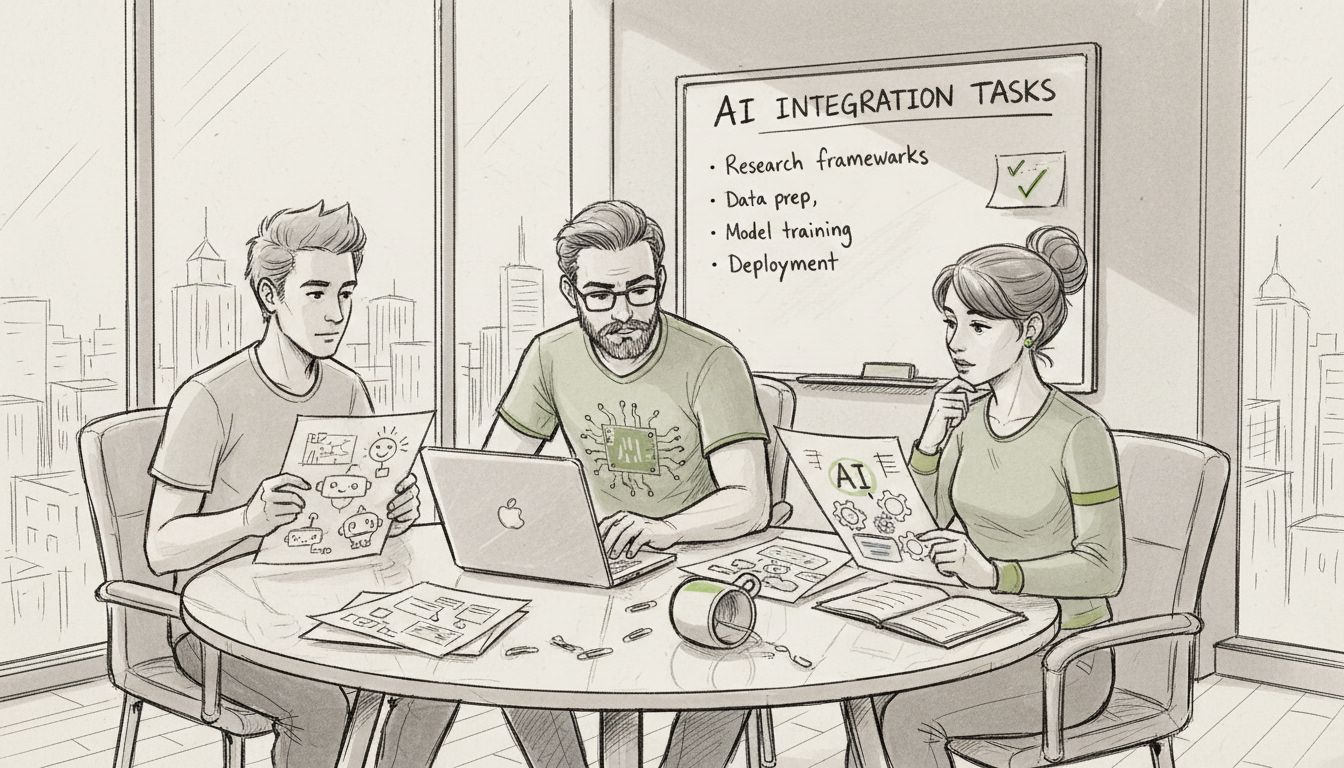
The core of AI integration lies in its ability to understand context, interpret user intent, and generate code with increasing precision. Advanced platforms feature deep persona-based coding orchestration, allowing AI to adapt its code generation style to individual developer preferences. Unique collaboration capabilities include real-time code suggestions, automatic error correction, and intelligent refinement mechanisms that learn from user interactions and feedback.
Key AI collaboration features include:
- Contextual Understanding: AI interprets complex developer instructions
- Iterative Code Refinement: Continuous improvement through conversational feedback
- Multi-User Synchronization: Real-time collaborative coding environments
- Voice-Driven Workflows: Natural language code generation
- Intelligent Error Handling: Proactive debugging and solution suggestions
Vibe coding tools manage environment constraints while empowering developers to guide AI output creatively, representing a significant leap in human-machine software development collaboration.
Pro tip: Experiment with different AI coding assistants to find the one that best matches your personal coding style and project requirements.
Real-World Use Cases for Startup Founders
Vibe coding transforms startup innovation by dramatically reducing technical barriers and enabling founders to rapidly prototype ideas with minimal coding expertise. This approach allows entrepreneurs to focus on creative problem-solving and market validation rather than getting bogged down in complex programming syntax.
Startup founders can leverage vibe coding tools across multiple critical development stages. From initial concept testing to building minimum viable products (MVPs), these platforms provide an accelerated pathway for transforming innovative ideas into functional software solutions. Domain experts without extensive programming backgrounds can now create technical prototypes, validate market assumptions, and iterate designs quickly and cost-effectively.
Typical startup use cases for vibe coding include:
- Rapid Prototype Development: Creating functional product demos in hours
- Market Validation: Building interactive proof-of-concept tools
- Product Iteration: Quickly testing and refining feature concepts
- Cost Reduction: Minimizing early-stage development expenses
- Technical Exploration: Experimenting with product technical feasibilities
AI-assisted development helps startups scale efficiently by democratizing product creation beyond traditional developer teams and enabling faster time-to-market strategies.
Pro tip: Start with small, focused projects to build confidence and understand how vibe coding tools can accelerate your specific startup goals.
Below is a summary of how vibe coding supports startup founders at different stages:
| Startup Stage | Vibe Coding Advantage | Typical Outcome |
|---|---|---|
| Idea Validation | Quick interactive prototypes | Faster market feedback |
| MVP Launch | Minimal development overhead | Reduced time-to-market |
| Iteration/Testing | Easy feature adjustments | Rapid user-driven changes |
| Scaling | Accessible for all team roles | Broader team contribution |
Cost, Risks, and Common Mistakes to Avoid
Vibe coding risks require strategic management to prevent potential technical and financial pitfalls. While these tools offer remarkable development speed, they demand careful implementation and ongoing quality oversight to mitigate potential vulnerabilities.
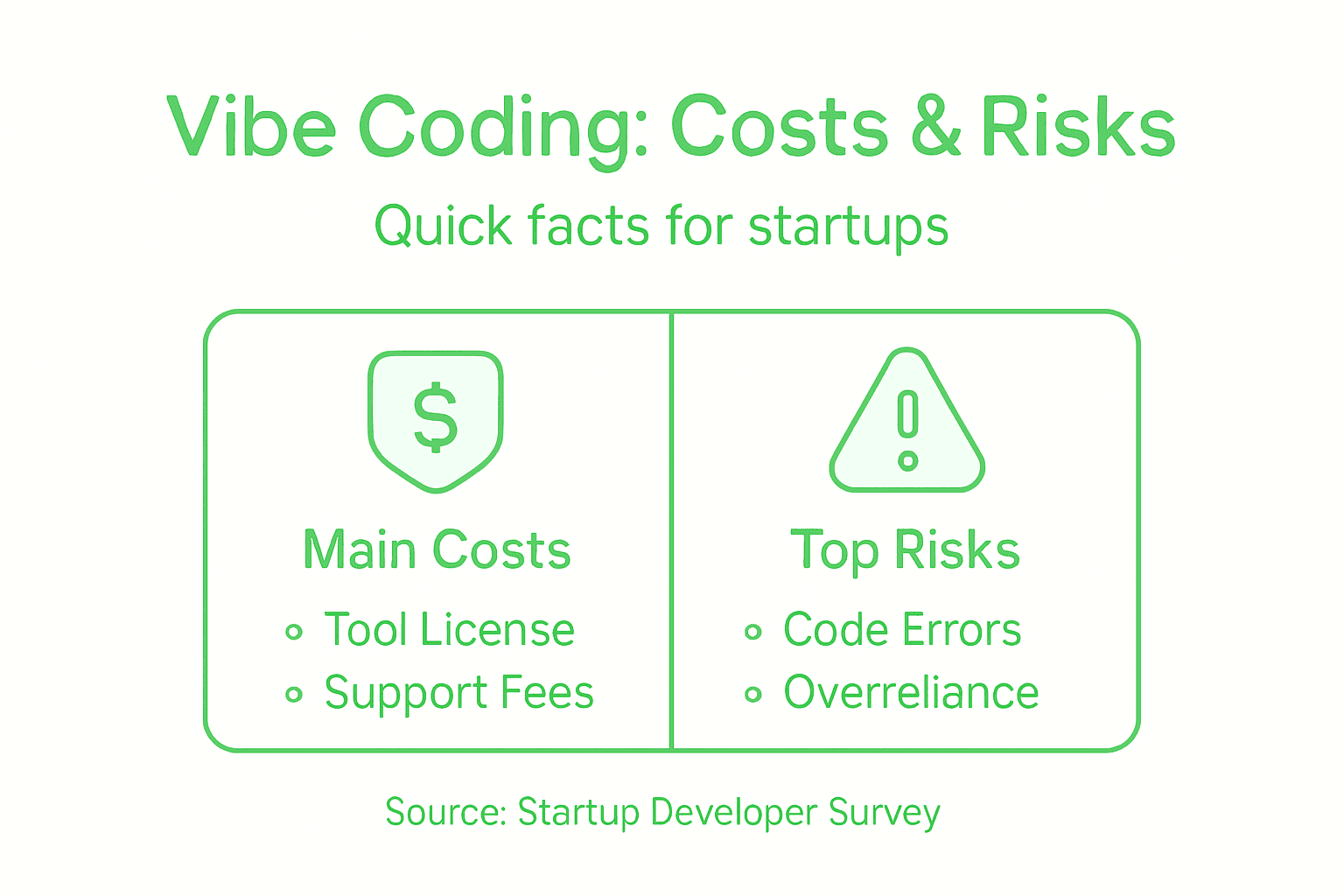
The primary financial risks emerge from potential technical debt and long-term maintenance challenges. Inexperienced developers might generate code quickly but struggle with debugging, scalability, and system reliability. This can lead to increased development costs, longer troubleshooting cycles, and potential product failures that could significantly impact startup budgets and timelines.
Key risks and common mistakes in vibe coding include:
- Blind AI Trust: Accepting generated code without thorough review
- Quality Assurance Gaps: Skipping comprehensive testing processes
- Debugging Limitations: Insufficient understanding of generated code mechanics
- Scalability Concerns: Using AI tools inappropriately for complex projects
- Knowledge Erosion: Overreliance leading to diminished programming skills
Strategic vibe coding requires careful implementation to balance innovation with technical soundness and long-term product sustainability.
Pro tip: Allocate at least 30% of your development time to manual code review and testing when using vibe coding tools to ensure robust, reliable software outputs.
Accelerate Your Startup Journey with Intelligent Strategy and Vibe Coding Insights
The article highlights how vibe coding tools empower founders to innovate fast by simplifying complex development tasks into intuitive AI-driven workflows. If you are facing challenges like validating ideas quickly, reducing development costs, or managing technical risks discussed in the article, you need a solution that matches this pace and clarity. At siift.ai, the Intelligent Business Canvas offers exactly that by guiding startup founders step-by-step through ideation, validation, and go-to-market strategies with personalized AI feedback and prioritized actions.
Don’t let technical or strategic uncertainty slow you down. Harness the momentum of vibe coding tools with a proven business framework that de-risks your founder’s journey and helps you build smarter. Explore how our intuitive AI platform complements your rapid development efforts and brings clarity to your business execution. Visit siift.ai Intelligent Business Canvas to get started now and transform your innovative ideas into viable, scalable businesses faster than ever before.
Frequently Asked Questions
What are vibe coding tools?
Vibe coding tools are AI-powered platforms that enable both skilled developers and novices to create applications using natural language interfaces, allowing them to translate ideas into functional software without deep programming knowledge.
How do vibe coding tools improve developer productivity?
Vibe coding tools enhance productivity by allowing rapid prototyping, minimizing technical barriers, enabling quick iteration, and providing AI-generated suggestions, which accelerates the software development process.
What are the key features to look for in vibe coding tools?
Important features to consider include natural language interpretation, multi-language support, iterative refinement capabilities, design tool integration, and collaborative workflows that facilitate real-time coding.
What risks should developers be aware of when using vibe coding tools?
Developers should be cautious of potential risks such as reliance on AI-generated code without proper review, quality assurance gaps, and challenges related to debugging, code scalability, and maintaining programming skills.
Recommended
- Vibe Coding Pros and Cons: Complete Guide | siift
- Understanding Vibe Coding: A New Approach to Tech Creation | siift
- Vibe Coding Issues: Risks for Indie Founders | siift
- Vibe Coding vs. Vibe Founding: Complete Guide | siift
- Top 5 automatisierungstools für unternehmen – Expert Comparison 2026 - EcomTask