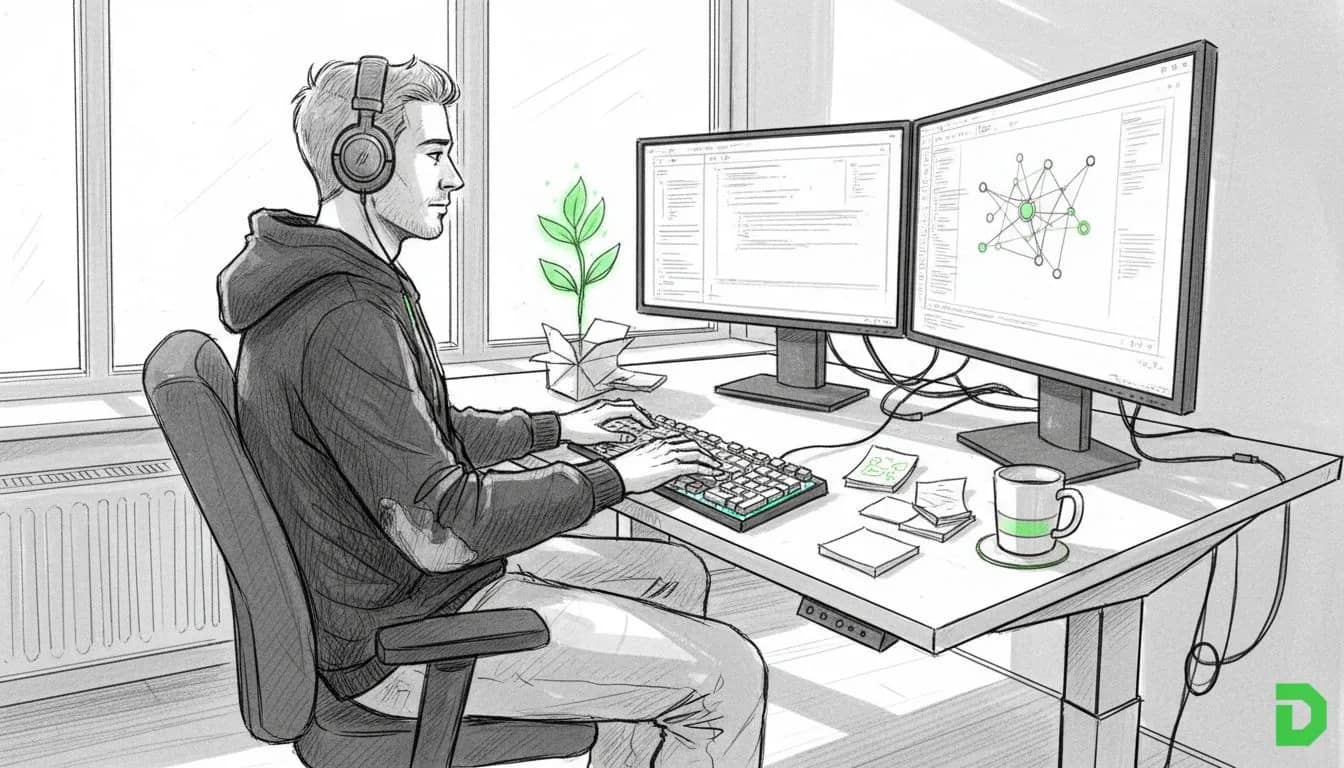
Building a new project often means wrestling with complex code and steep learning curves, especially for aspiring creators aiming to combine business acumen with technical skills. As the lines blur between developer and strategist, vibe coding offers a fast, intuitive way to transform ideas into functional software with the help of AI. This approach makes project creation more accessible while letting millennial founders focus on business impact rather than code syntax.
Table of Contents
- Defining Vibe Coding And Its Core Principles
- Prompting Techniques For Clear AI Collaboration
- Iterative Workflow: Feedback Loops And Control
- Where Vibe Coding Works—And Where It Fails
- Intentional Building: Validating Core Assumptions Early
- How Siift Accelerates AI-Powered Product Validation
Key Takeaways
| Point | Details |
|---|---|
| Vibe Coding Transforms Development | Vibe coding leverages AI for rapid code generation, shifting the role of developers to intent-driven oversight instead of traditional line-by-line coding. |
| Effective Prompt Engineering is Critical | Developers should use structured prompting techniques to enhance AI collaboration, ensuring clearer and more accurate code outputs. |
| Iterative Workflows Foster Improvement | A dynamic feedback loop is essential for refining AI-generated code, allowing for ongoing adjustments aligned with project goals. |
| Validate Assumptions Early | Intentional building through hypothesis testing and user feedback can reduce the risk of developing products that don’t meet market needs. |
Defining Vibe Coding and Its Core Principles
Vibe coding represents a transformative approach to software development where developers leverage AI tools to rapidly generate code through intuitive, intent-driven interactions. Unlike traditional coding methodologies, this technique prioritizes speed and accessibility over meticulous manual programming. Dynamic context management enables developers to quickly scaffold projects by providing high-level natural language directives.
At its core, vibe coding shifts the developer’s role from line-by-line coding to defining system behaviors and architectural intent. The key principles that define this emerging paradigm include:
- Rapid Prototyping: Generate functional code quickly through AI-assisted generation
- Natural Language Interfaces: Use conversational prompts to guide software creation
- Intent-Driven Development: Focus on describing desired outcomes rather than implementation details
- Iterative Refinement: Continuously adjust and improve AI-generated code through feedback loops
The practice fundamentally transforms how software gets built by lowering technical barriers and democratizing creation. Autonomous software scaffolding allows even non-technical founders to create complex systems with minimal coding expertise.
Here’s a comparison of vibe coding versus traditional software development methodologies:
| Aspect | Vibe Coding Approach | Traditional Development |
|---|---|---|
| Code Generation | AI-driven, rapid scaffolding | Manual, step-by-step |
| Accessibility | Lower technical requirements | High coding expertise needed |
| Speed | Fast prototyping and iteration | Slower due to manual effort |
| Developer Role | Intent definition and oversight | Direct implementation and design |
| Risk Management | Requires cautious validation | Built-in manual review |
Pro tip: Always maintain a skeptical mindset and validate AI-generated code thoroughly before integrating it into production environments.
Prompting Techniques for Clear AI Collaboration
Vibe coding relies on sophisticated prompt engineering techniques that transform how developers communicate with AI systems. Structured prompt frameworks have emerged as critical tools for ensuring precise, reliable code generation through intelligent collaboration. By designing intentional inputs, developers can dramatically improve the quality and relevance of AI-generated solutions.
The most effective prompting strategies include multiple advanced approaches:
- Zero-Shot Prompting: Explore new topics without providing explicit training examples
- Few-Shot Prompting: Guide specialized tasks by including minimal contextual examples
- Chain-of-Thought Prompting: Encourage AI to articulate detailed reasoning steps
- Role-Based Prompting: Assign specific personas or professional contexts to the AI
- Contextualized Prompting: Frame queries within precise domain-specific parameters
Human-guided AI interaction demands a nuanced approach that balances clarity, context-awareness, and iterative refinement. Successful prompt design transforms AI from a generic tool into a precise collaborative partner capable of understanding complex technical requirements.
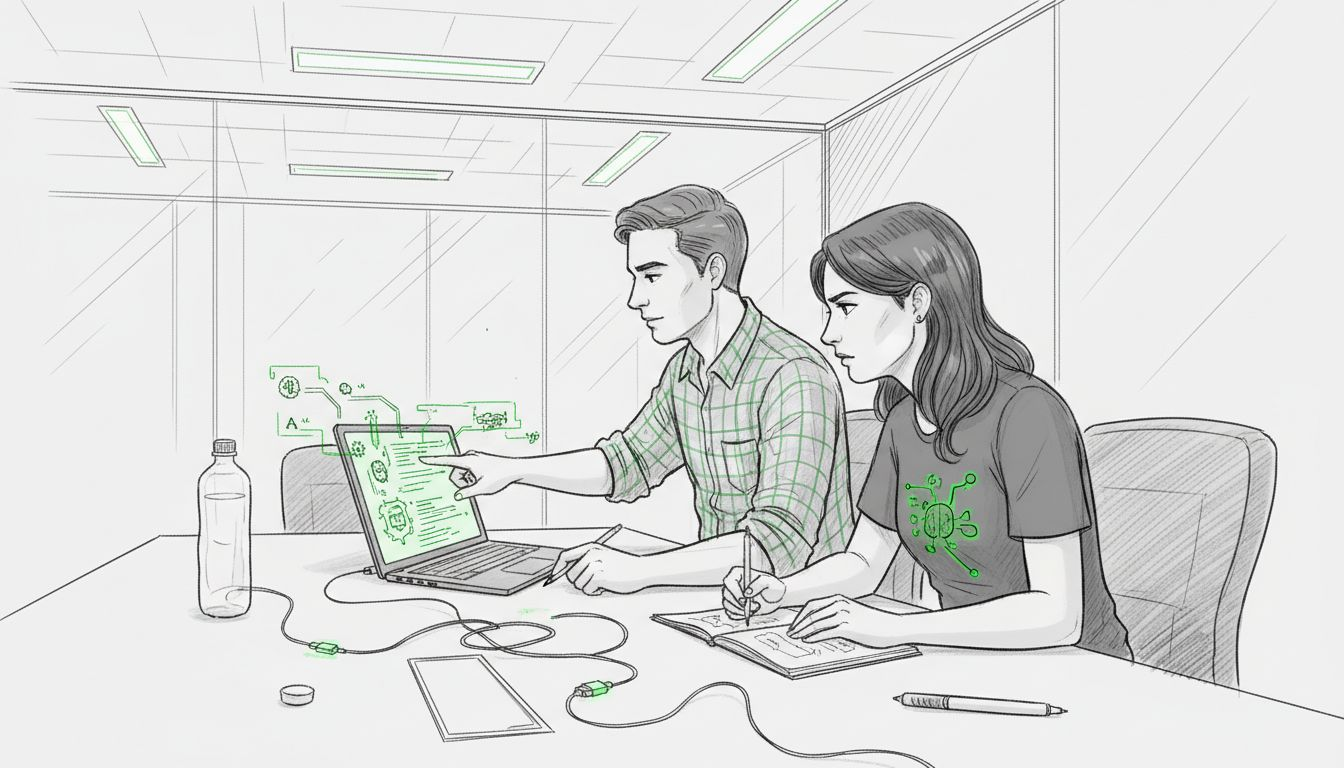
When crafting prompts, developers should focus on creating clear, logical instructions that explicitly communicate desired outcomes. This means providing sufficient context, defining specific constraints, and structuring requests to minimize ambiguity.
Pro tip: Always include a clear context statement, specific constraints, and a concrete example in your initial AI prompt to maximize response accuracy.
Iterative Workflow: Feedback Loops and Control
Vibe coding demands a dynamic, responsive approach to AI collaboration that goes beyond traditional linear development models. Adaptive human-AI interaction transforms software creation into a continuous process of verification, refinement, and alignment. Developers must actively manage the conversation with AI, treating each generation as a provisional step toward the final solution.
Effective iterative workflows incorporate several critical strategies:
- Systematic Verification: Constantly check AI outputs against original intent
- Uncertainty Management: Identify and resolve potential gaps or ambiguities
- Granular Feedback: Provide specific, actionable insights to guide AI refinement
- Meta-Feedback: Evaluate the AI’s understanding and communication process
- Alignment Tracking: Ensure ongoing correspondence between user goals and AI responses
Multi-agent optimization techniques enable more sophisticated feedback mechanisms, where different AI agents handle specific roles like refinement, execution, and evaluation. This approach allows for autonomous performance improvement and more nuanced problem-solving.
The key to successful iterative workflows is maintaining a tight, controlled feedback loop. Developers should approach AI collaboration as a dialogue, not a one-way generation process. Each iteration should incrementally improve the solution, with careful attention to maintaining the original project vision and technical constraints.
Pro tip: Create a structured feedback template with specific categories like accuracy, relevance, and technical feasibility to systematically evaluate and improve AI-generated code.
Where Vibe Coding Works—and Where It Fails
Vibe coding represents a powerful yet nuanced approach to software development that delivers exceptional value in specific contexts while posing significant risks in others. Rapid prototyping capabilities make it an invaluable tool for experienced developers seeking quick experimentation and initial concept validation.
The most effective domains for vibe coding include:
- Startup MVPs: Fast initial product mockups and proof-of-concept builds
- Design Exploration: Quickly testing user interface concepts and interaction flows
- Personal Projects: Experimental software with low mission-critical requirements
- Hackathons: Time-compressed innovation environments
- Proof-of-Technology: Demonstrating technical feasibility for new ideas
Conversely, enterprise software development presents substantial challenges for vibe coding. Critical systems demand rigorous testing, predictable performance, and maintainable architectures that AI-generated code frequently cannot guarantee. Safety-critical applications in healthcare, finance, and infrastructure require meticulous manual review and systematic validation processes that vibe coding inherently circumvents.
Successful vibe coding practitioners understand its limitations, treating AI-generated code as a starting point rather than a final solution. They maintain a skeptical approach, always validating outputs, understanding underlying implementation details, and being prepared to rewrite or substantially modify AI-suggested solutions.
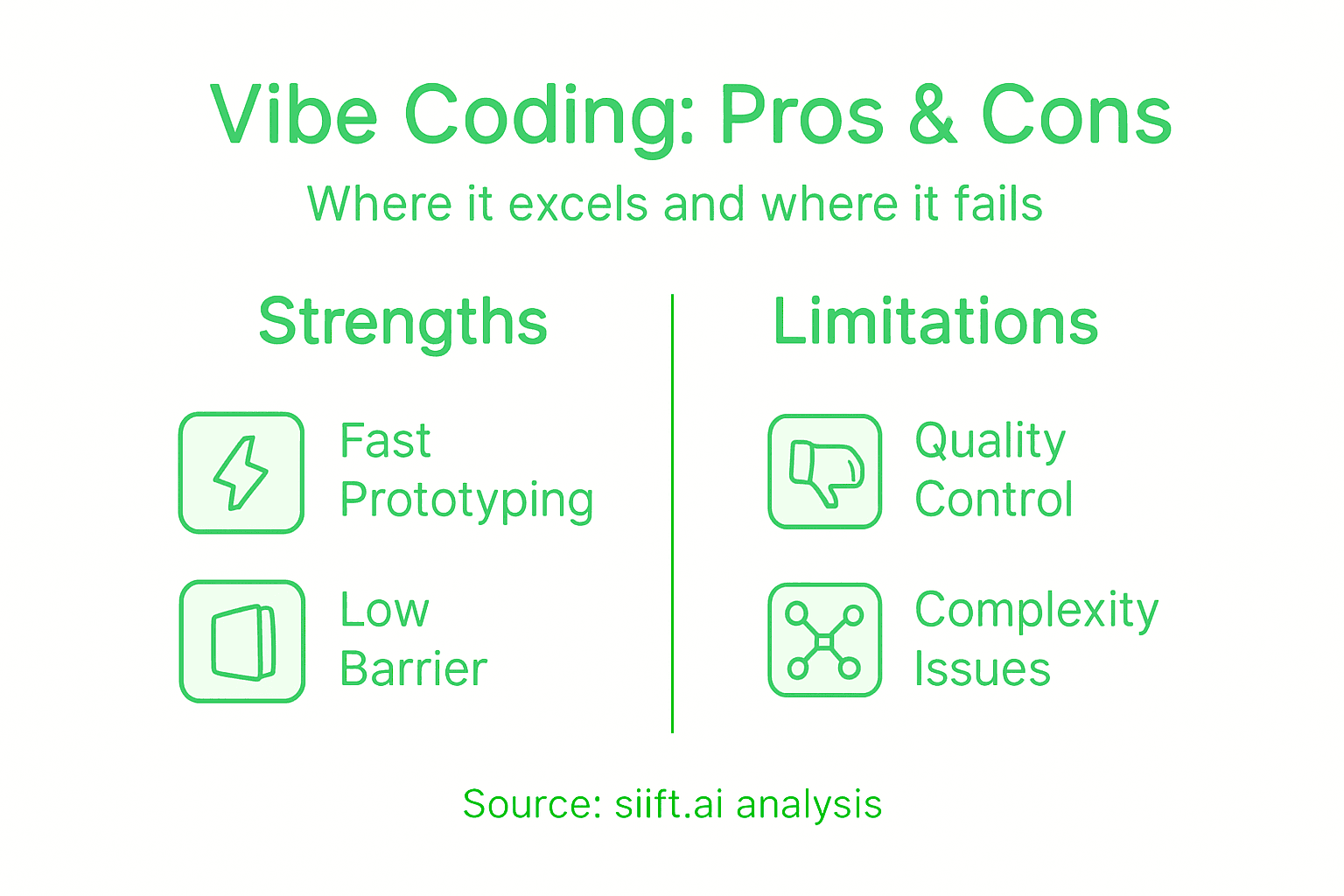
The following table categorizes where vibe coding excels and where traditional coding remains essential:
| Context | Vibe Coding Strength | Traditional Coding Necessity |
|---|---|---|
| Startup MVPs | Rapid early-stage building | Stable production deployment |
| Hackathons | Fast ideation and testing | Post-event maintainability |
| Enterprise Software | Limited flexibility | Robust, secure architectures |
| Safety-Critical Systems | Not recommended | Strict compliance required |
Pro tip: Establish a strict 60/40 rule: use AI for generating 60% of exploratory code, but manually review and potentially rewrite the remaining 40% to ensure quality and comprehension.
Intentional Building: Validating Core Assumptions Early
Vibe coding transforms software development by emphasizing rapid validation of fundamental project assumptions before significant resources are invested. Experiment-based validation enables founders to systematically test and challenge core hypotheses about their technological solutions, reducing the risk of building products that ultimately fail to meet market needs.
The most critical strategies for intentional building include:
- Hypothesis Framing: Clearly articulate testable assumptions about product functionality
- Minimal Viable Prototype: Create lightweight versions to validate core value propositions
- User Feedback Loops: Continuously gather and integrate direct customer insights
- Metric-Driven Validation: Establish concrete, measurable criteria for success
- Rapid Iteration: Be prepared to pivot quickly based on validated learning
Challenging underlying assumptions helps mitigate cognitive biases that can lead developers astray. By fostering a culture of inquiry and evidence-based decision-making, founders can build more resilient and market-aligned solutions.
Successful intentional building requires a disciplined approach that separates emotional attachment from objective evaluation. Developers must remain willing to completely restructure or abandon initial concepts when empirical evidence contradicts their original vision.
Pro tip: Design your validation experiments to prove yourself wrong, not to confirm your existing beliefs, ensuring a truly objective assessment of your technological concept.
How siift Accelerates AI-Powered Product Validation
siift’s Intelligent Business Canvas represents a breakthrough approach to transforming how founders rapidly validate and iterate on product concepts. By leveraging AI-powered tools, the platform enables entrepreneurs to systematically deconstruct and test core business assumptions with unprecedented speed and precision.
The platform’s core validation acceleration strategies include:
- Rapid Hypothesis Testing: Generate and evaluate multiple product scenarios instantly
- Automated Market Research: Extract insights from diverse data sources
- Bias Detection: Identify and challenge underlying entrepreneurial assumptions
- Scenario Modeling: Simulate potential business outcomes with AI-driven predictions
- Continuous Learning: Adapt validation frameworks based on emerging insights
Validate Product-Market Fit through intelligent workflows that transform subjective ideas into data-driven strategies. The platform breaks down complex validation processes into manageable, actionable steps that minimize entrepreneurial risk while maximizing innovation potential.
Unlike traditional validation methods that can consume months of research, siift’s approach compresses discovery timelines. Founders can quickly understand market viability, potential challenges, and optimization opportunities without extensive manual investigation.
Pro tip: Use siift’s AI tools to generate multiple product scenarios and systematically challenge your initial assumptions, treating each iteration as an opportunity for genuine learning.
Accelerate Your AI-Driven Product Validation with siift.ai
Vibe coding opens new horizons for rapid software development by leveraging AI to generate code through clear intent and iterative feedback. However, mastering this fast-paced, intent-driven development comes with challenges like maintaining rigorous validation and avoiding costly assumptions early in your project. If you want to transform these core concepts like iterative workflows and clear prompt engineering into measurable success you need a tool designed to guide your Founder’s Journey.
siift.ai’s Intelligent Business Canvas offers exactly this by providing personalized feedback, bias filtering, and prioritized actions that help you confidently navigate ideation and validation. By integrating siift’s AI-powered insights into your workflow you can systematically de-risk your build with rapid hypothesis testing and real-time scenario modeling. Take control now and turn your vibe coding experiments into validated, market-ready products faster than ever. Discover how to accelerate your path to product-market fit by visiting siift.ai and explore actionable strategies on how to Validate Product-Market Fit today.
Frequently Asked Questions
What is vibe coding?
Vibe coding is an innovative approach to software development that utilizes AI tools to quickly generate code through intuitive, intent-driven interactions, prioritizing speed and accessibility over traditional manual programming.
How does vibe coding differ from traditional software development?
Unlike traditional development, which involves manual, step-by-step coding, vibe coding focuses on rapid prototyping using AI-generated scaffolding, reducing the need for extensive technical expertise.
What are the key principles of vibe coding?
The main principles of vibe coding include rapid prototyping, natural language interfaces, intent-driven development, and iterative refinement, transforming how software is built and democratizing the creation process.
When should I use vibe coding instead of traditional coding methods?
Vibe coding is particularly effective for startup MVPs, design exploration, personal projects, hackathons, and proof-of-technology scenarios where quick ideation and flexibility are necessary, while traditional coding remains essential for enterprise software and safety-critical systems.