TL;DR:
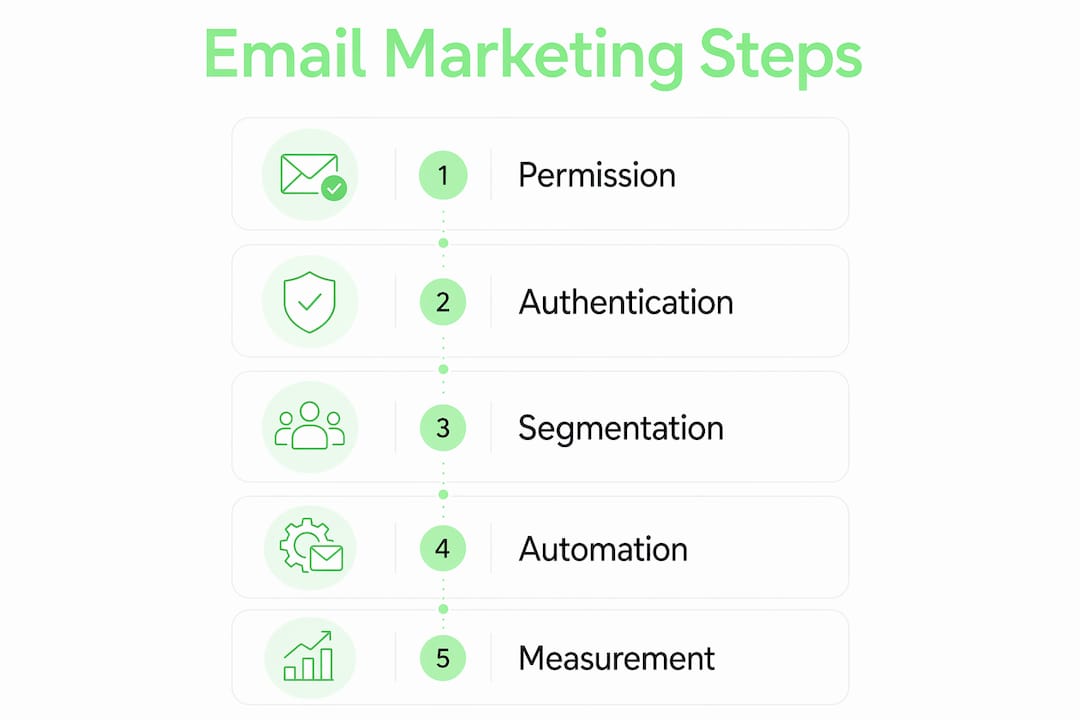
Email marketing relies on permission, authentication, segmentation, automation, and measurement for success.
Founders often overlook fundamentals, risking poor deliverability, low engagement, and lost revenue.
Email marketing fundamentals are the core principles that determine whether your campaigns reach inboxes, earn trust, and generate revenue. Done right, email delivers $10–$36 for every $1 spent, making it the highest-ROI channel in digital marketing. That kind of return doesn’t happen by accident. It comes from mastering list building, segmentation, deliverability compliance, automation, and performance measurement. This guide covers each of those pillars so you can build campaigns that actually work, not just land in spam folders.
What are email marketing fundamentals?
Email marketing fundamentals are the essential practices behind every successful email campaign. Think of them as the rules of the road. You can technically drive without knowing them, but you’ll crash eventually. The fundamentals include building a permission-based list, authenticating your sending domain, segmenting your audience, writing content that earns clicks, automating key sequences, and tracking the metrics that matter.
Email is also a direct, owned channel that doesn’t depend on social media algorithms. Your Instagram reach can drop overnight. Your email list belongs to you. That ownership is one of the most underrated advantages a small business owner has, and it compounds over time.
How do you build and maintain a quality email list?
List quality beats list size every time. A list of 500 engaged subscribers will outperform a list of 5,000 cold contacts who never asked to hear from you. The goal is to attract people who genuinely want your content and then keep them engaged.

Permission-based opt-in and double opt-in
Permission-based opt-in means subscribers actively choose to join your list. Double opt-in takes it a step further by requiring a confirmation click after signup. This extra step filters out typos, bots, and low-intent signups. The result is a cleaner list with higher engagement and fewer spam complaints.
Pro Tip: Use double opt-in for any list you plan to monetize. The short-term friction is worth the long-term deliverability gains.
Growing your list with the right tactics
Effective list growth methods include:
Lead magnets such as free guides, templates, or checklists in exchange for an email address
Embedded signup forms on high-traffic pages like your homepage, blog posts, and checkout page
Pop-up forms triggered by exit intent or time on page
Gated content like webinars, case studies, or mini-courses
Referral programs that reward existing subscribers for sharing
Keeping your list healthy
A list you never clean is a liability. Re-engage subscribers who have been inactive for 60–180 days with a targeted win-back campaign. If they don’t respond, remove them. Sending to disengaged contacts tanks your deliverability scores and wastes budget. For proven retention tactics that apply beyond email, the principles of consistent value delivery and timely follow-up translate directly to list management.
List hygiene actions to run regularly:
Remove hard bounces immediately after they occur
Suppress unsubscribes from all future sends
Segment inactive subscribers before attempting re-engagement
Delete unresponsive contacts after a re-engagement campaign fails
What are the key email deliverability and compliance practices for 2026?
Deliverability is the unglamorous backbone of email marketing. You can write the best subject line in the world, but if your email lands in spam, it doesn’t exist. Modern inbox providers like Gmail, Yahoo, and Microsoft enforce strict technical and behavioral standards.
Authentication protocols: SPF, DKIM, and DMARC
SPF, DKIM, and DMARC are DNS-based authentication protocols that prove you are who you say you are. SPF specifies which servers can send on your behalf. DKIM adds a cryptographic signature to each email. DMARC tells receiving servers what to do when either check fails. Without all three correctly configured, your emails will be throttled, sent to spam, or blocked outright, regardless of how good your content is.
Pro Tip: Use a free tool like MXToolbox to audit your SPF, DKIM, and DMARC records before your first send. Fixing these upfront saves you weeks of deliverability headaches later.
Compliance requirements every sender must follow
Requirement | What it means | Why it matters |
|---|---|---|
Spam complaint rate below 0.3% | Keep complaints under 0.3% per send | Exceeding this triggers filtering or blocking by major providers |
One-click unsubscribe | Subscribers must be able to opt out in a single click | Required by Gmail and Yahoo since 2024; non-compliance risks blacklisting |
Authenticated sending domain | SPF, DKIM, DMARC all configured | Unauthenticated sends are increasingly rejected at the server level |
Accurate sender identity | From name and address must be real and consistent | Misleading sender info violates CAN-SPAM and GDPR |
Physical mailing address | Include a valid postal address in every email | Required under CAN-SPAM for U.S. senders |
Compliance isn’t optional. It’s the floor, not the ceiling. Get these right before you worry about subject line optimization.
How do you craft effective email content and automation sequences?
Great email content starts with knowing who you’re talking to. Sending the same message to your entire list is the fastest way to train people to ignore you. Segmentation by behavior, purchase history, and demographics is what separates relevant messaging from generic blasts. For a deeper look at how segmentation works across channels, the customer segmentation guide from Siift breaks down the core frameworks clearly.
Build trust before you sell
New subscribers are not ready to buy. They just met you. The biggest mistake beginners make is leading with a hard sales pitch in the first email. Build brand awareness and trust first. Deliver value, share your story, and set expectations for what’s coming. The sale follows naturally once the relationship exists.
Essential email automations for beginners
Automated sequences are where email marketing pays off at scale. Lifecycle email flows generate 41% of total email revenue from just 5.3% of sends. That efficiency is the whole point of automation. Here are the sequences every founder should build first:
Welcome sequence: The most critical automation you will ever set up. A well-crafted welcome sequence sets expectations, introduces your brand, and drives early engagement. Aim for 3–5 emails over the first two weeks.
Abandoned cart sequence: Triggered when a visitor adds items to a cart but doesn’t complete the purchase. A two-email sequence with a gentle reminder and a small incentive recovers meaningful revenue.
Post-purchase follow-up: Sent after a completed transaction to thank the customer, set expectations for delivery, and introduce related products or content.
Re-engagement sequence: Targets subscribers who haven’t opened or clicked in 60–180 days. Give them a reason to stay or let them go gracefully.
Lead nurture sequence: For subscribers who opted in but haven’t purchased. Deliver educational content that moves them toward a buying decision over time.
Each of these sequences runs automatically once built. That’s the power of getting the fundamentals right early.
How do you measure and optimize email marketing performance?
Measurement is what separates founders who grow from those who guess. Tracking the right metrics tells you what’s working, what’s broken, and where to focus next.
Key metrics to track
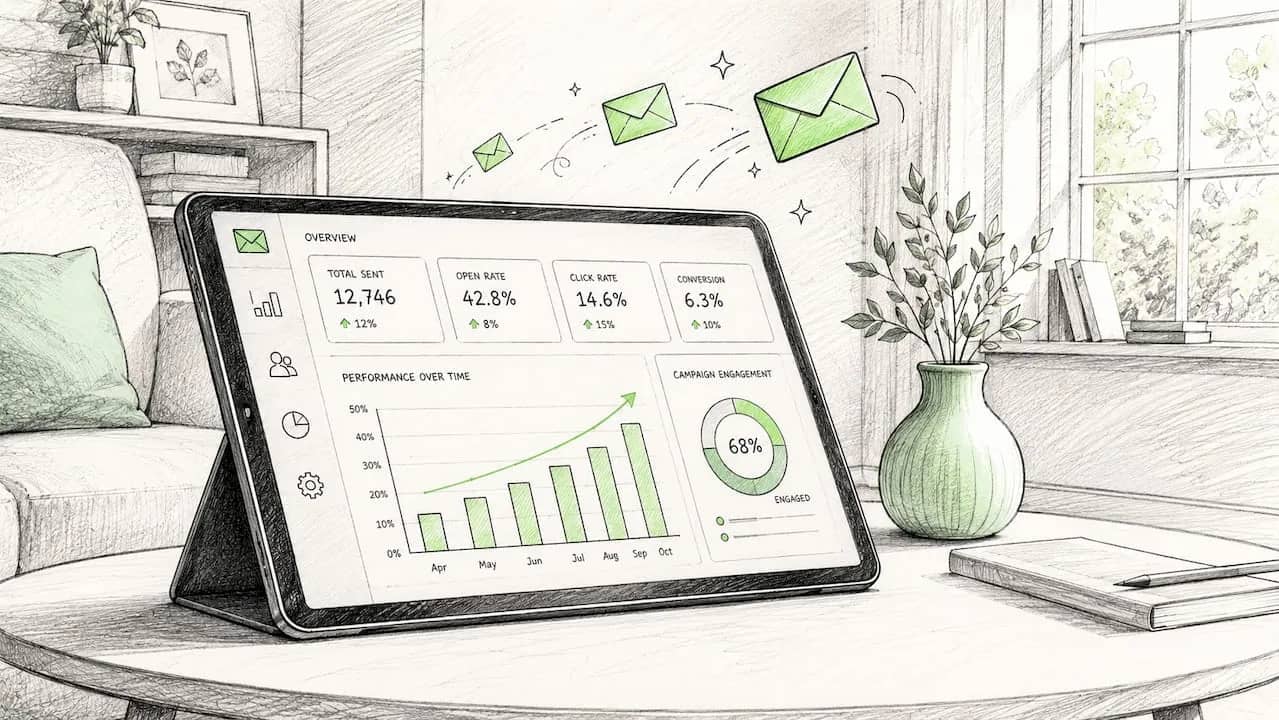
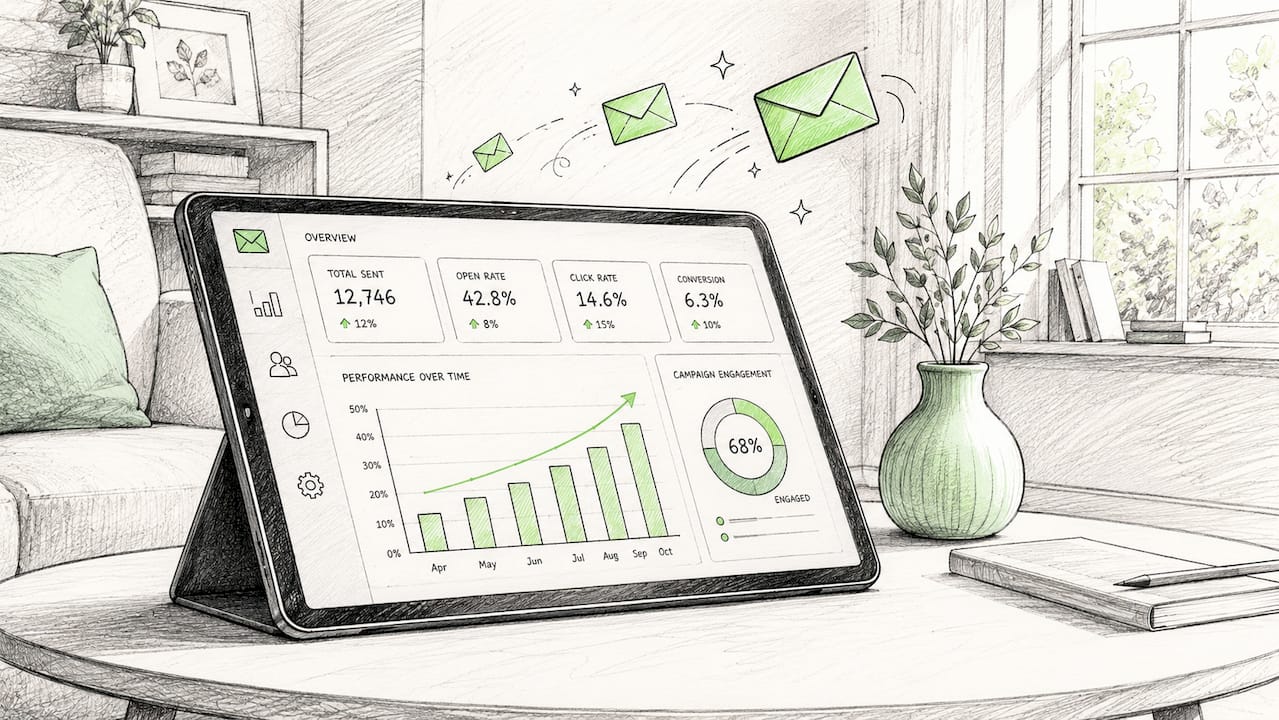
Open rate: The percentage of recipients who opened your email. A useful directional signal, but affected by Apple Mail Privacy Protection, which inflates opens for some senders.
Click-through rate (CTR): The percentage of recipients who clicked a link. This is a more reliable indicator of genuine engagement than open rate alone.
Conversion rate: The percentage of recipients who completed a desired action, such as a purchase or signup. This is the metric that ties directly to revenue.
Unsubscribe rate: A high rate signals a mismatch between what subscribers expected and what you delivered.
Spam complaint rate: Must stay below 0.3%. Watch this weekly, not monthly.
Bounce rate: Hard bounces indicate invalid addresses. Remove them immediately.
The 80/20 rule of email content
80% of recipients read subject lines, but only 20% read the full message. That ratio means your subject line is doing most of the work. Write subject lines first, not last. Test two versions using A/B testing, where you send variant A to one portion of your list and variant B to another, then measure which drives more opens or clicks. Apply the winner to future sends and repeat the process.
Pro Tip: Run A/B tests on one variable at a time: subject line, send time, or call-to-action. Testing multiple variables simultaneously makes it impossible to know what actually moved the needle.
Optimization is iterative. Set a baseline, test one change, measure the result, and repeat. Small improvements compound into significant gains over months.
Key Takeaways
Email marketing success requires permission, authentication, segmentation, automation, and consistent measurement working together as a system.
Point | Details |
|---|---|
List quality over quantity | Build permission-based lists with double opt-in to maximize engagement and deliverability. |
Authentication is non-negotiable | Configure SPF, DKIM, and DMARC before sending a single campaign. |
Automate the welcome sequence first | A strong welcome sequence drives the highest early engagement of any automation. |
Segment before you send | Behavioral and demographic segmentation prevents generic blasts and improves conversions. |
Track CTR and conversion rate | Open rates mislead; click-through and conversion rates reveal true campaign performance. |
Why email fundamentals are the foundation founders can’t skip
Here’s my honest take after watching founders build businesses from scratch: email is the channel most people underestimate until they desperately need it. Social platforms change their algorithms. Ad costs spike. But a well-built email list keeps delivering, quietly and consistently, because you own it outright.
The founders who struggle with email almost always skip the fundamentals. They buy a list, skip authentication, blast everyone with a discount on day one, and then wonder why their open rates are terrible and their domain got flagged. The sequence matters. Trust comes before the sale, always.
What I’ve found works is treating the first 30 days of a subscriber’s experience like an onboarding program. You’re not selling. You’re orienting. You’re showing them why they made a good decision by signing up. By the time you make an offer, it feels natural rather than pushy.
Start small. Build one welcome sequence. Get your authentication right. Clean your list every quarter. These aren’t glamorous tasks, but they’re the ones that separate founders who scale from those who plateau. The fundamentals aren’t a phase you graduate from. They’re the engine you keep tuning.
— Samim
How Siift supports your email marketing foundation
Building a solid email marketing strategy is one piece of a larger business puzzle. Siift’s New Business OS helps founders connect the dots, from validating your idea to mapping your go-to-market approach, including the channels that will drive early traction. If you’re figuring out how email fits into your broader startup growth strategy, Siift gives you a structured, AI-guided path to get there without the guesswork that slows most founders down. Ready to build your strategy on solid ground? Try TEST-D and see how Siift helps you execute with clarity and confidence from day one.
FAQ
What is the ROI of email marketing?
Email marketing generates $10–$36 for every $1 spent, making it the highest-ROI channel in digital marketing. Results vary by industry, list quality, and campaign execution.
What is double opt-in and why does it matter?
Double opt-in requires new subscribers to confirm their email address after signing up. It improves list quality, reduces spam complaints, and protects your sender reputation.
How do I keep my emails out of the spam folder?
Configure SPF, DKIM, and DMARC authentication on your sending domain and keep your spam complaint rate below 0.3%. These two steps address the majority of deliverability issues.
What email automation should I build first?
Build a welcome sequence first. It generates the highest engagement of any automated flow and sets the tone for your entire subscriber relationship.
How often should I clean my email list?
Run list hygiene at least once per quarter. Remove hard bounces immediately and target subscribers inactive for 60–180 days with a re-engagement campaign before removing them.